
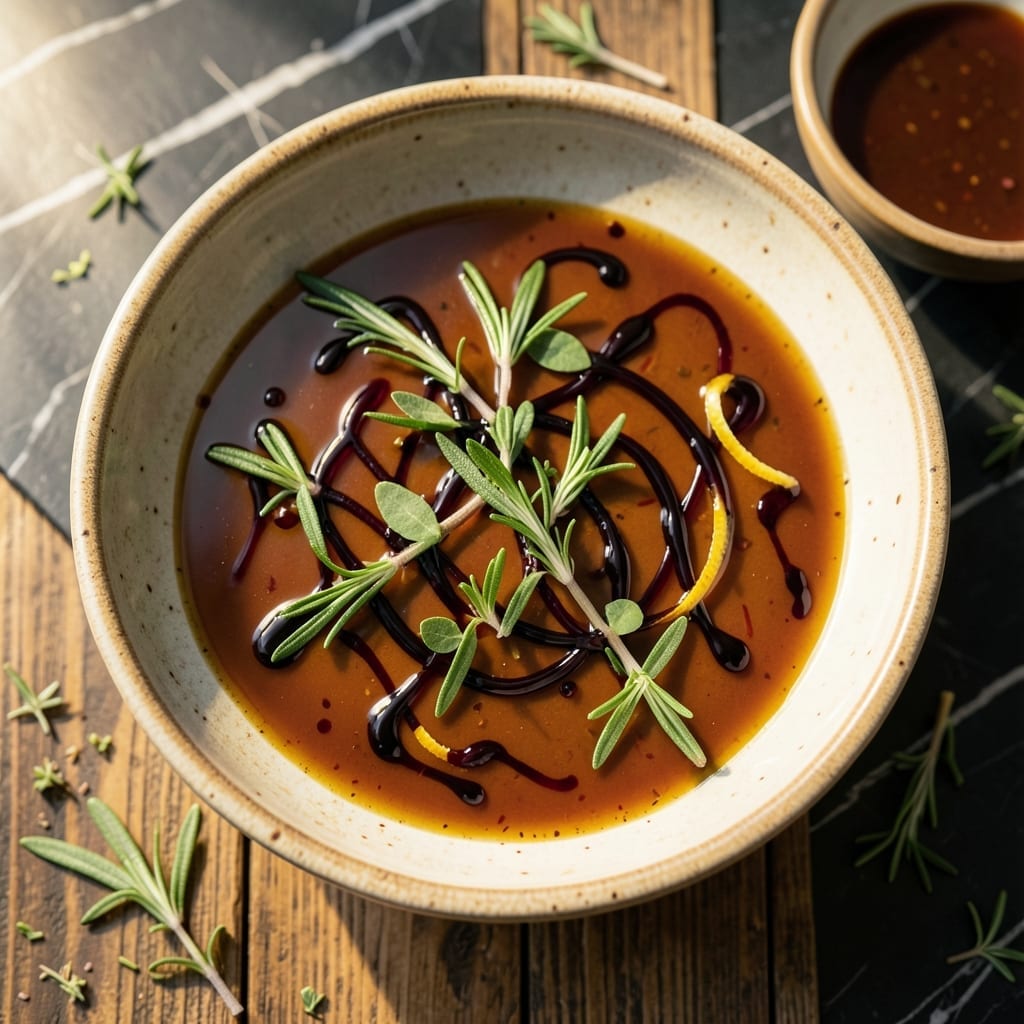
This marinade transforms wild duck from gamey to gourmet with a simple overnight soak. The blend of oils, acids, and herbs penetrates deeply, tenderizing the meat while balancing its bold natural flavors.
I developed this recipe after years of experimenting with wild game preparation. The key is a precise ratio of acidic and aromatic ingredients that work together without overpowering the duck’s rich taste.
You’ll notice the difference immediately after grilling. The meat stays moist and develops a complex flavor profile that highlights rather than masks the duck’s natural character.
Make a batch ahead of grilling season and store in the fridge for up to one week. This ensures you’re always ready when the moment strikes.
Ingredients for Wild Duck Marinade
A precisely balanced blend of oils, acids, and herbs to elevate wild duck flavor.
| Ingredient | Amount | Notes |
|---|---|---|
| Extra-Virgin Olive Oil 🫒 | 1 cup | High quality, cold-pressed |
| Red Wine Vinegar 🍷 | ½ cup | Or substitute apple cider vinegar |
| Soy Sauce 🥢 | ¼ cup | Low-sodium preferred |
| Worcestershire Sauce 🍶 | 2 tbsp | Anchovy-free if preferred |
| Fresh Rosemary 🌿 | 2 tbsp | Finely chopped, stems removed |
| Fresh Thyme Leaves 🍃 | 2 tbsp | Stripped from stems |
| Garlic Cloves 🧄 | 6 cloves | Minced or crushed |
| Dijon Mustard 🟡 | 2 tbsp | Smooth, no seeds |
| Honey 🍯 | 3 tbsp | Or substitute maple syrup |
| Black Pepper 🌶️ | 2 tsp | Freshly cracked for best flavor |
For optimal results, high-quality extra-virgin olive oil is non-negotiable—look for cold-pressed, single-origin varieties at Whole Foods or Eataly. The vinegar should be bold; red wine vinegar from Bragg or Colavita delivers the right acidity. Fresh herbs are essential here—organic rosemary and thyme from the farmers market or your garden will provide the most aromatic impact.
Need a soy sauce alternative? Tamari or coconut aminos work well for gluten-free needs. If avoiding anchovies, vegan Worcestershire sauce from Annie’s is a reliable swap. Dried herbs at one-third the amount can replace fresh in a pinch, though the flavor won’t penetrate as deeply. Honey can be replaced with maple syrup or agave for a slightly different but still effective sweetness.
This marinade keeps beautifully in the fridge for up to 1 week. Store in an airtight glass jar (plastic can absorb odors). For longer storage, freeze in ice cube trays, then transfer to a bag for up to 3 months. Always discard used marinade—never reuse it due to raw meat contamination.
Why You’ll Love This Recipe
- I’ll be real: the flavor gets even better overnight, so I always make extra for sandwiches the next day.
- No-Fuss Mix: I just dump olive oil, vinegar, soy, Worcestershire, and rosemary in a bowl—no chopping, no fuss.
- Rich and Deep: The soy and Worcestershire give it that umami punch, while rosemary adds an earthy brightness that clings to the duck.
- Hunter’s Best Friend: Honestly, it’s ideal for wild game nights or when I’ve got a freezer full of duck from last season.
Step-by-Step Instructions for Wild Duck Marinade
This method ensures maximum flavor penetration while preserving the duck’s natural richness.
Step 1: Combine the Acidic Base
In a medium bowl, whisk together the 1 cup Extra-Virgin Olive Oil, 0.5 cup Red Wine Vinegar, and 0.25 cup Soy Sauce until fully emulsified. The vinegar’s acidity begins tenderizing the meat immediately while the oil carries fat-soluble flavors deep into the tissue.
I always check for separation after a minute—if the mixture starts to split, whisk vigorously for another 30 seconds until it becomes uniform. This stable emulsion ensures even distribution of flavors across the duck’s surface.
Step 2: Incorporate the Aromatic Elements
Add the 2 tbsp Worcestershire Sauce, 6 cloves minced Garlic, 2 tbsp Dijon Mustard, and 2 tsp Black Pepper to the bowl. The garlic should be finely minced to release its maximum pungency, while the mustard acts as an emulsifier to maintain the marinade’s consistency.
Whisk for another 1-2 minutes until the mustard is fully incorporated and no visible streaks remain. The mixture will take on a slightly thicker texture as the mustard’s natural stabilizers engage with the liquids.
Step 3: Add Fresh Herbs and Sweetener
Stir in the 2 tbsp Fresh Rosemary, 2 tbsp Fresh Thyme Leaves, and 3 tbsp Honey. The herbs should be finely chopped to prevent large pieces from sticking to the duck during cooking. The honey balances the acidity while adding a subtle caramelization potential when grilled.
Let the marinade sit for 5 minutes to allow the herbs to infuse their essential oils into the liquid. You’ll notice the color deepen slightly as the rosemary and thyme release their pigments and flavors.
Step 4: Apply and Marinate the Duck
Place the duck pieces in a resealable plastic bag or shallow dish and pour the marinade over them, ensuring all surfaces are coated. For optimal flavor penetration, massage the marinade into the meat for 1-2 minutes, paying special attention to any thick areas.
Refrigerate and marinate for 4-12 hours, turning the duck occasionally to redistribute the marinade. The longer marinating time allows the flavors to penetrate deeply, while the acidity works to tenderize the typically tough wild duck meat without making it mushy.
Pro Tips For Making Wild Duck Marinade
- Marinate overnight: Wild duck needs time to tenderize—let it soak in the marinade for at least 8 hours, preferably overnight. I learned this the hard way after serving chewy duck to dinner guests.
- Crush the rosemary: Fresh rosemary releases more flavor when crushed—roll the sprigs with a rolling pin or chop finely before adding. Sounds weird, but it works.
- Balance the acid: Red wine vinegar can overpower, so use 1 part vinegar to 2 parts olive oil. My grandmother swore by this ratio, and she was right.
- Skip the metal bowl: Acidic ingredients like vinegar and Worcestershire can react with metal—use glass or plastic for marinating. After ruining a batch with a metallic taste, I finally figured this out.
Essential Equipment for This Dish
Mixing Bowls
A medium stainless steel mixing bowl is ideal for whisking your marinade. I prefer All-Clad’s 3-quart—its weight and shape make it easy to create a stable emulsion. The non-reactive material ensures no metallic taste transfers to your mixture.
Whisking Tools
Invest in a balloon whisk with a comfortable grip. The OXO Good Grips 11-inch is my go-to for blending oils and acids smoothly. Its design helps incorporate air, which stabilizes the emulsion for better cling to the duck.
Measuring Essentials
Precision matters with marinades. I use OXO measuring cups for liquids and stainless steel measuring spoons for smaller quantities. The 1 tbsp and 1 tsp measures see the most action in this recipe. 💡
Marinating Containers
For the duck, use a gallon-sized zip-top bag or a glass baking dish with a lid. The bag saves space in your fridge, while the dish works well if you’re marinating multiple pieces. Both allow easy turning for even coverage.
Herb Prep Tools
A sharp chef’s knife and cutting board are crucial for finely chopping the rosemary and thyme. I recommend Wüsthof’s 8-inch for its balance. Fresh herbs release more flavor when properly minced.
Storage Solutions
Store extra marinade in airtight glass jars. The Ball Mason 16-oz size works perfectly. Glass won’t absorb odors like plastic and lets you see the mixture’s color as it develops over time.
Nutrition Facts
Frequently Asked Questions
How long should I marinate wild duck?
Marinate for 4-12 hours in the fridge. This gives enough time for flavors to penetrate without making the meat mushy from over-exposure to acidity.
Can I use dried herbs instead of fresh?
Yes, but use 1/3 the amount since dried herbs are more concentrated. Fresh herbs provide better flavor infusion, but dried will work in a pinch.
What if my marinade separates?
Whisk vigorously for 30 seconds to re-emulsify. The mustard helps stabilize the mixture, but separation can happen if left sitting too long.
Is it safe to reuse leftover marinade?
Never reuse marinade that touched raw duck due to contamination risk. Make extra marinade separately if you want some for basting during cooking.

- 6 Egg Cake Recipe with Oil: Light as Air With Buttery Moisture - October 4, 2026
- 4 Bean Casserole Recipe: One-Pan Heartiness With Smoky Paprika Depth - October 4, 2026
- 3-Ingredient Keto Mug Cake Recipe: Microwave Magic in 2 Minutes - October 4, 2026