
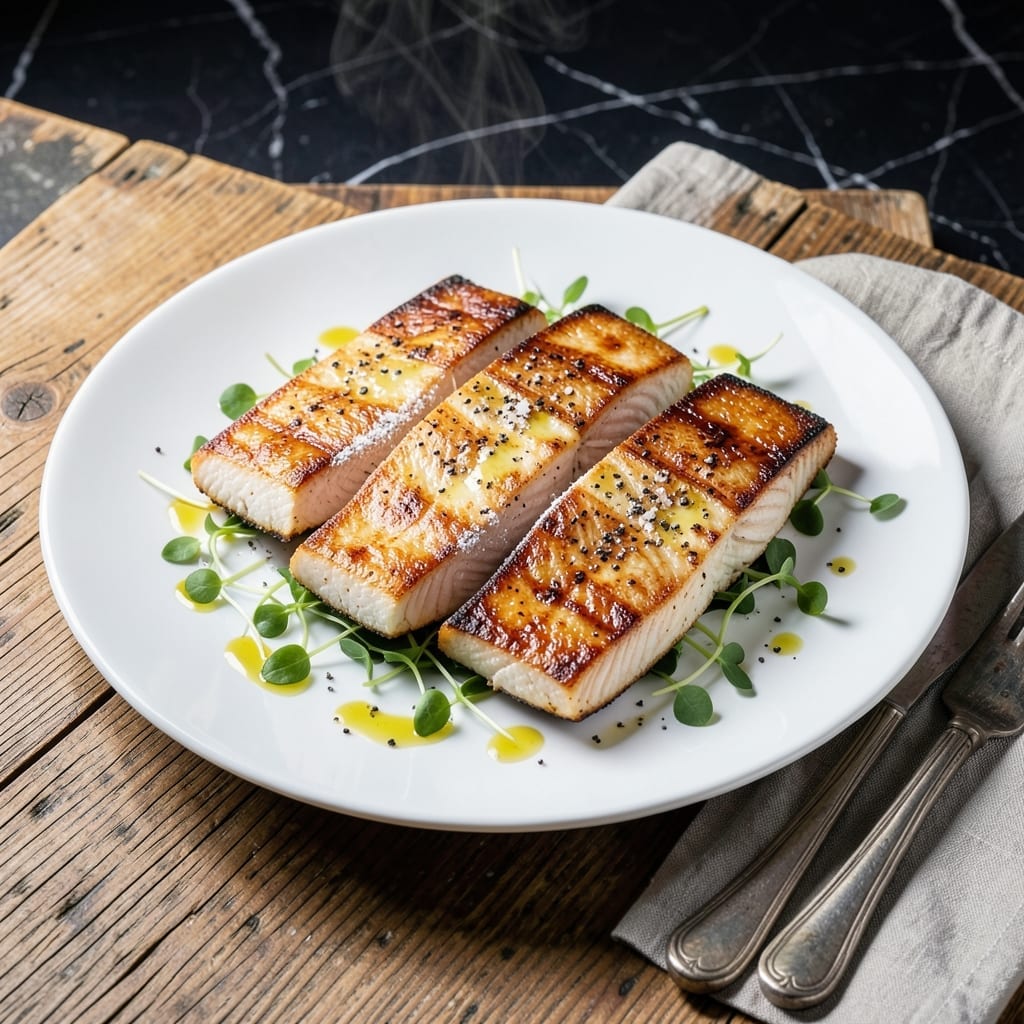
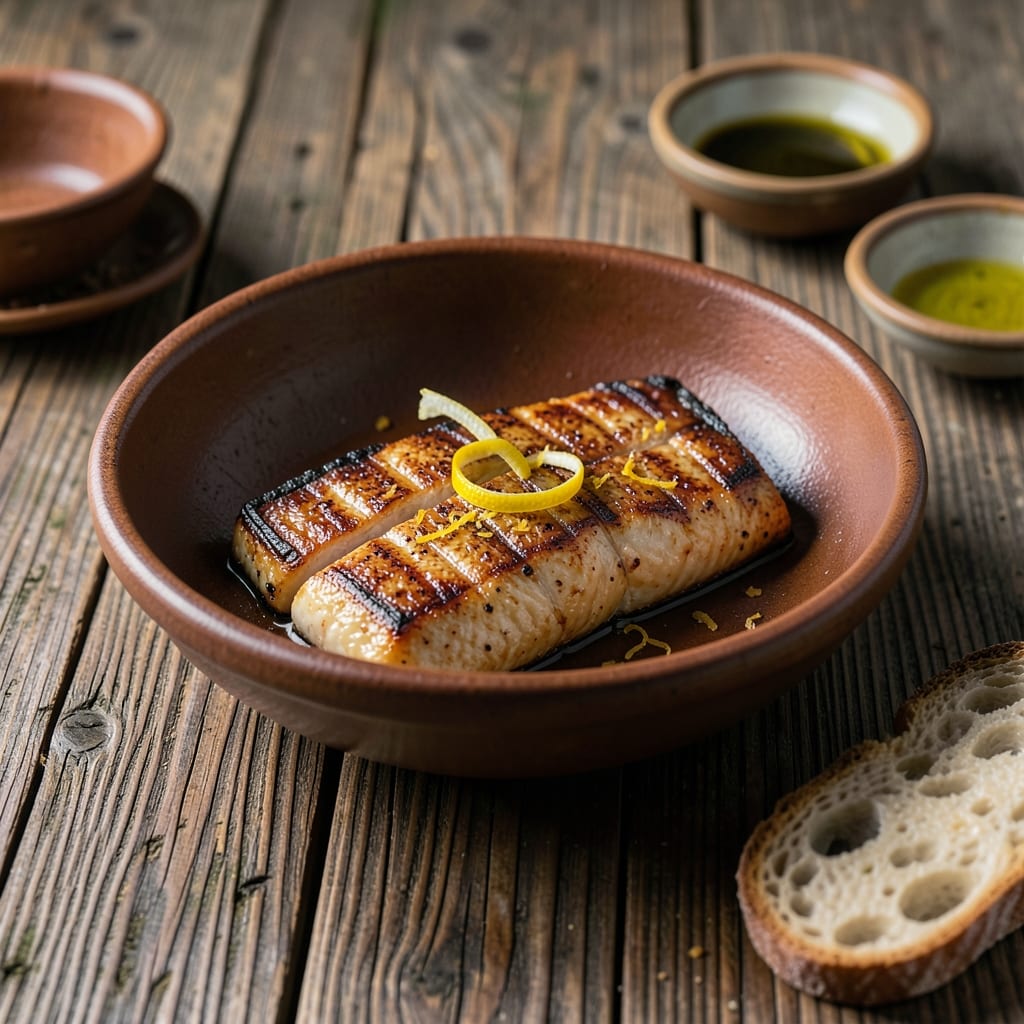
This pan-fried yellowtail delivers a professional result with crispy skin and flaky white fillets every time. The technique is simple but precise.
High heat and proper timing create that perfect golden crust while keeping the flesh tender and moist. No restaurant reservation needed for this quality.
Ingredients for Yellowtail Recipe Pan Fried
High-quality fish and simple seasonings create this restaurant-worthy dish with crisp, golden skin.
| Ingredient | Amount | Notes |
|---|---|---|
| Yellowtail Fillets 🐟 | 1 ½ lb | Skin-on, about 1-inch thick |
| Kosher Salt 🧂 | 1 tsp | Diamond Crystal preferred |
| Freshly Ground Black Pepper 🌶️ | ½ tsp | Coarse grind for texture |
| All-Purpose Flour 🌾 | ¼ cup | For light dusting only |
| Neutral Oil 🫒 | 3 tbsp | High smoke point required |
| Unsalted Butter 🧈 | 2 tbsp | For basting fillets |
| Garlic Cloves 🧄 | 3 cloves | Lightly crushed, peeled |
| Fresh Thyme Sprigs 🍃 | 4 sprigs | Optional for aroma |
| Lemon 🍋 | 1 whole | For serving, cut into wedges |
| Fresh Parsley 🌿 | ¼ cup | Chopped, for garnish |
| Olive Oil 🫒 | 1 tbsp | For finishing drizzle |
[recipeingredientscaler]
The yellowtail must be sushi-grade and skin-on for optimal texture. Whole Foods or local fishmongers are best for sourcing—look for fillets with translucent flesh and no fishy odor. Fillets should be uniform in thickness (about 1-inch) to ensure even cooking. The skin must be dry before seasoning to achieve maximum crispness during pan-frying.
No yellowtail available? Sea bass or snapper work well as alternatives with similar flakiness. For the oil, avocado or grapeseed oil are excellent high-smoke-point options. If avoiding butter, use extra oil for basting—though butter adds unmatched richness. The flour dusting is optional but helps create a superior crust.
This is best served immediately—crispy skin softens quickly. Leftovers keep refrigerated for 1-2 days maximum. Reheat gently in a dry skillet to revive texture. Never microwave, as it will ruin the skin’s crispness and dry out the delicate flesh.
Why You’ll Love This Recipe
- One Pan Wonder: I love that I only need a skillet, some flour, and a few minutes to get this yellowtail perfectly crispy.
- Crispy, Flaky Perfection: That golden crust from the flour and hot oil gives way to tender, buttery fish—every bite is spot-on.
- Weeknight Hero: Honestly, it’s my go-to for busy evenings when I need something fast but still impressive.
- Budget Friendly Luxe: Yellowtail feels fancy, but this simple pan-fry keeps it affordable without sacrificing flavor.
Step-by-Step Instructions for Pan Fried Yellowtail
Follow this precise method to achieve perfectly crispy skin and tender, flaky fillets every time.
Step 1: Season and Dredge the Fillets
Pat the 1.5 lb Yellowtail Fillets completely dry with paper towels—moisture prevents crisping. Season both sides evenly with 1 tsp Kosher Salt and 0.5 tsp Freshly Ground Black Pepper.
Lightly dust each fillet in 0.25 cup All-Purpose Flour, shaking off any excess. The flour creates a delicate crust that enhances the skin’s crispiness without overpowering the fish’s natural flavor.
Step 2: Sear the Skin to Golden Perfection
Heat 3 tbsp Neutral Oil in a large skillet over medium-high heat until shimmering. Place the fillets in the pan skin-side down, pressing gently with a fish spatula for 10 seconds to ensure full contact with the pan.
Cook undisturbed for 4-5 minutes until the skin is deep golden brown and crisp. Resist the urge to move the fish—this ensures even cooking and prevents the skin from sticking.
Step 3: Baste with Aromatic Butter
Flip the fillets and reduce heat to medium. Add 2 tbsp Unsalted Butter, 3 cloves Garlic Cloves, and 4 sprigs Fresh Thyme Sprigs to the pan. Tilt the skillet slightly and spoon the foaming butter over the fish continuously for 2-3 minutes.
The butter will turn a light hazelnut brown, and the garlic will release its fragrance. This basting technique infuses the fish with rich flavor while keeping it moist and tender.
Step 4: Rest and Garnish for Serving
Transfer the fillets to a paper towel-lined plate to drain excess oil. Let them rest for 2 minutes—this allows the juices to redistribute, ensuring flaky, moist flesh.
Drizzle with 1 tbsp Olive Oil and garnish with 0.25 cup Fresh Parsley and wedges from 1 whole Lemon. The acidity from the lemon balances the richness of the fish, while the parsley adds a fresh, vibrant finish.
Pro Tips For Making Yellowtail Recipe Pan Fried
- Dry the Fillets: Pat the yellowtail fillets bone-dry with paper towels before seasoning—I learned this the hard way after my first few batches steamed instead of seared.
- Heat the Pan First: Get that pan screaming hot before adding the oil, then let the oil shimmer for 30 seconds. Sounds obvious, but it’s the difference between a flabby fillet and a crisp, golden crust.
- Skip the Overcrowding: Cook the fillets in batches if needed, because cramming them in drops the pan temp fast and turns your dinner into a sad, soggy mess.
- Rest Before Serving: Give the pan-fried yellowtail a solid 2-3 minutes on a warm plate after cooking—it keeps the juices inside where they belong, not all over your cutting board.
Essential Equipment for This Recipe
Must-Have Tools 🍳
To achieve perfectly pan-fried yellowtail with crispy skin and tender fillets, start with a heavy-bottomed skillet like All-Clad or Lodge cast iron. A fish spatula with a thin, flexible edge ensures easy flipping without breaking the delicate fish. Don’t forget a pair of tongs for precise handling.
For temperature control, a meat thermometer like the ThermoWorks Instant Read helps you hit the ideal 145°F internal temp. A paper towel is also essential for patting the fillets dry—this ensures a crispy crust.
Nice-to-Have
A splatter screen keeps your stovetop clean as the fish sizzles, while a wire cooling rack lets excess oil drain after cooking. For even heat distribution, consider a carbon steel pan like Mauviel.
If you love precision, a kitchen scale ensures consistent portion sizes, and a fish bone pliers makes quick work of any pin bones.
Budget Alternatives
No fancy gear? A nonstick skillet works fine for beginners, though it won’t sear as well. Swap the fish spatula for a thin metal spatula, and use a fork in place of tongs. For temperature checks, rely on the flake test—opaque flesh that separates easily signals doneness.
Skip the splatter screen and use a lid to minimize grease splatter. A baking sheet lined with paper towels can substitute for a cooling rack.
Nutrition Facts

- 6 Egg Cake Recipe with Oil: Light as Air With Buttery Moisture - October 4, 2026
- 4 Bean Casserole Recipe: One-Pan Heartiness With Smoky Paprika Depth - October 4, 2026
- 3-Ingredient Keto Mug Cake Recipe: Microwave Magic in 2 Minutes - October 4, 2026