
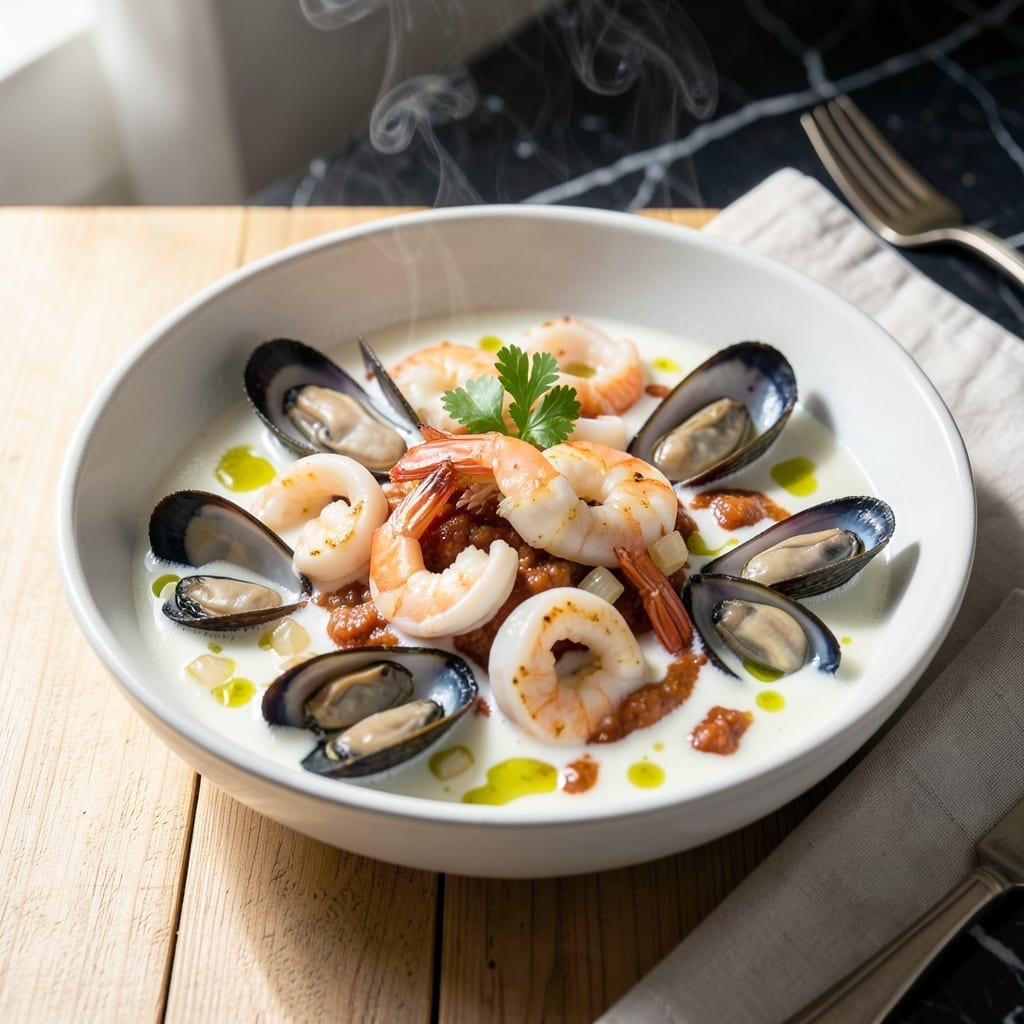
This Italian white sauce forms the perfect base for any zuppa di pesce, transforming simple seafood into a restaurant-quality dish. The secret lies in a precise balance of aromatics and white wine reduced to intensify flavor without overpowering the delicate seafood.
I’ve refined this method to create a sauce that’s rich yet light, allowing the natural sweetness of fish and shellfish to shine through. A touch of tomato paste adds depth, while fresh herbs provide the bright, authentic Italian character that defines this classic broth.
What results is a velvety sauce that clings to seafood while maintaining a clean, briny essence. It’s the foundation that elevates a humble fish stew to something truly special, with layers of flavor that develop as it simmers.
Use this as your canvas for mussels, clams, shrimp, or firm white fish. The possibilities are as endless as they are delicious.
Ingredients for Zuppa Di Pesce White Sauce
Nine ingredients build this velvety Italian seafood sauce base. Simple but essential.
| Ingredient | Amount | Notes |
|---|---|---|
| Extra-Virgin Olive Oil 🫒 | 3 tbsp | For sautéing aromatics |
| Garlic Cloves 🧄 | 4 cloves | Minced for depth of flavor |
| Shallot 🧅 | 1 whole | Finely diced for sweetness |
| Dry White Wine 🍷 | 1 cup | Crisp variety like Pinot Grigio |
| Fish Stock 🐟 | 3 cups | High-quality for seafood base |
| Tomato Paste 🍅 | 1 tbsp | For subtle depth |
| Fresh Parsley 🌿 | ¼ cup | Chopped, for bright finish |
| Fresh Basil 🌿 | ¼ cup | Torn, for Italian character |
| Bay Leaf 🍃 | 1 whole | For aromatic infusion |
| Red Pepper Flakes 🌶️ | ¼ tsp | Optional for subtle heat |
The wine is key here—grab a dry white you’d actually drink. Pinot Grigio or Sauvignon Blanc work perfectly. Fish stock matters too; Whole Foods or Trader Joe’s have good options, or use homemade if you’ve got it. The aromatics (garlic, shallot) should be fresh—no pre-minced stuff from a jar. It makes a difference in the final flavor (trust me on this one).
No white wine? Substitute with extra fish stock plus a splash of lemon juice for acidity. Fresh herbs not available? Dried at one-third the amount works fine, but add them earlier to bloom the flavor. Tomato paste can be swapped for a pinch of smoked paprika if you’re in a bind. The bay leaf is optional, but it adds that classic Italian depth.
This sauce keeps 3-4 days in the fridge, but it’s best used fresh. Freeze in 1-cup portions for up to 3 months. Let it cool completely before storing to preserve the texture (worth the extra minute).
Why You’ll Love This Recipe
- One Pot Wonder: I love that this comes together in a single pot—just sauté the garlic and shallots in olive oil, deglaze with wine, and let the fish stock do the rest.
- Depth in Every Spoon: The white wine and fish stock create this rich, briny base that makes the seafood taste like it came straight from an Italian coastline.
- Weeknight Hero: Honestly, it’s fancy enough for company but unfussy enough for a Tuesday night when I crave something special without the effort.
- Stretches Further: Leftovers taste even better the next day, and the broth soaks up any crusty bread I toss in—nothing goes to waste.
Step-by-Step Instructions for Zuppa Di Pesce White Sauce
This classic Italian seafood broth base comes together with simple steps and big flavor.
Step 1: Sauté the Aromatics
Heat the 3 tbsp Extra-Virgin Olive Oil in a large pot over medium heat. Add the finely diced 1 whole Shallot and cook for 2-3 minutes until it softens and becomes translucent, stirring occasionally.
Add the minced 4 cloves Garlic Cloves and cook for an additional 1 minute until fragrant. Be careful not to let the garlic brown—it should just turn golden at the edges. This creates a sweet, aromatic foundation for the sauce.
Step 2: Deglaze with Wine
Pour in the 1 cup Dry White Wine and stir to combine with the aromatics. Increase the heat to medium-high and let the mixture simmer for 3-4 minutes until the wine reduces by about half.
You’ll notice the alcohol smell dissipates as it cooks down, leaving behind a rich, tangy base. This step is crucial—it adds depth and balances the acidity in the final sauce. Stir in the 1 tbsp Tomato Paste and cook for 1 minute to mellow its raw flavor.
Step 3: Simmer the Broth
Add the 3 cups Fish Stock, 1 whole Bay Leaf, and 0.25 tsp Red Pepper Flakes (if using). Bring the mixture to a gentle simmer over medium heat, then reduce the heat to low to maintain a steady, gentle bubble.
Let it cook uncovered for 15-20 minutes to allow the flavors to meld together. The broth should reduce slightly and take on a rich, aromatic quality. Taste and adjust seasoning with salt if needed, but remember the fish stock may already be seasoned.
Step 4: Finish with Fresh Herbs
Remove the pot from heat and stir in the 0.25 cup Fresh Parsley and 0.25 cup Fresh Basil. The herbs should wilt slightly but retain their bright, fresh flavor. This adds a vibrant finish to the sauce.
Let the sauce sit for 5 minutes to allow the herbs to infuse. Remove the 1 whole Bay Leaf before serving. The broth should be fragrant, slightly rich, and ready to serve as a base for your favorite seafood.
Pro Tips For Making Zuppa Di Pesce White Sauce
- Sauté Slowly: Cook the shallot and garlic in olive oil on medium-low for at least 5 minutes—rushing this makes them bitter instead of sweet.
- Deglaze Properly: After adding white wine, scrape the browned bits from the pan with a wooden spoon; that’s where the flavor hides.
- Use Fresh Stock: I learned this the hard way—store-bought fish stock can taste thin, so if you’re short on time, at least reduce it by half first.
- Simmer, Don’t Boil: Once the sauce is together, keep it at a gentle simmer—boiling hard turns the white sauce cloudy and can curdle the texture.
Creative Variations of This Dish
Creamy Garlic Variation
Stir in ½ cup heavy cream and 2 tbsp butter at the end for a richer, velvety texture that clings to seafood beautifully. This works especially well with shellfish like scallops or shrimp. I love how the cream mellows the wine’s acidity. 💫
Spicy Arrabbiata Style
Increase the red pepper flakes to 1 tsp and add ½ cup crushed tomatoes with the fish stock for a spicy kick. The heat balances the sweetness of the seafood. This version reminds me of Southern Italian coastal flavors.
Lemon and Caper
Finish with zest of 1 lemon and 1 tbsp capers for a bright, briny twist. The capers add a salty pop that pairs perfectly with firm white fish like halibut or cod.
Herb-Infused Oil
Swap 1 tbsp olive oil for rosemary-infused oil when sautéing aromatics. The piney notes complement clams and mussels beautifully. I make my own by steeping fresh rosemary in oil for 1 week.
Saffron Luxury
Add a pinch of saffron threads (about ¼ tsp) with the fish stock for a golden hue and floral aroma. This elevates the sauce to gourmet status. A little goes a long way with this precious spice. ✨
White Wine Boost
Double the white wine to 2 cups and reduce by three-quarters for an intenser, more complex base. This works well when using the sauce for heartier seafood like monkfish or lobster.
Nutrition Facts
Frequently Asked Questions
Can I use a different type of wine?
Stick with a dry white like Pinot Grigio or Sauvignon Blanc for best results. Avoid oaky Chardonnays, as they can overpower the delicate seafood flavors. In a pinch, extra fish stock with a splash of lemon juice works.
How long can I store the sauce?
It keeps in the fridge for 3-4 days in an airtight container. For longer storage, freeze in 1-cup portions for up to 3 months. Always cool completely before storing.
Can I make this sauce without wine?
Yes! Replace the wine with an equal amount of fish stock and add 1 tbsp lemon juice for acidity. The flavor will be milder but still delicious.
Why does my sauce taste bitter?
Bitterness often comes from over-reducing the wine or burning the garlic. Keep the heat at medium and stir frequently. If it happens, balance with a pinch of sugar.

- 6 Egg Cake Recipe with Oil: Light as Air With Buttery Moisture - October 4, 2026
- 4 Bean Casserole Recipe: One-Pan Heartiness With Smoky Paprika Depth - October 4, 2026
- 3-Ingredient Keto Mug Cake Recipe: Microwave Magic in 2 Minutes - October 4, 2026