
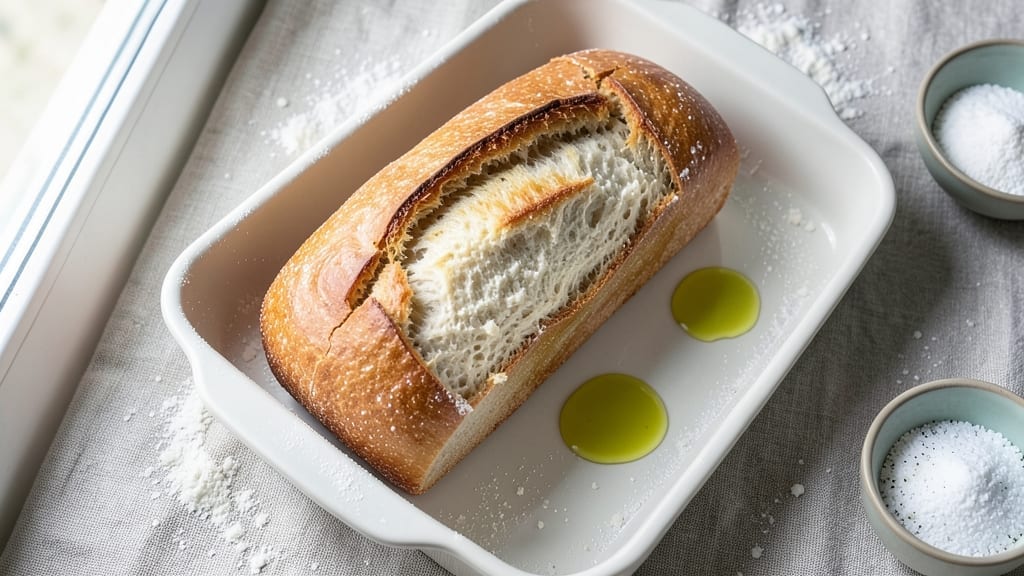
Mastering 00 flour bread machine recipes transforms your kitchen into an Italian bakery without the fuss of kneading by hand. This high-protein flour creates an artisan crust with a crisp exterior and airy interior, all while your machine does the work.
The secret lies in balancing hydration and timing—too much moisture, and your loaf becomes dense; too little, and it lacks that signature chew.
What sets this recipe apart is the no-knead technique, which relies on the bread machine’s precise cycles to develop gluten naturally. The 00 flour’s fine texture and moderate protein content (12-13%) deliver a lighter crumb than all-purpose flour, while still holding structure for a satisfying bite.
For best results, use a 2-pound capacity machine and avoid overloading with add-ins like seeds or herbs—stick to 5% of the flour weight to preserve texture.
The payoff? A loaf with a golden, crackly crust that shatters when torn, revealing an open crumb studded with tiny air pockets. The flavor is subtly nutty, with just enough elasticity to make sandwiches worth saving.
This method works for ciabatta, focaccia, or a simple baguette—just adjust the cycle length. Once you try it, store-bought bread will never compare.
For extra depth, brush the baked loaf with olive oil while still warm, or sprinkle coarse salt and herbs for a rustic finish. Leftovers stay fresh for 3 days wrapped in a towel, or freeze for up to 3 months.
The key is patience—let the dough rest between cycles if your machine allows, and resist the urge to peek at the glass window during proofing.
Ingredients for 00 flour bread machine
Nine simple ingredients transform your bread machine into an Italian bakery masterpiece.
| Ingredient | Amount | Notes |
|---|---|---|
| 00 Flour 🌾 | 3 ½ cups | Italian 00 flour, 12-13% protein |
| Instant Yeast 🍞 | ½ tsp | Active dry works too |
| Granulated Sugar 🍚 | ½ tsp | Feeds yeast for rise |
| Salt 🧂 | 1 ½ tsp | Fine sea salt preferred |
| Extra-Virgin Olive Oil 🫒 | ¼ cup | For dough elasticity |
| Warm Water 💧 | 1 ¼ cups | 105°F for yeast activation |
| Coarse Sea Salt 🧂 | 1 tsp | For crust finishing |
| Fresh Rosemary 🌿 | ½ tsp | Optional herb addition |
| Cornmeal 🌽 | 2 tbsp | For dusting bread pan |
The 00 flour is non-negotiable here—its 12-13% protein content creates the perfect balance between crisp crust and airy crumb. King Arthur or Caputo are my go-tos, but any Italian 00 flour works. The key is avoiding all-purpose flour, which would make the crust too dense. For the yeast, Fleischmann’s active dry is reliable, but check the expiration date—old yeast won’t activate properly. Warm the water to 105°F (just warm to the touch) to ensure the yeast wakes up without killing it.
No instant yeast? Active dry yeast needs 5 minutes in warm water before adding to the bread machine. Short on rosemary? Fresh thyme or dried Italian seasoning works just as well—just halve the amount. The olive oil matters here; avoid vegetable oil—it lacks the fruity notes that enhance flavor. If your machine has a light cycle, ignore it during the first 30 minutes—peeking can disrupt the dough’s natural rise. And if you’re making ciabatta? Add 1 extra tablespoon of olive oil to the dough for extra tenderness.
This dough is delicate—don’t overmix. Once baked, let the loaf cool 30 minutes before slicing, or it’ll turn gummy. Store wrapped in a clean kitchen towel for up to 3 days to maintain freshness. For freezing, wrap tightly in plastic and freeze for up to 3 months. The best part? The crust gets even better the next day—save a slice for tomorrow’s sandwich.
Why You’ll Love This Recipe
- Minimal Ingredient List: I swear by this—just five things: 00 flour, yeast, sugar, salt, and olive oil. No weird substitutions, no hunting for specialty items. Honestly, if you’ve got pantry basics, you’re golden.
- Yeast-Fed Perfection: That first rise in the bread machine? Pure magic. The 00 flour gives it this almost artisanal texture—crusty outside, pillowy inside—without the fuss of kneading or shaping. (Yes, even on a Tuesday night.)
- Weeknight & Meal Prep: Slice it fresh for sandwiches, toast it for breakfast, or freeze half for later. Between us, I’ve used this bread for everything from bruschetta to garlic butter slather. It’s my go-to for lazy days and busy mornings alike.
- Budget-Friendly Staple: A loaf costs less than takeout, keeps for days, and stretches my grocery budget. The olive oil adds richness without breaking the bank—plus, it’s the kind of bread that makes even simple meals feel special.
Step-by-step instructions for 00 flour bread machine recipe
Your bread machine does all the hard work—just follow these simple steps for a golden crust and airy crumb.
Combine Dough Ingredients in the Machine
Add the 3.5 cups 00 flour directly to your bread machine pan. This fine Italian flour creates that signature tender crumb and crispy crust. In a small bowl, whisk together the 0.5 tsp instant yeast, 0.5 tsp granulated sugar, and 1.5 tsp salt—this mixture jumpstarts fermentation. Pour in the 0.25 cup extra-virgin olive oil and 1.25 cups warm water (about 105°F—too hot and you’ll kill the yeast).
If using, finely chop the 0.5 tsp fresh rosemary and sprinkle it over the dry ingredients. The oil and water should create a shaggy dough ball when combined. Don’t worry if it looks uneven—your machine will handle the mixing. Select the “Basic White Bread” setting and start the cycle.
Let the Machine Do the Work
During the first 20 minutes of the cycle, you’ll hear the machine kneading the dough. The dough should pull away from the sides of the pan and become smooth and elastic. If it sticks too much, the machine will automatically adjust the kneading time—no need to intervene.
After kneading, the machine will switch to fermentation. The dough will rise dramatically, filling about 75% of the pan’s height. This is where the 00 flour shines—it develops gluten beautifully without overworking. The cycle typically takes 3 to 3.5 hours total, including rising and baking.
Shape and Prepare for Baking
Once the cycle completes, remove the dough from the pan and place it on a lightly floured surface. Gently shape it into a round loaf—this creates a more even bake. Dust a 9×5-inch loaf pan with 2 tbsp cornmeal (this prevents sticking and adds texture). Transfer the dough seam-side up into the pan.
Cover the pan loosely with a clean kitchen towel and let the dough rise for 30 to 45 minutes until it puffs up noticeably. The dough should spring back slowly when pressed gently with a finger. This final rise ensures a light, airy texture. Preheat your oven to 375°F while the dough rises.
Bake to Golden Perfection
Brush the risen dough with a little water or milk to create a glossy surface for browning. Sprinkle 1 tsp coarse sea salt evenly over the top—this enhances flavor and adds texture. Bake for 25 to 30 minutes until the crust turns a deep golden brown and sounds hollow when tapped on the bottom.
For extra crispiness, broil for 1 to 2 minutes at the end of baking. Let the bread cool in the pan for 10 minutes before transferring to a wire rack. This resting time prevents a gummy crumb. The crust should be crisp, the crumb soft, and the rosemary aroma subtle but noticeable—just like an artisanal bakery loaf.
Pro Tips For Making 00 Flour Bread Machine
- WEIGH YOUR FLOUR: 00 flour is deceptively dense—don’t eyeball it. Use a kitchen scale for 500g (or the recipe’s weight) and scoop directly into the machine’s pan. Spooning from a bag packs it too tightly, and you’ll end up with a brick instead of a loaf. I learned this the hard way after three attempts with a bread that looked more like a doorstop.
- DON’T SKIP THE OIL REST: Let the olive oil sit at room temperature for 30 minutes before measuring it. Cold oil from the fridge will slow yeast activation, and you’ll end up waiting longer for that first rise. If you’re in a rush, place the bottle in warm (not hot) water for 10 minutes—just enough to loosen the oil without killing the yeast.
- SALT THE WATER FIRST: Dissolve the salt in the water before adding yeast. This prevents clumping and ensures even distribution throughout the dough. I was skeptical until I tried it—now my bread has that consistent, subtle saltiness in every bite, not just the crust.
- USE A LIGHT TOUCH: After the first rise, avoid over-handling the dough. 00 flour is sticky and fragile—just gently shape it into a loose round or oval with wet hands, then place it seam-side up in the machine pan. Punching it down too hard will deflate the gluten you just built, and you’ll lose that airy texture.
Common mistakes when making perfect results
Overloading the Pan
Your bread machine has a 2-pound capacity limit, and exceeding it leads to dense, uneven loaves. The 3.5 cups of 00 flour in this recipe is already at the upper limit—adding more than 2 tablespoons of seeds or herbs (like sunflower seeds or chopped rosemary) will crowd the dough.
I’ve seen home bakers double the herbs and end up with a brick-like loaf. If you want extra flavor, stick to 1 teaspoon of herbs or 1 tablespoon of seeds max. 🌿
Skipping the Resting Time
Rushing the 30-minute cooling period after baking is a classic mistake that turns crispy crusts into gummy disasters. The dough needs time for starches to set properly. I’ve sliced bread too soon and ended up with a sticky mess—now I always set a timer.
For best results, let the loaf cool completely on a wire rack before storing it in an airtight container.
Incorrect Water Temperature
Using water that’s too hot (110°F+) or too cold (below 90°F) kills the yeast or slows fermentation. The 105°F sweet spot activates yeast without shocking it. I’ve ruined batches by using boiling water straight from the kettle—always test the water with your finger.
If it feels warm but not hot, it’s ready. A thermometer is worth the investment if you’re serious about bread baking.
Ignoring the Machine’s Kneading Phase
Peeking at the dough during the first 20 minutes of kneading disrupts the gluten development. The machine’s motor adjusts automatically, but opening the lid lets heat escape and weakens the dough’s structure. I’ve caught myself checking progress and had to restart the cycle.
Trust the machine—it knows what it’s doing. If your model has a light cycle, ignore it until the dough is fully formed.
Using All-Purpose Flour
Substituting all-purpose flour (10-11% protein) for 00 flour (12-13% protein) changes the texture dramatically. The result? A denser crumb and less crispy crust. I’ve tried this swap out of convenience, and the bread lacked that signature Italian artisanal feel.
If you can’t find 00 flour, King Arthur Bread Flour (12.7% protein) is the closest substitute. The higher protein content is key for that perfect chew.
Overproofing the Dough
Letting the dough rise too long in the machine or during the final proof causes it to collapse when baked. The dough should fill about 75% of the pan during the machine cycle and puff up noticeably (but not double) during the 30-45 minute final rise.
I’ve walked away from the kitchen and returned to find a flat, sad loaf. Set a timer and watch for the dough to spring back slowly when pressed—this is your cue to bake.
Nutrition facts
Frequently asked questions
Can I substitute all-purpose flour for 00 flour in this recipe?
While it’s possible, the texture will change significantly. All-purpose flour has lower protein content (10-11% vs 00 flour’s 12-13%), resulting in a denser crumb and less crispy crust. For similar results, use King Arthur Bread Flour (12.7% protein) instead. The higher protein in 00 flour creates that signature Italian artisanal texture.
Why does my bread turn out dense instead of light and airy?
Dense bread usually means overloading the pan or underdeveloped gluten. Stick to 3.5 cups 00 flour max and limit add-ins to 1 tbsp seeds/herbs. Also check your water temperature—it should be 105°F (not boiling). If your machine has a light cycle, ignore it during the first 20 minutes of kneading to prevent heat loss.
How do I know when the dough is fully risen?
The dough should fill about 75% of the pan during the machine cycle and puff up noticeably (but not double) during the 30-45 minute final rise. Press gently with a finger—if it springs back slowly, it’s ready. Overproofing causes collapse, while underproofing leads to a dense loaf. Set a timer to avoid guessing!
Can I make this bread without a bread machine?
Yes, but with adjustments. Mix the dough by hand until elastic, then let it rise 1-2 hours until doubled. Shape into a loaf, let rise another 30-45 minutes, then bake at 375°F for 25-30 minutes. The machine’s precise kneading and temperature control make it easier, but you can achieve similar results with patience and attention to timing.
What’s the best way to store leftover bread?
Wrap cooled bread in a clean kitchen towel and store at room temperature for up to 3 days to maintain freshness. For longer storage, freeze wrapped loaves for up to 3 months. The crust gets even better the next day—this method preserves moisture better than plastic bags. Toasting revives stale slices perfectly!

- 3lb Prime Rib Roast Recipe: Juicy Pink Center Guaranteed in 3 Hours - October 31, 2026
- 5 Spice Cake Recipe: Warmly Spiced Layers With Crunchy Top - October 31, 2026
- 1950’s Macaroni and Cheese Recipe: Nostalgic Creamy Cheese Sauce with Buttery Noodles - October 31, 2026