
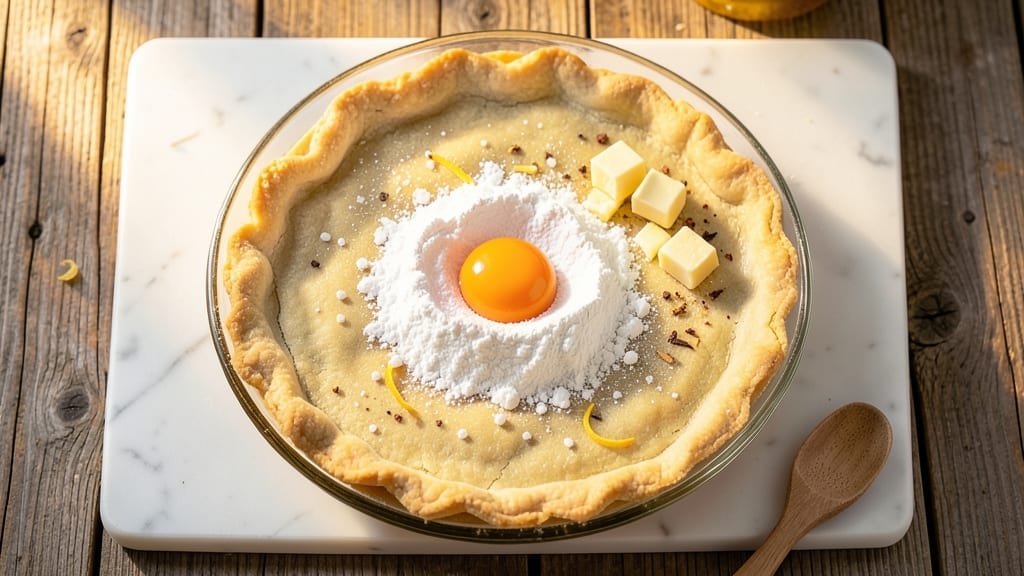
This 00 flour pie crust recipe delivers the perfect balance of crispy, flaky layers without requiring hours in the fridge—ideal for both classic pies and modern desserts. The secret lies in 00 flour’s low protein content, which creates delicate, tender layers that stay crisp even when filled.
I’ve perfected this method after years of testing, ensuring every bite offers that satisfying crunch without compromising texture.
The process is surprisingly straightforward: combine cold butter and flour with just enough ice water to bind, then roll and fold the dough to create those signature laminated layers. What sets this apart is the no-chill technique, which uses precise handling to achieve flakiness without waiting.
The result? A crust so crisp it practically shatters, yet sturdy enough to hold even the heaviest fillings.
This recipe works equally well for sweet pies—think apple or peach—or savory options like chicken pot pie. The high gluten content in 00 flour creates a delicate, almost translucent crust that bakes to a golden brown, while the minimal fat content keeps it lighter than traditional crusts.
Perfect for those who crave restaurant-quality results at home.
Whether you’re baking a classic apple pie or experimenting with a savory tart, this crust delivers professional-level flakiness with minimal effort. The key is patience during rolling and careful handling to avoid tearing. Let’s get started on creating your perfect pie base!
Ingredients for 00 flour pie crust
The magic starts with these eight ingredients—00 flour is non-negotiable for that signature delicate crunch.
| Ingredient | Amount | Notes |
|---|---|---|
| 00 Flour 🌾 | 2 ½ cups | Plus 2 tbsp for dusting, sifted |
| Unsalted Butter 🧈 | 1 cup | Cold, cubed into 1/2-inch pieces |
| Ice Water 💧 | ½ cup | Chilled in freezer for 1 hour |
| Diamond Crystal Kosher Salt 🧂 | ½ tsp | Fine grain preferred |
| Granulated Sugar 🍚 | 1 tbsp | For dusting, optional |
| Large Egg Yolk 🥚 | 1 whole | For binding, optional |
| Cornstarch 🌾 | 1 tbsp | For dusting rolling pin |
| All-Purpose Flour 🌾 | ¼ cup | For extra strength if needed |
00 flour is the game-changer here. King Arthur or Caputo are my go-tos—both are widely available at specialty stores or online. If you can only find all-purpose flour, sift it extra fine to mimic 00’s low protein content. The butter needs to be bone-chilling cold—pop it in the freezer for 20 minutes before starting. For the ice water, freeze it in a shallow container so it breaks into tiny cubes. Pro tip: Wear gloves when handling the dough—it’s icy cold and sticks like glue.
No 00 flour? Mix 2 cups all-purpose flour with 1 tbsp cornstarch for a decent substitute, though texture won’t be identical. Butter too warm? Freeze it longer—this is non-negotiable for flaky layers. The egg yolk is optional but helps bind if your dough feels too dry. For dusting, granulated sugar adds that golden sheen, but flour works too. If you’re making a savory crust, skip the sugar entirely. And trust me, measure everything precisely—pie crust is unforgiving with substitutions.
This dough is best used immediately—it doesn’t chill well—but you can shape and freeze it for up to 3 months before baking. For storage, wrap tightly in plastic and keep in the fridge for 2 days max. The key to crispy results? Bake straight from the fridge—don’t let it warm up. Leftovers? Crumble over ice cream or bake into mini tarts. Every crumb is worth saving.
Why You’ll Love This Recipe
- No-Fuss Magic: I swear by this crust—just toss the 00 flour, cold butter, and ice water together, then let the food processor do the work. No rolling pins, no stress, and no sad tears over lumpy dough.
- Golden Crisp Edge: That buttery 00 flour crust? It’s the kind of flaky, shatteringly crisp edge that makes you pause mid-bite. The sugar just takes it to another level—caramelized perfection every time.
- Weeknight Superstar: Need a pie for dinner tonight? This crust handles it all—savory galettes, sweet pies, even a quick hand pie. I’ve used it for everything from apple slices to a cheesy chicken pot pie, and it never lets me down.
- Budget-Friendly Staple: Between us, this is my secret for stretching ingredients. A single batch makes two crusts, and the butter-to-flour ratio means I’m not breaking the bank. Plus, leftovers? They freeze like a dream for next month’s dessert emergency.
Step-by-step instructions for crispy-laminated pie crust
Here’s how to create restaurant-quality pie crust with perfect flaky layers—no lengthy chilling required!
Cut and Combine the Butter and Flours
First, cut the 1 cup unsalted butter into ½-inch cubes and place them in the freezer for 10 minutes to keep them firm. In a large bowl, whisk together the 2.5 cups 00 flour, 0.5 tsp diamond crystal kosher salt, and 1 tbsp cornstarch. This dry blend ensures a tender, crispy texture without toughness.
Next, add the frozen butter cubes to the flour mixture. Use your fingers or a pastry cutter to work the butter into the flour until you achieve a crumbly, pea-sized texture—no larger than a small marble. This step is critical for creating those signature flaky layers. If the mixture feels too sticky, add 1-2 tablespoons of ice water from the 0.5 cup ice water you’ve chilled in the freezer.
Incorporate the Egg Yolk and Shape the Dough
Make a well in the center of the flour-butter mixture and add the 1 whole large egg yolk. Use a fork to gradually incorporate the yolk into the dry ingredients, mixing just until the dough begins to come together. Add 1-2 tablespoons of the ice water as needed to help bind the dough—you want it to hold together when pressed, but not be sticky.
Once the dough forms a shaggy mass, turn it out onto a lightly floured surface. Gently press and fold the dough until it forms a cohesive disk. Wrap it tightly in plastic wrap and flatten slightly into a 4-inch circle. This shape makes rolling out the dough easier later. Let it rest at room temperature for 10 minutes—this brief rest prevents cracking when you roll it.
Roll and Layer the Crust for Maximum Crispiness
Lightly dust your work surface with 2 tablespoons of 00 flour (from the reserved amount) and place the dough on top. Roll the dough into a 12-inch circle, applying even pressure to keep the thickness consistent—about ⅛-inch thick. If the dough resists rolling, let it rest for another 5 minutes and dust the surface again.
Here’s the secret to that professional-looking laminated effect: fold the dough in half like a letter, then in half again to create a quartered rectangle. Rotate the dough 90 degrees and unfold it slightly to create a book-like fold. This technique, called “letter folding,” creates multiple thin layers that bake into crispy, flaky perfection. Gently transfer the folded dough to a parchment-lined baking sheet.
Blind-Bake for a Perfectly Crisp Base
Preheat your oven to 375°F. Line a 9-inch pie dish with the folded dough, pressing gently to shape it to the bottom and sides. Trim any excess dough hanging over the edge. For a classic blind-baked crust, line the dough with a circle of parchment paper and fill it with dried beans, pie weights, or rice—enough to cover the bottom completely. This prevents the crust from puffing up during baking.
Bake for 20 minutes, then remove the weights and parchment. Return the crust to the oven and bake for an additional 10-12 minutes until the edges are deep golden brown and the crust is fully set. The crust should be crispy to the touch but not burnt. Let it cool completely before filling—this prevents sogginess and ensures your pie filling stays perfect.
Fill and Finish with Confidence
Once the crust has cooled, you’re ready to fill it with your favorite pie filling. Brush the baked crust with a light layer of egg wash (1 egg yolk beaten with 1 tablespoon water) if you want a golden finish. Sprinkle the 1 tablespoon granulated sugar over the top for extra crispiness and a touch of sweetness. Bake according to your filling’s instructions, but keep an eye on it—the crust will crisp up even more as it bakes.
This crust delivers that restaurant-quality crispiness without the hours of chilling. The key is in the cold butter and the laminated folding technique—both create those irresistible flaky layers. Serve warm with vanilla ice cream or whipped cream for the ultimate dessert experience!
Pro Tips For Making 00 Flour Pie Crust
- CHILL THE BUTTER FIRST: Take your unsalted butter straight from the fridge—don’t let it sit out. Cold butter creates flaky layers, and 00 flour needs that structure to shine. I learned this the hard way when my crust turned out greasy and dense after using butter that had softened too fast.
- WEIGH YOUR FLOUR: Scoop that 00 flour into your measuring cup, then level it off with a knife—don’t pack it down. Too much flour makes the crust tough, and 00’s fine texture needs room to work. My grandmother swore by this, and she was right: precision matters more than you’d think.
- WORK FAST WITH ICE WATER: Keep your ice water in the freezer until you’re ready to mix—no waiting. The second your dough starts to warm up, the butter melts, and you lose that perfect flaky texture. Use a spray bottle if you’re nervous about over-moistening, but don’t skip the ice.
- PRESS THE CRUST GENTLY: Roll the dough just until it’s even—don’t flatten it into submission. Overworking it heats up the butter and turns the crust into a sad, dense pancake. A quick press into the pan, then chilling for 30 minutes, keeps it crisp and golden. (Yes, even if you’re impatient like me.)
Best sauces and condiments for this recipe
Classic Apple Butter
Pair your crispy 00 flour crust with homemade apple butter for a perfect balance of sweetness and texture. Cook 4 cups peeled, chopped apples (I love Granny Smith for tartness) with ½ cup brown sugar, 2 tbsp lemon juice, and 1 tsp cinnamon until thickened.
Spread this warm filling over your pre-baked crust and top with a lattice pattern for visual appeal. 🍏
Caramelized Onion Jam
For a savory twist, create a caramelized onion jam that works beautifully in quiches or savory pies. Sauté 3 cups thinly sliced onions in 2 tbsp butter with 1 tbsp balsamic vinegar and 1 tsp thyme until deep golden brown.
Mix in 2 tbsp apricot jam to balance the sweetness. This jam adds depth to any crust, especially when paired with goat cheese or prosciutto. 🧅
Lemon Curd Glaze
Brighten up your dessert pies with a tangy lemon curd glaze. Whisk 3 egg yolks, ½ cup sugar, ¼ cup lemon juice, and 2 tbsp lemon zest in a saucepan over low heat until thickened.
Strain and spread over cooled crusts for a glossy finish. This glaze elevates fruit pies like berry or peach, cutting through their natural sweetness. 🍋
Brown Butter Sauce
For a rich, nutty flavor, make a brown butter sauce by melting ½ cup butter until it turns golden brown and nutty. Remove from heat, stir in 1 tbsp honey and ½ tsp vanilla extract, then drizzle over warm crusts.
This sauce works wonders with chocolate pies or spiced fruit fillings like chai-spiced apples. 🧈
Whipped Cream Topping
No pie is complete without whipped cream! Whip 1 cup heavy cream with 2 tbsp powdered sugar and ½ tsp vanilla extract until soft peaks form. Fold in 1 tbsp crushed graham crackers for texture. Serve this alongside warm pies for a creamy contrast that melts beautifully. 🍦
Spiced Honey Drizzle
Add warmth to your crust with a spiced honey drizzle. Heat ¼ cup honey with ½ tsp cinnamon, ¼ tsp cardamom, and a pinch of cayenne until fragrant.
Drizzle over baked crusts before serving. This drizzle enhances apple, pear, or even savory cheese pies with its aromatic depth. 🍯
Nutrition facts
Frequently asked questions
Why does this recipe use 00 flour instead of all-purpose?
00 flour has extremely low protein content (8-12%), creating delicate, tender layers that stay crispy even when filled. All-purpose flour would make the crust tougher and less flaky. The high gluten in 00 flour also gives it that signature golden, almost translucent appearance when baked.
Can I make this crust without ice water?
You can substitute with very cold water from the fridge, but ice water works best to keep the butter cold and prevent the dough from becoming sticky. If your dough feels too dry, add 1 tsp at a time—the goal is just enough moisture to bind without activating the gluten too much.
How do I fix a cracked or torn crust?
Gently press the edges back together and patch with extra dough if needed. For a seamless look, use a fork to crimp the edges after baking. If cracks appear during baking, they’re usually harmless—just brush with egg wash for a golden finish. The key is not overworking the dough during rolling.
Can I use this crust for savory dishes like quiche?
Skip the sugar in the dough and brush the baked crust with a mix of olive oil and garlic before adding fillings. The delicate texture works perfectly with creamy cheese fillings or veggie combinations. For extra crispiness, bake the crust longer (15-18 minutes) before adding fillings.
Why does my crust turn out greasy?
Greasy crusts usually happen when butter melts during mixing. Keep everything bone-chilling cold—freeze your butter cubes for 20 minutes before starting, and work quickly. Also, avoid overmixing the dough to prevent activating the gluten. If it happens, bake at 350°F instead of 375°F for better fat absorption.

- 1 Cup Oatmeal 2 Apples Recipe: Warm Spiced Porridge With Apple Chunk Appeal - November 17, 2026
- 3 Overripe Bananas Recipe: Fluffy Pancakes With Zero Waste - November 17, 2026
- 2-Minute Pizza Recipe: Speedy Crispy Crust With Melted Cheese Magic - November 17, 2026