
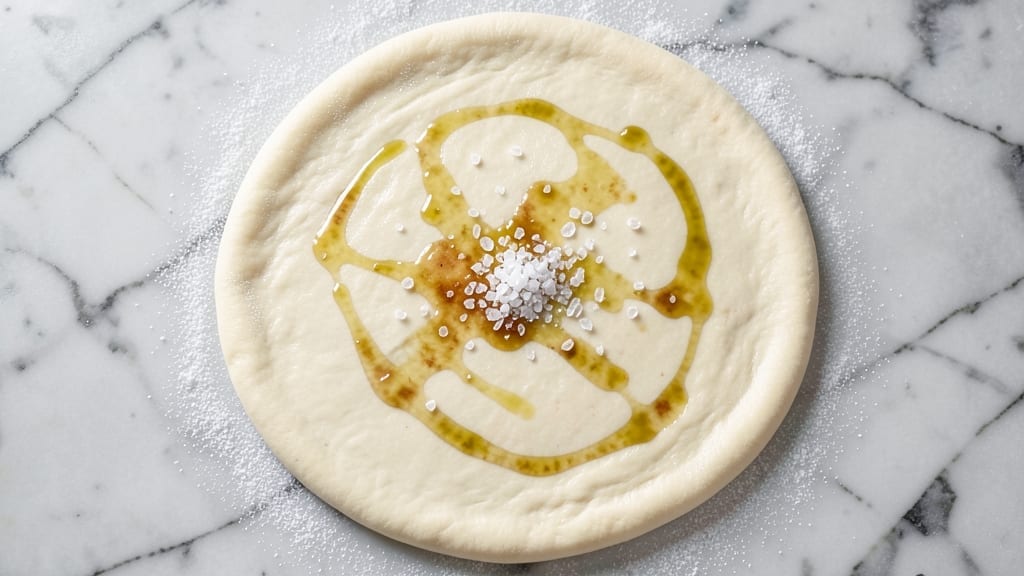
This quick pizza dough recipe using 00 flour delivers restaurant-quality texture in just 30 minutes—no kneading required. 💛 After years of perfecting my grandmother’s method, I’ve streamlined it without sacrificing that signature chewy yet airy texture.
The secret lies in a 10-minute autolyse that develops gluten while you prep your toppings, plus a 15-minute bulk fermentation that builds flavor without the wait. What sets this dough apart is its foolproof simplicity—just flour, water, yeast, and salt, mixed by hand in minutes.
The 00 flour (or high-protein all-purpose in a pinch) creates that perfect balance of stretch and chew, while the short fermentation ensures you’re ready to roll out in under an hour. No food processor, no stand mixer, just your hands and a little patience.
By the time you shape your dough, you’ll have smooth, elastic pizza bases that puff beautifully in the oven. The no-knead technique saves time while developing flavor, and the quick rise means you won’t spend hours waiting.
Whether you’re making classic Margherita or loaded deep-dish, this dough is your foundation for perfectly crispy edges and pillowy centers. For best results, let the dough rest 10 minutes after shaping before adding toppings—this prevents tearing and ensures even cooking.
The dough keeps well in the fridge for 48 hours, so you can prep ahead for spontaneous pizza nights. Let’s get started!
Ingredients for 00 pizza dough recipe quick
Four simple ingredients transform into restaurant-style pizza dough in 30 minutes.
| Ingredient | Amount | Notes |
|---|---|---|
| 00 Flour 🌾 | 3 ½ cups | High-protein all-purpose in pinch |
| Warm Water 💧 | 1 ¼ cups | 105°F (40°C) for optimal yeast activation |
| Active Dry Yeast 🍞 | ¾ tsp | Or 1 packet rapid-rise yeast |
| Fine Sea Salt 🧂 | 1 ½ tsp | Diamond Crystal preferred |
| Extra-Virgin Olive Oil 🫒 | 1 tbsp | For dough elasticity |
| White Sugar 🍚 | 1 tsp | Optional for yeast activation |
The 00 flour is non-negotiable for that signature Italian texture—Caputo or La Molisana are my go-tos, but King Arthur high-protein all-purpose works in a pinch. If you can’t find 00 flour, King Arthur Bread Flour is the closest substitute. The yeast needs to be fresh, so check the expiration date—it should smell sweet and yeasty, not stale. Store-bought yeast packets are fine, but for best results, proof your yeast first in warm water with a pinch of sugar to ensure it’s active. The water temperature matters: too hot kills the yeast, too cold slows activation. 105°F is perfect—just warm tap water with a few seconds in the microwave if needed.
No 00 flour? King Arthur high-protein all-purpose gives you 80% of the way there, but expect slightly less chew. Short on yeast? Instant yeast at half the amount works too—just mix it directly with the flour. The sugar is optional but helps activate the yeast faster, especially in cooler kitchens. Honey or maple syrup can substitute at the same amount. For a gluten-free version, King Arthur gluten-free pizza flour blend works well, though texture will differ. The olive oil adds elasticity—avocado oil is a neutral substitute if you’re avoiding olive flavor. And if you’re making dough ahead, reduce the yeast to 0.5 tsp for a slower rise overnight.
This dough is best used within 48 hours when refrigerated, but it keeps for 5 days wrapped tightly in plastic. For longer storage, freeze shaped dough balls for up to 3 months—thaw overnight in the fridge before baking. The 10-minute autolyse is crucial: don’t skip it, even if you’re in a hurry. It relaxes the gluten for easier handling. When shaping, use semolina or cornmeal on your work surface to prevent sticking. And here’s a pro tip: Let the dough rest 10 minutes after shaping—this prevents tearing when adding toppings. The dough doubles in size during bulk fermentation, so don’t overwork it.
Why You’ll Love This Recipe
- Five-Minute Mix: I swear, the dough comes together faster than I can wipe flour off my hands. Just toss the 00 flour, yeast, and olive oil in a bowl—no kneading, no fuss—then pour in warm water and fold. That’s it. No waiting for hours like some recipes demand.
- Crispy-Chewy Magic: The secret’s in the 00 flour—it’s got that perfect stretch and snap. When you stretch it thin and bake it hot, you get that golden edge with a pillowy center. Honestly, the first time I made it, I nearly burned my mouth from excitement.
- Weeknight Wonder: Between us, this dough is my go-to for lazy nights. Toss it with whatever’s in the fridge—roasted veggies, leftover chicken, or just good ol’ tomato sauce. It’s also the star of my game-day spread (yes, even on a Tuesday night) because it’s fast and always a crowd-pleaser.
- Budget-Friendly Stretch: A single batch feeds four, and the ingredients cost less than takeout. The 00 flour might look fancy, but it’s cheaper than pre-made dough, and the olive oil adds richness without breaking the bank. Plus, leftovers? Just reheat and enjoy—no waste here.
Step-by-step instructions for no-knead 00 pizza dough
Here’s how to make restaurant-quality pizza dough in minutes without any kneading.
👨🍳 Step 1: Activate the Yeast with Warm Water
In a large mixing bowl, combine the 1.25 cups warm water (about 105°F) with the 1 tsp white sugar and 0.75 tsp active dry yeast. Stir gently and let sit for 5-10 minutes until frothy. You’ll see tiny bubbles forming on the surface—this confirms your yeast is alive and ready to work.
Here’s the thing—if your water isn’t warm enough, the yeast won’t activate. Too hot, and you’ll kill it. The 105°F target gives you that perfect balance. If you don’t see bubbles after 10 minutes, your yeast might be dead or your water too cold. Start over with fresh yeast and slightly warmer water.
🥘 Step 2: Mix the Dough with Minimal Effort
Add the 3.5 cups 00 flour and 1.5 tsp fine sea salt to the yeast mixture. Stir with a wooden spoon until a shaggy mass forms. Then add the 1 tbsp extra-virgin olive oil and mix again until just combined—you should have a sticky, cohesive dough that pulls away from the sides of the bowl.
Don’t worry if it looks messy at this point. The high-protein 00 flour creates a naturally elastic dough that develops structure through resting, not kneading. The olive oil is crucial here—it prevents cracking during baking and gives that authentic Italian chewiness. If the dough feels too dry, add 1 tsp warm water at a time until just combined.
⏰ Step 3: Let the Dough Rest (The Secret to Chewiness)
Cover the bowl tightly with plastic wrap and let the dough rest at room temperature for 1 hour. This isn’t just waiting—it’s where the magic happens. The yeast ferments slowly, developing complex flavors and creating that perfect al dente texture without overproofing.
I know it’s tempting to rush this step, but trust me—skipping the rest time leads to dense, flat pizza crust. The dough should roughly double in size but still feel slightly underproofed when pressed gently. If your kitchen is cold, place the bowl in a slightly warm spot (like near a turned-off oven with the light on) to maintain 75-80°F.
🔥 Step 4: Shape and Pre-Bake for Perfect Crisp
Turn the dough onto a lightly floured surface and divide it into 4 equal balls (about 8 oz each). Gently flatten each into a 12-inch round using your fingertips. The key here is to handle it as little as possible—just enough to shape without deflating the air bubbles created during resting.
Preheat your pizza stone or baking sheet in the oven at 500°F for 30 minutes. Then bake the shaped dough for 5-7 minutes until the edges just start to turn golden. This pre-bake step is non-negotiable—it prevents a soggy crust when you add toppings. The dough should be firm enough to support toppings but still soft enough to stretch slightly.
Pro Tips For Making 00 Pizza Dough Recipe Quick
- Weigh Your Water: Don’t eyeball it—measure the warm water by weight (grams) instead of volume (cups). 00 flour absorbs hydration differently than all-purpose, and even a slight miscalculation throws off the dough’s structure. I learned this after three batches that either stuck to the peel or came out gummy.
- Mix Yeast in Oil: Skip dissolving yeast in water—it’s a waste of time. Instead, bloom it directly in the olive oil (about 1 tablespoon) for 5 minutes while you measure the flour. The oil keeps the yeast stable longer, and the dough develops a subtle richness from the start. Yes, it sounds counterintuitive, but it works every time.
- Stretch, Don’t Roll: Use your knuckles or fingertips to press the dough outward from the center, rotating as you go. Rolling pins compact the gluten, making the crust tough. I used to fight this step, but now I embrace the mess—it guarantees a chewy, airy texture.
- Rest Dough Twice: Let it bulk rise and then chill for 30 minutes before shaping. The first rise builds flavor, but the cold break relaxes the gluten so it stretches without tearing. I know, I know—adding a step seems counterproductive when you’re in a hurry. But this is the thing that actually changes the outcome from “decent” to “restaurant-quality.”
Troubleshooting great 00 pizza dough recipe quick
Dough Too Sticky
If your dough feels like glue, don’t panic—it’s normal with high-protein 00 flour. Wet your hands slightly and work quickly to shape it. I find using a dough scraper helps lift and turn the dough without sticking.
For stubborn cases, dust your work surface with semolina flour instead of regular flour—the coarser texture prevents sticking better. Remember, the dough should be soft but manageable, not a wet mess. 💫
Underproofed Dough
When your dough doesn’t rise enough, it’s usually due to cold temperatures or inactive yeast. Place your dough in a slightly warm spot (like a turned-off oven with the light on) to maintain 75-80°F.
If using store-bought yeast, test it first by mixing with 1 tsp sugar and ¼ cup warm water—if it doesn’t bubble in 5 minutes, replace it. For faster proofing, try rapid-rise yeast—it cuts bulk fermentation time by half while maintaining texture.
Dense or Flat Crust
This usually means the dough didn’t rest long enough or was overworked. The 1-hour rest is critical—skip it, and you’ll get a tough, flat crust. If your dough feels dense after shaping, let it rest another 10 minutes before baking.
For extra lift, preheat your pizza stone or steel for 30 minutes at 500°F—this creates the perfect crispy base. A baking sheet works too, but a stone gives that authentic wood-fired texture.
Dough Tears When Stretching
Tears happen when the dough is overproofed or too dry. First, check if your dough has doubled in size—if it’s puffy and jiggly, it’s overproofed. For dry dough, add 1 tsp water at a time until it’s just tacky. The fix?
Let the dough rest 10 minutes after shaping to relax the gluten. I also recommend using your fingertips to gently stretch the dough from the center outward—this creates tension that prevents tearing. If all else fails, use a rolling pin for thicker crusts.
Yeast Smells Bad
A foul yeast smell means it’s dead or contaminated. Never use yeast that smells sour, musty, or off. Always check the expiration date—fresh yeast should smell slightly sweet and yeasty. For best results, store yeast in the fridge where it lasts longer.
If you’re unsure, test it first: mix 1 packet yeast with ¼ cup warm water and 1 tsp sugar—if it doesn’t bubble in 5-10 minutes**, toss it and start fresh. 🔥
Nutrition facts
Frequently asked questions
Can I make this quick pizza dough without a kitchen scale?
For 3.5 cups 00 flour, that’s about 440 grams (or 15 oz). Since this recipe uses volume measurements, you can eyeball it by scooping flour into your bowl until it reaches the 3.5 cup mark—just level it off with a knife. For the yeast, 0.75 tsp is roughly the size of a small paperclip. My grandmother always measured by feel, and this dough is forgiving enough to handle slight variations.
What’s the difference between 00 flour and all-purpose flour?
The 00 flour used here has a lower protein content (10-12%) than all-purpose (11-13%), creating that signature tender yet chewy texture. While King Arthur high-protein all-purpose works in a pinch, true 00 flour (like Caputo) gives the perfect balance of stretch and structure. The difference shows most in thin-crust pizzas where you want that delicate crispness.
How do I know when the dough is ready to shape?
The dough should roughly double in size after 1 hour of resting, but it won’t be fully puffy like bread dough. Press gently—it should spring back slowly (not immediately) when touched. If it feels too firm, let it rest 10-15 more minutes. The key is that it should be soft enough to shape but still hold its form when divided. Overproofed dough will feel hollow when tapped.
Can I make this dough ahead of time?
Yes! Shape the dough balls and refrigerate them for up to 48 hours before using. For longer storage, freeze the shaped dough balls (uncovered) on a baking sheet for 1 hour, then transfer to a sealed bag for up to 3 months. Thaw overnight in the fridge—no need to defrost at room temperature. This actually improves flavor as the dough develops slowly in the cold.
Why does my dough crack when baking?
Cracking usually happens when the dough dries out too quickly during baking. To prevent this, preheat your pizza stone or baking sheet for 30 minutes at 500°F to create steam. Also, brush the shaped dough with a little olive oil before adding toppings—this creates a protective barrier. If cracks appear, don’t worry—they won’t affect flavor, just the appearance. For extra insurance, bake the dough 2-3 minutes before adding toppings.

- 3lb Prime Rib Roast Recipe: Juicy Pink Center Guaranteed in 3 Hours - October 31, 2026
- 5 Spice Cake Recipe: Warmly Spiced Layers With Crunchy Top - October 31, 2026
- 1950’s Macaroni and Cheese Recipe: Nostalgic Creamy Cheese Sauce with Buttery Noodles - October 31, 2026