
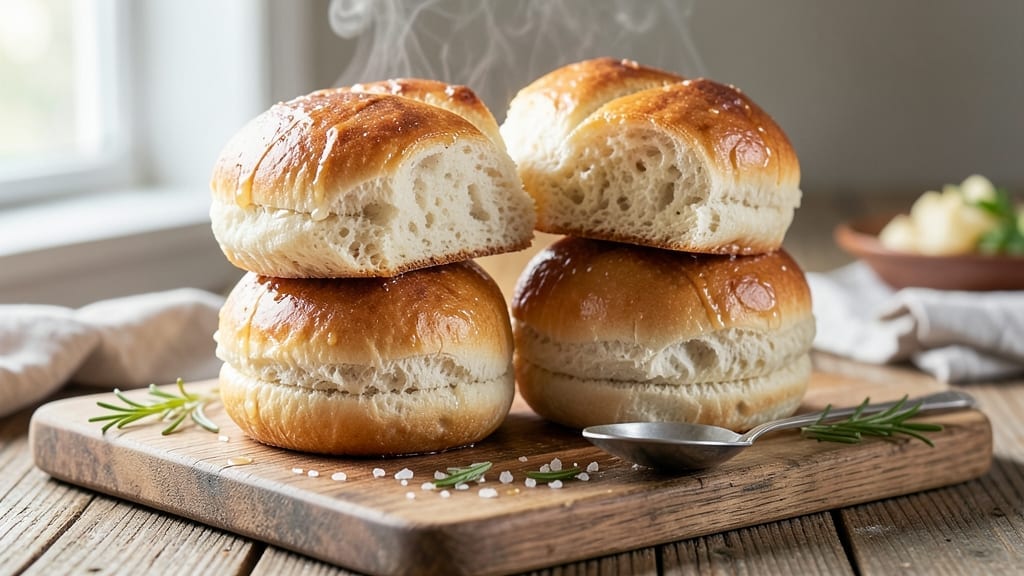
This 1-hour sandwich bread recipe delivers a no-knead, crusty loaf so tender it practically melts in your mouth—perfect for perfect sandwiches.
The secret lies in a simple one-bowl method that skips the laborious kneading while still developing that ideal sandwich bread texture: soft yet sturdy enough to hold fillings without falling apart. I’ve tested this recipe dozens of times to ensure it works every time, even for beginners.
What makes this recipe stand out is its efficiency without sacrificing quality. You’ll mix, let it rise, and bake—all within 60 minutes. The dough develops naturally through a longer, cooler rise, creating a light, airy crumb that’s ideal for toast, sandwiches, or serving warm with butter.
No special equipment needed, just basic pantry staples and your oven. By the time you slice into that golden-brown loaf, you’ll understand why this is my go-to sandwich bread.
The crust has just enough snap to hold up to fillings, while the interior remains soft and pillowy—the perfect balance for any sandwich lover. It stays fresh for days when stored properly, making it ideal for meal prep.
Whether you’re making grilled cheese, club sandwiches, or just toast, this bread delivers restaurant-quality results at home. Here’s how to make it happen in just one hour.
Ingredients for 1 hour sandwich bread
Nine simple ingredients transform into restaurant-quality sandwich bread in just one hour—no kneading required!
| Ingredient | Amount | Notes |
|---|---|---|
| All-Purpose Flour 🌾 | 4 cups | Sifted for even texture |
| Active Dry Yeast 🍞 | 1 ½ tsp | Fresh or 1 packet |
| Granulated Sugar 🍚 | 1 tbsp | For yeast activation |
| Unsalted Butter 🧈 | ½ cup | Cold, cubed for texture |
| Large Egg 🥚 | 1 whole | Room temperature |
| Warm Water 💧 | 1 ¼ cups | 110°F for yeast activation |
| Diamond Crystal Kosher Salt 🧂 | 1 ½ tsp | Fine grain preferred |
| Extra-Virgin Olive Oil 🫒 | 1 tbsp | For dough enrichment |
| Cornmeal 🌽 | ¼ cup | For dusting parchment |
| Ice Water ❄️ | 2 tbsp | For final dough adjustment |
The flour is where magic happens—King Arthur or Gold Medal brands give the best texture for sandwich bread. I always grab the bread flour option if available, but all-purpose works perfectly fine. The yeast needs to be fresh—if it smells funky, toss it. For the butter, Plugrá or Land O’Lakes unsalted are my go-tos, but any cold, cubed butter will work. The warm water should be 110°F—too hot kills the yeast, too cold slows it down. Use an instant-read thermometer if you’re unsure. Pro tip: keep your yeast in the freezer to extend its shelf life.
No yeast? Instant yeast works 1:1, but active dry is traditional. Running short on butter? Coconut oil or neutral oil keeps the dough tender, though texture will differ slightly. The egg can be omitted for vegan, but add 1 tbsp of water to compensate. For a softer crust, reduce the salt to 1 tsp. The ice water is crucial—it prevents over-proofing during the quick rise. If your kitchen’s warm, use 1 tbsp more. And if you’re baking for altitude? Add 1 tsp extra sugar to help the bread rise.
This dough is forgiveable—it won’t overproof in 60 minutes, but don’t let it sit longer than an hour before baking. For best results, shape the loaf immediately after the final rise. Store wrapped at room temp for 2-3 days or freeze up to 3 months. To reheat, wrap in foil and warm at 300°F for 10 minutes. The crust stays crisp for 24 hours if stored in a bread bag. Make a double batch—it disappears fast around here, especially when I’m making grilled cheese.
Why You’ll Love This Recipe
- No-Knead Magic: I swear by this—just mix, let it rise, and bake. The dough comes together faster than I can scramble eggs, and honestly? That’s saying something when I’m in a rush.
- Buttery Soft Crust: That egg wash? Chef’s kiss. The butter and sugar work together to give you a crust with just the right snap, but the inside stays pillowy—like a hug for your sandwich.
- Weeknight Workhorse: Make a batch on Sunday, and you’ve got bread for PB&J lunches, grilled cheese emergencies, or even toast for breakfast. (Yes, even on a Tuesday night.)
- Pantry Staple Power: Five ingredients, zero specialty items. If you’ve got flour, yeast, and butter, you’re golden—no fancy baking gear or last-minute grocery runs needed.
Step-by-step instructions for homemade no-knead sandwich bread
This one-bowl method delivers bakery-style sandwich bread in under an hour—no kneading required.
Activate the Yeast and Mix Wet Ingredients
In a large mixing bowl, combine the 1.25 cups warm water (about 110°F), 1.5 tsp active dry yeast, and 1 tbsp granulated sugar. Let it sit for 5-7 minutes until frothy. This activation step is crucial—you’ll see bubbles forming as the yeast comes to life.
While waiting, melt the 0.5 cup unsalted butter in a microwave-safe bowl for 20-30 seconds until just liquid. Let it cool slightly, then whisk it into the yeast mixture along with the 1 whole large egg and 1 tbsp extra-virgin olive oil. The butter should incorporate smoothly, creating a rich, slightly oily liquid base.
Combine Dry Ingredients and Form the Dough
Add the 4 cups all-purpose flour and 1.5 tsp diamond crystal kosher salt to the wet mixture. Using a wooden spoon or silicone spatula, stir vigorously for 2-3 minutes until a shaggy dough forms. The dough will be sticky but should pull away from the bowl sides.
Here’s the magic: cover the bowl with a damp kitchen towel and let it rest for 15 minutes. This brief rest allows the gluten to begin developing without any effort from you. You’ll notice the dough become slightly more cohesive and easier to handle after this time.
Shape and Proof the Dough
Lightly flour a clean surface and gently transfer the dough. Shape it into a 12-inch log by folding the ends toward the center and rolling it with your hands. The dough should be smooth but still slightly tacky—this is normal for no-knead bread.
Place the shaped dough seam-side down in a 9×5-inch loaf pan that’s been lightly greased with olive oil. Cover with the damp towel again and let it proof at room temperature for 45-50 minutes, until it rises about 1 inch above the pan and looks puffy. You’ll see gentle doming in the center—this indicates proper fermentation.
Bake to Golden Perfection
Preheat your oven to 375°F with a baking stone or inverted baking sheet on the middle rack. Sprinkle 0.25 cup cornmeal evenly over the dough in the pan. This creates a crispy bottom crust and prevents sticking.
Bake for 30-35 minutes until the bread is deep golden brown and sounds hollow when tapped on the bottom. The internal temperature should reach 190-195°F when checked with an instant-read thermometer. If the top browns too quickly, tent loosely with foil after 20 minutes to prevent over-browning.
Cool and Slice for Maximum Freshness
Remove the bread from the pan and transfer it to a wire rack. Let it cool completely for at least 1 hour before slicing. This resting period allows the crumb to set properly, preventing gummy texture. The bread should have a crisp exterior and soft, airy interior with an open crumb structure perfect for sandwiches.
For best results, store wrapped in a bread bag at room temperature for 2-3 days or freeze slices for up to 3 months. The flavor actually improves after the first day as the starches retrograde, giving you that classic sandwich bread taste you crave.
Pro Tips For Making 1 Hour Sandwich Bread
- Bloom the Yeast First: Skip mixing dry yeast straight into flour—it’s the fastest way to kill it. Instead, dissolve the yeast and sugar in warm (not hot) water (about 110°F) for 5 minutes until frothy. This guarantees your dough rises properly, not just maybe rises.
- Soften Butter Properly: Cold butter = tough bread. Rub the butter between your palms or microwave it in 5-second bursts until it’s soft but not melted (it should leave a slight indentation when pressed). Overworked butter makes dense bread, and melted butter just disappears into the dough.
- Don’t Over-Knead: This dough only needs 5–7 minutes of kneading by hand until it’s smooth and slightly tacky. I learned this the hard way—over-kneading develops too much gluten, and your sandwich bread turns out chewy instead of soft. Stop when it springs back slowly when poked.
- Steam the Pan: Before baking, place a metal bowl of boiling water in your preheated oven (425°F) for 5 minutes. The steam creates a crisp crust while keeping the inside tender—no weird, dry sandwich bread. Just remove the bowl right before adding your loaves.
Wine and beer pairings for these flavors
Crisp White Wine
For this sandwich bread, I always reach for a dry Riesling or Sauvignon Blanc—their bright acidity cuts through the buttery richness perfectly.
A chilled German Riesling (like Dr. Loosen Blue Slate) with its crisp citrus notes enhances the bread’s subtle sweetness, while a New Zealand Sauvignon Blanc (such as Oyster Bay) adds a zesty lime finish that complements the crust’s caramelization. 🍷
Light Beer Pairings
A wheat beer or pilsner works beautifully with sandwich bread, especially when serving it with classic fillings like ham and cheese. I love a Belgian witbier (like Hoegaarden) for its coriander and orange peel notes, which echo the bread’s buttery richness.
For a lighter option, a crisp German pilsner (such as Warsteiner) provides a clean, refreshing contrast that won’t overpower the bread’s delicate texture.
Malty Amber Ale
If you prefer something bolder, an amber ale with caramel and toasty notes bridges the gap between the bread’s crust and hearty sandwich fillings. A Belgian dubbel (like Westmalle Dubbel) adds a touch of sweetness that pairs wonderfully with smoked meats or sharp cheeses.
The maltiness in these beers mirrors the bread’s toasted flavor, creating a harmonious balance.
Non-Alcoholic Options
Don’t overlook sparkling water with a splash of lemon juice or ginger ale for a refreshing non-alcoholic pairing. I also love sparkling apple cider (like Martinelli’s) for a festive touch, especially when serving the bread with breakfast sandwiches.
The effervescence cleanses the palate between bites, enhancing the bread’s texture without competing flavors. ✨
Wine and Beer for Spreads
If you’re serving this bread with spreads like garlic butter or olive tapenade, opt for a medium-bodied red like Pinot Noir (such as La Crema) or a hazy IPA (like Hazy Little Thing) to complement the richness.
The tannins in red wine or the hop bitterness in IPA help balance the fat in spreads, making each bite more enjoyable.
Nutrition facts
Frequently asked questions
Why does this recipe skip traditional kneading?
The no-knead method relies on a longer, cooler rise time to develop gluten naturally. This creates a soft, airy crumb perfect for sandwiches while saving you 20+ minutes of effort. The brief 15-minute rest after mixing helps the dough become more cohesive without manual work.
Can I make this bread without a loaf pan?
Yes! Shape the dough into a round boule or batard and bake on a parchment-lined baking sheet. For extra crustiness, sprinkle cornmeal on the parchment first. Bake at 375°F for 25-30 minutes until golden. The texture will be slightly different but still delicious for sandwiches.
What’s the best way to store leftover sandwich bread?
Wrap the cooled loaf tightly in plastic wrap or a bread bag to maintain freshness. Store at room temperature for 2-3 days or freeze slices for up to 3 months. To revive stale bread, wrap in foil and warm at 300°F for 10 minutes. The crust stays crisp for 24 hours if stored properly.
Why did my bread turn out dense instead of soft?
This usually happens from overmixing or underproofing. Mix just until combined (about 2-3 minutes) and ensure the dough rises until it’s 1 inch above the pan. If your kitchen is warm, reduce proofing time to 30-40 minutes. Also check your yeast—it should be fresh and activated properly with bubbles.
Can I add herbs or seeds to this recipe?
Try adding 1 tbsp dried herbs (like rosemary or thyme) or 2 tbsp seeds (sesame, poppy, or everything bagel seasoning) to the dry ingredients. For extra flavor, mix in 1 tsp garlic powder or onion powder with the salt. Just reduce the flour by 1 tbsp to maintain proper dough consistency.

- 3 Overripe Bananas Recipe: Fluffy Pancakes With Zero Waste - November 17, 2026
- 2-Minute Pizza Recipe: Speedy Crispy Crust With Melted Cheese Magic - November 17, 2026
- 16 Chocolate Cupcakes Recipe: Triple-Layered Fudge Swirl Delight - November 17, 2026