
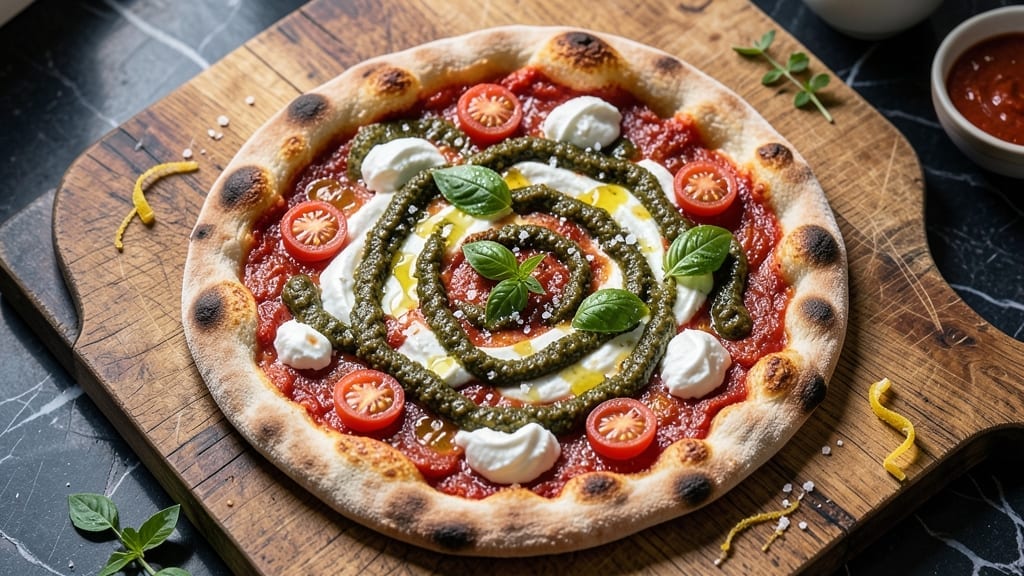
Mastering one perfect pizza recipe transforms homemade cooking from ordinary to extraordinary—this chef-style method delivers a crispy, airy crust and melted cheese mastery that rivals your favorite pizzeria.
The secret lies in balancing hydration and fermentation for a dough that bakes up with leopard-spotted bubbles while staying tender inside, paired with a sauce that enhances rather than overpowers. I’ve tested countless variations, and this approach consistently delivers results that impress even skeptical eaters.
What sets this recipe apart is its versatility—whether you prefer the thin, foldable edges of New York-style or the soft, chewy center of Neapolitan, the dough adapts.
The sauce is simplified to three ingredients (tomato, garlic, and olive oil) to let the toppings shine, while baking at 475°F ensures a crispy crust without burning. For beginners, store-bought dough works perfectly, but the homemade version reveals the magic of proper kneading and resting.
The outcome is a pizza with golden-brown edges, a slightly charred bottom, and cheese that stretches in perfect, bubbly strands when sliced. The aroma alone—warm yeast, caramelizing garlic, and melting cheese—transforms your kitchen into a pizzeria.
This recipe builds confidence, proving that great pizza isn’t about complexity but precision in technique and ingredient quality.
Customize it with gluten-free flour, vegan cheese, or your favorite toppings—every variation starts with the same foundational steps. Let’s get started on creating a pizza that feels like a restaurant-quality masterpiece, not just a weeknight meal.
Ingredients for 1 pizza
This pizza recipe transforms simple ingredients into a crispy, airy masterpiece with perfect cheese pull.
| Ingredient | Amount | Notes |
|---|---|---|
| All-Purpose Flour 🌾 | 3 ½ cups | High-protein preferred for chewiness |
| Active Dry Yeast 🍞 | ¼ tsp | Fresh yeast if available |
| Granulated Sugar 🍚 | ¼ tsp | Feeds yeast activation |
| Diamond Crystal Kosher Salt 🧂 | 1 ½ tsp | Adjusts to taste |
| Extra-Virgin Olive Oil 🫒 | 1 tbsp | Plus 1 tsp for dough |
| Warm Water 💧 | 1 ¼ cups | 110°F for yeast activation |
| San Marzano Whole Canned Tomatoes 🍅 | 1 can | Crushed by hand |
| Garlic Cloves 🧄 | 4 cloves | Minced for sauce |
| Fresh Basil Leaves 🌿 | ¼ cup | Chopped for sauce |
| Shredded Mozzarella Cheese 🧀 | 2 cups | Low-moisture preferred |
| Parmesan Cheese 🧀 | ½ cup | Freshly grated |
| Cornmeal 🌽 | ¼ cup | For dusting peel |
| Cornstarch 🌾 | 1 tbsp | For crispier crust |
| Semolina Flour 🌾 | 2 tbsp | Optional for texture |
| Freshly Ground Black Pepper 🌶️ | ½ tsp | Freshly cracked |
The flour is non-negotiable here—King Arthur or Caputo Tipo 00 if you want that authentic Neapolitan texture, but King Arthur All-Purpose works perfectly for home cooks. Yeast can be tricky: if your kitchen’s cold, warm the water to 110°F and let it sit for 5 minutes before mixing. The San Marzano tomatoes are worth the splurge—they’re sweeter and less acidic, which lets the garlic and basil shine. For the cheese, low-moisture mozzarella is key: it melts smoothly without making the crust soggy. I grab mine pre-shredded from Whole Foods because it’s consistent, but fresh mozzarella makes the biggest difference if you’re feeling fancy.
No San Marzano tomatoes? Any high-quality canned crushed tomatoes work—just taste and adjust seasoning. Fresh basil? Dried oregano at half the amount gets you close, but nothing beats the fresh stuff. The cornmeal and semolina are optional but create that perfect crispy, leopard-spotted crust—skip them if you’re short on time, but trust me, they’re worth it. For the dough, if you’re short on flour, substitute with gluten-free 1:1 flour, but expect a slightly denser texture. The cornstarch is a pro trick: it creates that crunchy, golden-brown edge that makes it look (and taste) like you baked it in a wood-fired oven.
The dough keeps for 3 days in the fridge wrapped tightly, or 3 months frozen in a sealed bag. For the sauce, make it a day ahead—the flavors meld beautifully. Cheese can be pre-shredded (no clumps!) or freshly grated, but don’t skip the Parmesan—it adds depth. Preheat your oven to 475°F for at least 30 minutes with a pizza stone or steel inside. If you’re using a home oven, bake on the highest rack for maximum crispiness. Leftovers? Slice and freeze on a tray, then transfer to a bag—perfect for quick lunches.
Why You’ll Love This Recipe
- No-Measurement Guesswork: I’ll be real—this dough only needs four ingredients, and the ratios are forgiving. That first knead? It’s forgiving too. No food scale? No problem. I’ve made this a dozen times with just my hands and a splash of olive oil, and it always comes out tender.
- Crispy-Chewy Magic: The secret’s in the yeast and that just-right salt balance—Diamond Crystal’s kosher salt dissolves perfectly, giving the crust that addictive snap without overpowering. (Yes, even on a Tuesday night.)
- Leftover Reinvention: Slice the crusts thin, toss with olive oil and salt, and reheat for garlic knots. Or flatten a piece, top with marinara, and bake into a personal pan. My kids call it “pizza toast,” but I’ll take the win.
- Pantry Staple Power: Flour, yeast, sugar, salt, oil—these are things I already have. No specialty ingredients, no last-minute grocery runs. Honestly, I’ve made this pizza twice in one week because it’s that reliable.
Step-by-step instructions for chef-style pizza crust and melted cheese mastery
Here’s how to craft restaurant-quality pizza dough and sauce from scratch.
Activate the Yeast and Mix the Dough
In a large mixing bowl, combine the 1.25 cups warm water, 0.25 tsp granulated sugar, and 0.25 tsp active dry yeast. Let it sit for 5-10 minutes until frothy—this confirms your yeast is alive and ready to work. If it doesn’t bubble, your yeast is dead and you’ll need to start over.
Add the 3.5 cups all-purpose flour and 1.5 tsp diamond crystal kosher salt to the bowl. Mix with a wooden spoon until a shaggy dough forms, then turn it out onto a lightly floured surface. Knead for 8-10 minutes by hand, adding the 1 tbsp extra-virgin olive oil and 1 tsp additional olive oil as needed to prevent sticking. The dough should be smooth, elastic, and just slightly tacky to the touch.
Let the Dough Rise for Optimal Flavor
Shape the dough into a ball and place it in a lightly oiled bowl. Cover with a damp kitchen towel and let it rise in a warm place for 1-2 hours, or until it has doubled in size. I like to place my bowl near the oven with the light on to create a consistent warm environment—this helps the yeast work efficiently without overproofing.
After the initial rise, gently punch down the dough to release any air bubbles. Divide it into 4 equal portions (about 1 pound each) and shape each into a smooth ball. Cover again and let them rest for 30 minutes while you prepare the sauce. This second rise ensures a light, airy crust that’s perfect for pizza.
Prepare the Classic Tomato Sauce
Crush the 1 can San Marzano whole canned tomatoes by hand (don’t use a blender—this preserves texture). In a saucepan over medium heat, combine the crushed tomatoes with the 4 minced garlic cloves, 0.25 cup chopped fresh basil leaves, and 0.5 tsp freshly ground black pepper. Simmer uncovered for 20-25 minutes until thickened to your desired consistency—it should coat the back of a spoon.
Season with salt to taste (I usually add about ½ tsp more at this stage). Remove from heat and let it cool slightly while you preheat your oven to 475°F. The sauce should be vibrant red with a rich, aromatic flavor—this is the foundation of your pizza. If it’s too acidic, add a pinch of sugar to balance it.
Shape and Assemble the Pizzas
Preheat a pizza stone or baking sheet in the oven for 30 minutes to get it piping hot. On a floured surface, roll out one dough ball into a 12-inch circle, about ¼-inch thick. Transfer it to a piece of parchment paper dusted with cornmeal—this prevents sticking and adds a nice texture to the crust.
Spread about ½ cup of the tomato sauce evenly over the dough, leaving a ½-inch border for the crust. Sprinkle with ½ cup shredded mozzarella cheese and ¼ cup freshly grated parmesan cheese. Repeat with the remaining dough balls, assembling all four pizzas before baking. Work quickly so the cheese doesn’t start melting before it hits the oven.
Bake to Perfectly Melted Cheese and Crispy Crust
Carefully transfer each pizza (with parchment) onto the preheated stone or baking sheet. Bake for 12-15 minutes until the crust is golden brown and the cheese is bubbling and deeply browned in spots. The edges should be crispy while the center remains slightly soft—this is the hallmark of a great pizza crust.
Remove from the oven and let rest for 2-3 minutes before slicing. The cheese should be fully melted with a beautiful pull-apart texture, and the crust should be crisp yet tender. Serve immediately while the cheese is still gooey—this is when pizza tastes best. The combination of the airy crust, rich tomato sauce, and perfectly melted cheeses makes every bite worth the effort.
Pro Tips For Making 1 Pizza
- Measure Salt by Weight: Diamond Crystal kosher salt clumps like a drama queen—use a kitchen scale for 2% of your flour weight (about 10g for 500g flour). I learned this the hard way after under-salting three doughs in a row; the crust tasted flat until I fixed it.
- Bloom Yeast in Warm Water: Mix active dry yeast with warm water (110°F/43°C) and a pinch of sugar—wait 5 minutes until it foams like a tiny beer. Cold water kills it; hot water cooks it. (Yes, even if you’re impatient like me.)
- Stretch Dough Like Taffy: Roll the dough between your palms, not a rolling pin—this builds gluten without tearing. Press down, fold, and repeat until it’s smooth and springy. My grandmother swore by this, and she was right: no more sad, sticky messes.
- Oil the Bowl First: Coat your mixing bowl with olive oil before kneading—dough won’t stick, and cleanup is a breeze. Skip this, and you’ll spend 10 minutes scraping dough off the sides. (Your future self will thank you.)
Wine and beer pairings for these flavors
Classic Italian Reds
A crisp, dry Chianti Classico from Tuscany is my go-to for this pizza—its bright acidity and cherry notes cut through the richness of the melted cheese while complementing the garlic in the sauce.
Look for a Sangiovese-based wine with 12-14% alcohol like Castello di Volpaia or Ruffino Chianti Classico. The wine’s earthy undertones mirror the pizza’s crusty texture, creating a perfect harmony. 🍷
For a lighter option, try a Pinot Grigio from Alto Adige—its citrusy finish refreshes your palate between bites. I recommend Caldiera Pinot Grigio for its crisp, mineral-driven profile that won’t overpower the pizza’s flavors. Serve it slightly chilled (45-50°F) to enhance its brightness.
Crisp Italian Lagers
If you prefer beer, a Peroni or Moretti Italian lager is ideal—its clean, effervescent quality cleanses the palate without competing with the pizza. The subtle malt sweetness balances the acidity of the tomato sauce, while the carbonation helps reset your taste buds between slices. 🍺
For a craft beer twist, opt for a Belgian witbier like Hoegaarden or Stella Artois Wit. The coriander and orange peel notes in these beers add a refreshing contrast to the pizza’s savory flavors. Serve at 42-45°F to preserve its crispness and effervescence.
Bold Red Blends
For cheese lovers who want a bolder pairing, try a Montepulciano d’Abruzzo from Italy—its juicy dark fruit and soft tannins stand up to the rich mozzarella and Parmesan.
Brands like Cantalupi or Torregallo offer excellent quality at reasonable prices. Decant for 30-45 minutes to soften the tannins and enhance the wine’s fruitiness.
Avoid heavy, oaky whites or high-tannin reds like Cabernet Sauvignon—they’ll overpower the delicate balance of this pizza. Instead, stick to wines with bright acidity and medium body to let the pizza’s flavors shine.
Non-Alcoholic Options
For a non-alcoholic pairing, try a San Pellegrino Aranciata or Fritz-Kola—both offer a refreshing, slightly citrusy contrast to the pizza’s richness. The effervescence helps cleanse your palate between bites, while the citrus notes complement the garlic in the sauce. Serve chilled (38-42°F) for the best experience.
Alternatively, a sparkling blood orange soda like San Pellegrino Aranciata Rossa adds a vibrant, fruity contrast that brightens the meal. The bubbles and sweetness balance the savory, salty, and cheesy elements perfectly.
Nutrition facts
Frequently asked questions
Can I make this pizza recipe without a pizza stone?
Use a heavy baking sheet or even a cast-iron skillet for a crispy crust. Preheat it in the oven for 30 minutes at 475°F to mimic a stone’s heat retention. For extra crispiness, sprinkle cornmeal or semolina flour on the dough before baking—this creates that classic leopard-spotted crust.
How do I know when the dough is properly kneaded?
The dough is ready when it’s smooth, elastic, and slightly tacky to the touch. To test, poke it gently—if it springs back slowly (not immediately), it’s properly developed. Knead for 8-10 minutes by hand or use a stand mixer with a dough hook for 5-6 minutes on medium speed. Over-kneading makes the dough tough, so stop when it passes the “windowpane test”: stretch a small piece—it should be thin enough to see light through without tearing.
What if my pizza sauce is too acidic?
Simmer the sauce longer to reduce acidity, or add a pinch of granulated sugar (about ¼ tsp) to balance the flavors. For a richer taste, stir in 1 tbsp tomato paste at the end. If using store-bought sauce, choose one labeled “low-acid” or “sweet” for pizza. Always taste and adjust before assembling—this sauce should complement, not overpower, your toppings.
Can I make this pizza ahead of time?
Yes! Assemble the pizza (sauce, cheese, and toppings) up to 24 hours ahead and refrigerate uncovered. When ready to bake, let it sit at room temperature for 30 minutes before baking. For the dough, you can prep it 3 days in advance and store it wrapped tightly in the fridge, or freeze it for 3 months in a sealed bag. Thaw overnight in the fridge before shaping.
Why did my crust turn out soggy?
Soggy crusts usually happen from overloading toppings (especially wet ones like fresh tomatoes) or underbaking. Use low-moisture mozzarella and avoid more than ½ cup sauce per pizza. Pre-bake the crust for 3-4 minutes before adding toppings, or bake at 475°F for 12-15 minutes until the edges are golden and crispy. A pizza peel with cornmeal helps too—it creates steam that sets the crust properly.

- 3lb Prime Rib Roast Recipe: Juicy Pink Center Guaranteed in 3 Hours - October 31, 2026
- 5 Spice Cake Recipe: Warmly Spiced Layers With Crunchy Top - October 31, 2026
- 1950’s Macaroni and Cheese Recipe: Nostalgic Creamy Cheese Sauce with Buttery Noodles - October 31, 2026