
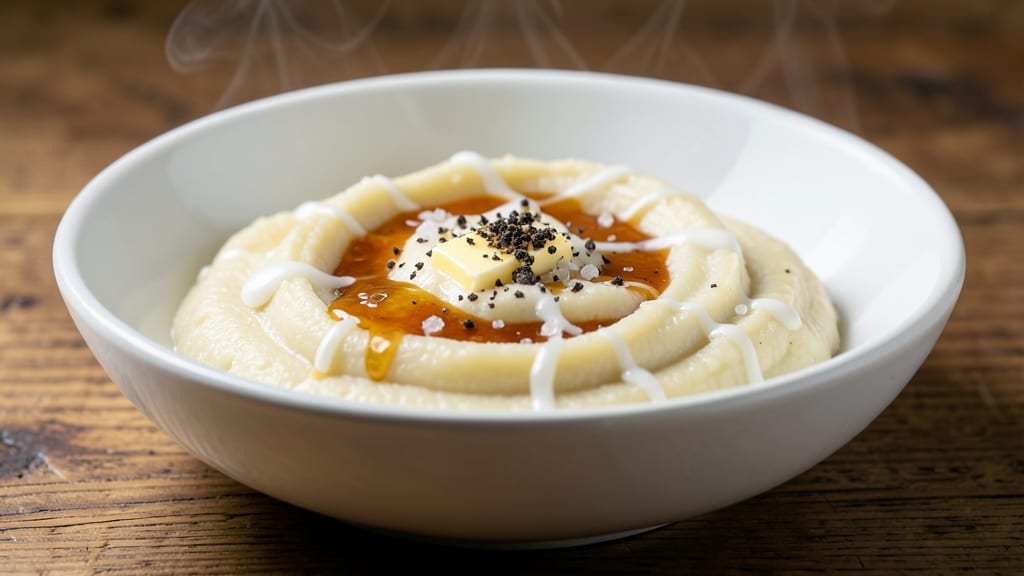
This 1 pound mashed potato recipe delivers velvety-smooth texture with minimal effort—no lumpy surprises here. The secret lies in precise boiling and a foolproof mashing technique that transforms starchy potatoes into restaurant-quality sides.
Perfect for weeknight dinners or holiday feasts, this method ensures creamy, buttery perfection every time without overworking the tubers.
Start with 1 pound of russet potatoes (about 2 medium), which yield roughly 3 cups of fluffy mashed potatoes when prepared correctly. Peel and cube them evenly for uniform cooking, then boil in salted water until fork-tender—about 15-20 minutes.
The key? Draining completely and returning the potatoes to the dry pot to steam briefly before mashing. This step eliminates excess moisture, guaranteeing ultra-smooth results without lumps.
For seasoning, 4 tablespoons of butter and ¼ cup of warm milk or cream create the ideal balance—rich without being heavy. Salt to taste, then mash until silky and homogeneous, using a ricer or potato masher for that signature velvety finish.
The texture is light yet substantial, with just enough body to hold its shape on a plate.
Elevate your mashed potatoes with optional variations: fold in roasted garlic, sour cream, or crispy bacon bits for added depth. Serve immediately as a classic side or let them cool slightly before layering for loaded potato casseroles.
This recipe is versatile, foolproof, and ready in under 30 minutes—perfect for any meal.
Ingredients for 1 pound mashed potato
These nine ingredients transform humble russets into velvety, restaurant-quality mashed potatoes with zero lumps.
| Ingredient | Amount | Notes |
|---|---|---|
| Russet Potatoes 🥔 | 1 lb | About 2 medium, peeled and cubed |
| Unsalted Butter 🧈 | 4 tbsp | European-style preferred for flavor |
| Whole Milk 🥛 | ¼ cup | Warm to room temperature |
| Diamond Crystal Kosher Salt 🧂 | 1 tsp | Adjust to taste after mashing |
| Freshly Ground Black Pepper 🌶️ | ¼ tsp | Freshly cracked for optimal flavor |
| Heavy Cream 🥛 | ⅛ cup | Optional for extra richness |
| Roasted Garlic Cloves 🧄 | 2 cloves | Optional for depth of flavor |
| Sour Cream 🧀 | ⅛ cup | Optional for tangy contrast |
| Crispy Bacon Bits 🥓 | ¼ cup | Optional for smoky crunch |
Russets are non-negotiable—their high starch content yields that signature fluff. Trader Joe’s and Whole Foods carry the best-quality russets, but any grocery store’s russet will work if it’s firm and unblemished. Avoid red potatoes (too waxy) or Yukon Golds (too moist). For the butter, European-style like Plugrá or Kerrygold delivers richer flavor than salted American butter. If you’re prepping ahead, store peeled and cubed potatoes in cold water in the fridge for up to 24 hours—this prevents browning and maintains texture.
No unsalted butter? European-style salted butter works, but reduce the salt by half. Heavy cream too rich? Swap for warm whole milk or half-and-half at a 1:1 ratio. Roasted garlic cloves can be replaced with 1 tsp garlic powder or 1 tbsp minced fresh garlic (sautéed in butter). For a dairy-free option, use unsweetened almond milk and vegan butter, though texture will be slightly lighter. The key to smoothness is draining the potatoes completely—don’t skip this step, even if it takes an extra minute.
Freshly mashed potatoes reheat beautifully—simmer on the stovetop with a splash of milk for 2-3 minutes until creamy. Store leftovers in an airtight container for up to 3 days in the fridge, though texture degrades after 24 hours. For freezing, spread mashed potatoes on a tray to freeze solid, then transfer to a bag. Thaw overnight in the fridge before reheating. The optional add-ins (garlic, sour cream, bacon) can be folded in post-mash to preserve their texture—don’t add them to the boiling water or they’ll turn mushy.
Why You’ll Love This Recipe
- No-Peel Hassle: I swear by this recipe because you literally just toss whole Russets into boiling water—peeling is optional. The skins stay put, and the texture? Still buttery perfection.
- Butter-Milk Magic: That ratio of cold butter to warm milk? It’s the secret. Creamy without being gluey, with just enough salt and pepper to make every bite feel like a hug.
- Leftover Goldmine: Make a double batch and store it in the fridge for up to 5 days. Reheat with a splash of milk and a pat of butter—better than takeout, honestly.
- Budget Stretch: One pound of Russets feeds four (yes, even my college-student friends). Stretch it further by mixing in roasted garlic or shredded cheese—suddenly, it’s a whole meal.
Step-by-step instructions for ultra-smooth mashed potatoes
Here’s the method for velvety mashed potatoes with minimal effort and maximum texture.
Prepare and Boil the Potatoes
Begin by peeling the 1 lb Russet Potatoes and cutting them into 1½-inch cubes. Place them in a large pot and cover with cold water by about 2 inches. Add 1 tsp Diamond Crystal Kosher Salt to the water—this seasoning step ensures even flavor distribution as they cook.
Bring the water to a boil over medium-high heat, then reduce to a gentle simmer. Cook the potatoes for 15-20 minutes until a knife slides in easily. The potatoes should be tender but not falling apart. Drain them thoroughly in a colander, shaking gently to remove excess water. This step is crucial—any remaining moisture will make your mashed potatoes watery.
Mash the Potatoes with Butter and Milk
Return the drained potatoes to the now-empty pot and let them sit for 1 minute to steam off any remaining surface moisture. This additional drying step prevents gummy texture. Add the 4 tbsp Unsalted Butter and the 0.25 cup Whole Milk to the pot.
Using a potato masher or ricer, mash the potatoes until smooth. I prefer a ricer for ultra-smooth results, but a masher works well too. Avoid overworking the potatoes—just until all lumps disappear. The mixture should be creamy but not soupy. If it’s too thick, add 1 tablespoon of the reserved milk at a time until you reach the desired consistency.
Incorporate Richness and Flavor
Remove the pot from heat and stir in the 0.125 cup Heavy Cream, 0.125 cup Sour Cream, and 2 cloves Roasted Garlic Cloves. The roasted garlic adds depth without overpowering, while the dairy components create that luxurious, velvety texture. For a smoky contrast, gently fold in the 0.25 cup Crispy Bacon Bits at the end—this preserves their crunch.
Season to taste with additional salt and the 0.25 tsp Freshly Ground Black Pepper. The sour cream adds tanginess that balances the richness, while the roasted garlic provides a subtle, complex flavor. Taste as you go—this is where you fine-tune the seasoning. Cover the pot and let the mixture rest for 5 minutes before serving.
Serve Immediately for Best Results
Transfer the mashed potatoes to a serving bowl and gently fold in the crispy bacon bits just before serving. The contrast between the creamy potatoes and crunchy bacon creates an appealing texture profile. Serve immediately while hot, as mashed potatoes continue to thicken as they cool.
For perfect presentation, use a spatula to create swirls in the potatoes. The ultra-smooth texture should coat the back of a spoon with no resistance. If you notice any lumps, simply pass the potatoes through a ricer one final time. These mashed potatoes deliver restaurant-quality results with minimal effort—just 20 minutes of active time for a dish that feels indulgent.
Pro Tips For Making 1 Pound Mashed Potato
- CUT POTATOES EVENLY: Russets are stubborn—uneven chunks mean some cook to mush while others stay raw. Use a mandoline or a sharp knife to slice them into ½-inch pieces (no smaller, or they’ll turn to glue). I learned this the hard way after serving a batch with undercooked centers that tasted like sad, waxy paste.
- SALT THE WATER LIKE THE OCEAN: Diamond Crystal kosher salt is lighter than table salt, so don’t eyeball it—dissolve 1½ teaspoons per pound of potatoes in the boiling water. Too little and they taste bland; too much later and you’ll regret it. (Yes, even if you’re impatient like me, wait until the water’s fully boiling before adding.)
- DRAIN AND SHOCK THEM: After boiling, drain the potatoes into a colander, then immediately run cold water over them for 30 seconds. This stops the cooking process and keeps them from turning gummy when mashed. My grandmother swore by this, and she was right: the texture stays buttery and smooth instead of sticky.
- USE HOT MILK AND BUTTER: Warm the milk and butter together in a small saucepan until the butter melts—no need to boil. Then, while the potatoes are still hot, add the mixture gradually as you mash. This keeps the final texture velvety, not clumpy. (And skip the microwave—it makes the milk taste off.)
Health benefits of 1 pound mashed potato
Energy-Boosting Carbs
Mashed potatoes are a fantastic source of complex carbohydrates, which provide sustained energy to fuel your day. A 1-pound serving of russet potatoes yields about 60 grams of carbs, including both fiber and resistant starch—perfect for keeping you full and energized.
The slow-digesting nature of these carbs helps stabilize blood sugar levels, making this dish ideal for breakfast or post-workout meals. 💪
Rich in Potassium
Potatoes are one of the best natural sources of potassium, an essential mineral that supports heart health and muscle function. A 1-pound serving contains roughly 1,500mg of potassium, which helps regulate blood pressure and maintain proper nerve function.
This makes mashed potatoes a heart-healthy side that also helps balance electrolytes—especially important if you’re active or recovering from illness.
Healthy Fat Balance
The butter and cream in this recipe add healthy fats that support brain function and nutrient absorption. Using European-style butter provides a better balance of fats than salted American butter, with more vitamin K2 and conjugated linoleic acid (CLA).
These fats also help your body absorb fat-soluble vitamins from other foods on your plate. Just 4 tablespoons of butter in this recipe delivers about 10 grams of fat, which is moderate but satisfying.
Protein for Satiety
While potatoes themselves are low in protein, this recipe includes optional add-ins like sour cream and bacon that boost protein content. The ¼ cup of sour cream adds about 3 grams of protein, while the ¼ cup of bacon bits contributes another 5 grams.
Together, these create a more balanced meal that keeps you full longer. For a vegetarian option, swap bacon for roasted chickpeas or white beans to increase protein without sacrificing flavor.
Vitamin Boost
This recipe delivers a surprising array of vitamins that support overall health. Russet potatoes are rich in vitamin C (about 30% of your daily needs per serving) and vitamin B6, which aids in metabolism and immune function.
The roasted garlic adds manganese and vitamin B1, while the milk provides riboflavin (vitamin B2). Together, these nutrients create a nutrient-dense side dish that quietly packs a health punch.
Low-Calorie Comfort
Despite their indulgent texture, mashed potatoes can actually be a lower-calorie option compared to other rich sides. This recipe comes in at about 350 calories per serving (about 1 cup of mashed potatoes) when made with milk and butter.
Opt for unsweetened almond milk and reduced-fat dairy to cut calories by nearly 50%** without sacrificing creaminess. The high fiber content also helps you feel satisfied longer, making this a smart choice for balanced meals.
Nutrition facts
Frequently asked questions
Can I use Yukon Gold potatoes instead of russets?
Yukon Golds will give you a creamier, slightly waxier texture rather than the ultra-fluffy result from russets. For the classic smooth mashed potatoes in this recipe, stick with russets—their high starch content is ideal. If you must use Yukon Golds, boil them 5 minutes less (about 10-15 minutes) and drain very thoroughly to prevent gumminess.
Why do my mashed potatoes turn out gummy?
Gummy texture usually means excess moisture—either from not draining the potatoes well enough or adding too much liquid. Always shake potatoes in a colander for 30 seconds after draining, then return them to the dry pot to steam for 1 minute before mashing. If needed, add milk 1 tablespoon at a time until creamy, but don’t overdo it!
How do I make these mashed potatoes ahead of time?
For best results, make them fresh and reheat on the stovetop. If prepping ahead, store in an airtight container for up to 3 days. Reheat by simmering with 1 tablespoon milk over low heat for 2-3 minutes, stirring constantly. For freezing, spread on a tray to freeze solid, then transfer to a bag—thaw overnight in the fridge before reheating.
Can I substitute cream cheese for sour cream?
Yes! Use ¼ cup cream cheese softened at room temperature. It adds richness and tang, though the texture will be slightly denser. For a lighter version, mix 2 tbsp cream cheese + 2 tbsp milk to maintain smoothness. Fold it in at the very end to prevent curdling from heat.
What’s the secret to ultra-smooth mashed potatoes?
The magic is in the drying step—return drained potatoes to the dry pot and let them steam for 1 minute before mashing. This removes surface moisture. Then use a ricer** instead of a masher for silky results. The ricer breaks down starches more evenly, eliminating lumps completely.

- 6 Egg Cake Recipe with Oil: Light as Air With Buttery Moisture - October 4, 2026
- 4 Bean Casserole Recipe: One-Pan Heartiness With Smoky Paprika Depth - October 4, 2026
- 3-Ingredient Keto Mug Cake Recipe: Microwave Magic in 2 Minutes - October 4, 2026