
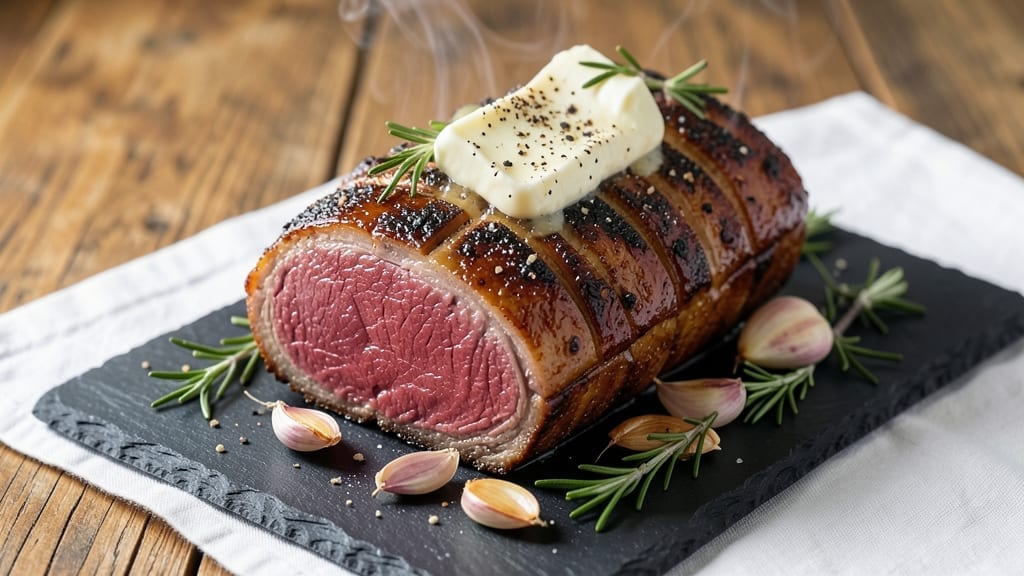
A 3.5 lb sirloin tip roast transforms into melt-in-your-mouth perfection with the right low-and-slow approach—this recipe delivers restaurant-worthy tenderness and caramelized edges without fuss. The secret lies in proper seasoning, precise temperature control, and letting the roast rest before slicing, ensuring every bite stays juicy and flavorful.
What sets this method apart is how it converts tougher cuts into something so tender, even the most skeptical eaters will ask for seconds.
This recipe focuses on simplicity and control: a basic salt-and-pepper rub enhances the beef’s natural richness, while slow roasting at a consistent 275°F breaks down connective tissue for maximum tenderness.
The key is patience—allowing the roast to cook until it reaches 130°F internal temperature (medium-rare) ensures a perfect balance of doneness and moisture. No need for fancy equipment; a standard oven and meat thermometer are all you’ll need to achieve professional results at home.
By the time you slice into this roast, you’ll uncover a center that’s impossibly tender, surrounded by a crust that’s rich and caramelized from the slow cooking process. The juices will flow freely, creating a sauce that elevates every bite.
This method works equally well for family dinners or special occasions, delivering a main course that feels like a celebration without the complexity.
Pair with classic sides like roasted garlic mashed potatoes and sautéed green beans to complete the meal. The roast’s natural richness stands up to bold flavors, making it versatile enough for various occasions while always delivering that juicy, satisfying texture you’re after.
Let’s get started on creating your perfect roast.
Ingredients for 3.5 lb sirloin tip roast
Six ingredients transform this tough cut into melt-in-your-mouth perfection—juicy, caramelized, and restaurant-worthy.
| Ingredient | Amount | Notes |
|---|---|---|
| Sirloin Tip Roast 🥩 | 3 ½ lb | Center-cut for even cooking |
| Kosher Salt 🧂 | 1 ½ tbsp | Diamond Crystal preferred |
| Freshly Ground Black Pepper 🌶️ | 1 tbsp | Coarse grind for texture |
| Unsalted Butter 🧈 | ½ cup | Cold, cubed for crust |
| Fresh Rosemary 🌿 | ½ cup | Chopped, stems removed |
| Garlic Cloves 🧄 | 6 cloves | Smashed, skin-on |
| Olive Oil 🫒 | 2 tbsp | For basting |
| Beef Tallow or Ductile Fat 🧈 | 2 tbsp | For extra richness (optional) |
| Yellow Onion 🧅 | 1 whole | Quartered for pan juices |
| Red Wine 🍷 | 1 cup | Bold, dry variety |
| Beef Broth 💧 | 1 cup | Homemade preferred |
| Fresh Thyme 🌿 | ¼ cup | Leaves only |
| Balsamic Vinegar 🍶 | 1 tbsp | For finishing |
The sirloin tip roast is where magic happens—look for a center-cut piece with good marbling at your butcher or grocery store’s meat counter. Costco or Whole Foods often carry pre-trimmed roasts, but if you’re trimming yourself, leave about a quarter-inch of fat for flavor. Freshness matters here: the roast should smell clean and bright, with a vibrant red color. If you’re unsure about the cut, ask the butcher for ‘top round tip’—it’s the same muscle group but sometimes more accessible. The rosemary and thyme should be fragrant and green, not wilted or brown around the edges—Trader Joe’s or local farmers markets are great spots for fresh herbs.
No beef tallow? Olive oil or duck fat works just as well for that golden crust. Running short on red wine? Beef broth with a splash of balsamic mimics the depth perfectly. The garlic cloves can be roasted whole with the onions for extra flavor—just squeeze them out of their skins after roasting. For the butter, don’t melt it ahead of time—cold cubes create the best crust when they render down. If you’re prepping ahead, store the roast uncovered in the fridge for up to 2 days to let it dry-brine slightly, which enhances the crust. The onion and garlic can be prepped a day ahead and refrigerated in a sealed container.
This roast shines when made ahead—rest it at room temperature for 1 hour before cooking for even doneness. The finished roast keeps beautifully for 4 days in the fridge, wrapped tightly in butcher paper (not plastic) to retain moisture. For leftovers, reheat slices in a skillet with a splash of beef broth to revive that juicy texture. Freezing isn’t ideal for this cut, but if you must, portion and freeze within 3 months. The pan juices? Strain and reduce them for a quick sauce—just add a splash of red wine and simmer until thickened.
Why You’ll Love This Recipe
- Minimal Prep, Maximum Impact: I swear by this roast—just a quick pat of salt, pepper, and crushed rosemary sprigs, then a slab of butter rubbed right into the meat. No fancy marinades, no chopping veggies for hours. Honestly, the hardest part is waiting for the oven to preheat.
- Rosemary Butter Magic: That moment when you slice into the roast and the rosemary-infused butter melts into every bite? It’s like a little flavor explosion. The crust gets perfectly crisp, but inside, it’s tender enough to fall apart—no dry, chewy bits here.
- Weeknight or Weekend Hero: Between us, this roast works for everything. Toss it with mashed potatoes for a lazy Sunday, slice it thin for sandwiches when the kids are home from school, or serve it with a simple green salad for a fancy-ish dinner. (Yes, even on a Tuesday night.)
- Leftovers That Don’t Suck: I make this roast on purpose so I have leftovers—because reheated beef isn’t usually a win. But this? Slice it thin, pan-sear the pieces until crispy, and suddenly you’ve got a new weeknight dinner. Budget-friendly, too—one roast feeds my family for days.
Step-by-step instructions for slow-roasted sirloin tip roast
Here’s how to transform a simple roast into melt-in-your-mouth perfection with rich flavors and caramelized edges.
Prep and Season the Roast for Maximum Flavor
Remove the sirloin tip roast from the refrigerator and let it sit at room temperature for 30 minutes—this ensures even cooking. Pat it dry completely with paper towels, focusing on the fat cap and any moisture pockets. Dry meat sears better and develops that coveted crust.
In a small bowl, combine the 1.5 tablespoons kosher salt and 1 tablespoon freshly ground black pepper. Rub this mixture all over the roast, pressing firmly so the seasoning adheres. Then, mix the 0.5 cup chopped fresh rosemary and 6 smashed garlic cloves (skin-on) with the 0.5 cup cold cubed unsalted butter and 2 tablespoons beef tallow until evenly distributed. Spread this herb butter mixture evenly over the roast, working it into the crevices.
Sear the Roast for Deep Flavor and Color
Preheat your oven to 425°F with a rack positioned in the lower third. Heat a large oven-safe skillet over medium-high heat until very hot. Add the 2 tablespoons olive oil and swirl to coat the bottom evenly. Place the roast fat-side down in the skillet and sear for 4-5 minutes until the fat renders and the surface develops a deep golden-brown crust.
Flip the roast and sear the other side for another 4-5 minutes. The goal is to create a flavorful crust that locks in juices during the slow roast. Transfer the skillet to the preheated oven, placing the roast on the rack for even heat circulation.
Slow-Roast to Juicy Perfection
Roast the sirloin tip for 2 hours at 425°F, then reduce the heat to 325°F and continue roasting for another 1.5 to 2 hours, or until the internal temperature reaches 130°F for medium-rare (use a meat thermometer inserted into the thickest part). The low-and-slow approach breaks down connective tissue, resulting in fork-tender meat.
About 30 minutes before the roast is done, add the 1 whole quartered yellow onion, 1 cup red wine, and 1 cup beef broth to the skillet. This creates a flavorful pan sauce while keeping the roast moist. The wine will reduce, and the onions will caramelize, adding depth to every bite.
Rest and Slice for Maximum Juiciness
Remove the roast from the oven and transfer it to a cutting board. Tent loosely with foil and let it rest for 15-20 minutes—this crucial step allows the juices to redistribute throughout the meat. Skipping this will result in dry slices. While it rests, skim any excess fat from the pan juices and stir in the 0.25 cup fresh thyme leaves and 1 tablespoon balsamic vinegar.
Slice the roast against the grain into ¼-inch thick slices. Serve immediately with the pan sauce spooned over the top. The result should be tender, juicy slices with a caramelized crust and layers of herb-infused flavor. Pair with roasted vegetables or crusty bread to soak up every last drop of that delicious pan sauce.
Pro Tips For Making 3.5 Lb Sirloin Tip Roast
- Sear Until Dark Brown: Don’t just touch the meat with your pan—get that roast screaming hot first, then press it down until it releases a deep, caramelized crust. I used to rush this and end up with pale, flavorless slices. Two minutes per side, no excuses.
- Salt Like You Mean It: Generously coat the roast with kosher salt at least 4 hours ahead—or overnight if you’re planning ahead. Fresh rosemary and butter won’t save you if the seasoning is half-hearted. Trust me, your knife will thank you later.
- Avoid the Crowd Rush: When basting with butter and rosemary, resist the urge to pile everything on top. Instead, spoon melted butter over the roast in thin layers—it’ll render faster and create a glossy finish. Overcrowding just steams the meat instead of searing it.
- Test with a Thermometer: Pull that roast at 125°F internal temp—yes, it’ll rise to 130°F while resting. I learned this the hard way by cutting into a rare slice that was still gray inside. A cheap instant-read thermometer is worth every penny here.
Perfect pairings for this dish
Classic Sides
Roasted garlic mashed potatoes bring rich, buttery comfort to every bite of your sirloin tip roast. Use 2 lbs Yukon Gold potatoes, boiled until tender, then mashed with ½ cup unsalted butter, ½ cup heavy cream, and 4 roasted garlic cloves.
The creaminess balances the roast’s caramelized edges perfectly. 🥔
Sautéed green beans with crispy shallots add freshness and crunch. Toss 1 lb green beans with 2 tbsp olive oil, 3 sliced shallots, and 1 tsp lemon zest, then roast at 425°F for 12 minutes.
Finish with toasted almonds for texture and a splash of white wine for brightness.
Bold Sauces
A red wine reduction sauce elevates the roast to restaurant quality. Deglaze the pan with 1 cup dry red wine after roasting, then simmer with 2 tbsp beef broth and 1 tsp Dijon mustard until thickened. Drizzle over slices for a tangy, velvety finish. 🍷
Creamy horseradish sauce adds a spicy kick. Mix ½ cup sour cream, 1 tbsp prepared horseradish, and 1 tsp fresh dill. Serve on the side for guests who love heat—just ½ tsp per serving delivers a zesty punch.
Crusty Breads
Freshly baked baguette slices soak up the pan sauce beautifully. Toast them in the oven until golden, then rub with 1 garlic clove and a pinch of salt. Serve alongside the roast for a rustic touch that feels like a Parisian bistro. 🥖
For a heartier option, try crusty sourdough with a honey butter dip. Mix 2 tbsp softened butter with 1 tbsp honey and a pinch of flaky sea salt. The sweetness contrasts the savory roast wonderfully.
Vegetable Medleys
Roasted root vegetables add earthy depth. Toss carrots, parsnips, and beets with 2 tbsp olive oil, 1 tbsp maple syrup, and ½ tsp rosemary, then roast at 400°F for 30 minutes. Their caramelized sweetness complements the roast’s richness. 🥕
A simple arugula salad with lemon vinaigrette cuts through the richness. Toss 4 cups arugula with 2 tbsp olive oil, 1 tbsp lemon juice, and 1 tbsp shaved Parmesan. The peppery bite refreshes your palate between bites of tender roast.
Nutrition facts
Frequently asked questions
Why does the recipe call for resting the roast before slicing?
Resting allows the meat’s juices to redistribute evenly throughout the fibers, preventing them from pooling on the cutting board. A 15-20 minute rest ensures every slice stays juicy and tender rather than dry. This is especially critical for tougher cuts like sirloin tip that rely on low-and-slow cooking.
Can I cook this roast in a smoker instead of the oven?
For a smoky flavor, cook at 250-275°F with hickory or applewood until reaching 130°F internal. Use the same herb butter rub but wrap the roast in butcher paper after the initial sear to prevent drying. The smoking process adds depth while maintaining tenderness.
What if my roast finishes at 130°F but still feels tough?
This usually means the roast wasn’t cooked long enough at the lower temperature. Extend the 325°F phase by 30-60 minutes—sirloin tip needs time to break down connective tissue. For extra tenderness, slice against the grain and serve with a red wine reduction to help tenderize each bite.
How do I adjust this recipe for a larger or smaller roast?
For every additional pound, add 15-20 minutes to total cooking time. Scale seasonings by 10% per pound (e.g., 1.8 lb roast needs 1.35 tbsp salt). Keep the same temperature profile—just extend the 325°F phase proportionally. A meat thermometer is your best friend here!
Can I make this ahead of time for a dinner party?
Yes! Cook the roast completely, then chill overnight. Reheat slices in a skillet with beef broth to restore moisture. The flavors actually improve after resting. For the sauce, make it fresh before serving—it thickens when cold. This method lets you focus on plating when guests arrive.

- 6 Egg Cake Recipe with Oil: Light as Air With Buttery Moisture - October 4, 2026
- 4 Bean Casserole Recipe: One-Pan Heartiness With Smoky Paprika Depth - October 4, 2026
- 3-Ingredient Keto Mug Cake Recipe: Microwave Magic in 2 Minutes - October 4, 2026