
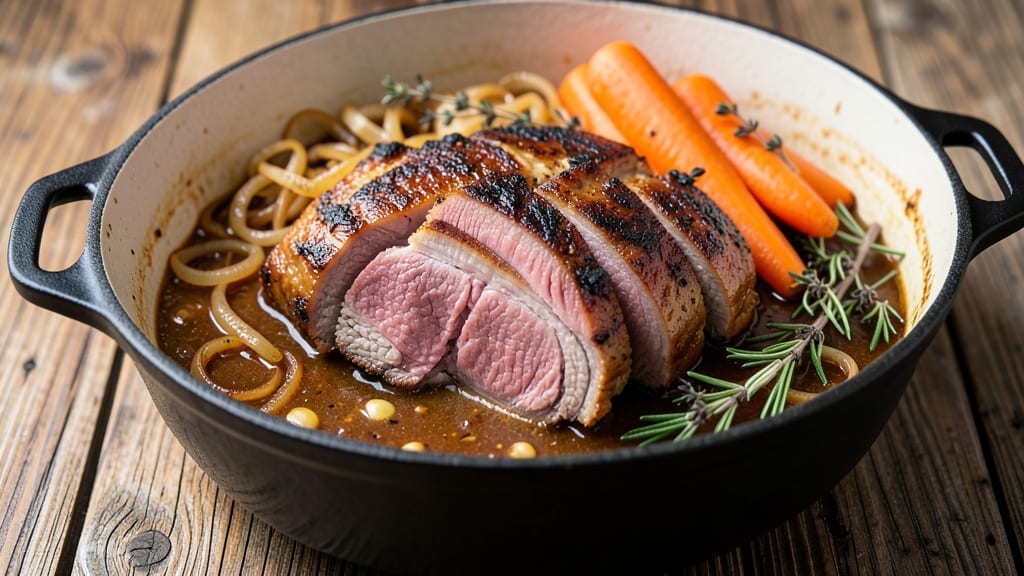
A 1-pound pot roast transforms tough cuts into melt-in-your-mouth perfection with minimal effort—this herb-infused braise delivers restaurant-quality tenderness in your own kitchen. The secret lies in slow cooking, where tough muscle fibers break down into silky, fork-tender meat that practically dissolves at the touch of a fork.
What makes this recipe work is the combination of aromatic herbs, a flavorful liquid, and patient cooking—no fancy techniques required, just time and attention to detail that pays off in every bite.
This method works beautifully for a single serving or can easily be scaled up for a small meal, making it ideal for weeknight dinners or special occasions.
The roast cooks submerged in a fragrant liquid—typically broth or wine—infused with garlic, thyme, and bay leaves, which penetrate the meat and create a deeply flavorful sauce. The result is a dish that feels luxurious yet remains approachable for home cooks, with minimal prep and hands-off cooking time.
By the time you serve this pot roast, you’ll have a fall-apart tender centerpiece that pairs perfectly with roasted vegetables, mashed potatoes, or crusty bread to soak up the rich braising liquid.
The aroma alone will have everyone anticipating dinner, and the texture—juicy, flavorful, and effortlessly impressive—will make it a staple in your recipe rotation. Here’s how to achieve it every time.
Whether you’re feeding one or a few, this recipe delivers consistent results without requiring specialized equipment. The slow-cooking process ensures the meat stays moist and tender, while the herbs and aromatics create layers of flavor that elevate simple ingredients into something extraordinary.
Let’s get started on creating your most tender pot roast yet.
Ingredients for 1 pound pot roast
Pantry staples plus a few fresh aromatics—this 1-pound pot roast delivers restaurant-quality tenderness.
| Ingredient | Amount | Notes |
|---|---|---|
| Chuck Roast 🥩 | 1 lb | Tough cut for braising, trim excess fat |
| Yellow Onion 🧅 | 1 whole | Chopped into large chunks |
| Carrots 🥕 | 2 medium | Whole, unpeeled for color |
| Garlic Cloves 🧄 | 4 cloves | Smashed for deeper flavor |
| Fresh Thyme 🌿 | 2 sprigs | Or 1 tsp dried thyme |
| Fresh Rosemary 🌿 | 1 sprig | For earthy aroma |
| Bay Leaves 🍃 | 2 whole | Standard dried leaves |
| Beef Broth 💧 | 1 ½ cups | Low-sodium preferred |
| Dry Red Wine 🍷 | ½ cup | Bold variety like Cabernet |
| Olive Oil 🫒 | 1 tbsp | For searing meat |
| Salt 🧂 | 1 ½ tsp | Kosher or sea salt |
| Black Peppercorns 🌶️ | ½ tsp | Freshly cracked |
| All-Purpose Flour 🌾 | 1 tbsp | For dusting meat |
The chuck roast is your secret weapon here—look for well-marbled cuts at the butcher counter, not the pre-packaged ones. Costco or Whole Foods usually have great selections, but even the regular grocery store will work if you check for that white fat streaking through the meat. Trim excess fat if you’re health-conscious, but leave some for flavor. The carrots and onion don’t need peeling—their skins add color and texture to the braising liquid. Fresh thyme and rosemary make all the difference (dried works in a pinch, but fresh has that bright aroma), and I always grab extra sprigs since they’re so aromatic.
No red wine? Beef broth with a splash of balsamic vinegar works perfectly fine. Short on thyme? Fresh oregano at the same amount gives a similar Mediterranean vibe. The flour is just for dusting—skip it if you’re avoiding gluten. For the broth, low-sodium versions let you control the salt better. If you’re using dried herbs, toast them in a dry pan for 30 seconds first to wake up their flavors. The garlic can be minced or smashed—both work, but smashed releases more flavor into the liquid.
This braise tastes even better the next day, so make extra. Store in an airtight container in the fridge for up to 4 days, or freeze portions for 3 months. The sauce thickens as it cools, so add a splash of broth when reheating. I always portion mine into individual containers—perfect for quick lunches. The meat should be fork-tender, so if it’s not quite there after 3 hours, give it another hour. Patience is key here—don’t rush the process.
Why You’ll Love This Recipe
- One-Pan Magic: I swear by this—just toss the chuck roast, chopped onion, and whole carrots into a Dutch oven with garlic and thyme, add broth, and walk away. No cutting boards, no mess, no stress.
- Thyme for Taste: That fresh thyme and garlic? It turns tough roast into melt-in-your-mouth perfection—crispy edges, tender inside, with carrots so sweet they disappear first. (Between us, my husband’s the first to finish his.)
- Leftovers That Win: Make it once, eat it three times. The flavors deepen overnight, and reheating? Just a splash of broth in the pan—no drying out, no sad meals. My freezer’s full of these because it’s that good.
- Budget Meal, Big Impact: A pound of chuck roast feeds two with sides, or stretches to four with rice. Onions and carrots are cheap, thyme lasts forever, and you’re left with a dish that feels fancy without breaking the bank. (Yes, even on a Tuesday night.)
Step-by-step instructions for herb-infused pot roast
Here’s how to transform a tough chuck roast into melt-in-your-mouth perfection using simple braising techniques.
Sear the Chuck Roast for Deep Flavor
Pat the 1 lb chuck roast completely dry with paper towels—this ensures a good sear. Heat 1 tablespoon olive oil in a heavy Dutch oven over medium-high heat until shimmering. Place the roast in the pot and sear for 3-4 minutes per side until it develops a deep, golden-brown crust. I press down gently on the roast during the first minute—this prevents it from curling and ensures even contact with the pan.
While the roast sears, prepare the aromatics: chop the 1 whole yellow onion into large chunks and peel the 2 medium carrots (leave them whole for easy handling). Smashed 4 cloves garlic release more flavor than minced. Once the roast is browned, remove it from the pot and set aside on a plate.
Build the Herb-Packed Base
In the same Dutch oven (don’t wipe out the browned bits—they’re packed with flavor), add the chopped onion, carrots, and garlic. Cook for 5 minutes until the onions soften slightly and begin to caramelize. Sprinkle in 1 tablespoon all-purpose flour and stir for 1 minute to remove any raw taste.
Add 1.5 teaspoons salt, 0.5 teaspoon black peppercorns, 2 sprigs fresh thyme, 1 sprig fresh rosemary, and 2 whole bay leaves. Stir everything together for 30 seconds to coat the vegetables in the aromatic spices. This step layers the foundation for your roast’s rich, herby flavor profile.
Braise Until Fork-Tender
Return the seared chuck roast to the Dutch oven. Pour in 0.5 cup dry red wine and scrape up any browned bits from the bottom—this deglazes the pan and adds depth to the sauce. Bring to a simmer over medium heat for 2 minutes until the wine mostly evaporates.
Add 1.5 cups beef broth, then cover the pot with a tight-fitting lid. Transfer to a 325°F oven and braise for 2.5 to 3 hours. The roast is done when it’s fork-tender—the meat should pull apart easily with minimal resistance. I check at the 2-hour mark since ovens vary in heat distribution.
Rest and Serve with Pan Sauce
Remove the roast from the oven and transfer it to a cutting board. Tent loosely with aluminum foil and let it rest for 15 minutes. This resting period allows the juices to redistribute throughout the meat, ensuring every bite stays moist and flavorful.
While the roast rests, skim any excess fat from the surface of the braising liquid (if desired). The remaining sauce should coat the back of a spoon—if it’s too thin, simmer uncovered for 2-3 minutes to reduce slightly. Slice the roast against the grain into ¼-inch thick pieces and serve with the pan sauce spooned over the top.
Pro Tips For Making 1 Pound Pot Roast
- SEAR THE ROAST FIRST: Chuck roast is forgiving, but a quick 3-4 minute sear in a hot Dutch oven with oil—before adding anything else—builds flavor you won’t get from slow cooking alone. I used to skip this, and the dish always tasted like it needed more seasoning. Trust me, the crust makes a difference.
- CUT ONIONS IN EVEN SLICES: Thin, even slices of onion caramelize faster and don’t turn to mush. Aim for ¼-inch thickness—thicker pieces stay crunchy while thinner ones melt into the sauce. (Yes, I’ve burned both ends of this spectrum.)
- DON’T OVERCROWD THE POT: If your carrots and onions are packed in like sardines, they’ll steam instead of brown. Spread them out in the first 10 minutes of cooking, then stir occasionally. Overcrowding is how you end up with sad, pale veggies.
- USE WHOLE THYME STEMS: No need to strip the leaves—just tie the stems with kitchen twine and toss them in whole. They’ll infuse the broth without turning it into thyme-flavored mush. (I learned this from my nonna, who called it “the lazy way.”)
Regional styles of this 1 pound pot roast
French Classic Braising
In France, pot roast is all about slow-cooked elegance with minimal fuss. The French technique focuses on low-and-slow braising with just a splash of dry white wine (like Sauvignon Blanc) instead of red, and a bouquet garni of parsley stems, thyme, and bay leaf tied together.
I’ve made this version countless times, and the key difference is the gentle simmer—French cooks often use a Dutch oven submerged halfway in water in the oven to maintain even moisture. Serve with buttery mashed potatoes and glazed carrots for a true bistro experience. 🍷
American Comfort Style
Here in the US, pot roast is a weeknight hero with bold flavors. The American approach often includes brown sugar (1-2 tablespoons) in the braising liquid for a subtle caramel note, and Worcestershire sauce (1 tablespoon) for umami depth.
I like to add potatoes and onions directly into the Dutch oven with the roast—this creates a hearty one-pot meal. Top with crusty bread to soak up the rich gravy. This version is perfect for family dinners or game day spreads. 🏈
Italian Osso Buco Style
For an Italian twist, transform your pot roast into osso buco-inspired braised veal—though chuck roast works beautifully too. The Italian method calls for white wine deglazing, tomato paste (1 tablespoon), and gremolata (lemon zest, garlic, parsley) at the end.
I’ve adapted this by adding a splash of milk (¼ cup) at the end to tenderize the meat further. Serve with risotto or polenta to soak up the romesco-inspired sauce. This version feels luxurious but stays true to home cooking. 🍋
German Sauerbraten Twist
German sauerbraten brings tangy, vinegar-marinated flavors to the table. For a German-inspired pot roast, marinate the chuck roast overnight in ½ cup red wine vinegar, 1 cup beef broth, 1 tbsp juniper berries, and 1 tbsp mustard seeds.
After braising, reduce the liquid into a thick, glossy sauce with a touch of honey (1 tablespoon) for balance. Pair with red cabbage and spätzle for a hearty, rustic meal. This method adds a bright acidity that cuts through the richness. 🌿
Modern Shortcut Version
No time for hours in the oven? Try this 3-hour slow cooker adaptation—perfect for busy weeknights. Sear the roast as directed, then transfer everything (including veggies and herbs) to a 6-quart slow cooker. Add the wine and broth, cover, and cook on low for 3 hours.
The slow cooker maintains even heat, so you get tender meat with minimal effort. I love this version for meat-and-three meals—just serve with store-bought sides. 💡
Nutrition facts
Frequently asked questions
Can I use a different cut of beef for this pot roast?
Chuck roast is ideal because its tough fibers break down beautifully during braising, but you can also use bottom round or short ribs. Avoid lean cuts like sirloin—they won’t become tender. For short ribs, reduce cooking time to 2 hours since they cook faster. The key is choosing a cut with good marbling for flavor.
How do I know when the pot roast is done?
The meat is ready when it’s fork-tender—meaning it should pull apart easily with minimal resistance. Insert a fork into the thickest part: if it slides in like butter, it’s perfect. For a 1 lb roast**, this usually takes 2.5-3 hours at 325°F. If it’s not quite there, add 15-30 minutes more. Never overcook or the meat will dry out.
Can I make this pot roast in a slow cooker?
Sear the roast first, then transfer everything (including veggies and herbs) to a 6-quart slow cooker. Add the wine and broth, cover, and cook on low for 3 hours or high for 2 hours. The slow cooker maintains even heat, so you’ll get tender meat with minimal effort. Just skip the oven step entirely.
What’s the best way to reheat leftover pot roast?
Reheat gently to preserve tenderness. Place slices in a skillet with 1-2 tablespoons broth or water, cover, and warm over low heat for 5-7 minutes. Alternatively, microwave for 60-90 seconds on 50% power with a damp paper towel covering. Never reheat dry—this makes the meat tough. The sauce thickens as it cools, so add a splash of broth when reheating.
Why did my pot roast turn out dry?
Dry pot roast usually means overcooking or insufficient liquid. Always use a tight-fitting lid to trap steam, and don’t exceed 3 hours at 325°F. If the meat looks dry, it might have been too lean—next time, choose a well-marbled cut. Also, avoid peeking at it too often, as opening the lid releases heat and moisture. The braising liquid should cover at least half the roast.

- 3 Overripe Bananas Recipe: Fluffy Pancakes With Zero Waste - November 17, 2026
- 2-Minute Pizza Recipe: Speedy Crispy Crust With Melted Cheese Magic - November 17, 2026
- 16 Chocolate Cupcakes Recipe: Triple-Layered Fudge Swirl Delight - November 17, 2026