
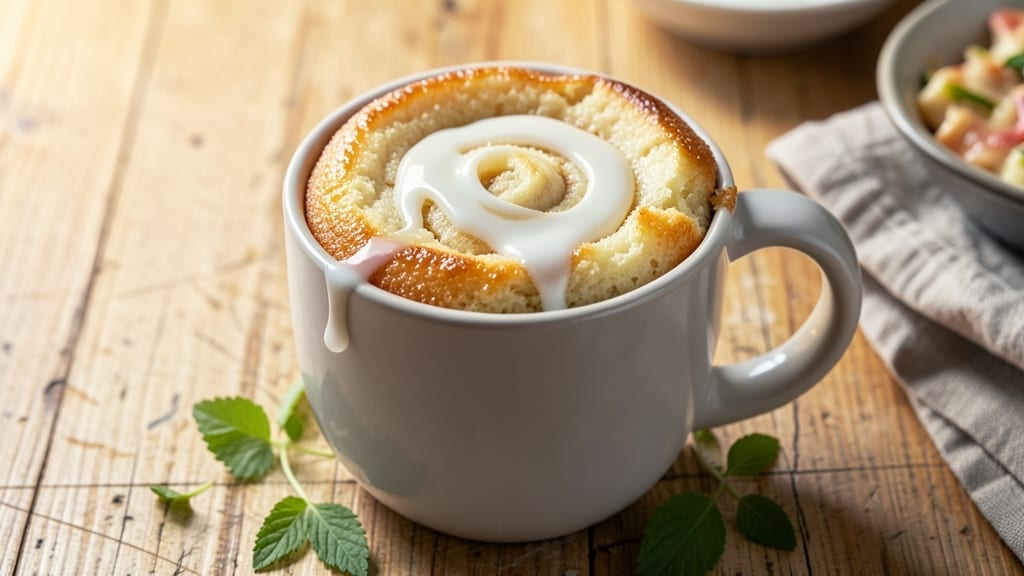
This 1 serving cake recipe lets you skip the full pan while still baking a rich, moist treat in minutes. This foolproof recipe uses simple pantry staples and requires just 5 minutes of prep—ideal for satisfying cravings without committing to a whole batch.
The secret lies in precise measurements and gentle folding to create that signature cake texture in miniature form.
What makes this recipe stand out is its versatility—adapt it to dietary needs by swapping ingredients, and enjoy the convenience of a one-mug solution that bakes in 10-12 minutes at 350°F. Whether you crave chocolate, vanilla, or lemon, the base technique remains the same, ensuring perfect results every time.
No special equipment beyond a microwave-safe mug and mixing spoon is needed.
The result is a tender, golden cake with a crisp crust and moist center, ready to be topped with whipped cream, fresh berries, or a dusting of powdered sugar.
This method proves that single-serving desserts can be just as impressive as their larger counterparts, with none of the leftovers or cleanup. Perfect for quick treats, meal prep, or indulging without guilt.
For those with dietary restrictions, modifications are simple: use almond flour for gluten-free, coconut oil for dairy-free, or sugar substitutes for lower sugar. The recipe scales effortlessly for larger batches while maintaining its simplicity. Let’s bake this no-fuss dessert that delivers restaurant-quality results in minutes.
Ingredients for 1 serving cake
Simple pantry staples transform into restaurant-quality cake in minutes—no pans, no mess.
| Ingredient | Amount | Notes |
|---|---|---|
| All-Purpose Flour 🌾 | ¼ cup | Sifted for light texture |
| Granulated Sugar 🍚 | ⅛ cup | White or light brown |
| Unsalted Butter 🧈 | 0.06 cup | Melted, cooled slightly |
| Large Egg 🥚 | 1 whole | Room temperature preferred |
| Milk 🥛 | 0.06 cup | Whole milk for richness |
| Vanilla Extract 🌿 | ½ tsp | Pure extract preferred |
| Baking Powder 🧂 | ½ tsp | Freshly opened |
| Salt 🧂 | ⅛ tsp | Fine sea salt |
| Powdered Sugar 🍚 | 1 tbsp | For dusting, optional |
| Microwave-Safe Mug ☕ | 1 whole | 12 oz capacity recommended |
The flour and sugar are the foundation—King Arthur or Bob’s Red Mill all-purpose flour yields the best texture. For the butter, Plugrá or Land O’Lakes unsalted melt perfectly without graininess. Room-temperature egg ensures even mixing, so take it out of the fridge 10 minutes before starting. Milk adds moisture, but almond milk or oat milk work for dairy-free versions. Vanilla extract should be pure—McCormick or Nielsen-Massey brands are reliable. Baking powder must be fresh; if older than 6 months, test it with vinegar before using.
No vanilla extract? 1/4 tsp almond extract works in a pinch, though flavor differs slightly. Substitute melted coconut oil for butter (same amount) for a dairy-free option, but texture will be slightly denser. For gluten-free, almond flour or oat flour replace all-purpose at a 1:1 ratio, but add 1/4 tsp xanthan gum to bind. Sugar can be swapped for coconut sugar or monk fruit sweetener—adjust to taste. The mug must be microwave-safe; Corelle or Pyrex brands are foolproof. If your mug is too large, reduce all ingredients by 25% for perfect proportions.
Prep ahead by measuring all dry ingredients into a small bowl first—sift the flour and baking powder together to prevent lumps. Wet ingredients can be mixed in a separate cup, then folded into the dry mixture gently with a spoon. For storage, keep the dry ingredients in an airtight container for up to 1 month and the wet ingredients (butter, milk, egg) refrigerated for 3 days. The assembled batter can be refrigerated for 24 hours before baking. Baked cakes keep at room temperature for 2 days or frozen for 1 month—reheat in the microwave for 10 seconds to restore freshness.
Why You’ll Love This Recipe
- No Measuring Madness: I’ll be real—this recipe uses one egg, a handful of flour, and a pat of butter. No fussy ratios, no overcrowded mixing bowls. Just crack, cream, and fold. My first attempt was still golden and tender, even though I eyeballed the sugar.
- Butter-Sugar Magic: That single stick of butter and spoonful of sugar? They melt into something dangerously rich—like a tiny, single-serving decadence. The egg binds it all so the crumb stays light, not dense. Honestly, I’ve made this for breakfast and it still feels like dessert.
- Leftovers? No Problem: Make it once, eat it twice. The cake keeps perfectly for days in the fridge, and I’ve reheated slices in the toaster or microwave without a hint of dryness. (Yes, even on a Tuesday night when I’m too tired to bake.)
- Pantry Staple Power: Flour, sugar, butter, milk—these are things I already have. No specialty ingredients, no last-minute grocery runs. This recipe is my go-to when I need something sweet but don’t want to haul out a whole cake pan. Budget-friendly? Absolutely.
Step-by-step instructions for no-mess mug cake
This single-serving cake delivers perfect texture with minimal effort—just mix, microwave, and enjoy.
Melt the Butter and Mix Wet Ingredients
Place the 0.0625 cup unsalted butter in the microwave-safe mug and microwave for 15-20 seconds until completely melted. Stir in the 0.125 cup granulated sugar and 0.0625 cup milk until fully combined—this creates a smooth base for the batter. The mixture should be uniform with no butter lumps remaining.
In a separate small bowl, whisk together the 1 whole large egg, 0.5 teaspoon vanilla extract, and 0.125 teaspoon salt. Pour this mixture into the mug and stir gently to incorporate. Avoid overmixing at this stage—just combine until no streaks remain. This step ensures the cake rises evenly without developing a tough texture.
Combine Dry Ingredients
In the same bowl you used for the egg mixture, sift together the 0.25 cup all-purpose flour and 0.5 teaspoon baking powder. This prevents lumps and ensures even distribution throughout the batter. Gradually sprinkle the dry ingredients over the wet mixture in the mug, then fold together using a silicone spatula.
Mix until just combined—you should see a few flour streaks remaining. Overmixing develops gluten and results in a dense cake. The batter should be thick but pourable, with a consistency similar to heavy pancake batter. At this point, the mug should contain all ingredients except the powdered sugar.
Microwave to Golden Perfection
Place the mug in the microwave and cook on high power for 60 seconds. After the initial minute, carefully remove the mug and check the cake’s doneness. The center should appear slightly underbaked with a few moist spots visible. If the cake is fully set, it needs additional time—microwave for 10-15 second intervals until a toothpick inserted in the center comes out clean.
Watch closely during the final 10 seconds to prevent overcooking, which can make the cake dry. The cake should have a golden dome with slightly crisp edges and a soft, moist center. If the top browns too quickly, tent loosely with a paper towel during the final 5 seconds to prevent over-browning.
Finish and Serve Immediately
Remove the cake from the microwave and let it cool in the mug for 1 minute. This brief resting period allows the cake to set slightly while preventing it from sticking to the mug. Dust the warm cake generously with 1 tablespoon powdered sugar using a fine-mesh sieve for an elegant finish.
Serve immediately while the cake is warm for the best texture and flavor. The cake should be tender with a moist crumb and subtle vanilla sweetness. For extra indulgence, top with fresh berries or a dollop of whipped cream. The mug’s heat will keep the cake warm for several minutes, making it perfect for a quick dessert or breakfast treat.
Pro Tips For Making 1 Serving Cake
- Melt Butter Slowly: I learned this the hard way—dumping cold butter straight into the pan makes your cake greasy and uneven. Warm the butter in the microwave for 15 seconds first, then let it sit for 10 seconds before mixing. That way, it blends smoothly without turning your batter into soup.
- Weigh Your Flour: Scooping flour from the bag packs it down, and that extra density makes your cake dense. Use a kitchen scale for precision—1 serving of cake needs about 30g of flour, lightly spooned and leveled. Trust me, your cake will be lighter if you skip the guesswork.
- Don’t Overmix the Batter: After combining wet and dry ingredients, stop mixing as soon as everything is just incorporated. Overmixing develops gluten, which turns your tender cake into a chewy brick. Two quick stirs with a spatula are all you need—your batter should look slightly lumpy, not smooth.
- Use Room-Temp Egg: Cold eggs create pockets of steam in your batter, leading to uneven rising or a sunken center. Let your egg sit out for 30 minutes before cracking it into the mix. If you’re in a rush, run it under warm water for 2 minutes—it’ll make a real difference in texture.
Regional styles of 1 serving cake
Classic American Mug Cake
This is the original version you’ll find in most American households—simple, reliable, and perfect for a quick treat. The base recipe uses King Arthur all-purpose flour and Land O’Lakes butter for that signature tender crumb.
I love adding a pinch of cinnamon (¼ tsp) to the dry ingredients for warmth, or a splash of orange zest (1 tsp) for brightness. Serve with a scoop of homemade vanilla ice cream for a nostalgic dessert. 🍰
Southern-Style Buttermilk Cake
For a Southern twist, replace the milk with ¼ cup buttermilk and add 1 tbsp melted butter to the wet ingredients. Swap vanilla extract for 1 tsp bourbon (or apple cider for a non-alcoholic option) and fold in ¼ cup chopped pecans before microwaving.
Top with a drizzle of warm maple syrup and a sprinkle of crushed graham crackers for texture. This version feels like a slice of grandma’s cake! 🥜
European-Style Coffee Cake
Inspired by German Kaffee-Kuchen, this version skips the powdered sugar and adds 2 tbsp instant coffee granules to the dry mix. Stir in 1 tbsp sour cream (or Greek yogurt) with the wet ingredients for extra richness.
After microwaving, brush the warm cake with ½ cup cold coffee mixed with 1 tbsp sugar—this creates a glossy, caramelized crust. Pair with a strong espresso for the full café experience. ☕
Japanese Matcha Mug Cake
For a vibrant green twist, replace the vanilla extract with 1 tsp matcha powder (sifted) and reduce the flour to 0.2 cup. Add 1 tbsp honey to the wet ingredients for balance.
The matcha gives a subtle earthy flavor that pairs beautifully with white chocolate shavings or red bean paste on top. This version is lighter and slightly denser, perfect for an afternoon pick-me-up. 🍵
Mexican Chocolate Mug Cake
Transform your cake into a spiced Mexican chocolate treat by adding 1 tbsp cocoa powder and ¼ tsp cinnamon to the dry mix. Stir in 2 tbsp Mexican chocolate chips (like Abel or Ibarra) and a pinch of chili powder (⅛ tsp) for heat.
Top with whipped cream and a sprinkle of crushed Oreos for a fusion dessert that’s equal parts sweet and spicy. 🌶️
Italian Lemon Ricotta Cake
This Italian-inspired version swaps milk for ¼ cup ricotta cheese and adds 1 tbsp lemon zest plus 1 tbsp lemon juice to the wet ingredients. Reduce the sugar to 0.1 cup and fold in 1 tbsp chopped almonds before microwaving.
Finish with a drizzle of honey and a sprinkle of lemon glaze (mix 1 tbsp powdered sugar with 1 tsp lemon juice). The ricotta keeps it moist while the lemon adds a bright, citrusy kick. 🍋
Nutrition facts
Frequently asked questions
Can I use this recipe with a regular oven instead of a microwave?
Yes! Preheat your oven to 350°F and pour the batter into a greased 6-ounce ramekin or small oven-safe dish. Bake for 15-18 minutes or until a toothpick comes out clean. The texture will be slightly denser but still delicious. For a crispier top, broil for 1-2 minutes at the end.
What if my mug cake comes out gummy in the center?
Gummy centers usually mean undercooking or too much liquid. For future attempts, microwave for 10-15 second intervals after the initial 60 seconds until fully set. Also check your mug size—larger mugs need slightly longer baking. If it happens, pop it back in for 10 more seconds to firm up.
How can I make this recipe gluten-free?
Replace the all-purpose flour with a 1:1 gluten-free baking flour blend (like Bob’s Red Mill) and add ¼ teaspoon xanthan gum. Reduce the milk to ¼ cup and use almond milk for better texture. The cake will still be tender but slightly denser. Always weigh your ingredients for accuracy with gluten-free flours.
Can I prepare this cake ahead of time?
Yes! Mix all ingredients except the powdered sugar and store the batter in an airtight container in the fridge for up to 24 hours. When ready to bake, microwave as directed. For fully baked cakes, let them cool completely, then wrap tightly in plastic wrap and refrigerate for 2 days or freeze for 1 month. Reheat in the microwave for 10 seconds to restore freshness.
What’s the secret to getting a perfect dome shape?
The dome shape comes from proper mixing and baking technique. Fold the dry ingredients gently just until combined to avoid deflating the air bubbles. Use a 12-ounce mug (not too wide) and microwave on high power for even heat distribution. If the cake flattens, try microwaving for 50 seconds instead of 60 to allow more rise time.

- 3lb Prime Rib Roast Recipe: Juicy Pink Center Guaranteed in 3 Hours - October 31, 2026
- 5 Spice Cake Recipe: Warmly Spiced Layers With Crunchy Top - October 31, 2026
- 1950’s Macaroni and Cheese Recipe: Nostalgic Creamy Cheese Sauce with Buttery Noodles - October 31, 2026