
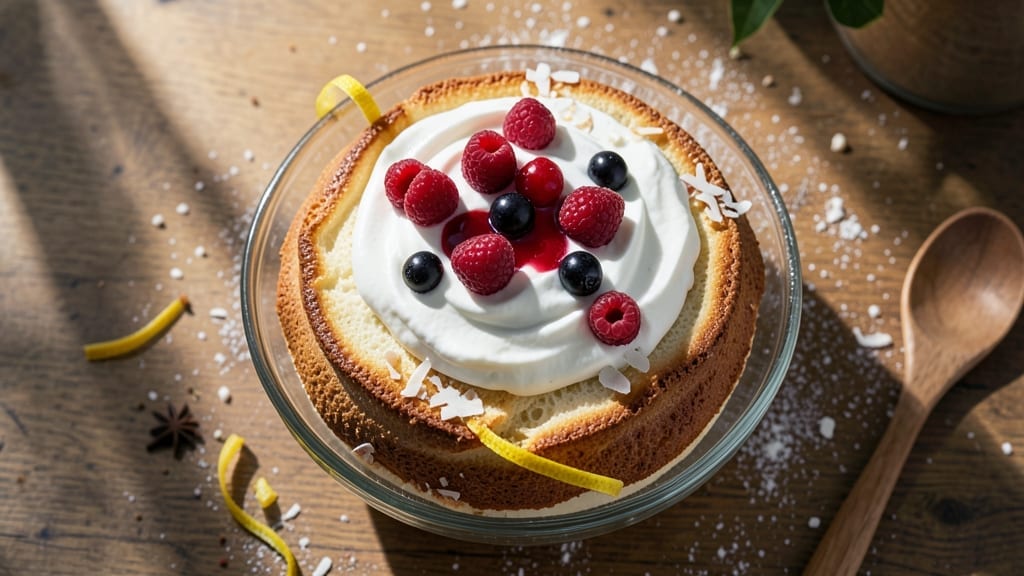
This 10-egg pavlova recipe delivers the perfect balance of a crispy, caramelized shell and a light, marshmallow center that’s impossible to resist. The secret lies in carefully whipped egg whites, precise sugar incorporation, and a baking technique that transforms delicate meringue into a sturdy yet elegant dessert base.
After years of perfecting this classic, I’ve developed a method that ensures consistent results every time.
The foundation begins with 10 large egg whites whipped to stiff peaks, gradually folded with sugar to create the signature glossy texture. A splash of vinegar stabilizes the meringue while baking at 250°F for 1 hour and 15 minutes creates that signature crisp shell without burning the edges.
The slow cooling process is just as critical—it allows the center to develop that signature marshmallow softness while maintaining structural integrity.
What makes this pavlova truly special is its crispy exterior that shatters slightly when cut, revealing the light, airy interior. Topped with freshly whipped cream and vibrant seasonal fruit, it becomes a showstopping dessert that’s perfect for celebrations or impressing dinner guests.
The key to success lies in patience—both during the baking and cooling phases—and attention to detail in the meringue preparation.
Once mastered, this recipe becomes your go-to for elegant gatherings, holiday desserts, or when you simply want to indulge in a dessert that looks as impressive as it tastes.
The method scales beautifully for larger groups while maintaining that delicate balance between structure and lightness. Let’s create something truly extraordinary with this timeless classic.
Ingredients for 10 egg pavlova
Ten egg whites, precise sugar ratios, and a slow bake transform into this legendary dessert masterpiece.
| Ingredient | Amount | Notes |
|---|---|---|
| Large Egg Whites 🥚 | 10 whole | Room temperature for best whipping |
| Granulated White Sugar 🍚 | 1 ½ cups | Superfine preferred for finer texture |
| Cornstarch 🌾 | 2 tbsp | Lightly toasted for deeper flavor |
| White Vinegar 🍶 | 1 tbsp | Pure, distilled for stability |
| Unsalted Butter 🧈 | ¼ cup | Softened for even spreading |
| Fresh Lemon Juice 🍋 | 1 tbsp | Freshly squeezed for brightness |
| Heavy Whipping Cream 🥛 | 2 cups | Cold for stiff peaks |
| Powdered Sugar 🍚 | 1 cup | Sifted for smooth texture |
| Vanilla Extract 🌸 | 1 tsp | Pure vanilla for authentic flavor |
| Seasonal Berries 🍓 | 2 cups | Fresh or thawed frozen |
| Toasted Almond Slices 🌰 | ½ cup | Lightly toasted for crunch |
| Mint Leaves 🌿 | ¼ cup | Chopped for garnish |
| Diamond Crystal Kosher Salt 🧂 | ¼ tsp | Fine grain for delicate seasoning |
| Baking Sheet 🍳 | 1 whole | Heavy gauge for even heat |
| Parchment Paper 📄 | 1 sheet | For easy release |
The egg whites are non-negotiable—room temperature is critical for proper volume. Whole Foods or high-quality grocery stores carry the freshest, largest eggs, which whip best. Look for organic or free-range labels for superior protein structure. The sugar must be superfine or pulverized—regular granulated creates graininess. Toast the cornstarch in a dry pan for 30 seconds to deepen its flavor without burning. I always use Diamond Crystal kosher salt for its fine texture, which dissolves completely for delicate seasoning.
No superfine sugar? Pulse regular granulated sugar in a food processor for 30 seconds—game changer. Vinegar substitutes? White wine or lemon juice work, but vinegar’s acidity is most stable. The butter should be soft but not melted—microwave for 20 seconds if needed. For the berries, thaw frozen berries overnight in the fridge to preserve texture. Swapping almonds? Toasted pecans or hazelnuts add richness. The mint can be dried if fresh isn’t available—use half the amount.
Preheat your oven to 250°F—this low temperature is crucial for even baking. Line the baking sheet with parchment paper, but leave edges bare for proper airflow. The meringue must cool completely in the oven—at least 2 hours—before removing. Store in an airtight container with parchment between layers for up to 3 days. For serving, assemble just before guests arrive to maintain the crisp shell.
Why You’ll Love This Recipe
- No Stand Mixer Needed: The meringue magic happens with just a hand mixer—no fancy equipment, no stress. Ten egg whites turn into cloud-like peaks in under 10 minutes, and honestly? The vinegar trick keeps it stable without overcooking.
- Crispy-Creamy Magic: That buttery edge with a marshmallow center? It’s all in the sugar-to-egg ratio and a slow bake. The cornstarch gives it just enough structure to hold toppings (or resist crumbling), and the caramelized top? Pure satisfaction.
- Dessert for Any Moment: Too fancy for a Tuesday? Nope. Perfect for a last-minute dinner party? Absolutely. Top it with whipped cream and berries for breakfast, or dust with cocoa for a midnight snack. I’ve served it at both—works every time.
- Eggs Stretch Your Budget: Ten eggs make this dessert feel special without breaking the bank. The sugar and butter are minimal, and the vinegar/cornstarch combo cuts costs while keeping the texture foolproof. Leftovers? Reheat in 20 seconds—no one will guess it’s been there.
Step-by-step instructions for 10 egg pavlova recipe
Mastering pavlova requires precision and patience—here’s how to create a perfectly crisp shell with a marshmallow center.
Prepare the Egg White Mixture
Preheat your oven to 275°F and line the baking sheet with the parchment paper, leaving overhang on all sides. In a spotlessly clean mixing bowl, combine the 10 whole large egg whites with the 1 tbsp white vinegar and 1 tbsp fresh lemon juice. The acidity helps stabilize the meringue.
Using a stand mixer fitted with the whisk attachment, beat the egg whites on low speed for 2 minutes until they begin to froth. Gradually add the 1.5 cups granulated white sugar and the 2 tbsp cornstarch—about 1 tablespoon at a time—while increasing the speed to medium-high. Beat for 8-10 minutes until the mixture forms stiff, glossy peaks that hold their shape when the whisk is lifted.
This step is critical: the meringue should be thick enough to hold its shape but still smooth. If it’s too soft, it won’t hold the oven’s heat; if too stiff, it’ll crack. Test by lifting the whisk—if the peak stands straight, you’re ready to proceed.
Shape and Bake the Meringue
Transfer the meringue to a piping bag fitted with a large round tip. Pipe an even circle onto the prepared baking sheet, creating a 9-inch diameter base. Use the back of a spoon to gently spread the edges to create a smooth, even surface with slightly raised sides—this helps create that signature crisp shell.
Place the baking sheet in the preheated oven and immediately reduce the temperature to 250°F. Bake for 1 hour, then carefully open the oven door and turn off the heat. Leave the pavlova inside with the door ajar for 15-20 minutes to cool gradually. This slow cooling prevents cracking and allows the meringue to set properly.
Here’s the thing—don’t peek during the baking process. Every time you open the oven, you risk sudden temperature shifts that can cause the meringue to collapse. The gradual cooling is what creates that perfect crisp shell with a soft center.
Prepare the Topping Mixture
While the pavlova cools, prepare the topping. In a medium bowl, combine the 2 cups heavy whipping cream, 1 cup powdered sugar, 1 tsp vanilla extract, and 0.25 tsp diamond crystal kosher salt. Using a hand mixer, beat on high speed until the cream forms stiff peaks that hold their shape when the whisk is lifted.
In a separate small bowl, gently toss the 2 cups seasonal berries with the 0.5 cup toasted almond slices and 0.25 cup chopped mint leaves. The mint adds a refreshing contrast to the sweet berries and creamy topping. Set aside until ready to use.
I like to add the berries and almonds just before serving to maintain their freshness and vibrant colors. The mint leaves should be added last to preserve their bright green hue and delicate flavor.
Assemble and Serve
Once the pavlova has completely cooled (it should be crisp to the touch), carefully transfer it to a serving plate using the parchment paper overhang. Spread the 0.25 cup softened unsalted butter evenly over the top of the meringue shell—this adds richness and helps create a beautiful sheen.
Gently pipe or spread the whipped cream mixture over the butter layer, creating an even coating. Immediately arrange the berry-almond-mint mixture on top, pressing down lightly to create a colorful, textured presentation. The butter layer ensures the cream doesn’t sink into the meringue, keeping the structure intact.
Serve immediately while the pavlova is at its peak texture—crisp on the outside, soft and marshmallow-like on the inside. Each slice should reveal that perfect contrast between the crisp shell and the light, airy center. The combination of tart berries, nutty almonds, and fresh mint creates a balanced flavor profile that complements the sweet meringue.
Pro Tips For Making 10 Egg Pavlova
- Whip Egg Whites Cold: Pop those egg whites straight from the fridge—room temperature makes them clingy and hard to control. I learned this the hard way when my meringue collapsed into a sad, sticky mess after sitting too long in a warm bowl.
- Sugar Gradually, Not Dumped: Add sugar in three batches while whipping, not all at once. Dumping it all at once makes your meringue grainy and stiff—like trying to fold wet sand into cookie dough. Patience here keeps the texture light and crisp.
- Vinegar First, Then Butter: Mix the vinegar into the egg whites before adding butter—it stabilizes the meringue better. I used to add butter first, and the meringue would weep like a bad soufflé. Trust the order, even if it feels counterintuitive.
- Bake at 250°F, Not Higher: Low and slow is the only way—250°F for 1 hour, then 225°F for 30 minutes. Rushing it with higher heat gives you a crispy shell and a gummy center. Sounds weird, but it works every time.
Make-ahead tips for 10 egg pavlova
Pre-Baking Prep
Start your pavlova prep the night before by separating the 10 large egg whites and storing them in the fridge uncovered. This chilling step helps remove any moisture that might prevent them from whipping properly.
I also recommend prepping your baking sheet with parchment paper and marking a 9-inch diameter circle with a pencil—this ensures perfect symmetry when piping. 🍳
Meringue Stability
For make-ahead success, whip your meringue base up to soft peaks (not stiff) and pipe it into shape, then refrigerate uncovered for 4-6 hours. This partial drying prevents cracking during baking.
I cover it loosely with a clean kitchen towel to protect from drafts while allowing airflow. The key is patience—rushing the drying process leads to structural weaknesses.
Baking Timeline
Bake your pavlova 12-24 hours before serving. After the initial 1-hour bake at 250°F, turn off the oven completely and let it cool inside overnight. This ultra-slow cooling process creates that signature marshmallow center while maintaining the crisp shell.
Store in an airtight container with parchment between layers to prevent moisture buildup. ❄️
Topping Assembly
Prepare your whipped cream and berry toppings the morning of serving. The cream should be chilled until ready to use—whip it just before assembling to maintain peak stiffness. Keep the berries and almonds separate until the last moment to preserve their freshness.
I find that assembling the pavlova 2-3 hours before serving gives the flavors time to meld without compromising the crisp shell.
Storage Secrets
If you need to store the assembled pavlova, keep it refrigerated for up to 24 hours with a loose cover. The shell will soften slightly but recovers beautifully when brought to room temperature.
For longer storage, assemble without the berries (add fresh ones before serving) and store the meringue base separately in an airtight container for up to 3 days. The butter layer acts as a protective seal against moisture.
Nutrition facts
Frequently asked questions
Why does my pavlova crack during baking?
Cracking happens when the meringue dries too quickly or the oven temperature shifts suddenly. To prevent this, bake at 250°F for 1 hour without opening the oven, then turn off the heat and let it cool inside with the door ajar for 15-20 minutes. Also, ensure your egg whites are fully whipped to stiff peaks and the sugar is incorporated gradually.
Can I make a smaller or larger pavlova?
Yes! For a 6-egg pavlova, reduce sugar to 1 cup and cornstarch to 1 tbsp. For a 12-egg version, increase sugar to 1.75 cups and cornstarch to 2.5 tbsp. Always maintain the same ratio of 1 tbsp sugar per egg white for stability. Adjust baking time by 5-10 minutes per additional egg.
What’s the best way to store a pavlova?
Store the baked meringue shell in an airtight container with parchment between layers for up to 3 days at room temperature. For longer storage, refrigerate for 5 days. Assemble with toppings only 2-3 hours before serving to maintain the crisp shell. Never store with berries—add them fresh!
Can I use corn syrup instead of sugar?
No, corn syrup won’t work—it’s too liquid and lacks the structure needed for meringue. The sugar’s crystalline structure is essential for creating that signature crisp shell. For a lighter texture, use superfine sugar or pulse regular sugar in a food processor for 30 seconds. Never substitute with honey or maple syrup.
How do I fix a pavlova that’s too soft?
If the center is underbaked, return it to a 200°F oven for 10-15 minutes until firm. For a soggy shell, try reheating slices in a 350°F oven for 3-5 minutes to restore crispness. Prevention is key—always bake at 250°F for the full 1 hour and cool completely before serving.

- 3lb Prime Rib Roast Recipe: Juicy Pink Center Guaranteed in 3 Hours - October 31, 2026
- 5 Spice Cake Recipe: Warmly Spiced Layers With Crunchy Top - October 31, 2026
- 1950’s Macaroni and Cheese Recipe: Nostalgic Creamy Cheese Sauce with Buttery Noodles - October 31, 2026