
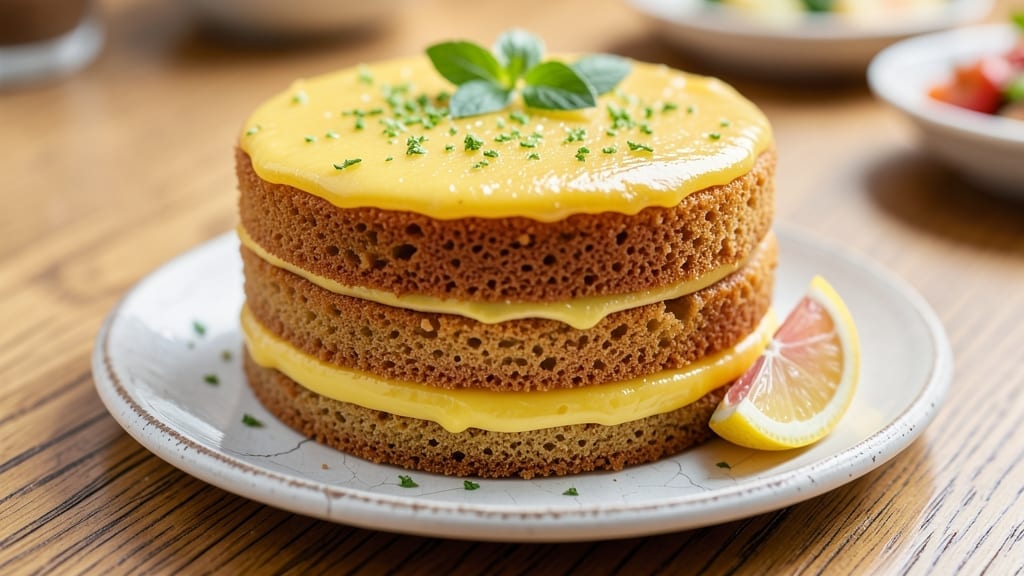
This 10-inch lemon cake recipe delivers a perfect balance of bright citrus and tender crumb—every slice bursts with zesty lemon flavor and buttery richness. 💛 The secret lies in a precise mix of flour, sugar, and eggs, combined with freshly squeezed lemon juice and zest for that signature tang.
Whether you’re baking for a celebration or craving a homemade treat, this recipe yields a single, showstopping layer that’s foolproof for beginners and impressive for seasoned bakers alike.
Baking at 325°F for about 30 minutes ensures a golden, evenly risen cake with a moist interior and a subtle crust. The frosting—a velvety blend of butter and powdered sugar—ties everything together, creating a smooth finish that complements the cake’s vibrant flavor.
No special equipment is needed, just a standard 10-inch pan and a whisk for mixing.
What you’ll end up with is a cake that’s bright, tender, and perfectly balanced—no one will guess it’s made from scratch. The lemon flavor shines through without overpowering, and the frosting adds just the right amount of sweetness.
This is the kind of dessert that disappears quickly, leaving guests asking for the recipe.
Serve it at room temperature for the best texture, or chill for 30 minutes if you prefer a firmer slice. Pair it with a scoop of vanilla ice cream or fresh berries for an extra touch of elegance. Ready to bake? Let’s get started!
Ingredients for 10 inch lemon cake
Twelve ingredients for a showstopping lemon cake with bright citrus and velvety frosting.
| Ingredient | Amount | Notes |
|---|---|---|
| All-Purpose Flour 🌾 | 2 ½ cups | Sifted for even texture |
| Granulated Sugar 🍚 | 2 cups | White or light brown |
| Unsalted Butter 🧈 | 1 ½ cups | Room temperature, softened |
| Large Eggs 🥚 | 4 whole | Room temperature preferred |
| Fresh Lemon Juice 🍋 | ¾ cup | From 3-4 lemons, freshly squeezed |
| Lemon Zest 🍋 | ¼ cup | Fine, from 3-4 lemons |
| Baking Powder 🌶️ | 2 tbsp | Diamond Crystal preferred |
| Salt 🧂 | ½ tsp | Fine sea salt |
| Vanilla Extract 🌿 | 1 tbsp | Pure, high-quality |
| Powdered Sugar 🍚 | 3 cups | For frosting, sifted |
| Heavy Cream 🥛 | ½ cup | Cold, for frosting |
The flour and sugar are your foundation—King Arthur or Gold Medal flour yields the best texture. For the butter, Plugrá or Land O’Lakes unsalted work perfectly, but never use salted. The lemons should be bright yellow with no green spots—Burma or Eureka varieties have the most juice. If you can’t find fresh lemons, lemon juice concentrate works in a pinch, but add a splash of water to dilute. The zest is where the magic happens—use a microplane for fine, even strips. Baking powder matters: Diamond Crystal is twice as potent as others, so measure carefully.
No fresh lemons? Lemon extract at half the amount gets you close, but it lacks zest. Substitute orange juice and zest for a different citrus twist. For a dairy-free frosting, swap heavy cream for coconut cream—just chill it overnight first. The vanilla extract should smell rich and deep; Nielsen-Massey or McCormick are reliable brands. If you’re out of powdered sugar, granulated sugar blended into a fine powder works, but it won’t be as smooth. For a richer frosting, add 1 tbsp lemon curd to the powdered sugar before mixing with cream.
Store cake layers wrapped in plastic at room temperature for up to 3 days—the flavor deepens overnight. Frosting keeps 2 days in the fridge, covered tightly. For longer storage, freeze layers individually for up to 3 months—thaw at room temperature before frosting. If the frosting gets lumpy, gently reheat the cream for 10 seconds in the microwave and whisk smooth. Serve chilled for a firmer slice, but room temperature highlights the lemon’s brightness.
Why You’ll Love This Recipe
- No-Fuss Mixing: I swear by this recipe—just cream butter and sugar, crack eggs, fold in flour. The lemon juice brightens everything instantly, and you’re done before the timer goes off. (Yes, even on a Tuesday night.)
- Tart Magic: That burst of fresh lemon juice? It’s the secret weapon. The cake stays moist, the frosting tangles perfectly with the buttery crumb, and one slice makes you want another. Honestly, it’s the kind of flavor that sticks with you.
- Weekend or Weeknight: Slice it for brunch with coffee, pack it for a picnic, or serve it at a birthday party—this 10-inch cake handles it all. The size is just right: big enough to share, small enough to bake without stress.
- Budget-Friendly Staples: All-purpose flour, sugar, butter, eggs, and a splash of lemon juice? You’re already stocked. No specialty ingredients, no wasted leftovers (unless someone asks for seconds), and it costs less than half what bakery cakes do. My wallet thanks me.
Step-by-step instructions for lemon cake layers and frosting
Here’s how to bake a perfectly moist lemon cake with a tangy center and silky buttercream.
👨🍳 Step 1: Prepare the Cake Batter
Preheat your oven to 350°F and grease two 5-inch round cake pans, lining the bottoms with parchment paper. In a medium bowl, whisk together the 2.5 cups all-purpose flour, 2 tbsp baking powder, and 0.5 tsp salt. Sift this dry mixture once to remove any lumps—this ensures your cake will be light and airy.
In a large mixing bowl, beat the 1.5 cups softened unsalted butter and 2 cups granulated sugar on medium speed until light and fluffy, about 3-4 minutes. Add the 4 whole eggs one at a time, beating well after each addition. Scrape down the sides of the bowl to ensure everything is fully incorporated.
Add the 0.75 cup fresh lemon juice, 0.25 cup lemon zest, and 1 tbsp vanilla extract to the butter mixture. Mix until fully combined, then gradually add the dry ingredients in three parts, mixing just until each addition is incorporated. The batter should be thick but pourable—don’t overmix or your cake will be dense.
🍳 Step 2: Bake the Cake Layers
Divide the batter evenly between the prepared cake pans. Tap each pan gently on the counter to remove any air bubbles, then smooth the tops with a spatula. Bake for 25-30 minutes or until a toothpick inserted in the center comes out clean. The edges should be golden brown, and the top should spring back when touched lightly.
I like to rotate the pans halfway through baking for even browning. If the tops brown too quickly, tent the pans with aluminum foil. Once done, remove the cakes from the oven and let them cool in the pans for 10 minutes. Then transfer them to a wire rack to cool completely—this prevents soggy layers when assembling.
🥘 Step 3: Make the Lemon Buttercream Frosting
In a large mixing bowl, beat the 3 cups powdered sugar and 0.5 cup cold heavy cream on medium-high speed until smooth and fluffy, about 2-3 minutes. Add the 1 tbsp vanilla extract and mix for another 30 seconds to combine. The frosting should be thick but spreadable—if it’s too stiff, add 1-2 teaspoons of lemon juice to loosen it.
For extra lemon flavor, add 1-2 tablespoons of the lemon juice from your cake batter to the frosting. Mix until fully incorporated. Taste and adjust the sweetness if needed—you can add more powdered sugar or lemon juice to balance the flavors. The frosting should be sweet enough to complement the tangy cake but not overpower it.
🍽️ Step 4: Assemble and Frost the Cake
Once the cake layers are completely cool, place one layer on a cake stand or plate. Spread a thin layer of frosting over the top to create a “crumb coat.” This helps prevent crumbs from getting into the final frosting layer. Place the second layer on top and repeat the process, pressing gently to ensure the layers are secure.
Spread the remaining frosting evenly over the entire cake, using a spatula to create smooth sides. For a polished look, chill the cake in the refrigerator for 30 minutes before serving. This allows the frosting to set slightly, making it easier to slice and serve. Garnish with extra lemon zest or fresh berries for a pop of color and freshness.
Pro Tips For Making 10 Inch Lemon Cake
- Bake at 325°F—Not Hotter: I learned this the hard way—350°F makes the outside overbrown before the center sets. A 10-inch cake needs gentle heat to rise evenly. Trust the lower temp, or you’ll end up with a cake that looks done but’s still gummy inside.
- Zest Before Juicing: The peel’s oils are where lemon flavor lives. Grate the zest of 2 lemons (about 2 tablespoons) before juicing, then fold it into the batter. Skipping this means your cake will taste like lemonade, not lemon cake.
- Don’t Overmix the Batter: After adding the flour, mix just until combined—no streaks, no overworking. I used to beat it like I was angry at the eggs, and that’s how you get a dense, tough cake. Think “gentle” here.
- Use Room-Temp Butter: Cold butter creates pockets that don’t blend smoothly, leading to a cake with weird texture. Let it sit out for 30–60 minutes until it’s soft but not melted. Your future self will notice the difference in crumb.
Essential equipment for great 10 inch lemon cake
Must-Have Baking Tools
Start with a standard 10-inch round cake pan—I recommend Wilton Perfect Results pans for even baking and easy release. A 9×13-inch baking pan works too if you prefer a sheet cake style.
For mixing, a stand mixer with a paddle attachment (like KitchenAid) makes whipping butter and sugar effortless, but a hand mixer works fine if you’re on a budget. 💛
Don’t skip the offset spatula—it’s essential for spreading frosting smoothly. A bench scraper helps with mixing and dividing batter evenly. For zesting, a microplane gives finer, more flavorful results than a grater. I also keep a toothpick handy to test doneness.
Pro Tips for Equipment
Grease your pans thoroughly with butter or baking spray—this prevents sticking. I use Baker’s Joy spray for a non-sticky, mess-free finish. For cooling, a wire rack is a game-changer—it keeps the cake layers crispy, not soggy.
If you’re short on time, a cooling rack insert for your countertop speeds things up.
For frosting, a piping bag with a star tip creates decorative swirls, but a spatula works just as well for a classic look. Chill your cake on a cake stand or plate for easy slicing. A digital kitchen scale ensures precise measurements, especially for powdered sugar.
Budget-Friendly Swaps
No stand mixer? A wooden spoon and strong arm work—just mix vigorously for 5-6 minutes. For zesting, a cheese grater in a pinch (though it’s less precise).
A loaf pan can substitute for a round pan, but bake time may vary slightly. I’ve even used aluminum foil to create makeshift parchment liners.
Skip the offset spatula? A butter knife spreads frosting almost as well. For cooling, stack cake layers on parchment paper instead of a rack—just flip them halfway through. The key is patience: let layers cool completely before frosting to avoid a crumbly mess.
Nutrition facts
Frequently asked questions
Can I make this lemon cake in a 9×13-inch pan instead of two 5-inch pans?
Yes! For a single-layer sheet cake, spread the batter evenly in a greased 9×13-inch pan and bake at 350°F for 25-30 minutes. Reduce the frosting to 2 cups powdered sugar and 0.25 cup heavy cream to avoid excess. The texture will be slightly denser than layers, but still delicious.
How do I store leftovers without drying out the cake?
Wrap each layer tightly in plastic wrap and store at room temperature for up to 3 days. For longer storage, freeze layers individually for up to 3 months. Thaw overnight in the fridge before frosting. Frosting keeps 2 days refrigerated—cover tightly to prevent drying.
Why did my cake sink in the middle?
Overmixing the batter or opening the oven too soon are common causes. Always bake until a toothpick comes out clean (25-30 minutes) and avoid peeking. For extra support, bake in a water bath (place pan in a larger pan with hot water halfway up the sides). Let cakes cool completely before frosting too.
Can I substitute lemon juice with bottled lemon juice?
Fresh lemon juice gives the best flavor, but bottled works in a pinch. Use 0.75 cup bottled lemon juice and add 1 tsp extra sugar to balance the artificial taste. For zest, fresh is non-negotiable—bottled zest lacks the bright, aromatic oils.
How do I make this cake gluten-free?
Replace the 2.5 cups all-purpose flour with 2 cups gluten-free 1:1 baking flour (like Bob’s Red Mill) plus 0.5 cup cornstarch. Add 1 tsp xanthan gum if your blend doesn’t include it. Reduce baking powder to 1.5 tbsp and bake 5-10 minutes longer at 325°F. Frosting remains the same.

- 6 Egg Cake Recipe with Oil: Light as Air With Buttery Moisture - October 4, 2026
- 4 Bean Casserole Recipe: One-Pan Heartiness With Smoky Paprika Depth - October 4, 2026
- 3-Ingredient Keto Mug Cake Recipe: Microwave Magic in 2 Minutes - October 4, 2026