
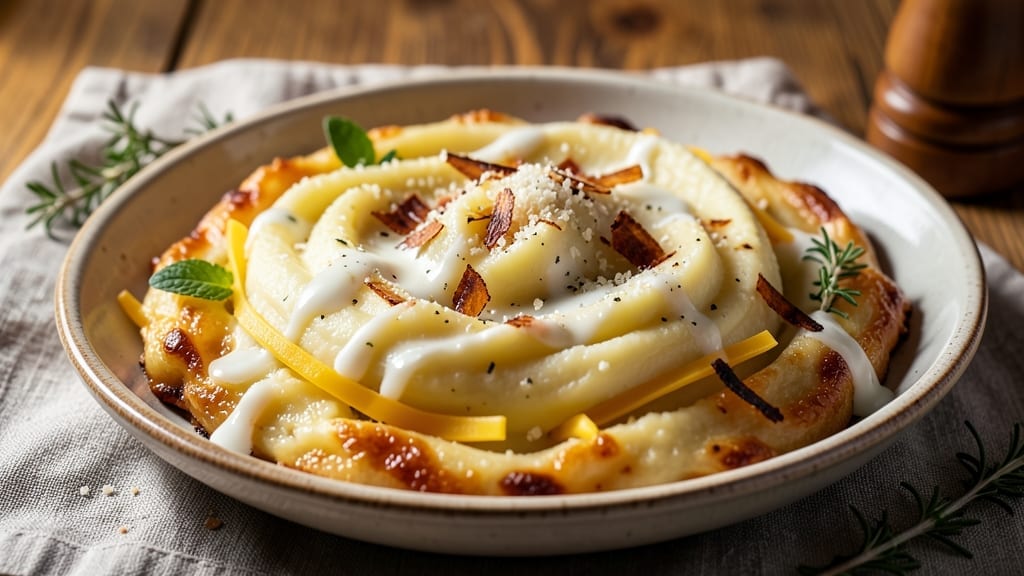
This 3 cheese mashed potatoes recipe transforms simple spuds into velvety luxury with every bite—where sharp cheddar, nutty gouda, and salty parmesan melt together for restaurant-quality creaminess.
The secret lies in selecting the right potatoes (Russets for fluffiness) and mastering the cooking technique to achieve that signature silky texture without lumps. I’ve perfected this recipe through years of holiday dinners and family gatherings, ensuring it’s foolproof for both beginners and seasoned cooks alike.
What sets these mashed potatoes apart is the three-cheese blend, which creates a complex flavor profile that’s richer than store-bought versions. The cheddar provides that classic tang, gouda adds a velvety smoothness, and parmesan contributes a savory depth that elevates every bite.
The process is straightforward—boil the potatoes until tender, drain thoroughly, then mash and blend with warm milk and butter before incorporating the cheese. No electric mixer required—a simple potato masher works perfectly for that classic handmade texture.
By the time you’re done, you’ll have creamy, lump-free mashed potatoes that are impossible to resist, with a velvety finish that’s both rich and satisfying. The perfect balance of cheeses ensures each spoonful delivers that luxurious mouthfeel, while the technique guarantees consistent results every time.
These potatoes pair beautifully with roasted meats, holiday dinners, or even as a comforting side dish on a chilly evening.
The best part? This recipe scales effortlessly, whether you’re feeding a crowd or just treating yourself to a cozy meal. For extra indulgence, consider adding a touch of garlic or sour cream, or drizzle with homemade gravy for the ultimate comfort food experience.
Let’s get started on creating your new favorite side dish!
Ingredients for 3 cheese mashed potatoes
These luxurious ingredients transform humble potatoes into restaurant-quality mashed potatoes every time.
| Ingredient | Amount | Notes |
|---|---|---|
| Russet Potatoes 🥔 | 3 lb | Medium-sized, peeled and quartered |
| Sharp White Cheddar Cheese 🧀 | 1 cup | Shredded, aged 6 months minimum |
| Smoked Gouda Cheese 🧀 | ¾ cup | Shredded, smoked variety preferred |
| Parmesan Cheese 🧀 | ½ cup | Freshly grated from block |
| Heavy Whipping Cream 🥛 | ½ cup | Full-fat for maximum creaminess |
| Unsalted Butter 🧈 | ½ cup | Cold, cut into small cubes |
| Whole Milk 🥛 | ½ cup | Warm for smooth blending |
| Granulated Garlic 🧄 | 1 tsp | Optional for subtle depth |
| Kosher Salt 🧂 | 1 ½ tsp | Diamond Crystal preferred |
| Freshly Ground Black Pepper 🌶️ | ½ tsp | Freshly cracked preferred |
| Sour Cream 🥛 | ¼ cup | Full-fat for richness |
| Chives 🌿 | 2 tbsp | Finely chopped for garnish |
The cheeses are where the magic happens—sharp cheddar for tang, smoked gouda for depth, and freshly grated parmesan for umami. Grab aged cheddar (6+ months) from the deli counter—pre-shredded gets clumpy. For gouda, Trader Joe’s has a fantastic smoked variety. The parmesan? Grate it yourself—pre-grated tastes like sawdust. Russet potatoes are non-negotiable for fluffiness—avoid red potatoes, which turn gluey. If you’re prepping ahead, peel and store potatoes in cold water in the fridge for up to 24 hours before cooking.
No smoked gouda? Substitute extra sharp cheddar plus a pinch of smoked paprika. Running low on parmesan? Pecorino Romano works beautifully. The heavy cream can be swapped for half-and-half if needed, but trust me on the full-fat version. For extra indulgence, add a splash of cream cheese (2 tbsp) for even more velvety texture. The sour cream is optional but worth it—fold it in at the very end for that signature restaurant finish. Garlic lovers? Use 2 tsp granulated garlic or 1 fresh clove, minced.
These mashed potatoes reheat beautifully—just warm gently in a double boiler with a splash of milk and butter. Store leftovers in an airtight container for up to 5 days in the fridge, or freeze for 3 months. For freezing, spread in a single layer on a tray first to prevent clumping. Garnish with chives and extra parmesan right before serving—no need to refrigerate garnishes if serving immediately. Double the batch and freeze half for lazy days—microwave-safe containers make reheating a breeze.
Why You’ll Love This Recipe
- I’ll be real: this dish tastes even better the next day. The cheeses meld into an even richer texture, and it reheats like a champ—perfect for packing lunches or feeding a crowd without stress. (Yes, even on a Tuesday night.)
- Cheese Lovers’ Dream: Honestly, the combo of sharp white cheddar, smoky gouda, and nutty parmesan is next level—creamy but with layers of flavor that make you want to eat it with a spoon. The cheddar brings that tangy punch, the gouda adds depth, and the parmesan? Pure umami magic.
- One-Pot Wonder: Between us, this recipe is ridiculously simple. You boil the russets, mash them with cream, then fold in the cheeses—no strainers, no extra bowls, just smooth, dreamy potatoes in under 30 minutes. My lazy Sundays just got an upgrade.
- Leftovers That Shine: I’ll be real: this dish tastes even better the next day. The cheeses meld into an even richer texture, and it reheats like a champ—perfect for packing lunches or feeding a crowd without stress. (Yes, even on a Tuesday night.)
Step-by-step instructions for 3 cheese mashed potatoes
Here’s how to transform simple potatoes into velvety, triple-cheese luxury.
Cook the Potatoes Until Fork-Tender
Place the 3 lb Russet Potatoes in a large pot and cover with cold water by 2 inches. Add 1.5 tsp Kosher Salt and bring to a boil over high heat. Once boiling, reduce to a gentle simmer and cook for 15-20 minutes until a knife slides in easily with no resistance.
The key here is patience—don’t rush the cooking. You want potatoes that are completely tender but not mushy. I like to test by piercing with a knife near the center; if it goes in smoothly and the potato flattens slightly, they’re ready. Drain thoroughly in a colander, shaking to remove excess water. This step ensures your mash will be light and fluffy, not gluey.
Melt Butter and Warm Milk
While the potatoes cook, melt the 0.5 cup Unsalted Butter in a large mixing bowl over low heat until completely liquid. Remove from heat and stir in the 0.5 cup Whole Milk and 1 tsp Granulated Garlic (if using). Warm the milk slightly—this helps emulsify the potatoes better later.
Here’s the thing—warm milk blends more smoothly than cold. If you use cold milk, you’ll end up with lumps that are impossible to fix later. The butter should be fully melted but not browned—just golden and fragrant. This butter-milk mixture forms the luxurious base of our triple-cheese mash.
Mash the Potatoes to Perfection
Return the drained potatoes to the pot and let them steam dry for 1 minute. Then, using a potato masher or ricer, work in batches to break them down completely. Transfer to your prepared mixing bowl with the butter and milk mixture. Add the 0.25 cup Sour Cream and 0.5 tsp Freshly Ground Black Pepper and mash vigorously until completely smooth.
This is where the magic happens. I prefer a ricer for ultra-smooth texture, but a masher works too—just be patient. You’re looking for a consistency where the potatoes are completely broken down with no lumps. The sour cream adds that signature tangy richness that separates great mashed potatoes from good ones. Don’t skip this step—it makes all the difference.
Incorporate the Triple Cheese Blend
Reduce heat to low and begin adding the cheeses in stages. First, stir in the 1 cup Sharp White Cheddar Cheese and 0.75 cup Smoked Gouda Cheese, mixing until fully melted and incorporated. Then add the 0.5 cup Parmesan Cheese and 0.5 cup Heavy Whipping Cream, folding gently to maintain airiness.
The cheese blend is what makes these potatoes extraordinary. The sharp white cheddar provides that classic tang, the smoked gouda adds depth and complexity, while the parmesan brings umami richness. I like to add the cheeses gradually—this prevents clumping and ensures even distribution. Keep stirring gently until the mixture is completely smooth and velvety, with no cheese granules remaining.
Finish and Garnish for Restaurant-Quality Presentation
Taste and adjust seasoning with additional Kosher Salt if needed. Transfer to a serving bowl and let sit for 5 minutes to thicken slightly. Garnish with 2 tbsp finely chopped Chives just before serving for freshness and color contrast.
Here’s my pro tip: For the ultimate presentation, pipe the mashed potatoes onto a platter using a piping bag fitted with a star tip. This creates beautiful swirls that look as good as they taste. The chives add a pop of color and freshness that elevates this dish from homestyle to restaurant-quality. Serve immediately while still warm and creamy—these potatoes don’t wait!
Pro Tips For Making 3 Cheese Mashed Potatoes
- Boil Until Fork-Tender: Russets are stubborn—don’t rush them. Test doneness by piercing with a fork; it should slide in like butter, not fight you. Overcooked potatoes turn to glue, and no amount of cheese can save them.
- Shred Cheese Coarse: Skip the fine powder—use a box grater for sharp, jagged edges. The Gouda and cheddar melt slower this way, creating pockets of gooey texture instead of a sad, uniform paste.
- Warm the Cream: Cold cream makes lumps. Heat the heavy cream in a small saucepan until it’s just warm to the touch (not boiling), then whisk it into the potatoes. Smooth every time.
- Press, Don’t Stir: After adding cheese, mash with a potato masher or ricer, then press the mixture through a fine-mesh sieve for ultra-silky results. Stirring traps air and ruins the creamy finish.
Pro cooking tips for this recipe
Potato Prep Secrets
Start with cold water in your pot—this ensures even cooking and prevents the potatoes from breaking apart. Add 1.5 tsp Diamond Crystal salt directly to the water, not just to the potatoes, for even seasoning.
I always use medium-sized Russets because they have the perfect starch-to-moisture ratio for creamy mash. Peel them right before cooking to prevent oxidation, which can make the potatoes turn gray when boiled. 🥔
Cheese Melting Mastery
Add cheeses in stages to prevent clumping—start with the sharp cheddar and smoked gouda, then finish with the parmesan. Use freshly grated parmesan (never pre-shredded) for that authentic, granular texture that melts beautifully.
For extra richness, warm the cheeses slightly in a dry skillet over low heat for 1-2 minutes before adding them to the potatoes. This helps them blend more smoothly into the mixture.
Texture Control Tips
For ultra-smooth mashed potatoes, use a potato ricer instead of a masher—it breaks down the potatoes completely without incorporating excess air. If you prefer a masher, work in batches and be patient; pressing too hard can create lumps.
To maintain creaminess when reheating, store leftovers in a microwave-safe dish with a splash of milk and cover tightly. Reheat on 50% power in 1-minute intervals, stirring between each.
Temperature Precision
Keep your butter and milk warm but not hot—110-115°F is ideal for blending. If the mixture looks too thick after adding the cheeses, warm it gently over low heat while stirring constantly.
For extra fluffiness, fold in 1-2 tbsp sour cream at the very end—this adds tang and prevents the potatoes from becoming gluey when reheated. Always taste as you go and adjust seasoning gradually.
Equipment Upgrades
Invest in a heavy-bottomed mixing bowl (like Le Creuset) to prevent scorching when melting butter. A potato masher with a handle (like OXO Good Grips) gives you better control than a fork.
For presentation, use a piping bag with a star tip to create elegant swirls on your platter. These small upgrades make a world of difference in both texture and presentation. ✨
Nutrition facts
Frequently asked questions
Can I make these mashed potatoes ahead of time?
These triple-cheese mashed potatoes reheat beautifully. Store leftovers in an airtight container in the fridge for up to 5 days. For best results, reheat in a double boiler with a splash of milk and butter, stirring constantly until warmed through (5-7 minutes). For freezing, spread in a single layer on a tray first to prevent clumping, then transfer to a freezer bag for up to 3 months. Thaw overnight in the fridge before reheating.
What if I don’t have smoked gouda?
No problem! Swap it for an extra ¼ cup sharp cheddar plus ½ teaspoon smoked paprika to mimic that smoky flavor. For a different twist, try Gruyère or Comté cheese—both add nutty depth that pairs wonderfully with the cheddar and parmesan. Just remember to grate it fresh for the best texture and flavor.
Why did my mashed potatoes turn out lumpy?
Lumps usually happen from overworking the potatoes or not draining them thoroughly. To fix this, use a potato ricer instead of a masher for ultra-smooth results. Always drain potatoes completely in a colander and let them steam dry for 1 minute before mashing. For existing lumps, press them through a fine-mesh sieve or blend briefly with an immersion blender—just don’t overdo it, or you’ll lose that lovely fluffy texture.
Can I make this recipe dairy-free?
Yes! Replace the butter with vegan butter or olive oil, use unsweetened almond milk or oat milk instead of whole milk, and swap the cheeses for nutritional yeast (for cheesy flavor) plus dairy-free cheese alternatives like Miyoko’s or Violife. For creaminess, add ½ cup coconut cream or cashew cream. The texture will be slightly different but still delicious—just expect a lighter, less rich finish.
How do I keep these mashed potatoes from getting gluey when reheating?
Gluey potatoes usually happen from too much liquid or reheating incorrectly. Store leftovers with a splash of milk or butter on top to maintain moisture, then reheat on low heat while stirring frequently. For microwave reheating, use 50% power in 1-minute intervals, stirring between each. Adding 1-2 tablespoons sour cream at the end (as in the recipe) also helps prevent glueiness by adding fat that stabilizes the texture.

- 6 Egg Cake Recipe with Oil: Light as Air With Buttery Moisture - October 4, 2026
- 4 Bean Casserole Recipe: One-Pan Heartiness With Smoky Paprika Depth - October 4, 2026
- 3-Ingredient Keto Mug Cake Recipe: Microwave Magic in 2 Minutes - October 4, 2026