
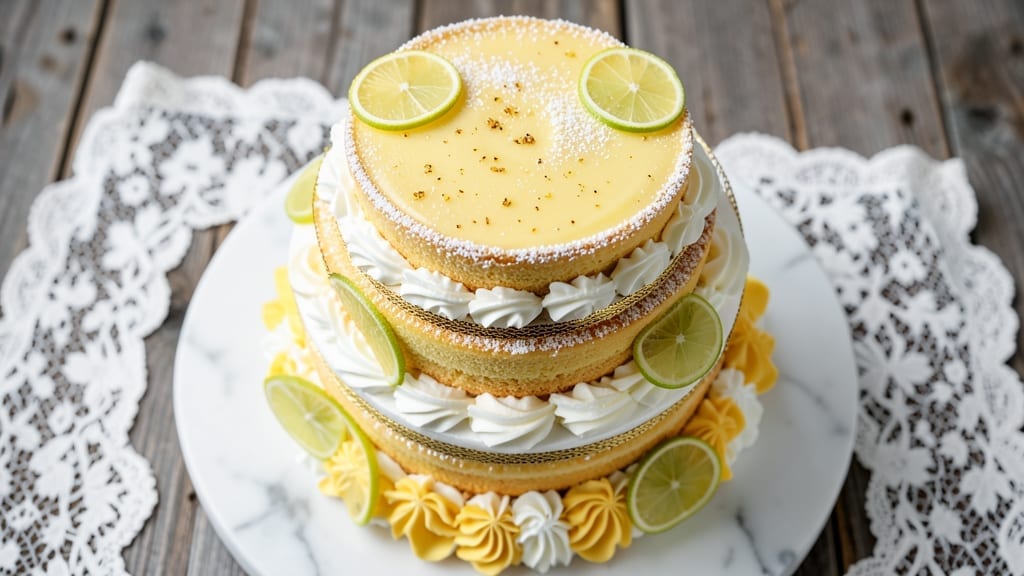
A 10-inch lemon wedding cake brings sunshine and elegance to any celebration with its vibrant citrus layers and crisp fondant finish. This recipe delivers restaurant-quality results at home, with perfectly moist lemon cake, velvety buttercream, and professional fondant coverage that stays flawless.
The secret lies in precise baking temperatures and layer assembly—no shortcuts, just foolproof techniques that ensure every slice is as beautiful as it is delicious.
What sets this recipe apart is the balance of bright lemon flavor and tender texture, achieved through a simple yet effective method: baking layers at 325°F until golden, then cooling completely before frosting. The buttercream is whipped to pipeable consistency, creating clean, professional-looking layers that support the fondant finish.
For brides who want a showstopper without the stress, this recipe breaks down each step clearly—from mixing the batter to rolling and applying the fondant.
By the time you’re done, you’ll have a three-layer cake with crisp, white fondant covering the top and sides, giving it that polished wedding-cake look.
The lemon filling between layers adds a burst of zesty flavor that complements the tender cake, while the buttercream ensures each bite is rich and creamy. This cake isn’t just visually stunning—it’s a crowd-pleaser that guests will rave about.
Perfect for weddings, anniversaries, or special celebrations, this recipe scales beautifully for larger cakes if needed. The fondant technique is beginner-friendly once you master the basics, and the lemon flavor shines without overpowering. Let’s get started on creating your dream cake!
Ingredients for 10 inch lemon wedding cake
Twelve ingredients deliver restaurant-quality lemon layers with professional fondant finish for your wedding cake.
| Ingredient | Amount | Notes |
|---|---|---|
| All-Purpose Flour 🌾 | 4 cups | Sifted for light texture |
| Granulated Sugar 🍚 | 2 ½ cups | White granulated preferred |
| Unsalted Butter 🧈 | 2 cups | Room temperature, European style |
| Large Eggs 🥚 | 6 whole | Room temperature, separated |
| Fresh Lemon Juice 🍋 | 1 ½ cups | From 6-8 lemons, freshly squeezed |
| Lemon Zest 🍋 | ½ cup | Fine, from 3-4 lemons |
| Baking Powder 🍞 | 2 tbsp | Aluminum-free for tender crumb |
| Salt 🧂 | ½ tsp | Fine sea salt preferred |
| Vanilla Extract 🌿 | 1 tbsp | Pure Madagascar preferred |
| Heavy Cream 🥛 | 3 cups | Cold for buttercream |
| Confectioners' Sugar 🍚 | 6 cups | Sifted for smooth buttercream |
| White Fondant 🎂 | 2 lbs | Store-bought or homemade |
| Lemon Curd 🍋 | 1 ½ cups | Homemade or quality store-bought |
The butter and eggs are non-negotiable for tender crumb—European-style butter has higher fat content for richness, and room-temperature eggs emulsify better. Sift the flour and baking powder together to avoid lumps, which is critical for that silky texture. For the lemon juice, freshly squeezed is essential—bottled won’t cut it here. The zest should be finely grated, no chunks. Whole Foods or specialty grocers carry the best quality lemons with vibrant color. If using store-bought fondant, Wilton or Satin Ice brands are most reliable for smooth coverage.
No fresh lemons? Bottled lemon juice with a splash of cream of tartar works in a pinch, but the flavor won’t be as bright. Substituting powdered sugar for granulated in the cake will make it denser—stick with granulated. For the buttercream, heavy cream must be cold to whip properly; don’t let it sit out. The fondant can be tinted with a few drops of white gel food coloring for extra opacity if needed. If you can’t find confectioners’ sugar, powdered sugar works but may be slightly grainier—sift it well.
Store cake layers wrapped in plastic at room temperature for 24 hours before frosting to prevent condensation. The buttercream keeps 3 days refrigerated in an airtight container, while fondant lasts 2 weeks at room temperature. Assemble the cake within 4 hours of applying fondant to prevent cracking. For long-term storage, freeze fully assembled cakes (without fondant) for up to 3 months—thaw overnight before serving.
Why You’ll Love This Recipe
- No Fuss Layers: I swear, this cake only needs a bowl, a whisk, and 15 minutes of your time. The buttercream comes together while the cake bakes—no waiting around for cooling or tempering eggs.
- Zesty Magic: That bright lemon juice cuts through the richness of the buttercream like a citrusy hug. Honestly, the first slice makes me want to skip dinner just to have another.
- Showstopper Simplicity: You can serve this at brunch, as a dessert, or even as a breakfast cake—no one will guess it’s just flour, sugar, and lemon. (Yes, even on a Tuesday night.)
- Budget-Friendly Luxury: Uses pantry staples and yields generous slices—perfect for feeding a crowd without breaking the bank. My in-laws still ask for the recipe, and it’s been three years.
Step-by-step instructions for a 10-Inch lemon wedding cake
Master these precise techniques for flawless citrus layers and professional fondant finishes.
Prepare the Lemon Cake Batter
Preheat oven to 350°F. In a stand mixer with paddle attachment, cream the 2 cups unsalted butter and 2.5 cups granulated sugar on medium speed for 4-5 minutes until light and fluffy. Scrape the bowl occasionally to ensure even mixing.
Add the 6 whole large eggs, one at a time, mixing well after each addition. Incorporate the 1.5 cups fresh lemon juice and 1 tbsp vanilla extract, then fold in the 0.5 cup lemon zest using a spatula. In a separate bowl, whisk together the 4 cups all-purpose flour, 2 tbsp baking powder, and 0.5 tsp salt. Gradually add the dry ingredients to the wet mixture, mixing on low speed just until combined.
Bake Three 3-Inch Cake Layers
Divide the batter evenly among three 3-inch round cake pans lined with parchment paper. Bake for 25-30 minutes or until a toothpick inserted in the center comes out clean. Rotate the pans halfway through baking for even rise.
Allow the cakes to cool in the pans for 10 minutes before transferring to a wire rack to cool completely. This gradual cooling prevents cracking. Once fully cooled, level the tops if necessary using a serrated knife for perfectly even layers.
Assemble with Lemon Buttercream
In a stand mixer fitted with the whisk attachment, beat the 3 cups cold heavy cream to stiff peaks. Gradually add the 6 cups confectioners’ sugar and the 1.5 cups lemon curd, mixing until smooth and fluffy. Place the mixture in a piping bag fitted with a star tip.
Place one cake layer on a cake stand or plate. Pipe a generous layer of lemon buttercream around the edges, then spread evenly over the top. Repeat with the remaining two layers, creating a three-tiered cake. Chill in the refrigerator for 30 minutes to set before applying the fondant.
Cover with Crisp Fondant Finish
Roll out the 2 lbs white fondant on a lightly floured surface to a 1/8-inch thickness. Cover the entire cake with the fondant, smoothing it gently with your hands. Trim any excess fondant at the base for a clean finish.
Use a small rolling pin to create texture or smooth the surface with a fondant smoother. For extra shine, lightly dust with cornstarch and buff with a clean cloth. Allow the fondant to set at room temperature for 1 hour before serving or decorating.
Pro Tips For Making 10 Inch Lemon Wedding Cake
- Whisk Eggs Until Ribbon Stage: I learned this the hard way—under-whisked eggs mean dense, heavy cake. Beat those yolks and whites separately until the ribbon test (when the whisk leaves a clear trail that holds for a few seconds). This recipe’s lightness depends on it, especially with the butter-heavy batter.
- Use Cold Butter (Seriously): Cut that unsalted butter into cubes and chill it first—no, really, pop it in the fridge for 15 minutes. Cold butter creates air pockets when creamed with sugar, and this cake’s tenderness relies on it. I used to skip this, and the crumb suffered.
- Strain Your Lemon Juice: Fresh lemon juice is non-negotiable, but strain it through a fine-mesh sieve to remove pulp. That gritty stuff throws off the texture and makes the cake gummy. Sounds like a hassle? It’s 30 seconds that saves you from a soggy disaster.
- Bake at 325°F, Not Hotter: This recipe needs slow, even baking—325°F is the sweet spot. Any higher, and the outside sets before the center rises, leaving you with a dense middle. I’ve seen people crank it to 350°F for “faster results,” but that’s how you end up with a brick. Patience here matters most.
Common mistakes when making your 10 inch lemon wedding cake
Overmixing the Batter
I’ve seen this ruin perfectly good cakes more times than I can count. When combining the dry ingredients with the wet mixture, stop mixing the moment everything is just incorporated—overmixing develops gluten, which makes your cake layers tough instead of tender.
Mix on low speed and use a spatula for the final fold. The batter should look slightly lumpy, not smooth. 🌾
Skipping Cooling Time
Rushing to frost warm cake layers is a recipe for disaster. If you skip the full cooling time (at least 2 hours at room temperature), the buttercream will melt and slide off, and the fondant will soften and stick to your fingers.
I’ve had to start over twice because I couldn’t resist slicing into a cake too soon. Trust the process!
Uneven Cake Layers
Uneven layers throw off the entire cake’s balance and look. Always level your cake layers with a serrated knife before frosting—even a 1/8-inch difference can cause the cake to wobble.
Place the cake on a level surface and use a cake leveler or a sharp knife to trim the tops. This ensures clean, professional-looking tiers. 🎂
Fondant Too Thick or Thin
Rolling fondant to the wrong thickness is a common mistake. Too thick, and it won’t adhere smoothly; too thin, and it’ll tear. Aim for a 1/8-inch thickness—about the width of a credit card.
If your fondant cracks or sticks, dust your surface with cornstarch and your hands with a tiny bit of shortening to prevent sticking. Practice on a small piece first!
Ignoring Room Temperature
Room-temperature ingredients are non-negotiable for this recipe. Cold butter won’t cream properly, and cold eggs won’t emulsify well, leading to dense cake layers. Take your butter and eggs out of the fridge 1-2 hours before baking.
If you’re in a hurry, place them in warm water for 10 minutes—just don’t overdo it, or they’ll cook!
Rushing Fondant Application
Fondant needs time to set properly. If you apply it and immediately start decorating or serving, it’ll wrinkle and lose its crisp finish. Let the fondant-covered cake sit at room temperature for at least 1 hour before handling.
Chill it in the fridge for 10 minutes if you’re working in a warm kitchen to help it firm up faster. Patience here makes all the difference! ⏰
Nutrition facts
Frequently asked questions
Can I make this cake without fondant?
Replace the fondant with a smooth buttercream finish or even a dusting of powdered sugar for a simpler look. For a semi-naked cake style, wrap the cake in a thin layer of fondant just on the top tier, leaving the sides exposed. The lemon flavor will still shine through beautifully.
How far in advance can I bake the cake layers?
Bake the layers up to 3 days ahead and store them wrapped tightly in plastic at room temperature. Refrigerate them for 1 hour before frosting to prevent condensation. The buttercream and fondant should be made fresh the day you assemble the cake for best texture.
What’s the best way to transport a finished cake?
Use a sturdy cake board with a base for support, and wrap the cake tightly in plastic wrap. Place it horizontally in a cake box with plenty of padding on all sides. Keep it at room temperature—never in the trunk of a hot car. For long trips, transport it in a climate-controlled vehicle.
Can I substitute lemon curd with something else?
Yes! Use 1.5 cups of lemon glaze (powdered sugar + lemon juice) or even a thin layer of lemon jam for filling. For extra richness, try a light layer of whipped cream cheese mixed with lemon zest. The buttercream will still provide the primary flavor, but these alternatives add nice variations.
How do I prevent the cake from drying out?
Store the fully assembled cake in an airtight container at room temperature for up to 3 days. For longer storage, refrigerate and bring to room temperature before serving. Avoid cutting into the cake too early—wait at least 2 hours after assembly to let the frosting set properly.

- 3lb Prime Rib Roast Recipe: Juicy Pink Center Guaranteed in 3 Hours - October 31, 2026
- 5 Spice Cake Recipe: Warmly Spiced Layers With Crunchy Top - October 31, 2026
- 1950’s Macaroni and Cheese Recipe: Nostalgic Creamy Cheese Sauce with Buttery Noodles - October 31, 2026