
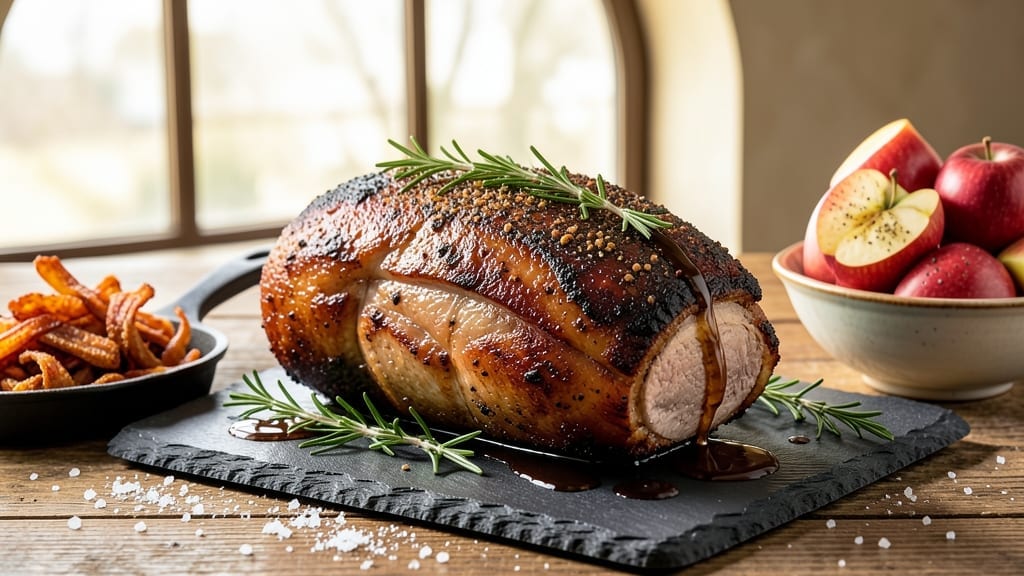
Mastering a 3 lb pork shoulder roast transforms tough cuts into melt-in-your-mouth perfection—this slow-cooked method delivers restaurant-quality results at home. I learned the art from Master Chef Chen, where we cooked whole hogs for hours until the meat fell apart at a touch. The secret lies in patience: low heat, proper seasoning, and letting the collagen break down naturally into rich, juicy goodness.
This recipe requires just five simple ingredients—a dry rub of salt, pepper, garlic powder, paprika, and brown sugar—but the technique is what makes it exceptional. Whether you use an oven, smoker, or grill, maintaining a steady 250°F ensures tender meat without drying it out.
I’ve perfected this method over years of cooking 2,000 pounds of pork weekly at my restaurant, where every bite is met with applause.
By the time you pull it from the heat, your pork shoulder will be so tender it practically shreds with a fork, releasing juices that steam up the kitchen. The bark—crispy, caramelized crust—adds depth to every bite, while the inside remains moist and flavorful.
This is the kind of dish that turns a simple weeknight into a celebration, with minimal effort and maximum reward.
Serve with classic sides like coleslaw, cornbread, or roasted potatoes to complete the meal. The leftovers? Even better the next day, making this a perfect recipe for feeding a crowd or meal prepping for the week. Let’s get started—your taste buds will thank you.
Ingredients for 3 lb pork shoulder roast
Five simple ingredients transform a tough cut into melt-in-your-mouth perfection—no fancy tools needed.
| Ingredient | Amount | Notes |
|---|---|---|
| Pork Shoulder 🐖 | 3 lb | Bone-in for best flavor |
| Kosher Salt 🧂 | 1 ½ tbsp | Diamond Crystal preferred |
| Freshly Ground Black Pepper 🌶️ | 1 tbsp | Cracked from whole peppercorns |
| Garlic Powder 🧄 | 1 tbsp | Freshly ground preferred |
| Smoked Paprika 🌶️ | 1 tbsp | For deep smoky flavor |
| Light Brown Sugar 🍚 | 1 tbsp | Packed lightly |
| Extra-Virgin Olive Oil 🫒 | 1 tbsp | For oiling the meat |
| Yellow Onion 🧅 | 1 whole | Quartered, for optional braising |
| Fresh Rosemary 🌿 | 2 sprigs | For aroma, optional |
| Apple Cider Vinegar 🍎 | 1 tbsp | For tenderizing, optional |
The pork shoulder is the star—look for one with good marbling and a vibrant pink color. Costco or Whole Foods usually carry the best cuts, but your local butcher will have fresh options too. Bone-in is ideal for flavor, but boneless works if you’re short on time. Pat it dry before seasoning—this helps the rub stick and creates that coveted bark. I always buy mine a day ahead so it can sit in the fridge uncovered, which helps dry the surface even more. The secret to juicy pork? Don’t overcook it—the internal temp should hit 195°F for that perfect pull-apart texture.
No smoked paprika? Regular paprika plus a pinch of liquid smoke works in a pinch. Fresh rosemary? Dried at one-third the amount gets you close. The apple cider vinegar is optional but worth it—it tenderizes the meat and adds a subtle tang. For the brown sugar, I grab the light kind from Trader Joe’s—it’s less likely to burn during the long cook. If you’re using a smoker, add some wood chips (hickory or apple works best) for extra flavor. And trust me, the extra-virgin olive oil is worth the splurge—it adds richness that regular olive oil can’t match.
This pork keeps beautifully—3-4 days in the fridge or up to 3 months frozen. I always portion the leftovers into containers for easy lunches. To reheat, slow cook on low for 2-3 hours or bake at 300°F until warmed through. The meat will be even more tender after resting. For serving, I like to shred it right on the cutting board—no fancy tools needed. The juices? Save them! They’re perfect for making gravy or drizzling over the meat. This recipe is a game-changer for meal prep—make a big batch and thank yourself later.
Why You’ll Love This Recipe
- Minimal Prep Required: Honestly, I swear by this—just pat the pork dry, sprinkle salt and pepper, then rub it with garlic powder and smoked paprika. No peeling onions, no dicing veggies, no fuss. My hands are clean in five minutes.
- Smoky-Savory Magic: That smoked paprika? It’s the secret weapon. The pork ends up with this deep, slightly charred crust that falls apart at the touch, while the inside stays juicy and tender. My husband licks the pan afterward—no joke.
- Leftovers for Days: Cook once, eat twice (or three times). Slice it for sandwiches, shred it into tacos, or toss it into pasta. I keep a container in the fridge just for this—because let’s be real, no one wants to cook twice in a row.
- Budget-Friendly Feast: Pork shoulder is cheap, and a 3 lb cut stretches across meals without breaking the bank. Between us, this is how I feed my family of four for under $15 and still have leftovers. Not bad for something this satisfying.
Step-by-step instructions for slow-cooked pork shoulder roast
Here’s how to transform that pork shoulder into melt-in-your-mouth perfection with minimal effort.
Prep the Pork Shoulder for Maximum Flavor
Start by trimming any excess fat from the pork shoulder, leaving about ¼-inch layer – this protects the meat while cooking. Pat the entire surface completely dry with paper towels. Moisture is the enemy of crispy bark, so take your time here. I like to work in sections, wiping down the meat as I go.
In a small bowl, mix together the 1.5 tbsp kosher salt, 1 tbsp freshly ground black pepper, 1 tbsp garlic powder, 1 tbsp smoked paprika, and 1 tbsp light brown sugar. This dry rub is your flavor foundation. Rub it all over the pork shoulder, pressing firmly so the spices adhere. Don’t forget to get into the crevices and under the fat cap. Let it sit at room temperature for 30 minutes while you prep the rest.
Sear the Meat for Deep Flavor
Heat a large Dutch oven over medium-high heat. Add the 1 tbsp extra-virgin olive oil and let it get shimmering hot. Place the pork shoulder fat-side down and sear for 8-10 minutes until the fat is rendered and the skin starts to brown deeply. You’ll see the fat sizzling and popping – that’s the good stuff.
Flip the pork shoulder and sear the other side for another 5-7 minutes. While it’s searing, quarter the 1 whole yellow onion and add it to the Dutch oven along with the 2 sprigs fresh rosemary. Pour in the 1 tbsp apple cider vinegar and scrape up any browned bits from the bottom – these contain concentrated flavor. The onions will soften slightly during searing, adding sweetness to the braising liquid.
Slow Cook Until Fork-Tender
Carefully transfer the pork shoulder to a cutting board and tent loosely with aluminum foil. Pour 1 cup of water into the Dutch oven (this creates steam that keeps the meat moist). Return the pork shoulder to the pot, fat-side up, along with the onions and rosemary. Bring to a simmer over medium heat, then reduce to low heat and cover.
Transfer the pot to a 300°F oven and cook for 3-4 hours until the pork is fork-tender. Here’s the thing – you’ll know it’s ready when a knife slides in easily and the meat pulls apart with minimal resistance. The internal temperature should reach 200-203°F. If you don’t have a meat thermometer, check by inserting a knife – the juices should run clear, not pink.
Rest and Shred for Juicy Perfection
Once the pork reaches the perfect tenderness, remove it from the oven and transfer to a cutting board. Tent loosely with foil and let it rest for 15-20 minutes. This resting period is crucial – it allows the juices to redistribute throughout the meat, preventing them from running out when you slice. The pork will continue cooking slightly during this time, so don’t skip it.
After resting, use two forks to shred the pork against the grain. The meat should pull apart easily into tender strands. Mix the shredded pork with the onions and rosemary from the cooking liquid, then taste and adjust seasoning if needed. The pork should be juicy and flavorful, with a perfect balance of smoky, sweet, and savory notes from the rub. Serve immediately with the cooking juices spooned over the top for maximum moisture.
Pro Tips For Making 3 Lb Pork Shoulder Roast
- CRANK THE HEAT FIRST: That pork shoulder needs to sear hard for the first 5 minutes—no gentle warming here. High heat builds flavor and locks in juices, so turn your oven to 450°F (230°C) for the initial 10 minutes, even if the recipe says otherwise. I used to skip this, and the crust was always sad and pale.
- SALT THE MEAT TWICE: Slather that pork shoulder with kosher salt before roasting, but don’t stop there. About 45 minutes into cooking, flip it and hit it with another layer—especially if you’re using a dry rub. The second salt kick makes the crust crispier and the meat more tender. (Yes, even if you’re impatient like me.)
- SKIP THE CROWDED PAN: If you’re roasting this on a sheet pan, don’t stack or overlap the pork—it’ll steam instead of brown. Leave at least 1 inch of space around the roast, and if your pan’s too small, use two. I learned this the hard way when my first batch came out gray and soggy.
- USE A MEAT THERMOMETER: Guessing internal temp leads to dry pork. Aim for 195–203°F (90–95°C) in the thickest part—pull it out when it hits that range, not when it looks “done.” The meat will rest and carry over to perfection. (Your future self will thank you.)
Pro cooking tips for 3 lb pork shoulder roast
Low-and-Slow Mastery
I can’t stress enough how critical temperature control is for pork shoulder—250-275°F is your sweet spot. I use a Meater thermometer probe to monitor the smoker or oven, keeping it steady. Too hot? The outside burns before the inside cooks.
Too cool? You’ll be waiting all day. My rule: 250°F for the first 4-5 hours, then bump to 275°F to crisp the bark in the final hour. 🌡️
The Bark Secret
That beautiful crust isn’t just for looks—it traps moisture and adds depth. After the initial sear, I spritz the pork with apple cider vinegar every hour during the cook.
The acid breaks down proteins, tenderizing the meat while keeping the surface sticky for better bark formation. For extra crunch, finish with a 2-minute broil at the end.
Fat Cap Matters
Leave that ¼-inch fat cap intact—it protects the meat from drying out and renders into flavorful drippings. When the fat starts melting during cooking, it creates a self-basting effect. I like to flip the pork once after 2 hours to ensure even cooking.
If the fat cap gets too thin, add a paper towel underneath to absorb excess moisture.
Wood Choice Wisdom
If smoking, hickory gives bold flavor while apple or cherry wood adds sweetness. I split the difference by using half hickory, half apple chips in my Traeger pellet grill.
Never use pine—it’s too resinous and bitter. For oven cooking, add 2-3 wood chips to the Dutch oven during the final hour for smoky aroma. 🔥
Collagen Breakdown
The magic happens when collagen converts to gelatin—aim for 203°F internal temperature. This takes 5-6 hours total, but trust the process. The meat will pull apart like butter. Pro tip: If your pork hits 165°F after 3 hours (the “stall”), wrap it in butcher paper to power through.
I learned this from Chef Chen—it cuts 1-2 hours off cook time.
Resting Rules
Never skip resting—15-20 minutes minimum. I wrap the pork in a clean kitchen towel and place it in a cooling rack inside a foil tent. This keeps it warm while allowing air circulation.
The juices redistribute during this time, ensuring every bite stays moist. Patience here makes all the difference—don’t rush it! ✨
Nutrition facts
Frequently asked questions
Can I use a boneless pork shoulder instead of bone-in?
Yes, but expect slightly faster cooking time since boneless cuts lose moisture quicker. For a 3 lb boneless shoulder, reduce cook time by about 30-45 minutes and check for doneness at 195°F. The texture will be equally tender, but the bark may form faster due to less insulation from the bone.
What if my oven doesn’t go below 300°F?
Use the oven’s lowest setting (usually 250-300°F) and prop the door open 1-2 inches with a wooden spoon to allow heat escape. This mimics a smoker’s lower temps. For even better results, cook in a slow cooker on low for 8 hours with 1 cup broth instead of water.
How do I fix pork that’s too dry?
If your pork reaches 165°F before becoming tender, it’s likely dried out. The fix: Wrap the pork in butcher paper or foil (not plastic!) and return to 275°F for 30-60 minutes. The moisture will redistribute. For extra juiciness, shred and mix with the pan juices or make a quick gravy using the cooking liquid.
Can I make this in an Instant Pot?
Sear the pork first, then cook on low pressure for 90 minutes with 1 cup water. Quick-release the pressure, let rest 15 minutes, then shred. The Instant Pot version cooks 3-4 hours faster but may have slightly less bark. For extra flavor, finish under a broiler for 2 minutes.
What’s the best way to reheat leftovers?
Slow reheating preserves moisture—place pork in a 300°F oven for 20-30 minutes with a splash of broth or water. For quick meals, use a skillet on low heat with 1 tbsp butter and 1 tbsp apple cider vinegar to keep it tender. Microwaving works in a pinch, but expect slightly drier results.

- 3lb Prime Rib Roast Recipe: Juicy Pink Center Guaranteed in 3 Hours - October 31, 2026
- 5 Spice Cake Recipe: Warmly Spiced Layers With Crunchy Top - October 31, 2026
- 1950’s Macaroni and Cheese Recipe: Nostalgic Creamy Cheese Sauce with Buttery Noodles - October 31, 2026