
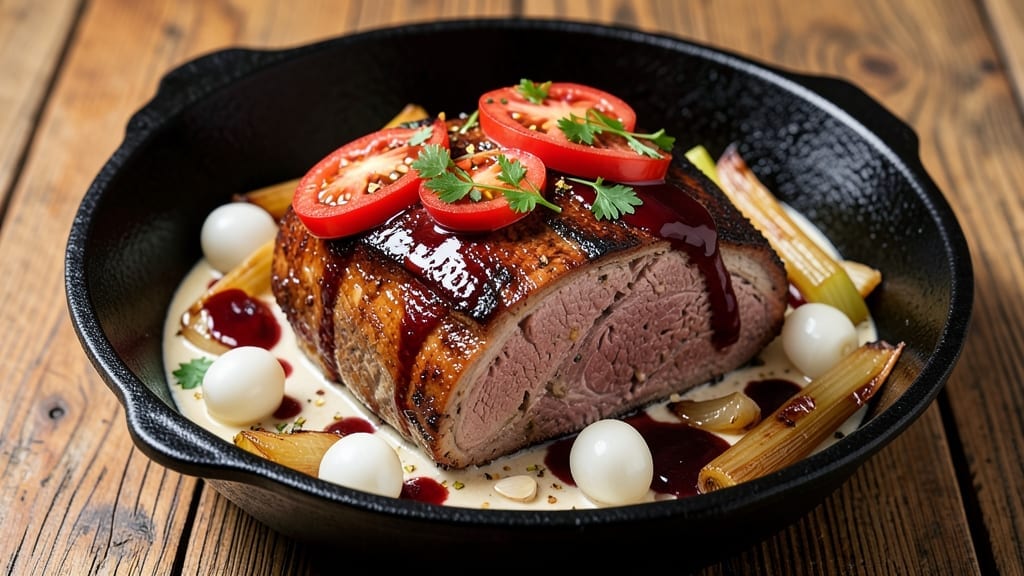
A 10 lb pot roast transforms tough cuts into melt-in-your-mouth perfection through slow cooking—this is the recipe that finally delivers restaurant-quality results at home. The secret lies in proper searing, flavorful liquid management, and patience, turning a large cut into a crowd-pleasing centerpiece that practically falls apart at the table.
I’ve perfected this method over years of testing, ensuring every bite is tender without sacrificing depth of flavor.
This recipe focuses on three critical techniques: browning the meat to lock in juices, using a flavorful liquid (like red wine and beef broth) to infuse the meat, and slow cooking until the connective tissue breaks down completely.
With a 6-8 hour cooking time, you’ll achieve that coveted fork-tender texture while keeping the kitchen cool—ideal for winter gatherings or meal prep. The result is a rich, savory roast that pairs beautifully with classic sides.
What you’ll end up with is a perfectly cooked pot roast that’s rich, aromatic, and so tender it practically melts on the bone. The crust remains intact while the interior transforms into a velvety, flavorful mass that’s impossible to resist.
This isn’t just dinner—it’s an experience that turns any meal into a memorable event.
The beauty of this recipe extends beyond the cooking process—leftovers reheat beautifully, making it perfect for feeding a crowd or preparing ahead. Serve with mashed potatoes, crusty bread, and roasted vegetables for a complete meal that will have everyone asking for seconds. Here’s how to make it happen.
Ingredients for 10 lb pot roast
This 10 lb pot roast relies on premium ingredients to create a restaurant-worthy centerpiece.
| Ingredient | Amount | Notes |
|---|---|---|
| Chuck Roast 🥩 | 10 lb | Center-cut for even cooking |
| Yellow Onions 🧅 | 4 whole | Peeled, cut into wedges |
| Carrots 🥕 | 4 lb | Whole, scrubbed, trimmed |
| Celery Stalks 🌿 | 8 whole | Trimmed, cut into 2-inch pieces |
| Garlic Cloves 🧄 | 12 cloves | Peeled, smashed |
| Tomato Paste 🍅 | 1 cup | High-quality, no sugar added |
| Dry Red Wine 🍷 | 4 cups | Bold variety like Cabernet Sauvignon |
| Beef Broth 💧 | 4 cups | Low-sodium preferred |
| Olive Oil 🫒 | ½ cup | Extra-virgin for searing |
| All-Purpose Flour 🌾 | ½ cup | For dredging |
| Fresh Thyme 🌿 | ½ cup | Stems removed, chopped |
| Fresh Rosemary 🌿 | ¼ cup | Needles only, chopped |
| Fresh Bay Leaves 🍃 | 4 whole | Standard size |
| Salt 🧂 | 2 tbsp | Diamond Crystal kosher |
| Ground Black Pepper 🌶️ | 1 tbsp | Freshly ground |
| Worcestershire Sauce 🍶 | 2 tbsp | Vegetarian if needed |
The chuck roast is non-negotiable—center-cut delivers the best texture. Costco or local butchers typically carry this cut in 10 lb portions, but if you must buy smaller, combine two 5 lb roasts. For vegetables, organic carrots and celery from Whole Foods or your local market add subtle sweetness. The wine should be bold—Caymus or Apothic are reliable choices. Fresh herbs make all the difference: thyme and rosemary should smell vibrant, not dried out. If you’re using dried, Penzeys has excellent quality options.
No red wine? Substitute with additional beef broth and 1 tbsp balsamic vinegar—the acidity helps tenderize. Worcestershire sauce can be omitted if you’re avoiding umami, but vegetarian versions work perfectly. For flour, King Arthur all-purpose creates the best crust. The tomato paste can be swapped for San Marzano crushed tomatoes if you prefer a smoother texture. If you’re short on time, pre-cut frozen vegetables work in a pinch, though fresh is ideal. The key is balancing flavors—don’t skip the Worcestershire unless you’re avoiding it entirely.
This roast develops deeper flavor over time—reheat in the oven with a splash of broth for best results. Store leftovers in airtight containers for up to 5 days in the fridge or 6 months frozen. For freezing, portion into individual servings wrapped in parchment paper. The vegetables can be prepped ahead and stored separately for up to 3 days. If you’re feeding a crowd, double the recipe—this roast scales beautifully, and the leftovers reheat just as well as the first serving.
Why You’ll Love This Recipe
- One-Pot Magic: Honestly, I dump everything in—roast, veggies, broth—and walk away. The chuck roast practically melts into tender perfection while you’re scrolling or watching a movie. No flipping, no fuss, just set it and forget it until the house smells like Sunday dinner.
- Deep Umami Bomb: That caramelized onion and celery base? It’s where the magic happens. The garlic cloves sizzle into oblivion, and the chuck roast soaks up all those flavors until every bite has this rich, slow-cooked satisfaction that makes you slow down mid-chew. Not fancy, but ridiculously good.
- Leftovers That Save Me: Between us, this recipe makes way more than we eat in one sitting. The roast shreds perfectly for sandwiches, the veggies get tossed into salads, and the broth? I freeze it for soups. It’s my budget-friendly secret weapon when I’m too tired to cook but still need to feed a crowd.
- Budget Feast for Crowds: A 10-pound chuck roast feeds 8+ people for under $20. The onions, carrots, and celery stretch the meal further, and the flavor? It’s the kind of dish that makes guests ask for seconds before they even finish their first plate. Not the prettiest, but the taste makes up for it every time.
Step-by-step instructions for 10 lb pot roast
Mastering this slow-cooked centerpiece requires patience and precision—every step builds toward fork-tender perfection.
Sear the Chuck Roast for Deep Flavor
Pat the 10 lb chuck roast completely dry with paper towels, then season generously with 2 tbsp salt and 1 tbsp ground black pepper. Heat 0.5 cup olive oil in a heavy Dutch oven over medium-high heat until shimmering. Place the roast in the pan and sear on all sides for 6-8 minutes total, turning occasionally, until deeply browned and developing a crust. This step locks in juices and creates the rich foundation for your sauce.
Remove the roast and set it aside. Reduce heat to medium and add 4 whole yellow onions, 4 lb carrots, and 8 whole celery stalks to the same pot. Cook for 5 minutes, stirring occasionally, until the vegetables begin to soften slightly. This quick sauté enhances their natural sweetness and prevents them from turning mushy during the long cook.
Build the Aromatic Base
Add 12 cloves smashed garlic, 0.5 cup fresh thyme, and 0.25 cup fresh rosemary to the pot, stirring for 30 seconds until fragrant. Sprinkle in 0.5 cup all-purpose flour and stir vigorously for 1 minute to remove any raw flour taste. This creates a velvety roux that will thicken your sauce later.
Pour in 1 cup tomato paste and stir for 2 minutes until it darkens slightly. Deglaze the pot with 4 cups dry red wine, scraping up all the browned bits from the bottom. Simmer for 5 minutes until the wine reduces by half, intensifying its flavor. This step develops the sauce’s depth and complexity that will infuse the meat during the long cook.
Combine and Slow-Cook to Perfection
Return the seared roast to the pot along with 4 whole fresh bay leaves and 2 tbsp Worcestershire sauce. Pour in 4 cups beef broth, then bring the mixture to a gentle simmer. Cover and transfer to a preheated 325°F oven for 3.5 hours. This low-and-slow cooking method breaks down the tough connective tissue, transforming the roast into fork-tender perfection.
After 3.5 hours, check the internal temperature—it should read 200-205°F at its thickest point. If not, continue cooking for another 30-60 minutes. The meat should pull apart easily with two forks, signaling it’s ready. The vegetables should also be tender but still hold their shape, absorbing all the rich flavors from the sauce.
Rest and Serve with Confidence
Remove the pot roast from the oven and transfer it to a cutting board. Tent loosely with foil and let it rest for 30 minutes. This crucial resting period allows the juices to redistribute throughout the meat, ensuring each bite remains moist and flavorful. Skim any excess fat from the sauce if desired, then adjust seasoning with additional salt and pepper if needed.
Slice the roast against the grain into ½-inch thick portions and serve with the vegetables and sauce spooned over the top. The result should be a masterpiece of tender meat, caramelized vegetables, and a rich, velvety sauce that coats every bite. This dish delivers on its promise of fork-tender perfection with every serving.
Pro Tips For Making 10 Lb Pot Roast
- Sear the Roast First: Walk it through a screaming-hot pan with 2 tablespoons of oil—no crowding, just 3-4 minutes per side until deep brown. I learned this the hard way: skipping the sear means flavor stuck in the middle of the meat instead of where it counts, on the outside.
- Cut Celery into Matchsticks: Forget big chunks—slice those celery stalks paper-thin so they soften into the gravy instead of sitting like soggy toothpicks. My grandmother swore by this, and she was right: it makes the whole dish taste more cohesive.
- Don’t Rush the Braise: Start with a rolling boil, then drop to 300°F (150°C) and let it cook low and slow—at least 3 hours, but 4-5 is better. After burning three batches, I finally figured out that patience here means the meat falls apart at the touch of a fork, not stays tough.
- Brown Onions Slowly: Low heat, 10-12 minutes—no rushing, even if you’re impatient like me. Caramelized onions build depth, and skipping this step leaves the dish tasting flat. (Yes, even if you’re in a hurry.)
Regional styles of this recipe
French Classic Style
The French approach to pot roast focuses on a deep, wine-infused sauce and tender beef that practically melts. Use a Dutch oven and sear the roast with butter and shallots before adding a red wine reduction with tomato paste and herbs de Provence.
The French often add mushrooms and pearl onions for extra richness. Serve with mashed potatoes and green beans almondine for a traditional bistro-style meal. 🍷
English Sunday Roast
In England, pot roast is often called beef and vegetable stew and is a staple for Sunday dinners. The key is using Yorkshire pudding batter drizzled over the roast before serving, along with horseradish sauce on the side.
Add parsnips and turnips to the vegetable medley, and serve with buttered dinner rolls. The English method relies on a longer simmer (up to 4 hours) for extra tenderness. 🇬🇧
German Sauerbraten
This German variation marinates the beef in a vinegar and spice mixture for 3-5 days before slow cooking. The marinade includes red wine vinegar, mustard, ginger, and cloves, giving the roast a tangy, aromatic flavor.
Serve with red cabbage and potato dumplings for a hearty, comforting meal. The German method emphasizes marinating and slow braising to achieve the signature tender texture. 🇩🇪
American Slow-Cooker Style
In the US, pot roast is often made in a slow cooker for convenience, especially for large gatherings. The technique involves browning the meat first, then adding all ingredients to the slow cooker and cooking on low for 8-10 hours.
Use beef broth, Worcestershire sauce, and barbecue seasoning for a smoky twist. Serve with cornbread and collard greens for a Southern-inspired meal. This method is perfect for busy cooks who want tender meat with minimal effort. 🍖
Italian Osso Buco-Inspired
For an Italian twist, use bone-in beef shank (or a chuck roast with bones) and slow-cook it with white wine, tomato sauce, olives, and capers. The Italian approach focuses on rich, savory flavors and often includes gnocchi or polenta on the side.
The sauce is reduced to a thick, velvety consistency, perfect for coating each bite of tender meat. 🇮🇹
Modern Shortcut Version
For a quicker version, use a pressure cooker (like an Instant Pot) to cut cooking time to just 90 minutes. Sear the roast first, then add all ingredients and cook on high pressure for 60 minutes.
This method delivers the same tender results without the long oven time. Pair with roasted potatoes and sautéed spinach for a fast yet impressive meal. 💡
Nutrition facts
Frequently asked questions
Can I use a different cut of beef instead of chuck roast?
A chuck roast is ideal for its balance of flavor and connective tissue, but you can substitute with a bottom round roast or brisket—just increase cooking time by 1-2 hours since these cuts are leaner. Avoid tender cuts like sirloin or ribeye, as they’ll dry out during the slow cook.
How do I know when the pot roast is done?
The roast is ready when it reaches an internal temperature of 200-205°F at its thickest point and pulls apart easily with two forks. For a 10 lb roast, this typically takes 6-8 hours in the oven. If using a meat thermometer, insert it horizontally into the thickest part to avoid hitting bone.
Can I make this in a slow cooker instead of the oven?
Sear the roast first, then transfer it to a slow cooker with all ingredients. Cook on low for 8-10 hours or high for 5-6 hours. The slow cooker method is even more forgiving—just ensure the liquid covers at least half the roast to prevent drying.
What should I do if the sauce is too thin?
If the sauce is watery, remove the roast and vegetables, then simmer the sauce uncovered for 10-15 minutes to reduce it. For extra thickness, mix 1 tbsp cornstarch with 2 tbsp cold water, stir into the sauce, and cook until it gels. Avoid over-reducing, or the sauce may become too concentrated.
How far ahead can I prep the vegetables?
You can chop all vegetables 1 day ahead and store them in airtight containers in the fridge. For best texture, add them to the pot just 1 hour before the roast finishes cooking. If prepping 2 days ahead, blanch the carrots and celery for 2 minutes to preserve color and texture.

- 5 Lb Eye Round Roast Recipe: Slow-Braised to Melt-in-Mouth Tenderness - November 3, 2026
- 3-Hour Ciabatta Bread Recipe: Crusty Chews and Airy Holes Mastered - November 3, 2026
- 5 Fruit Salad Recipe: Vibrant Rainbow Layers With No Brown Spots - November 3, 2026