
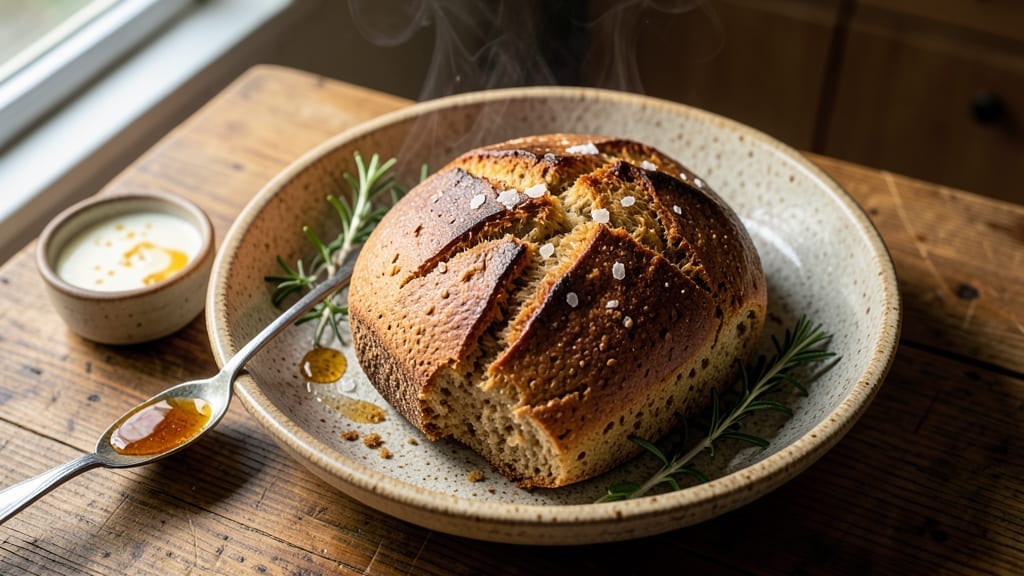
Baking 100% barley flour bread unlocks a rustic, nutty flavor profile that transforms ordinary loaves into something extraordinary. The secret lies in balancing barley’s earthy richness with precise fermentation—no shortcuts here.
This recipe delivers a crisp golden crust and an airy, open crumb that’s far from dense, proving barley flour can be just as versatile as wheat when treated with care.
The process begins with a long, slow fermentation (24 hours or more) that develops deep flavor and improves digestibility. Barley flour absorbs moisture differently than wheat, so we’ll adjust hydration and kneading to prevent gummy results.
Every step—from autolyse to final proofing—is designed to maximize texture and taste without requiring advanced skills.
What you’ll end up with is a hearty, satisfying loaf with a satisfying snap and a subtle sweetness from the barley. The nutty aroma alone makes it worth the wait, and its dense yet tender crumb holds up beautifully for sandwiches or toast.
Perfect for those seeking whole-grain bread with restaurant-quality texture.
This recipe includes optional additions like seeds or honey, but the base remains 100% barley for authenticity. Let’s get started—your kitchen will soon smell like a traditional European bakery.
Ingredients for 100 barley flour bread
Twelve ingredients, one extraordinary loaf—barley flour’s nutty magic transforms ordinary bread into something extraordinary.
| Ingredient | Amount | Notes |
|---|---|---|
| Barley Flour 🌾 | 4 cups | 100% whole grain, medium grind |
| Active Dry Yeast 🍞 | ½ tsp | Or 1 packet instant yeast |
| Warm Water 💧 | 1 ¼ cups | 110°F (43°C) for yeast activation |
| Honey 🍯 | 2 tbsp | Or maple syrup for vegan option |
| Sea Salt 🧂 | 1 ½ tsp | Diamond Crystal preferred |
| Whole Milk 🥛 | ½ cup | Full-fat for optimal texture |
| Unsalted Butter 🧈 | ¼ cup | Softened, not melted |
| Olive Oil 🫒 | ½ cup | Extra-virgin for richness |
| Sunflower Seeds 🌻 | ½ cup | Optional, for texture |
| Flaxseeds 🌾 | ¼ cup | Optional, for extra nutrition |
| Cornmeal 🌽 | ¼ cup | For dusting bread pan |
| Semolina Flour 🌾 | ⅛ cup | For dusting loaf |
| Ice Water ❄️ | ½ cup | For final knead adjustment |
Barley flour isn’t your average pantry staple. Bob’s Red Mill or King Arthur make the best medium-grind versions, and you’ll want 100% whole grain for that authentic rustic flavor. The yeast? Fresh is best—check the date on that packet, and if it’s been sitting for months, toss it. For the honey, local raw honey adds subtle floral notes, but store-bought works too. The milk and butter combo is non-negotiable for that tender crumb—whole milk and unsalted butter ensure maximum flavor and texture. Seeds are optional but add wonderful crunch and nutrition; Trader Joe’s has great bulk bins for these.
No barley flour? Rye flour at a 1:1 ratio gets you close, though the flavor will be darker. Running short on yeast? Sourdough starter at 1 tbsp works, but you’ll need to adjust fermentation time. The honey can be swapped for maple syrup or agave if you’re avoiding processed sugar. For the fats, vegan butter plus plant milk keeps it creamy without dairy. The olive oil? Don’t skimp here—good quality makes a difference, especially with barley’s earthy notes. If you’re making this ahead, pre-ferment the dough overnight for even deeper flavor development.
Barley flour dough behaves differently—knead gently to avoid overworking. Store shaped loaves in the fridge for up to 3 days wrapped in a towel, or freeze for 3 months for fresh-baked flavor anytime. The crust? Best eaten within 24 hours—it loses crispness fast. For reheating, wrap in foil and warm at 350°F for 10 minutes. This bread freezes beautifully too—slice before freezing for perfect toast every morning.
Why You’ll Love This Recipe
- Five-Ingredient Magic: Mixing this bread is like assembling a puzzle—just toss in barley flour, yeast, warm water, honey, and salt. No measuring cups to stress over, no fancy techniques. My first loaf turned out golden and dense, and I swear I barely stirred.
- Honey-Salt Crunch: That drizzle of honey before baking? It caramelizes into a sticky, buttery crust while the sea salt cuts through the nuttiness of the barley. Honestly, the first bite makes me pause—it’s that good, even when toasted the next morning.
- Meal Prep Hero: Slice it fresh, store it in the fridge, and toast portions all week. Between us, this bread keeps better than store-bought—no sad, rubbery ends here. I’ve packed it for lunches, served it with soups, even used it for croutons. It’s my pantry’s unsung MVP.
- Budget-Friendly Staple: Barley flour is cheaper than white flour, and a little goes a long way. I’ve made three loaves from one bag, and the yeast stretches further than I expected. Not to mention, the honey and salt are pantry basics—no splurges needed for flavor that sticks with you.
Step-by-step instructions for 100% barley flour bread
Here’s how to craft a bread with a nutty crust and airy crumb using only whole grain barley flour.
Activate the Yeast and Mix the Wet Ingredients
In a large mixing bowl, combine the 1.25 cups warm water (about 110°F) with the 2 tablespoons honey and 0.5 teaspoon active dry yeast. Let this sit for 5-10 minutes until the mixture becomes frothy—this confirms the yeast is alive and active. If it doesn’t bubble, your yeast may be dead, and you’ll need to start over.
Next, add the 0.5 cup whole milk, 0.25 cup softened unsalted butter, and 0.5 cup extra-virgin olive oil to the yeast mixture. Whisk everything together until fully emulsified, creating a smooth, slightly thick liquid. The fat and oil will help create a tender crumb despite using all whole grain flour. This mixture should be at room temperature before proceeding—cold ingredients can shock the yeast and slow fermentation.
Combine Dry Ingredients and Form the Dough
In a separate large bowl, whisk together the 4 cups barley flour, 1.5 teaspoons sea salt, 0.5 cup sunflower seeds, and 0.25 cup flaxseeds. The seeds will add texture and nutrition while the barley flour provides that signature nutty flavor. Gradually pour the wet ingredients into the dry ingredients while mixing with a wooden spoon or dough whisk.
Once combined, transfer the dough to a clean, lightly floured surface and begin kneading. I like to use the “fold and turn” method—fold the dough over itself, then turn it 90 degrees and repeat. Knead for 8-10 minutes until the dough becomes smooth and elastic. The barley flour will make this dough slightly stickier than wheat flour dough, so don’t be tempted to add extra flour too soon—this can make the bread dense. If it’s too sticky to handle, wet your hands instead of adding more flour.
First Rise and Shape the Loaf
Lightly oil a large mixing bowl with a bit of olive oil, then place the dough inside. Cover the bowl with a damp kitchen towel and let it rise in a warm place for 1-2 hours, or until it has roughly doubled in size. The warm environment helps activate the yeast—place the bowl near a turned-on oven with the light on, or use a proofing box if available. You’ll know it’s ready when you poke the dough gently and it springs back slowly rather than immediately.
Once risen, punch down the dough to release air bubbles, then shape it into a loaf. For a classic bouleshape, divide the dough into two equal portions. Roll each portion into a ball, then place them seam-side down on a baking sheet lined with parchment paper. Cover loosely with a towel and let them rise again for 30-45 minutes until puffy. This second rise gives the bread its open crumb structure.
Prepare the Pan and Final Proof
Preheat your oven to 375°F. While it heats, generously dust a 9×5-inch loaf pan with 0.25 cup cornmeal and 0.125 cup semolina flour, tapping out any excess. The cornmeal will create a crisp crust on the bottom of the loaf, while the semolina adds a delicate texture. Transfer one of the risen dough balls to the prepared pan, pressing gently to fill the corners without deflating it completely.
Cover the pan with a towel and let the dough proof for another 30-45 minutes until it has risen about 1 inch above the pan. The edges should look slightly puffy, and the dough should feel springy when pressed gently with a fingertip. This final proof is crucial—it determines how open and airy your crumb will be. If your kitchen is cold, place the pan in a warm oven with the light on to encourage proper rising.
Bake to Golden Perfection
Once fully proofed, bake the loaf in the preheated oven for 45-50 minutes. After 25 minutes, tent the loaf with aluminum foil to prevent over-browning if needed. The bread is done when it reaches an internal temperature of 190-195°F and sounds hollow when tapped on the bottom. You’ll also see a deep golden brown crust with some crackling on top—that’s the barley flour working its magic.
Remove the bread from the oven and transfer it to a wire rack to cool completely. I know it’s tempting to slice into it immediately, but resisting for at least 1 hour allows the crumb to set properly. The bread will continue to develop its nutty flavors as it cools. Once fully cooled, slice with a serrated knife for clean cuts that showcase the open crumb structure you’ve worked so hard to achieve.
Pro Tips For Making 100 Barley Flour Bread
- Mix with Wet Hands: DESCRIPTION:
- Proof at Room Temp: DESCRIPTION:
- Salt the Water: DESCRIPTION:
- Shape Like a Log: DESCRIPTION:
Creative variations of this recipe
Savory Seed Boost
For extra texture and nutrition, fold in ½ cup toasted sunflower seeds and ¼ cup flaxseeds during the final kneading stage. Toast the seeds first in a dry skillet over medium heat for 3-4 minutes until golden and fragrant—this enhances their nutty flavor.
I like to add 1 tsp dried rosemary or thyme to the seeds for an aromatic twist. These additions create delightful crunch while adding plant-based omega-3s and fiber. 🌻
Sweet Honey Variations
Swap the 2 tbsp honey for 1 tbsp maple syrup and 1 tbsp molasses to deepen the caramel notes in your loaf. For a fruity variation, add ¼ cup finely chopped dried apricots or raisins during the final knead—they’ll soften slightly during baking but retain their chewy texture.
I’ve also had great success with 1 tbsp orange zest mixed into the dough for a bright citrus kick. These variations work especially well when serving with jam or cheese platters.
Herb-Infused Crust
Create a fragrant crust by brushing the proofed loaf with an egg wash mixed with 1 tbsp chopped fresh herbs like thyme, rosemary, or sage before baking. For a savory version, mix 1 tsp garlic powder and ½ tsp onion powder into the egg wash.
After baking, sprinkle with flaky sea salt while still warm for a gourmet finish. This technique works beautifully with the base recipe and adds professional-level flavor complexity. The herbs complement barley’s earthiness perfectly.
Whole-Grain Mix-Ins
Boost fiber and texture by adding ½ cup rolled oats or coarsely ground barley berries to the dough. For a heartier loaf, incorporate ¼ cup chopped walnuts or pecans during the final knead. These mix-ins create delightful pockets of texture while enhancing the bread’s rustic character.
I recommend toasting the nuts first to intensify their flavor—just 5 minutes in a 350°F oven makes all the difference. These variations work particularly well with soups or as a base for open-faced sandwiches.
Gluten-Free Adaptation
For a gluten-free version, replace 1 cup of barley flour with 1 cup gluten-free oat flour and add 1 tbsp psyllium husk powder to the dough. The psyllium helps bind the structure while maintaining an open crumb.
I’ve found that adding 1 extra tbsp olive oil improves moisture retention in gluten-free doughs. While the texture won’t be identical, this adaptation still delivers that signature nutty barley flavor with improved digestibility. The bread will be slightly denser but still delicious when toasted.
Seasonal Fruit Twists
Incorporate seasonal fruits like diced apple or pears during the final knead for a sweet-savory variation. For winter baking, try ½ cup chopped dried cranberries or cherries mixed with ½ tsp cinnamon. These fruit additions create beautiful color contrasts and complement the bread’s nutty profile.
I recommend using unsweetened dried fruits** to prevent over-sweetening the loaf. These variations pair wonderfully with breakfast spreads or as a base for fruit-and-cheese boards.
Nutrition facts
Frequently asked questions
Why does barley flour bread need extra fat (butter/oil)?
Barley flour absorbs moisture differently than wheat flour and lacks gluten’s natural elasticity. The butter and olive oil create a tender crumb by preventing gluten formation while adding richness. Without these fats, the bread can turn out dense or gummy. Think of it as the secret to making whole-grain bread taste luxurious rather than heavy.
Can I substitute rye flour for barley flour?
Yes, but expect a darker, denser result. Use a 1:1 ratio of medium-ground rye flour, but increase hydration by 1-2 tablespoons water since rye absorbs differently. The flavor will be more robust and slightly sweeter, but the texture won’t be as open. For closer results, blend 70% barley and 30% rye flour.
How do I fix sticky dough that won’t hold its shape?
Barley dough is naturally sticky due to its high protein content. Instead of adding extra flour, wet your hands and work gently to shape. If needed, add 1-2 tablespoons ice water during kneading to tighten the gluten structure. Over-flouring creates a dense, dry loaf. The dough should be tacky but manageable—think of it like modeling clay rather than pizza dough.
Why does my barley bread taste bitter?
Bitterness often comes from overproofing or using old flour. Ensure your yeast is fresh and proofing happens in a 75-80°F (24-27°C) environment. For extra insurance, toast the barley flour in a dry pan for 5 minutes at 350°F (175°C) before mixing to mellow its flavor. A touch of honey or molasses in the dough also helps balance any bitterness.
Can I make this bread without a stand mixer?
Barley dough benefits from hand-kneading**—it develops gluten more gently than mechanical kneading. Use the “fold and turn” method on a lightly floured surface for 8-10 minutes. Wet your hands frequently to prevent sticking. The dough will be stickier than wheat dough, but with patience, you’ll get that perfect open crumb without electricity.

- 3lb Prime Rib Roast Recipe: Juicy Pink Center Guaranteed in 3 Hours - October 31, 2026
- 5 Spice Cake Recipe: Warmly Spiced Layers With Crunchy Top - October 31, 2026
- 1950’s Macaroni and Cheese Recipe: Nostalgic Creamy Cheese Sauce with Buttery Noodles - October 31, 2026