
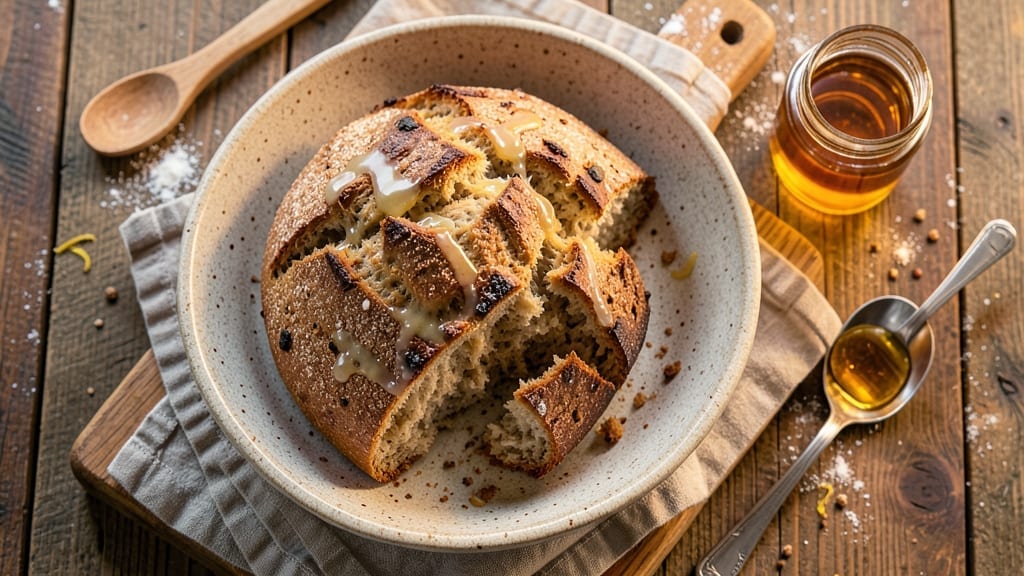
Transform your kitchen with this 100 percent whole wheat bread recipe—light, airy, and far from the dense loaves you’ve tried before. This recipe combines traditional artisanal methods with modern shortcuts to deliver a loaf that’s nutritious without sacrificing texture.
The secret? A precise blend of hydration, proper kneading, and controlled proofing that transforms whole wheat into something truly special.
What sets this recipe apart is the balance of whole grains and careful mixing to avoid heaviness.
Unlike many whole wheat breads that turn out gummy or dry, this method ensures a crispy crust, open crumb, and tender bite—qualities you’d expect from white bread, but with all the fiber and nutrients.
The dough is manageable for home bakers, whether you’re using a stand mixer or hand-kneading, and the proofing process is designed to maximize flavor without overworking the gluten.
The result is a golden-brown loaf with a satisfying crunch and a soft, slightly chewy interior—perfect for toast, sandwiches, or enjoying fresh from the oven. This recipe also includes troubleshooting tips to address common whole wheat challenges, like dryness or uneven baking, so you’ll achieve consistent success.
Whether you’re a seasoned baker or new to whole wheat, this method delivers professional-quality results at home.
Once baked, the bread stores beautifully for up to a week in an airtight container, making it ideal for meal prep. For even better flavor, brush the warm loaf with melted butter or olive oil—this simple step enhances the crust and adds richness.
Ready to bake bread that’s as good as it gets? Let’s get started.
Ingredients for 100 percent whole wheat bread
Precision-mixed ingredients that transform whole wheat into an artisanal loaf with crisp crust and tender crumb.
| Ingredient | Amount | Notes |
|---|---|---|
| 100 Percent Whole Wheat Flour 🌾 | 5 cups | High-protein, bread flour preferred |
| Active Dry Yeast 🍞 | 2 ¼ tsp | Or 1 packet (2.25 tsp) |
| Granulated Sugar 🍚 | 1 tbsp | For yeast activation |
| Warm Water 💧 | 1 ¼ cups | 105-110°F (40-43°C) |
| Unsalted Butter 🧈 | ½ cup | Cold, cubed, room temp |
| Honey 🍯 | 1 tbsp | For dough elasticity |
| Large Egg 🥚 | 1 whole | Room temperature |
| Diamond Crystal Kosher Salt 🧂 | 2 tsp | Adjust to taste |
| Extra-Virgin Olive Oil 🫒 | 1 tbsp | For dough softness |
| Instant Vital Wheat Gluten 🌾 | ¼ cup | Essential for structure |
| Cornmeal 🌽 | ¼ cup | For dusting loaf pan |
| Ice Water 💧 | ½ cup | For final dough adjustment |
The whole wheat flour is the foundation, but not all flours are created equal. King Arthur or Bob’s Red Mill high-protein whole wheat deliver the best gluten development for this light texture. Vital wheat gluten is non-negotiable—it strengthens the structure that whole wheat alone can’t provide. For the yeast, Fresh & Easy brand (found in most supermarkets) activates faster than generic brands. Keep your butter cold when mixing to prevent overdevelopment, but let it soften slightly before incorporating. The honey isn’t just for sweetness—it enhances gluten elasticity, making the dough more manageable during kneading. If your flour is particularly dense, you might need an extra tablespoon of water during mixing.
No vital wheat gluten? Substitute with an extra 0.25 cup all-purpose flour, though texture will be slightly denser. Short on honey? Maple syrup works 1:1, though it adds more moisture. The egg can be replaced with 1 tbsp flaxseed meal + 3 tbsp water for a vegan version, though texture will be slightly different. For salt, Diamond Crystal measures differently than Morton—use 1.5 tsp Morton if that’s what you have. The olive oil can be swapped for avocado oil, but it lacks the fruity notes that complement the whole wheat. If your dough feels too sticky after mixing, add ice water 1 tbsp at a time until it comes together cleanly.
Store the baked loaf in an airtight container at room temperature for up to 5 days, though it’s best enjoyed within 2 days for maximum freshness. For longer storage, freeze the cooled loaf wrapped in plastic for up to 3 months. To revive, wrap in a damp towel and warm in a 200°F oven for 10 minutes. The crust stays crisp for about 24 hours at room temperature, after which it’s best to toast slices. For meal prep, slice and freeze individual portions—reheat directly from frozen in a toaster or 350°F oven for 5 minutes.
Why You’ll Love This Recipe
- No-Fuss Mix-In: Mixing the dough is literally five minutes of stirring—just flour, yeast, sugar, water, and butter. No kneading, no fancy techniques, just dump, fold, and let the yeast do the work. (Yes, even if you’re still in your pajamas at 11 a.m.)
- Nutty, Rich Depth: That butter and sugar combo? It’s the secret weapon—balancing the whole wheat’s earthiness with just enough sweetness to make every slice taste like a treat. Honestly, my kids ask for this over white bread, and they’re not picky.
- Weeknight Workhorse: Toast it for breakfast, pack it in lunchboxes, or use it for sandwiches—this bread handles it all. Between us, I’ve even thrown it into a skillet with garlic butter for dinner toast. Versatile enough to replace store-bought in every scenario.
- Budget Bread Magic: A single batch costs pennies and stretches for days—freeze half for later, and you’ve got fresh bread anytime. (I’ve pulled dough straight from the freezer into the oven on lazy Sundays.) Plus, whole wheat means fewer trips to the grocery store for “just one loaf.”
Step-by-step instructions for artisan-light whole wheat bread
Mastering this dough requires patience and precision—here’s how to transform dense flour into an airy, flavorful loaf.
Activate the Yeast and Mix Wet Ingredients
In a small bowl, combine the 1.25 cups warm water (test temperature with your finger—it should feel like bathwater, 105-110°F), 1 tbsp granulated sugar, and 2.25 tsp active dry yeast. Let sit for 5-10 minutes until foamy. This activation step ensures your dough rises properly—if it doesn’t foam, your yeast is dead and you’ll need to start over.
In a stand mixer fitted with the dough hook, combine the 5 cups 100 percent whole wheat flour, 0.25 cup instant vital wheat gluten, and 2 tsp diamond crystal kosher salt. The gluten provides structure that whole wheat flour lacks on its own. With the mixer running on low speed, gradually add the 1 whole large egg, 1 tbsp honey, 0.5 cup cold cubed unsalted butter, and 1 tbsp extra-virgin olive oil. Mix for 3-4 minutes until the butter is fully incorporated and the dough begins to pull away from the bowl sides.
Hydrate and Knead the Dough
Add the yeast mixture all at once and mix on medium speed for 5 minutes. The dough will be shaggy at first but will gradually come together as the gluten develops. If the dough feels too dry, add 1-2 tablespoons of ice water at a time until it forms a soft, slightly tacky ball that cleans the sides of the bowl.
Switch to low speed and knead for 8-10 minutes until the dough is smooth, elastic, and passes the windowpane test: stretch a small piece between your fingers—it should be translucent and thin enough to see light through without tearing. This indicates proper gluten development, which is crucial for that light, airy texture we’re after. If the dough tears easily, knead for another 2-3 minutes—whole wheat dough requires more time than white flour dough.
First Rise and Shaping
Lightly oil a large bowl, place the dough inside, and turn to coat all surfaces. Cover with a damp towel and let rise in a warm place (75-80°F) for 1-1.5 hours, or until doubled in size. The dough should feel springy when pressed gently—if it springs back slowly, it needs more time. Whole wheat dough rises more slowly than white flour dough, so don’t rush this step.
Punch down the risen dough to release air, then turn it out onto a lightly floured surface. Gently shape into a 9×5-inch loaf by folding one short end toward the center, then the other, and roll tightly from the seam toward you. This creates tension that helps the bread expand properly in the pan. Place the shaped loaf seam-side down in a 9×5-inch loaf pan dusted with 0.25 cup cornmeal—this prevents sticking and adds a subtle crunch to the crust.
Second Rise and Baking
Cover the pan with a damp towel and let rise for another 45-60 minutes until the dough domes 1-2 inches above the pan. Preheat your oven to 375°F with a baking stone or inverted baking sheet on the middle rack—this creates steam for a better oven spring. Five minutes before baking, place an ice cube in the bottom of the pan. When the oven reaches temperature, bake for 45-50 minutes until the internal temperature reaches 190-195°F and the crust is deep golden brown.
For that perfect crust, I like to tent the loaf with foil after 20 minutes to prevent over-browning while ensuring the interior cooks through. Tap the bottom of the loaf—it should sound hollow when done. Let cool in the pan for 10 minutes, then transfer to a wire rack. The bread will continue to firm up as it cools, making slicing easier. Store wrapped at room temperature for up to 3 days or freeze for longer storage.
Pro Tips For Making 100 Percent Whole Wheat Bread
- Bloom the Yeast First: Skip mixing yeast directly into dry flour—it’s a rookie move. Instead, dissolve it in the warm water with sugar first, then wait 5-10 minutes until it’s bubbly and frothy. I learned this the hard way when my dough took forever to rise because the yeast was sluggish from dry flour.
- Use a Scale for Flour: Measuring whole wheat flour by cups is a disaster—it packs differently every time. Weigh it instead (about 450g for most recipes) for consistent texture. Trust me, your bread’s density will thank you, and you won’t end up with a brick or a puffy mess.
- Don’t Over-Knead the Dough: Whole wheat dough is stubborn—it won’t behave like white flour. Knead just until it’s smooth (about 8-10 minutes by hand), then stop. Overworking it makes gluten tighten too much, and your bread turns out dense. Let the dough rest if it resists; patience wins here.
- Chill the Dough Overnight: This isn’t optional—it’s the upgrade. Shape your dough, cover it, and refrigerate for 8-12 hours. The slow rise deepens flavor, makes shaping easier, and gives you a lighter loaf without extra effort. Yes, even if you’re impatient like me.
Wine and beer pairings for this recipe
Crisp White Wine
Pair your golden-brown whole wheat loaf with a dry Riesling or Sauvignon Blanc—their bright acidity and citrus notes cut through the bread’s earthy whole wheat flavor beautifully.
I love a New Zealand Sauvignon Blanc with its zesty grapefruit and herbal undertones, which complement the honey and olive oil in the dough. Serve chilled at 50-55°F to enhance the wine’s crispness against the warm, slightly chewy interior. 🍷
Malty Amber Ale
For beer lovers, an amber ale with caramel and biscuit notes bridges the gap between whole wheat’s nuttiness and the bread’s buttery richness. Try a Belgian-style amber ale like Leffe Blond or a US craft amber like Allagash White.
The beer’s subtle sweetness balances the bread’s slight tang, while its effervescence cleanses your palate between bites. Serve at 45-50°F to preserve the beer’s crispness.
Honey-Infused Mead
For a unique pairing, serve with honey mead—the same honey used in the dough enhances the flavor connection. Look for a dry or semi-dry mead like Archetype Honey Wine, which mirrors the bread’s honeyed sweetness while adding floral complexity.
The mead’s natural carbonation also complements the bread’s airy texture. This pairing feels like a celebration of the recipe’s key ingredient. 🍯
Seasonal Variations
In fall, swap the Riesling for a dry Riesling Kabinett with its apple and pear notes, which pair perfectly with the bread’s warm spices. For summer, a sparkling rosé adds a refreshing contrast to the bread’s hearty texture.
In winter, a dry cider like Strongbow Original brings caramel and oak flavors that echo the bread’s crust. Each season offers a different way to enjoy this versatile loaf.
Non-Alcoholic Options
Skip the alcohol with sparkling apple cider—its effervescence and tartness mirror wine’s cleansing properties. For a nutty contrast, try chilled hibiscus tea with a squeeze of lemon, which enhances the bread’s honeyed sweetness.
Both options keep the pairing refreshing while highlighting the bread’s natural flavors. Perfect for brunch or family gatherings! 🍹
Nutrition facts
Frequently asked questions
Why does my whole wheat bread always turn out dense?
Dense whole wheat bread usually happens when gluten development is insufficient or hydration levels are off. This recipe uses vital wheat gluten and precise kneading (8-10 minutes) to strengthen the structure. Also, never skip the proofing steps—whole wheat dough rises slower than white flour dough and needs that extra time to develop air bubbles. If your dough feels too dry, add ice water 1 tbsp at a time during mixing.
Can I make this bread without a stand mixer?
Hand-kneading works perfectly—just be prepared to work the dough for 10-12 minutes until it passes the windowpane test. Use your knuckles to press and fold the dough rather than stretching it, which can tear whole wheat dough. For the butter, cut it into small cubes and work it into the dough gradually while kneading to distribute evenly.
How do I know when the dough is properly kneaded?
The dough is ready when it’s smooth, elastic, and passes the windowpane test: stretch a small piece between your fingers until it’s thin enough to see light through without tearing. Whole wheat dough will feel slightly tacky but shouldn’t stick excessively. If it tears easily, knead for another 2-3 minutes—this extra time helps develop the gluten that gives your bread its light texture.
What’s the best way to store leftover whole wheat bread?
Wrap the cooled loaf tightly in plastic wrap or place it in an airtight container to preserve freshness for up to 5 days at room temperature. For longer storage, freeze the bread (wrapped) for up to 3 months. To revive frozen bread, thaw at room temperature for 1-2 hours or warm in a 200°F oven for 10 minutes wrapped in a damp towel for a fresher texture.
Can I add seeds or nuts to this recipe?
Yes, but add them sparingly—2-3 tablespoons max—to avoid weighing down the dough. Best options are sunflower seeds, flaxseeds, or chopped walnuts (soak nuts briefly in warm water first). Stir them into the dough during the final 2 minutes of kneading so they distribute evenly. Avoid adding seeds/nuts during proofing, as they can interfere with the dough’s rise.

- 3lb Prime Rib Roast Recipe: Juicy Pink Center Guaranteed in 3 Hours - October 31, 2026
- 5 Spice Cake Recipe: Warmly Spiced Layers With Crunchy Top - October 31, 2026
- 1950’s Macaroni and Cheese Recipe: Nostalgic Creamy Cheese Sauce with Buttery Noodles - October 31, 2026