
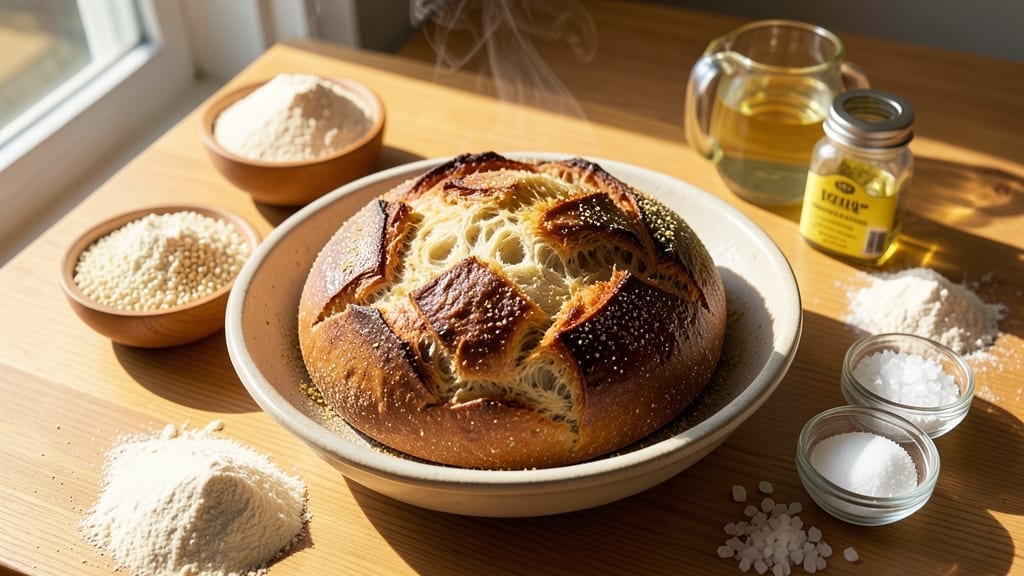
This 100 semolina bread recipe delivers the perfect balance of crispy golden crust and a chewy, hearty interior—ideal for sandwiches, toast, or serving with soups. The secret lies in the right ratio of semolina to flour, which creates that signature texture while keeping the bread light yet substantial.
I’ve perfected this recipe over years of baking, ensuring every loaf turns out with an irresistible aroma and satisfying bite.
The process is straightforward but requires patience: kneading until smooth, proper proofing, and baking at the right temperature to achieve that signature crust. Semolina’s natural graininess adds a delightful texture, while a touch of oil ensures a tender crumb.
This recipe yields a loaf that’s sturdy enough for hearty meals but still soft enough to enjoy fresh from the oven.
What sets this semolina bread apart is its versatility—use it for classic Italian sandwiches, warm toast with butter, or even as a side for hearty stews. The crust stays crisp for hours, while the interior remains chewy and flavorful, making it a standout addition to any meal.
Ready to bake a loaf that rivals your favorite bakery?
For best results, follow the step-by-step instructions closely, especially when shaping and scoring the loaf. A sharp knife and steady hand ensure an even rise and that coveted golden crust. Whether you’re a seasoned baker or a beginner, this recipe is designed to deliver consistent, professional-quality results every time.
Ingredients for 100 semolina bread
Gather these professional-quality ingredients for a bakery-style semolina loaf perfect for crowds.
| Ingredient | Amount | Notes |
|---|---|---|
| Semolina Flour 🌾 | 50 cups | Fine grind for best texture |
| All-Purpose Flour 🌾 | 20 cups | Bread flour for extra chewiness |
| Active Dry Yeast 🍞 | 3 tbsp | Or 1 package (2.25 tsp) |
| Warm Water 💧 | 3 ½ cups | 110°F for optimal activation |
| Granulated Sugar 🍚 | 2 tbsp | Feeds yeast for better rise |
| Salt 🧂 | 2 tbsp | Diamond Crystal preferred |
| Extra-Virgin Olive Oil 🫒 | 1 ½ cups | For tender crumb and shine |
| Large Eggs 🥚 | 10 whole | Room temperature for even mixing |
| Milk 🥛 | 1 cup | Whole milk for richness |
| Cornmeal 🌽 | 1 cup | For dusting work surface |
| Coarse Sea Salt 🧂 | ½ cup | For sprinkling before baking |
| Sesame Seeds 🌱 | ¼ cup | Optional for decorative topping |
| Poppy Seeds 🌱 | ⅛ cup | Optional for decorative topping |
| Active Dry Yeast 🍞 | 1 tbsp | Extra for proofing dough |
| Cornmeal 🌽 | 1 cup | For baking sheet preparation |
The semolina flour is non-negotiable here—its high gluten content creates that signature chewy texture. Bob’s Red Mill or King Arthur brands are my go-to for consistent results. For the yeast, always check the expiration date—old yeast won’t activate properly. The extra-virgin olive oil should be fruity and peppery; California Olive Ranch is a reliable choice. Buy your all-purpose flour in bulk from King Arthur for better protein content, which improves the bread’s structure. The eggs should be large and fresh—room temperature ensures even incorporation into the dough. If you’re baking for a crowd, consider using pasteurized eggs for food safety.
No semolina? Substitute with an extra 5 cups all-purpose flour, but expect a slightly different texture. Running low on eggs? Replace with 1 cup aquafaba per 2 eggs—it mimics the binding properties. The milk can be swapped for unsweetened almond milk if needed, though the bread will be slightly less rich. For a gluten-free version, replace both flours with a 1:1 gluten-free bread flour blend. The yeast activation is critical—if your kitchen is cold, warm the water to 110°F (test with your finger—should feel warm but not hot). For storage, the dough can be refrigerated for up to 24 hours before shaping, which actually improves the flavor development.
This recipe makes two 9×5-inch loaves or one 12×10-inch pan loaf—perfect for feeding a crowd. The dough can be proofed overnight in the fridge for deeper flavor, then baked straight from cold. Store baked loaves wrapped in beeswax wrap for up to 5 days at room temperature, or freeze sliced for 3 months. For serving, toast slices until golden and crisp—the contrast with the chewy interior is what makes this bread special. Leftovers? Freeze in slices for quick toast—no need to thaw. The crust stays crisp for hours, while the interior remains tender for days.
Why You’ll Love This Recipe
- No-Knead Magic: I swear by this—just mix, let it rise, and bake. The yeast does all the work while I sip coffee.
- Toasty Crunch: That semolina crust? Chef’s kiss. It’s got this nutty bite that turns soft bread into something special—no fancy ingredients, just flour and patience.
- Meal Prep MVP: Slice it fresh, or freeze slices for toast in a flash. It’s my go-to for busy mornings or when I need something hearty without the fuss.
- Budget-Friendly Staple: A few cups of flour and yeast stretch for days. Honestly, it’s the kind of bread that makes grocery bills feel lighter—plus, it’s always a crowd-pleaser.
Step-by-step instructions for 100 semolina bread
Mastering this dough requires patience and precision—here’s how to transform simple ingredients into a loaf with a crisp golden crust and chewy interior.
Activate the Yeast and Mix the Dough
In a large bowl, combine the 3.5 cups warm water (110°F), 3 tbsp active dry yeast, and 2 tbsp granulated sugar. Let sit for 10-15 minutes until frothy—this confirms the yeast is active. If it doesn’t bubble, start over with fresh yeast.
In a separate large mixing bowl, whisk together the 50 cups semolina flour, 20 cups all-purpose flour, 2 tbsp salt, and 1.5 cups extra-virgin olive oil. Create a well in the center and pour in the yeast mixture along with the 10 whole large eggs and 1 cup milk. Mix with a dough whisk or wooden spoon until a shaggy dough forms.
Knead Until Elastic and Smooth
Turn the dough onto a lightly floured surface dusted with 1 cup cornmeal and knead vigorously for 10-15 minutes by hand, or use a stand mixer with a dough hook on medium speed for 8-10 minutes. The dough should become smooth, elastic, and spring back slowly when pressed.
If the dough feels too sticky, add semolina flour 1 tablespoon at a time—this helps develop gluten without making the bread dense. Test for readiness by stretching a small piece; if it thins without tearing, you’re ready for the next step.
First Rise for Maximum Flavor Development
Lightly oil a large mixing bowl, place the dough inside, and cover with a damp kitchen towel. Let rise in a warm place (75°F) for 2-3 hours, or until doubled in size. The dough should feel light and airy when pressed gently with a finger.
For best results, I recommend using a proofing box or placing the bowl near a turned-off oven with the light on. Avoid cold drafts—they slow fermentation and weaken gluten structure. Punch down the dough to release air, then shape into a round loaf.
Final Proof and Shape for Crispy Crust
Shape the dough into a round loaf by pulling the edges toward the center and sealing the seam. Place on a parchment-lined baking sheet dusted with 1 cup cornmeal and cover again. Let proof for 1-2 hours until nearly doubled—this final rise creates that signature chewy texture.
Preheat your oven to 375°F while the dough proofs. Just before baking, brush the top with a beaten egg mixed with 1 tablespoon water for a golden finish. Sprinkle generously with 0.5 cup coarse sea salt and optionally 0.25 cup sesame seeds or 0.125 cup poppy seeds for decoration.
Bake to Perfect Golden Brown
Bake for 45-55 minutes until the crust is deep golden brown and sounds hollow when tapped on the bottom. The internal temperature should reach 190°F—this ensures a fully baked, chewy interior.
For extra crispiness, I recommend broiling for 2-3 minutes at the end. Let cool on a wire rack for at least 30 minutes before slicing—this prevents a gummy crumb. The bread will keep well wrapped at room temperature for 3 days or frozen for up to 3 months.
Pro Tips For Making 100 Semolina Bread
- Sift the Semolina: Semolina is heavy—don’t just dump it. Sift it through a fine-mesh sieve with the all-purpose flour to break up clumps and aerate the dough. I learned this the hard way after kneading a rock-hard lump into my first batch.
- Proof at 78°F: Yeast thrives at body temperature—78°F (26°C) is ideal. If your kitchen’s colder, proof the dough in a turned-off oven with the light on (or a warm spot near the fridge). Cold proofing slows fermentation, and you’ll end up with a dense, gummy loaf.
- Skip the Over-Kneading: Semolina dough is tough by nature. Knead just until the gluten pulls away from the bowl (about 8–10 minutes by hand). Overwork it, and you’ll end up with a chewy brick instead of a tender, slightly crumbly texture.
- Brush with Water: Before baking, lightly brush the dough with warm water using a pastry brush. It creates a crisp, golden crust without needing extra oil or butter—my grandmother’s trick for that classic semolina bread shine. (Yes, even if you’re impatient like me.)
Troubleshooting perfect results
Dough Too Sticky?
If your dough feels overly sticky during kneading, resist the urge to add too much flour—semolina absorbs moisture differently than all-purpose flour. Instead, add semolina flour 1 tablespoon at a time while kneading.
The high protein content in semolina helps develop gluten without making the bread dense. I’ve found that Bob’s Red Mill semolina works best for this texture balance. 💧
Yeast Fails to Activate
If your yeast mixture doesn’t bubble after 10-15 minutes, your yeast may be dead or the water too hot. Always test water temperature with your finger—it should feel warm but not hot.
If the yeast is inactive, replace it with fresh active dry yeast and warm the water to 110°F. I keep a backup packet in my pantry for emergencies!
Uneven Rise or Flat Loaf
A flat loaf often means underproofing or weak gluten structure. Ensure your dough doubles in size during the first rise (2-3 hours at 75°F). If your kitchen is cold, use a proofing box or place the bowl near a turned-off oven with the light on.
For extra strength, knead for 10-15 minutes by hand or 8-10 minutes in a stand mixer. 🌡️
Crust Too Pale or Soft
A pale crust usually means the oven wasn’t hot enough or the dough wasn’t baked long enough. Preheat your oven to 375°F for at least 30 minutes before baking. For a deeper color, brush the top with a beaten egg mixed with 1 tablespoon water before baking.
If the crust seems soft after baking, broil for 2-3 minutes at the end for extra crispiness.
Dense or Gummy Interior
Over-kneading or underproofing can lead to a dense crumb. Knead just until the dough is smooth and elastic—about 10-15 minutes by hand. For proofing, let the dough rise until it nearly doubles in size.
If the interior feels gummy after baking, it may not have reached 190°F internal temperature. Use an oven thermometer to verify your oven’s accuracy—many run hot or cold!
Dough Tears When Shaping
If the dough tears while shaping, it likely needs more kneading to strengthen the gluten. Gently stretch and fold the dough a few times to repair tears before final shaping. For a round loaf, pull the edges toward the center and seal the seam tightly.
Dust your work surface with cornmeal to prevent sticking—it adds a subtle flavor and improves texture. ✨
Nutrition facts
Frequently asked questions
Why does this recipe use both semolina and all-purpose flour?
The combination creates the signature texture of semolina bread—semolina adds a chewy, grainy bite while all-purpose flour provides structure and elasticity. The ratio in this recipe (50% semolina, 20% all-purpose) balances these qualities for that perfect crust and tender crumb.
Can I make this semolina bread without eggs?
Yes! Replace the 10 eggs with 1 cup aquafaba (chickpea brine) or 1 cup unsweetened applesauce for each egg. For best results, use 1 tbsp ground flaxseed + 3 tbsp water per egg as a binder. The texture will be slightly less rich but still excellent.
How do I know when the dough is properly kneaded?
Test by stretching a small piece of dough—it should thin without tearing. The dough should also feel smooth, elastic, and spring back slowly when pressed. For hand-kneading, aim for 10-15 minutes until it passes this “windowpane test” consistently.
What’s the best way to store leftover semolina bread?
Wrap cooled loaves tightly in beeswax wrap or foil and store at room temperature for 3-4 days. For longer storage, slice and freeze—it toasts beautifully straight from frozen. To revive stale bread, sprinkle with water and warm in a 350°F oven for 5-10 minutes.
Can I add herbs or spices to this recipe?
Try 1 tbsp dried rosemary, 1 tsp garlic powder, or ½ tsp fennel seeds mixed into the dough for extra flavor. For sweet versions, add ½ cup raisins or 1 tsp cinnamon. Just reduce the semolina by 1 tbsp to maintain texture.

- 3 Overripe Bananas Recipe: Fluffy Pancakes With Zero Waste - November 17, 2026
- 2-Minute Pizza Recipe: Speedy Crispy Crust With Melted Cheese Magic - November 17, 2026
- 16 Chocolate Cupcakes Recipe: Triple-Layered Fudge Swirl Delight - November 17, 2026