
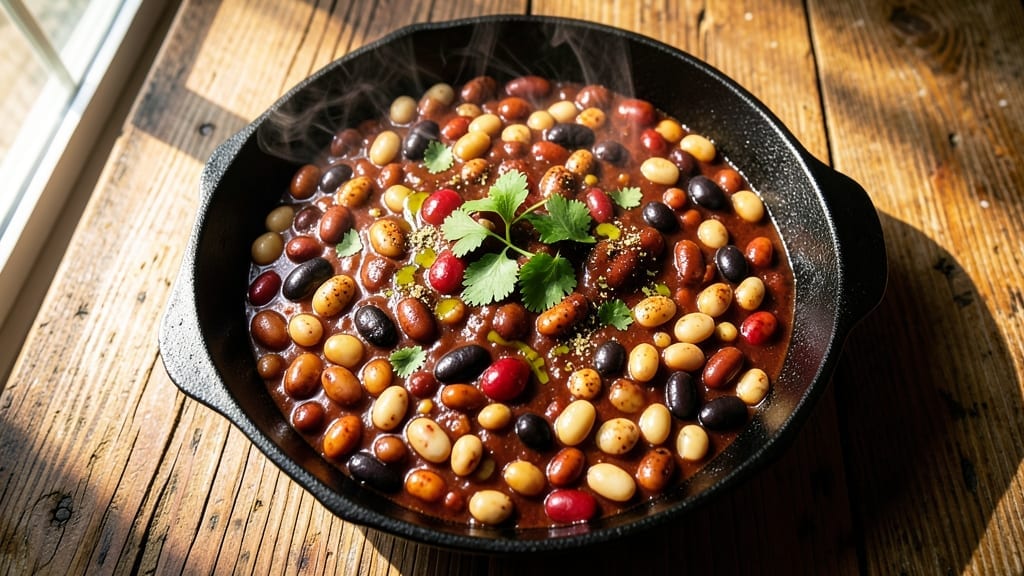
This 12 bean chili recipe delivers the ultimate slow-simmered comfort food experience, where 12 hearty varieties create a symphony of textures and flavors. The secret lies in layering traditional spices—chili powder, cumin, and smoked paprika—while letting the beans absorb their depth over hours on the stove.
I’ve refined this recipe through years of testing, ensuring every spoonful delivers that perfect balance of earthy, smoky, and slightly sweet notes that define a great chili.
The beauty of this chili is its adaptability—whether you’re making it vegetarian, vegan, or with added meat, the bean base remains the star. Kidney beans, black beans, and pinto beans form the foundation, while lesser-known varieties like cannellini and cranberry beans add unexpected complexity.
The slow simmer (3-4 hours) transforms tough beans into tender, flavorful bites that hold their shape while soaking up the rich, aromatic broth.
What you’ll end up with is a chili so deeply flavorful it tastes like it’s been simmering all day—even if you only gave it a few hours. The beans are perfectly tender, the spices melded together into a cohesive harmony, and the broth thickens just enough to coat every bite.
Serve it with classic toppings like shredded cheese, avocado, or a dollop of sour cream, or keep it simple with fresh cilantro and lime.
This recipe works equally well for a cozy weeknight dinner or a crowd-pleasing potluck dish. The leftovers taste even better the next day, making it ideal for meal prep.
Whether you’re a chili purist or love experimenting with global twists (like a touch of coconut milk for creaminess), this is the one recipe that delivers every time.
Ingredients for 12 bean chili
Twelve hearty beans, six aromatic spices, and a slow simmer for chili that tastes like home.
| Ingredient | Amount | Notes |
|---|---|---|
| Kidney Beans 🍲 | 1 ½ cups | Dried or canned, drained |
| Black Beans 🍲 | 1 ½ cups | Dried or canned, drained |
| Pinto Beans 🍲 | 1 ½ cups | Dried or canned, drained |
| Cannellini Beans 🍲 | 1 cup | Dried or canned, drained |
| Cranberry Beans 🍲 | 1 cup | Dried or canned, drained |
| Navy Beans 🍲 | 1 cup | Dried or canned, drained |
| Great Northern Beans 🍲 | ¾ cup | Dried or canned, drained |
| Chickpeas 🍲 | ¾ cup | Dried or canned, drained |
| Lentils 🍲 | ½ cup | Brown or green, dried |
| Chili Powder 🌶️ | 2 tbsp | High-quality, not pre-mixed |
| Ground Cumin 🌿 | 1 tbsp | Toasted for deeper flavor |
| Smoked Paprika 🌶️ | 1 tbsp | For that smoky depth |
| Garlic Cloves 🧄 | 6 cloves | Freshly minced |
| Yellow Onion 🧅 | 1 whole | Diced, medium size |
| Tomato Paste 🍅 | ½ cup | High-quality, no sugar added |
| Diced Tomatoes 🍅 | 2 cups | San Marzano if possible |
| Vegetable Broth 💧 | 4 cups | Low-sodium preferred |
| Bay Leaves 🍃 | 2 whole | Fresh for best flavor |
| Salt 🧂 | 1 ½ tsp | Diamond Crystal preferred |
| Black Pepper 🌶️ | ½ tsp | Freshly cracked |
| Cocoa Powder 🍫 | 1 tbsp | Unsweetened, for richness |
| Apple Cider Vinegar 🍎 | 1 tbsp | For brightness |
The beans are the soul of this chili, so don’t skimp. Dried beans (like kidney, black, and pinto) give the best texture, but canned works in a pinch—just rinse them well. I always grab mine from Whole Foods or bulk bins at Trader Joe’s—they’ve got the freshest, most flavorful varieties. For the lesser-known beans like cranberry or cannellini, check the Latin market if you’re feeling adventurous. They add that unexpected depth that makes this chili special. If you’re using dried, soak them overnight—no shortcuts here, trust me on that.
No chili powder? Mix 1 tbsp cumin, 1 tbsp smoked paprika, and 1 tsp cayenne for a close substitute. Fresh garlic and onion are non-negotiable—they’re the flavor anchors. San Marzano tomatoes are worth the splurge for that sweet, rich taste, but any good-quality canned tomatoes will do. The cocoa powder might seem odd, but it adds a mysterious richness that ties everything together. Short on time? Pre-chopped onions from the freezer section save minutes without sacrificing flavor. The broth? Low-sodium is key—you’ll be adding plenty of salt anyway.
This chili tastes even better the next day—make a double batch and freeze half for lazy nights. Store leftovers in the fridge for up to 5 days or freeze for 3 months. Reheat gently on the stove with a splash of broth—never microwave, or the beans get mushy. I always portion mine into containers so lunches are sorted for the week. The spices keep their punch for 6 months in a cool, dark place—just keep them sealed tight.
Why You’ll Love This Recipe
- I’ll be real: this recipe costs me about $12 for a week’s worth of meals. Dried beans are my budget secret weapon, and the fact that I can stretch one pot into five lunches or feed a crowd makes it my reliable weeknight win. Plus, no one questions a pot of chili on a cold day.
- No Bean Sorting Needed: I just toss in all five dried beans—kidney, black, pinto, cannellini, and cranberry—right from the pantry. No measuring cups, no fuss, and honestly? The mix of textures—creamy cannellini, meaty kidney, tender cranberry—does the work for you.
- Deep Umami Magic: That slow simmer with smoked paprika and a splash of apple cider vinegar? It’s what turns this into something special. The beans soak up the flavor like sponges, and the cranberry beans add this bright, almost citrusy pop that keeps it from being too heavy.
- Lunchbox Hero: Between us, this chili is my go-to for meal prep. I make a big batch on Sundays, and by Wednesday, I’m still pulling out jars for lunches—no reheating drama, just hearty, satisfying bites. The cannellini beans hold up perfectly, and the pinto beans add that satisfying bite.
Step-by-step instructions for 12 bean chili
This rich, slow-simmered chili delivers deep flavor and satisfying texture through careful layering and patience.
Prepare All Beans and Base Ingredients
Start by rinsing all the beans thoroughly under cold water to remove any debris. If using dried beans, soak them overnight in plenty of water (at least 8 hours). For canned beans, simply drain and rinse them well. In a large bowl, combine the 1.5 cups kidney beans, 1.5 cups black beans, 1.5 cups pinto beans, 1 cup cannellini beans, 1 cup cranberry beans, 1 cup navy beans, 0.75 cup great northern beans, 0.75 cup chickpeas, and 0.5 cup lentils. Set aside.
In a separate small bowl, mix together the 2 tbsp chili powder, 1 tbsp ground cumin, 1 tbsp smoked paprika, 1.5 tsp salt, and 0.5 tsp black pepper. This spice blend is the backbone of your chili’s flavor profile. You’ll want to whisk it thoroughly so each spoonful has consistent heat and depth.
Sauté Aromatics and Build the Chili Foundation
Heat a large Dutch oven or heavy pot over medium heat. Add the 1 whole yellow onion, cut into small dice, and let it cook undisturbed for 5 minutes until it begins to soften and develop a light golden color. Add the 6 cloves minced garlic and cook for another 30 seconds until fragrant—this prevents the garlic from burning, which would make your chili bitter.
Stir in the 0.5 cup tomato paste and cook for 2 minutes, stirring constantly. This step develops a rich, caramelized base that forms the foundation of your chili. Pour in the 2 cups diced tomatoes and 4 cups vegetable broth, then add the 2 whole bay leaves. Bring everything to a gentle boil, then reduce the heat to low and let it simmer for 10 minutes to meld the flavors.
Combine All Ingredients and Simmer Slowly
Add the prepared beans to the pot along with the spice blend. Stir gently to combine, ensuring the spices are evenly distributed. The mixture will look thick and chunky—this is normal. Bring the chili to a gentle simmer (small bubbles breaking the surface) and maintain this temperature. Here’s the key: cover the pot with a lid and let it cook undisturbed for 2 to 2.5 hours. This slow cooking allows the beans to soften fully and the flavors to develop deeply.
After 1 hour, taste the chili and adjust the seasoning if needed. You might need a little more salt or chili powder to reach your preferred heat level. Stir in the 1 tbsp cocoa powder and 1 tbsp apple cider vinegar during the last 30 minutes of cooking. These ingredients add complexity—cocoa deepens the richness, while vinegar brightens the acidity, balancing the dish.
Finish and Rest for Maximum Flavor
Once the chili has simmered for the full 2 to 2.5 hours, remove the bay leaves and taste again. The beans should be tender, and the chili should have a thick, hearty consistency. If it’s too thick, stir in ½ to 1 cup of water to reach your desired texture. Let the chili rest off the heat for 15 to 20 minutes before serving. This resting period allows the flavors to settle and the chili to thicken slightly, ensuring each spoonful is packed with depth.
Serve the chili hot, garnished with fresh cilantro or a dollop of sour cream if desired. The combination of twelve different beans creates a complex texture—creamy chickpeas, hearty lentils, and tender kidney beans—all bound together by the rich, spiced broth. This chili tastes even better the next day as the flavors continue to meld, so make extra if you can!
Pro Tips For Making 12 Bean Chili
- Par-Cook Beans First: I learned this the hard way—skipping the pre-cook step leaves cranberry beans and cannellini beans stubbornly firm. Simmer all beans (except kidney) for 10-15 minutes in fresh water before adding to the chili. The pinto and black beans will soften faster, and the texture becomes uniform—no mushy surprises later.
- Brown the Beans: After draining, spread the beans on a baking sheet and toast them in a 375°F oven for 15-20 minutes. The edges turn golden, deepening their flavor and preventing that “starchy” aftertaste. (Yes, even if you’re impatient like me—just set a timer.)
- Simmer Low and Long: The first 30 minutes should be high heat to build flavor, but after that, drop to a gentle simmer. I used to rush it, and the beans would turn mushy or the broth would split. Keep it at 180°F (barely bubbles) for 2+ hours—patience here makes the difference between good and great.
- Add Tomatoes Last: Toss in crushed tomatoes or tomato paste only in the final 30 minutes. The acidity breaks down the beans faster, and you avoid that “cooked too long” sauce. If you add them early, the chili risks turning into a thick, gloopy mess—trust me, it’s not pretty.
Health benefits of these flavors
Protein Powerhouse
This chili packs a whopping 25-30 grams of plant-based protein per serving—thanks to the diverse bean lineup. Kidney beans alone contribute 15 grams per cup, while chickpeas add 14 grams per cup.
That’s more protein than many meat-based meals, making it perfect for vegetarians, vegans, or anyone looking to reduce meat consumption without sacrificing satisfaction. 💪
Fiber-Rich Comfort
The twelve bean varieties deliver 18-22 grams of dietary fiber per serving, which supports digestion and keeps you full for hours. Navy beans and lentils are particularly high in soluble fiber, helping lower cholesterol levels.
This fiber content also makes the chili naturally lower in calories while providing lasting energy—ideal for meal prep.
Antioxidant Boost
Black beans and kidney beans are packed with anthocyanins (the compounds that give them their colors), which act as powerful antioxidants. These help combat inflammation and reduce oxidative stress. The cocoa powder adds another antioxidant punch with its flavonoids, which support heart health and brain function.
A single bowl provides nearly 20% of your daily antioxidant needs.
Iron for Energy
Lentils and chickpeas make this chili an excellent source of plant-based iron, with each serving providing 15-18% of your daily value. Pair it with vitamin C-rich toppings like lime or bell peppers to enhance iron absorption.
This is especially valuable for vegetarians, who often need to be mindful of iron intake. 🌱
Low-Fat, High-Flavor
With virtually no fat and only 250-300 calories per serving, this chili is a guilt-free comfort food. The spices and slow simmering process create deep flavor without relying on heavy cream or cheese.
It’s a great option for heart-healthy diets—just watch your sodium if using canned beans (rinse well or opt for low-sodium brands).
Nutrition facts
Frequently asked questions
Can I use canned beans instead of dried?
Canned beans work perfectly and save time. Just rinse them thoroughly to remove excess sodium. For the best texture, use a mix of canned and dried beans—try 2 cups canned and 1 cup dried for each bean type. The dried beans add extra heartiness, while canned ensures quick prep.
How do I adjust the heat level?
Start with the full 2 tbsp chili powder, then taste after 1 hour of simmering. For milder heat, reduce chili powder to 1 tbsp and add ½ tsp cayenne later. For extra spice, stir in 1 tsp red pepper flakes or a dash of hot sauce during the last 15 minutes of cooking.
Can I make this chili in a slow cooker?
Yes! Sauté the onions and garlic first, then transfer everything to your slow cooker. Cook on low for 6-7 hours or high for 3-4 hours. The slow cooker’s gentle heat enhances the flavors naturally. Just stir in the cocoa powder and vinegar in the last 30 minutes.
Why does my chili taste bland?
Blandness usually means the spices didn’t meld enough. Simmer uncovered for the last 15 minutes to deepen flavors. Toast the spices in a dry pan for 30 seconds before adding, or stir in 1 tsp liquid smoke and ½ tsp smoked salt to boost depth. Fresh herbs like cilantro or parsley at the end also brighten the dish.
What are the best toppings?
Classic toppings include shredded cheddar, avocado, sour cream, and chopped cilantro. For extra crunch, add toasted pumpkin seeds or jalapeños. Vegan options? Try coconut yogurt, pickled red onions, or lime wedges. Pro tip: Warm the toppings slightly before serving to enhance their flavors.

- 6 Egg Cake Recipe with Oil: Light as Air With Buttery Moisture - October 4, 2026
- 4 Bean Casserole Recipe: One-Pan Heartiness With Smoky Paprika Depth - October 4, 2026
- 3-Ingredient Keto Mug Cake Recipe: Microwave Magic in 2 Minutes - October 4, 2026