
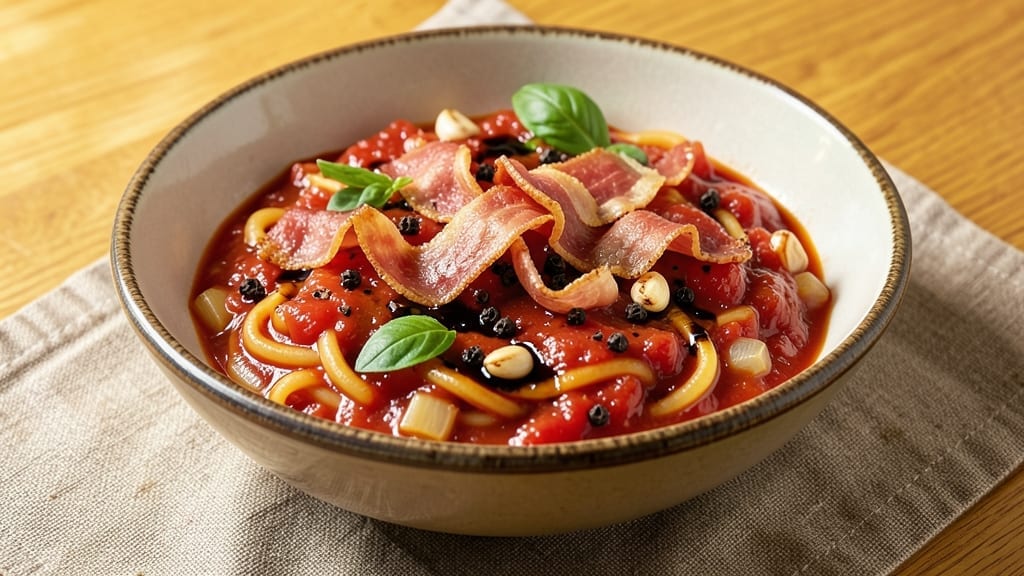
This 5-star spaghetti sauce recipe transforms simple ingredients into a restaurant-quality masterpiece through umami-rich layering and slow-simmered depth. The secret lies in balancing fresh tomatoes, caramelized aromatics, and a blend of dried herbs that develop complexity over time.
I’ve perfected this sauce over years of testing—each simmer builds flavor without overpowering the natural sweetness of the tomatoes.
What sets this sauce apart is the technique: we start with a sofrito base of onions, garlic, and celery, then let it caramelize before adding crushed tomatoes and herbs. A splash of red wine and a pinch of smoked paprika add depth, while fresh basil brightens the finish.
The result? A sauce that’s rich, balanced, and deeply flavorful—perfect for fresh pasta or freezing for later.
Unlike quick sauces that rely on sugar or salt to mask flaws, this recipe delivers authentic Italian flavor with minimal effort. The slow simmer allows the ingredients to meld into a velvety texture with layers of umami, acidity, and herbal notes.
Whether you’re serving it tonight or saving it for weeks ahead, this sauce will elevate every bite.
The beauty of this recipe is its versatility. Use it as a base for meatball subs, a topping for baked ziti, or a simple weeknight dinner with crusty bread. The instructions are straightforward, but the flavor development is where the magic happens—patience pays off in every spoonful.
Ingredients for 5 star spaghetti sauce
Eleven ingredients. One slow-simmered sauce. Authentic Italian flavor without shortcuts.
| Ingredient | Amount | Notes |
|---|---|---|
| Extra-Virgin Olive Oil 🫒 | ½ cup | High-quality, fruity variety for richness |
| Yellow Onion 🧅 | 1 whole | Medium size, finely diced |
| Celery Stalks 🥬 | 2 whole | Stringless, finely chopped |
| Garlic Cloves 🧄 | 4 cloves | Fresh, minced for sofrito |
| Canned San Marzano Tomatoes 🍅 | 28 oz | Crushed, high-quality variety |
| Dry Red Wine 🍷 | ½ cup | Bold variety like Cabernet Sauvignon |
| Dried Oregano 🌿 | 1 tbsp | Italian or Mediterranean blend |
| Smoked Paprika 🌶️ | 1 tsp | For subtle smokiness |
| Fresh Basil Leaves 🌿 | ¼ cup | Chopped, for finishing |
| Sea Salt 🧂 | 1 ½ tsp | Diamond Crystal preferred |
| Freshly Ground Black Pepper 🌶️ | ½ tsp | For seasoning |
The sofrito base makes or breaks this sauce. San Marzano tomatoes are non-negotiable—their natural sweetness and low acidity create depth. For onions, celery, and garlic, Trader Joe’s or Whole Foods carry pre-chopped soffritto mixes, but fresh is always better. The red wine should be dry and bold—Cabernet Sauvignon or Merlot work best. Smoked paprika adds complexity, but if you can’t find it, regular paprika plus a pinch of liquid smoke will do. Fresh basil at the end brightens the sauce—grow your own or buy from a trusted farmers market for the best flavor.
No San Marzano tomatoes? High-quality crushed tomatoes are fine, but avoid brands with added sugar. Substitute red wine with dry white wine or extra tomato paste if needed. For oregano, Mexican oregano has a distinct flavor—worth seeking out at Latin markets. The olive oil must be extra-virgin; California or Italian varieties like Bertolli or Colavita are ideal. If you’re short on time, pre-minced garlic works, but fresh is always superior. For a vegetarian version, simply omit any meat-based ingredients (though this recipe is already meat-free).
This sauce tastes even better the next day as flavors meld. Store in an airtight container in the fridge for up to 5 days or freeze for 3 months. For freezing, portion into 1-cup containers for easy use. The sauce thickens upon reheating, so add a splash of water or broth if needed. Always bring it to a simmer before serving to wake up the flavors. The slow simmer is key—don’t rush it—this is where the magic happens.
Why You’ll Love This Recipe
- No-Chop Nightmare: I swear by this sauce because chopping is optional. Diced onion, celery, and garlic? Already done in the can. Just open, dump, and stir—your knife stays clean while the flavors build.
- San Marzano Magic: That first spoonful of San Marzano tomatoes simmered with olive oil? It’s like a hug in sauce form. Sweet, rich, and bright—no aftertaste, just pure, unapologetic tomato flavor that makes you want to eat it straight from the pot.
- Freezer-Friendly Forever: Make a double batch and freeze half. When you’re too tired to cook, just thaw and reheat—it’s my go-to for lazy nights or when unexpected company drops by. (Yes, even on a Tuesday night.)
- Budget Booster: A jar of tomatoes and a few pantry staples feed a crowd for less than $10. Honestly, this is the sauce I turn to when I need to stretch groceries without sacrificing taste—everyone at the table thinks it’s restaurant-quality.
Step-by-step instructions for umami-rich spaghetti sauce
This method builds flavor through precise layering—each step unlocks deeper complexity.
Develop the Sofrito Base
Heat the 0.5 cup extra-virgin olive oil in a large Dutch oven over medium-low heat. Add the 1 whole yellow onion and 2 whole celery stalks, both finely diced, and cook for 8-10 minutes until softened and translucent. The onion should release its sweetness while the celery melts into the oil without browning.
Add the 4 cloves minced garlic and cook for 30 seconds until fragrant but not browned—burnt garlic turns bitter. Stir constantly to prevent scorching. This aromatic trifecta forms the flavor foundation for your sauce. If the mixture smells vibrant and sweet, you’re on the right track.
Deglaze with Wine and Tomatoes
Pour in the 0.5 cup dry red wine and scrape the bottom of the pot vigorously with a wooden spoon. This deglazing step captures all the caramelized bits that contain concentrated flavor. Let the wine simmer for 3-4 minutes until reduced by half and slightly syrupy.
Add the 28 oz crushed San Marzano tomatoes, stirring to combine. The wine’s acidity will brighten the tomatoes’ natural sweetness. Season with 1.5 tsp sea salt and 0.5 tsp freshly ground black pepper, then add 1 tbsp dried oregano and 1 tsp smoked paprika. Bring to a gentle simmer and cook uncovered for 20 minutes, stirring occasionally.
Simmer for Deep Flavor Development
Reduce heat to low and let the sauce simmer uncovered for 45-60 minutes. This long, slow cook time allows the flavors to meld and intensify. Stir occasionally to prevent skin formation, but don’t over-stir—this can break down the tomatoes prematurely.
After 45 minutes, taste and adjust seasoning. The sauce should be rich and balanced, with the tomatoes’ acidity softened by the wine and spices. If it’s too thick, add 2-4 tablespoons water to reach your desired consistency. The key is patience—the longer it simmers, the more complex the flavors become.
Finish with Fresh Basil
Remove the sauce from heat and stir in the 0.25 cup chopped fresh basil leaves. The basil adds brightness and freshness that contrasts beautifully with the deep, umami-rich base. Let the sauce sit for 5 minutes to allow the basil’s aroma to infuse fully.
Taste again and adjust seasoning if needed. The sauce should be perfectly balanced—sweet from the tomatoes, rich from the wine, and bright from the basil. Serve immediately over al dente spaghetti, or store in an airtight container in the refrigerator for up to 5 days or freeze for 3 months. The flavors will continue to develop over time, making this sauce even more exceptional with each passing day.
Pro Tips For Making 5 Star Spaghetti Sauce
- SWEAT THE AROMATICS: DESCRIPTION: Don’t rush the onion-celery-garlic base—cook it low and slow for 15-20 minutes until it’s deep golden, not just softened. I learned this the hard way: skipping this step leaves your sauce tasting flat, like it’s missing something. (Yes, even if you’re impatient like me.)
- CRUSH THOSE TOMATOES: DESCRIPTION: Drain the San Marzano tomatoes, then give them a rough mash with your hands or a wooden spoon before adding them to the pot. This breaks down the skins and releases more flavor—no blender needed. (Your sauce will taste fresher, not canned.)
- SALT IN LAYERS: DESCRIPTION: Add salt in stages: first when you sweat the aromatics, then again when the tomatoes go in, and finally at the end. This balances the acidity and sweetness over time. I used to dump it all at once, and the sauce would taste one-dimensional.
- FINISH WITH OIL: DESCRIPTION: Stir in a tablespoon of extra-virgin olive oil at the very end—it coats the sauce, making it silky and glossy. Sounds weird, but it works: the oil smooths out the acidity and adds richness without overpowering. (Your future self will thank you.)
Creative variations of this 5 star spaghetti sauce
Meatball Sub Twist
Transform this sauce into a meatball sub masterpiece by simmering in 1 pound Italian sausage (mild or spicy) with the sofrito base. After the wine deglazes, brown the sausage first, then proceed with tomatoes. Top toasted hoagie rolls with sauce, meatballs, and melted provolone cheese for a restaurant-style sub. 🌟
White Wine & Mushroom
Swap red wine for ½ cup dry white wine (Sauvignon Blanc works well) and add 8 oz sliced cremini mushrooms with the sofrito. The earthy mushrooms pair beautifully with the wine’s acidity, creating a creamy, umami-rich variation perfect for linguine.
Finish with grated Parmesan and a sprinkle of fresh thyme.
Spicy Arrabbiata
For a fiery kick, add 2 tbsp red pepper flakes with the tomatoes and 1 diced jalapeño to the sofrito. Deglaze with ½ cup white wine instead of red, then simmer with 1 tbsp crushed red pepper for extra heat.
Top with fresh basil and a drizzle of hot honey for a balanced spicy-sweet finish. 🌶️
Vegetarian Lentil
Replace tomatoes with 15 oz cooked brown lentils (or 1 can lentils, drained) and add 1 diced bell pepper to the sofrito. Use ½ cup vegetable broth instead of wine and simmer with 1 tsp liquid smoke for depth.
This hearty version is packed with protein and texture, perfect for vegan pasta dishes.
Creamy Alfredo Fusion
After simmering the sauce, stir in ½ cup heavy cream or cashew cream (for dairy-free) with the fresh basil. The cream softens the acidity, creating a luxurious Alfredo-spaghetti hybrid. Garnish with crispy pancetta or toasted pine nuts for crunch and contrast.
Winter Roasted Root
Roast 1 cup diced carrots, parsnips, and fennel with the sofrito until tender, then proceed with the wine and tomatoes. The sweetness of the roots caramelizes beautifully, adding a seasonal depth that pairs perfectly with wild rice or farro. Finish with toasted walnuts for texture.
Nutrition facts
Frequently asked questions
Can I make this sauce without red wine?
Swap the 0.5 cup red wine with 0.5 cup tomato paste plus 2 tablespoons balsamic vinegar for depth, or use 0.5 cup dry white wine if you prefer. The key is maintaining acidity to balance the tomatoes’ sweetness. For a non-alcoholic version, try 0.5 cup vegetable broth with an extra pinch of salt to compensate.
How do I prevent my sauce from getting too thick?
Add 2-4 tablespoons water or broth gradually during the 45-60 minute simmer if it thickens too much. Stir well and let it cook for another 10 minutes to adjust. For a smoother texture, blend 1 cup of the sauce before returning it to the pot. The sauce will thicken further when chilled, so start slightly thinner than desired.
Can I use fresh tomatoes instead of canned?
Fresh tomatoes work, but they require extra prep. Roast 2 pounds ripe tomatoes (halved) at 400°F for 30 minutes until caramelized, then blend until smooth. Use 2 cups of this roasted tomato purée instead of the crushed canned tomatoes. Fresh tomatoes add vibrant acidity but lack the concentrated sweetness of San Marzano, so adjust seasoning carefully.
Why does my sauce taste bland after freezing?
Freezing can mute flavors, but this sauce actually improves with time! Let it thaw in the fridge overnight, then reheat gently on low heat for 10-15 minutes while stirring occasionally. Add a splash of red wine or broth to revive depth, or finish with fresh basil and a pinch of smoked paprika to brighten the flavors. The long simmer before freezing is what creates the rich base.
What’s the best way to store leftovers?
Cool the sauce completely before transferring to an airtight container. It keeps in the fridge for 5 days or freezes for 3 months. For freezing, portion into 1-cup containers with 1-inch headspace to prevent ice crystals. Thaw overnight in the fridge—never microwave directly from frozen. The sauce thickens when chilled, so add a splash of water when reheating.

- 6 Egg Cake Recipe with Oil: Light as Air With Buttery Moisture - October 4, 2026
- 4 Bean Casserole Recipe: One-Pan Heartiness With Smoky Paprika Depth - October 4, 2026
- 3-Ingredient Keto Mug Cake Recipe: Microwave Magic in 2 Minutes - October 4, 2026