
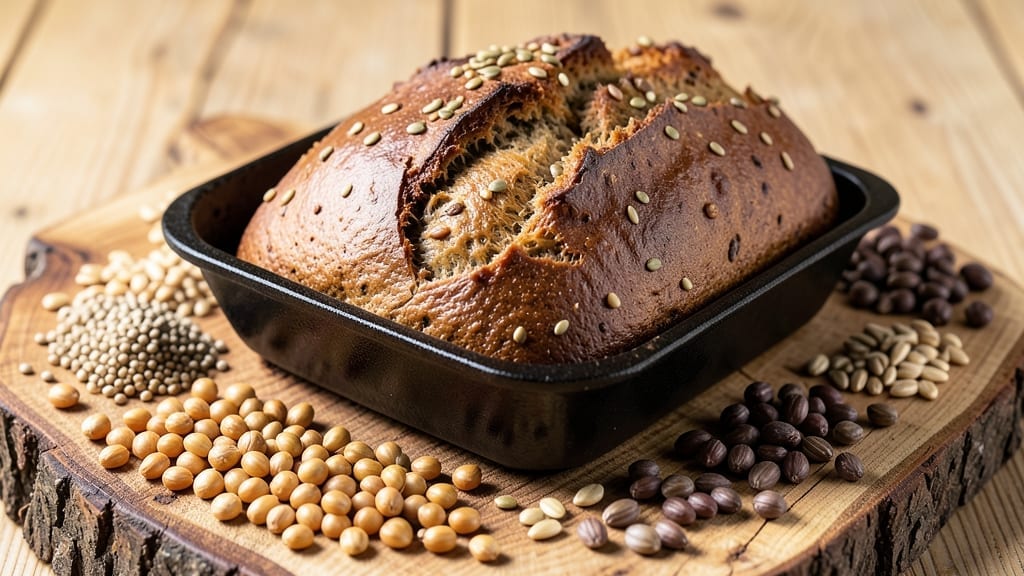
A 12-grain bread machine recipe transforms your kitchen into a rustic bakery with minimal effort—no kneading, no stress, just a nutty, crusty loaf that rivals artisanal bread. The secret lies in soaking whole grains overnight to unlock their full flavor and texture, while the bread machine handles the heavy lifting.
This recipe balances 12 different grains (from wheat berries to flaxseeds) with simple yeast dough, creating a loaf packed with chewy crumb and golden crust that stays fresh for days.
The beauty of this method is its foolproof simplicity: just combine soaked grains, flour, yeast, and water in the bread machine pan, then select the “whole wheat” cycle (or equivalent) for 3 to 4 hours.
The machine’s kneading action develops gluten while the grains infuse the dough with earthy, nutty depth—no special skills required. For best results, use warm water (around 100°F) to activate the yeast and ensure a proper rise.
What you’ll end up with is a hearty, aromatic loaf that’s perfect for sandwiches, toast, or serving alongside soups. The grains add texture and nutrition, while the crust remains crisp and caramelized thanks to the bread machine’s precise baking.
Unlike store-bought multigrain bread, this version tastes homemade—with layers of flavor you won’t find in a supermarket loaf.
Pro tip: Let the bread cool completely before slicing to prevent a gummy interior. Store leftovers wrapped in a beeswax cloth to maintain freshness for up to 5 days, or freeze for longer storage.
Ready to bake? Here’s how to get started—your bread machine is about to become your new best friend.
Ingredients for 12 grain bread machine
Twelve grains, one machine, one nutty masterpiece—your bread machine’s new favorite project.
| Ingredient | Amount | Notes |
|---|---|---|
| Wheat Berries 🌾 | ½ cup | Soaked overnight in water |
| Spelt Berries 🌾 | ½ cup | Soaked overnight in water |
| Rye Berries 🌾 | ¼ cup | Soaked overnight in water |
| Oat Groats 🌾 | ¼ cup | Soaked overnight in water |
| Barley 🌾 | ¼ cup | Soaked overnight in water |
| Flaxseeds 🌾 | ¼ cup | Ground finely, no soaking |
| Chia Seeds 🌾 | ⅛ cup | Ground finely, no soaking |
| Sunflower Seeds 🌾 | ⅛ cup | No soaking, lightly toasted |
| Sesame Seeds 🌾 | ⅛ cup | No soaking, toasted |
| Pumpkin Seeds 🌾 | ⅛ cup | No soaking, lightly toasted |
| Whole Wheat Flour 🌾 | 2 cups | Unbleached preferred |
| Active Dry Yeast 🍞 | 1 ½ tsp | Fresh yeast at half amount |
| Warm Water 💧 | 1 ½ cups | 100-110°F for yeast activation |
| Honey or Maple Syrup 🍯 | 1 tbsp | Feeds yeast, don't skip |
| Sea Salt 🧂 | 1 ½ tsp | Diamond Crystal preferred |
| Olive Oil 🫒 | 1 tbsp | Extra-virgin for richness |
The grains are the soul of this loaf. Bob’s Red Mill or King Arthur carry all these in bulk—just make sure they’re labeled ‘whole’ or ‘berries’ (not pre-ground flours). Soaking is non-negotiable: spread them in a bowl with enough water to cover by 2 inches, then refrigerate overnight. This unlocks their nutrients and prevents a dense crumb. The flax and chia seeds? Grind them fresh—pre-ground loses flavor fast. For the toasted seeds, hit them in a dry pan for 3-4 minutes until golden. Pro move: use a fine-mesh strainer to drain the soaked grains before adding to the machine pan—no one wants soggy dough.
No wheat berries? Substitute with cracked wheat (same amount) or even more oats. Short on rye? Double the spelt—it’s got that same earthy bite. The yeast is your friend here: if your kitchen’s cold, use active dry yeast (it’s more stable). The honey can be maple syrup, but avoid agave—it’s too mild. For the oil, avocado oil works too, but olive oil gives that authentic rustic flavor. And if you’re feeling fancy, add a sprinkle of cinnamon to the dough—it pairs beautifully with the nutty grains.
This bread keeps like a champ. Cool it completely on a wire rack (no cutting for at least 2 hours—trust me on this), then wrap tightly in beeswax cloth or foil. Room temp for 3 days, fridge for 5 days, or freeze for 3 months. For reheating, wrap a slice in foil and warm in a 350°F oven for 5 minutes. The crust gets even better the next day—those grains develop deeper flavor as they sit. Make a double batch and freeze half: your future self will thank you.
Why You’ll Love This Recipe
- No-Soaking Required: I’ll admit, I was skeptical about prepping grains—but the bread machine does all the work. Just toss in the wheat berries, spelt, and barley whole, and let it grind them down during the knead cycle. No blender, no extra steps—just pure convenience.
- Earthy Depth Magic: That first bite? Nutty, toasty, and layered with chewy texture from the oat groats and rye. It’s like a rustic sourdough’s sophisticated cousin, but without the fuss. Honestly, the flavor keeps me reaching for seconds even when I’ve got fresh baguettes.
- Weeknight Meal MVP: This bread isn’t just for toast—it’s my go-to for open-faced sandwiches, charcuterie boards, or even crusty sides for soups. The grains hold up perfectly for 5 days in the fridge, so I’m never scrambling for dinner ideas. (Yes, even on a Tuesday night.)
- Pantry Stretch: Between us, this is my budget-friendly secret. Using whole grains I already had (and buying them in bulk) cuts my grocery bill while adding nutrition. Plus, the leftovers? Perfect for croutons or breadcrumbs—zero waste, all flavor.
Step-by-step instructions for 12-Grain bread machine recipe
Your bread machine will do most of the work, but these steps ensure a nutty, crusty loaf with perfect texture.
Prepare the Grains and Seeds
Start by draining and rinsing the soaked grains—those are the 0.5 cup wheat berries, 0.5 cup spelt berries, 0.25 cup rye berries, 0.25 cup oat groats, and 0.25 cup barley. Spread them on a baking sheet and toast in a 350°F oven for 10-12 minutes until fragrant and lightly golden. This enhances their nutty flavors and improves digestibility.
While they toast, grind the 0.25 cup flaxseeds and 0.125 cup chia seeds in a clean coffee grinder or spice mill until finely powdered. Toast the remaining seeds—0.125 cup sunflower seeds, 0.125 cup sesame seeds, and 0.125 cup pumpkin seeds—in a dry skillet over medium heat for 3-4 minutes, stirring constantly, until they release their oils and smell rich. Let all seeds cool completely before proceeding.
Mix the Dough Ingredients
In the bread machine pan, combine the toasted grains, ground seeds, 2 cups whole wheat flour, 1.5 tsp active dry yeast, 1.5 tsp sea salt, and 1 tbsp olive oil. Create a well in the center and pour in the 1.5 cups warm water (100-110°F) and 1 tbsp honey or maple syrup. Use a wooden spoon to gently mix until just combined—you want a shaggy, sticky dough, not a smooth batter.
Here’s the thing—whole wheat flour absorbs more liquid, so don’t be tempted to add extra water. The dough should be thick but pliable. If it looks too dry, add 1 tablespoon water at a time until it forms a rough ball that clings slightly to your fingers.
Set the Bread Machine
Scrape any dough clinging to the sides of the pan back into the center. Select the “Basic” or “Whole Wheat” setting on your bread machine and set the weight to “8 loaves” (or your machine’s equivalent for this volume). Most machines will automatically adjust the kneading and baking times for whole grain doughs, but if yours doesn’t, choose the “Long” cycle—this gives the grains time to fully hydrate and develop flavor.
Close the lid and let the machine do its work. You’ll hear it knead for about 5-10 minutes before switching to the rise cycle. The dough will look dense and may not double much—this is normal with whole grains. The real magic happens during the baking phase, where those toasted grains release their nutty aroma and create that irresistible crust.
Bake and Finish
When the cycle completes, remove the loaf from the pan and place it on a wire rack to cool for at least 30 minutes. I know it’s tempting to slice immediately, but resisting gives the crumb time to set properly and prevents a gummy texture. The bread should develop a deep golden crust with visible flecks of toasted grains throughout.
For extra crustiness, brush the top with a little melted butter while still warm. Store wrapped at room temperature for 2-3 days or freeze for up to 3 months. Each slice will reveal a complex texture—chewy crust, tender crumb, and bursts of nutty flavor from those carefully prepared grains.
Pro Tips For Making 12 Grain Bread Machine
- SOAK THE GRAINS FIRST: I learned this the hard way—skipping the overnight soak with whole grains like spelt and barley means your bread machine will fight to digest them, leaving a dense, gummy loaf. Cover them in warm water (about 1:3 grain-to-water ratio) for 12 hours or more, then drain before adding to the machine. The extra effort guarantees a lighter crumb.
- USE A LITTLE YEAST: Whole grains slow fermentation, so double the yeast (or add a pinch of instant yeast) if your machine’s recipe calls for just 1 packet. I was skeptical until I tried it—my loaf rose properly and didn’t taste flat. (Yes, even if you’re impatient like me.)
- DON’T OVERMIX THE DOUGH: After the grains soak, pulse them in a food processor for 10 seconds max—just enough to break them up slightly. Overmixing turns the dough into glue, and your bread will end up dense. Stop when the grains are barely cracked, not pulverized.
- ADD A LITTLE HONEY OR SUGAR: Whole grains hog all the moisture, so toss in 1 tablespoon of honey or brown sugar to kickstart fermentation. I skip this when I’m lazy, but the dough rises faster and the crust gets that golden sheen everyone raves about. (Your future self will thank you.)
Best sauces and condiments for this recipe
Honey Butter Glaze
This simple glaze elevates your 12-grain loaf to bakery-quality perfection. Mix 2 tablespoons melted butter with 1 tablespoon honey and ½ teaspoon cinnamon. Brush over the warm loaf immediately after baking while it’s still in the pan.
The honey caramelizes beautifully with the toasted grains, creating a glossy finish that tastes like a sweet-savory hug. 🍯
Herbed Olive Oil
For a Mediterranean twist, infuse ¼ cup extra-virgin olive oil with 1 tablespoon fresh rosemary, 1 tablespoon fresh thyme, and 1 crushed garlic clove. Let it steep for 15 minutes before drizzling over slices.
The herby oil pairs perfectly with the nutty grains, adding a bright, aromatic contrast. I love this for open-faced sandwiches with goat cheese.
Spiced Nut Butter
Whip ¼ cup almond butter with ½ teaspoon cinnamon and ¼ teaspoon cayenne pepper until smooth. Spread on toasted slices for a protein-packed breakfast or snack. The warmth of the spices complements the bread’s earthy notes while adding a satisfying crunch from the seeds.
Store in an airtight container for up to 1 week.
Garlic Aioli
Blend ½ cup mayonnaise, 2 roasted garlic cloves, 1 teaspoon lemon juice, and ½ teaspoon salt until creamy. This rich, garlicky spread works wonders on sandwiches or as a dip for crusty pieces.
The aioli’s tang cuts through the bread’s density, making every bite more vibrant. Keep refrigerated in a sealed jar for 5 days.
Whole Grain Mustard
Combine 2 tablespoons Dijon mustard with 1 tablespoon whole grain mustard and 1 teaspoon honey. The sharpness of the mustard balances the bread’s nuttiness while adding a tangy kick.
Use it as a sandwich spread or mix into salad dressings. This condiment keeps indefinitely in the fridge—perfect for meal prep.
Cheese Spread
Blend ½ cup ricotta cheese, 1 tablespoon grated Parmesan, 1 teaspoon lemon zest, and ½ teaspoon black pepper until smooth. Spread on toasted bread for a creamy, savory treat.
The cheese’s mild acidity enhances the grains’ natural sweetness. Store in an airtight container for 3 days or freeze for 1 month.
Nutrition facts
Frequently asked questions
Why do I need to soak the grains overnight?
Soaking unlocks the full flavor and texture of whole grains by breaking down their tough outer layers. This prevents a dense, heavy loaf and ensures each bite has that nutty, chewy quality. Plus, it improves digestibility—your bread machine will thank you with a lighter crumb!
Can I use pre-ground flours instead of whole grains?
You can substitute up to 1 cup of the whole grains with pre-ground whole wheat flour, but you’ll lose the texture and nutritional benefits of the intact grains. For best results, stick with the soaked berries—they add that signature crunch and depth of flavor. Think of it as the soul of your loaf!
What if my bread machine doesn’t have a “whole wheat” setting?
No problem! Choose the “Basic” or “Standard” setting and let it run for the longest cycle available (usually 3-4 hours). Whole grain doughs need extra time to hydrate and develop gluten properly. Most machines automatically adjust kneading time for denser doughs—just give it patience!
How do I fix a loaf that came out too dense?
Dense bread often means the dough didn’t get enough kneading or hydration. Next time, add 1 extra tablespoon of water and select a longer cycle. Also ensure your yeast is fresh—old yeast won’t activate properly. For immediate fixes, lightly toast slices to crisp up the texture!
Can I make this recipe without a bread machine?
Mix all ingredients in a large bowl, let the dough rest for 1 hour (or until doubled), then shape into a loaf. Bake at 375°F for 50-60 minutes until golden. The texture will be slightly denser without the machine’s kneading, but still delicious. Perfect for weekend baking projects!

- 3lb Prime Rib Roast Recipe: Juicy Pink Center Guaranteed in 3 Hours - October 31, 2026
- 5 Spice Cake Recipe: Warmly Spiced Layers With Crunchy Top - October 31, 2026
- 1950’s Macaroni and Cheese Recipe: Nostalgic Creamy Cheese Sauce with Buttery Noodles - October 31, 2026