
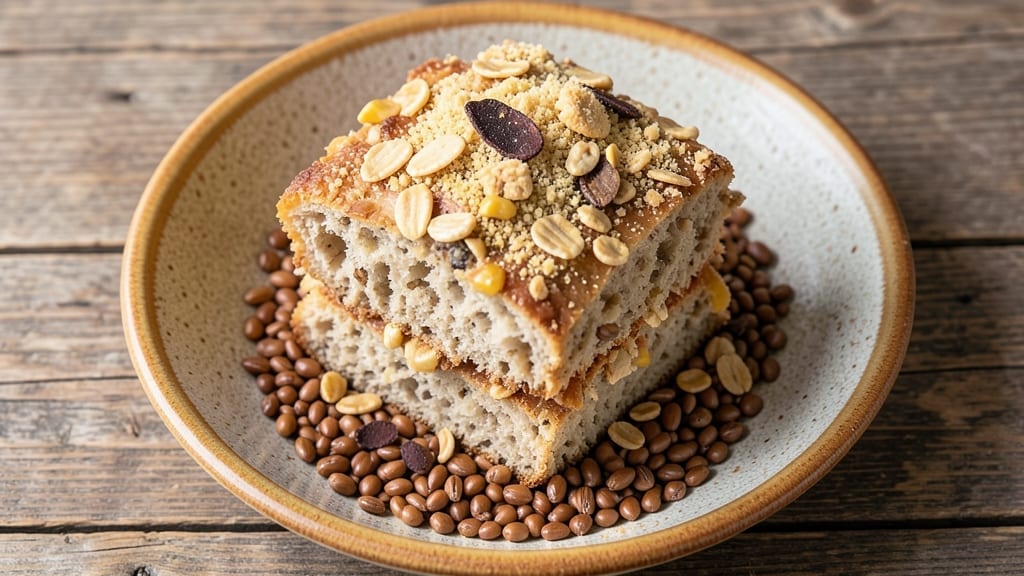
This 12-grain cereal bread recipe delivers a hearty, nutty loaf that transforms simple pantry staples into something extraordinary—think rustic texture, deep flavor, and a crust that crackles with every bite.
The secret lies in blending whole grains like wheat berries, barley, and rye with flaked cereals, creating a loaf that’s both satisfying and versatile. I developed this recipe after years of baking dense, flavorless bread, and the difference is night and day.
The magic happens in the dough, where each grain contributes its own unique texture and nuttiness. Kneading by hand ensures proper gluten development, while a slow fermentation allows the grains to soften and infuse the dough with their rich, toasty flavors.
This isn’t your typical sandwich bread—it’s a loaf with substance, perfect for soaking up soups, pairing with butter, or slicing into hearty sandwiches.
By the time it emerges from the oven, you’ll have a loaf with a crusty exterior and a tender, open crumb, where each bite reveals layers of toasted grain and subtle sweetness.
The aroma alone will have everyone gathering around the table, and the texture—chewy yet airy—makes it impossible to resist. This bread proves that homemade doesn’t have to mean complicated.
Whether you’re baking for a family dinner or meal prepping for the week, this recipe scales effortlessly and delivers restaurant-quality results without the fuss. The key is patience—letting the dough rise slowly and baking at the right temperature ensures a loaf that’s both impressive and foolproof.
Let’s get started on your next artisanal loaf.
Ingredients for 12 grain cereal bread
Twelve grains, one loaf—this is your pantry transformed into something extraordinary.
| Ingredient | Amount | Notes |
|---|---|---|
| Wheat Berries 🌾 | ½ cup | Uncooked, toasted lightly for nuttiness |
| Barley 🌾 | ½ cup | Pearled or whole grain, rinsed well |
| Rye Flour 🌾 | 1 cup | Dark rye for robust flavor |
| Wheat Flour 🌾 | 2 cups | All-purpose or bread flour preferred |
| Flaked Wheat Cereal 🍞 | 1 cup | Like shredded wheat, unsweetened |
| Flaked Corn Cereal 🌽 | ½ cup | Like corn flakes, unsweetened |
| Flaked Rice Cereal 🍚 | ½ cup | Like rice krispies, unsweetened |
| Active Dry Yeast 🍞 | 1 ½ tsp | Or 1 packet instant yeast |
| Honey 🍯 | 2 tbsp | Or maple syrup for vegan option |
| Unsalted Butter 🧈 | ½ cup | Softened, full-fat preferred |
| Whole Milk 🥛 | ¾ cup | Warm for best yeast activation |
| Salt 🧂 | 1 ½ tsp | Fine sea salt or kosher salt |
| Olive Oil 🫒 | 1 tbsp | For dough and brushing crust |
| Cornmeal 🌽 | 2 tbsp | For dusting baking sheet |
The grains are where the magic happens. Wheat berries and barley need toasting first—just 5 minutes in a dry pan until fragrant. Bob’s Red Mill or King Arthur carry these whole grains, but any bulk section will have them. Look for rye flour labeled ‘dark’—it’s got that deep, almost chocolatey flavor. The flaked cereals? Unsweetened is key—sugar can overpower the dough. I usually grab the big box of shredded wheat at Costco for the best price, but the small bags work too. Toast these lightly in the same pan as the grains, stirring constantly so they don’t burn.
No wheat berries? Substitute extra barley or quinoa—they’ll add a different but still satisfying texture. Short on rye flour? Mix in extra whole wheat at a 1:1 ratio. The cereals can be swapped too—oat flakes or puffed millet work beautifully. For the yeast, if it’s old or your kitchen’s cold, proof it in warm milk first (just mix the yeast with 1 tbsp warm milk and 1 tsp honey, let sit 5 minutes until foamy). The butter matters here—full-fat gives the best flavor and texture, but if you’re watching calories, use a 50/50 mix with olive oil.
This dough is patient—let it rise overnight in the fridge if you have time. The grains soften more, and the flavor deepens. Store any extra loaves wrapped in a clean kitchen towel for up to 5 days at room temp, or freeze for 3 months. For reheating, wrap tightly in foil and warm in a 350°F oven for 10 minutes. The crust gets crunchier as it cools, so slice it fresh—never pre-slice or it’ll dry out. This bread keeps well, so double the recipe and give some away.
Why You’ll Love This Recipe
- Pantry Magic: I swear by this recipe when I forget to buy bread—just pull out those wheat berries and barley from the back of your cupboard. No fancy ingredients, no last-minute grocery runs, just a loaf that tastes like you slaved over it (but you didn’t).
- Nutty Crunch Surprise: That flaked wheat cereal? It’s the secret weapon—every bite has this unexpected crunch that keeps me coming back. Honestly, my kids fight over the last slice, and I don’t even bake bread often.
- Weeknight Workhorse: Toast it, slice it for sandwiches, or even use it for garlic bread—this bread handles everything without falling apart. Between us, it’s the only loaf that doesn’t turn to mush when I’m in a rush.
- Budget-Friendly Staple: Rye and whole wheat flours stretch my grocery budget, and the grains add bulk without breaking the bank. I make two loaves at once, freeze one, and boom—no more sad grocery receipts.
Step-by-step instructions for 12 grain cereal bread
This hearty loaf combines nutty grains and flaky cereals for a bread with surprising texture and depth.
Toast the Grains and Prepare the Cereals
Preheat your oven to 350°F and spread the 0.5 cup wheat berries and 0.5 cup barley on a baking sheet. Toast for 15-20 minutes, stirring halfway, until they’re fragrant and lightly golden. This step develops their nutty flavors and prevents them from staying raw in the bread.
While the grains toast, break up the 1 cup flaked wheat cereal, 0.5 cup flaked corn cereal, and 0.5 cup flaked rice cereal into smaller pieces by hand. This ensures even distribution throughout the dough and prevents large cereal clusters. Set all the toasted grains and broken cereals aside to cool completely before using.
Mix the Dough and Let It Rise
In a large bowl, combine the 1 cup rye flour, 2 cups wheat flour, 1.5 tsp active dry yeast, and 1.5 tsp salt. Whisk to distribute the yeast evenly. In a separate bowl, mix the 0.75 cup warm whole milk (about 105-110°F) with the 2 tbsp honey and 0.5 cup softened unsalted butter until smooth.
Make a well in the dry ingredients and pour in the wet mixture. Stir with a wooden spoon until a shaggy dough forms. Add the toasted grains and broken cereals, then mix in the 1 tbsp olive oil. Knead the dough on a lightly floured surface for about 8-10 minutes until it becomes smooth and elastic. If it feels too sticky, add a little more flour, but don’t overdo it—this bread benefits from a slightly wetter dough.
Place the dough in a lightly greased bowl, cover it with a damp towel, and let it rise in a warm place for 1-2 hours, or until it has doubled in size. You’ll know it’s ready when you poke it gently and the indentation stays put.
Shape and Let the Dough Rise Again
Punch down the risen dough to release the air, then turn it out onto a lightly floured surface. Gently shape it into a loaf, tucking the ends under slightly to form a smooth, rounded top. Place the shaped loaf seam-side down in a greased 9×5-inch loaf pan, then cover it again with a damp towel.
Let the dough rise for another 30-45 minutes until it’s just about to overflow the pan. This second rise ensures a light, airy texture. While the dough rises, preheat your oven to 375°F and sprinkle 2 tbsp cornmeal onto a baking sheet—this will help the bread develop a crispy bottom.
Bake to Golden Perfection
Carefully transfer the risen loaf to the prepared baking sheet, then brush the top lightly with a little more olive oil or melted butter. This creates a golden, crispy crust. Bake for 45-50 minutes until the bread is deeply golden brown and sounds hollow when tapped on the bottom.
To check for doneness, insert a toothpick into the center of the loaf. If it comes out clean or with just a few crumbs, the bread is ready. If it’s still slightly underdone, return it to the oven for another 5-10 minutes. Let the bread cool in the pan for 10 minutes before transferring it to a wire rack to cool completely.
This bread is best enjoyed fresh, but it keeps well at room temperature for 2-3 days or can be frozen for up to 3 months. The combination of toasted grains, flaky cereals, and rye flour gives it a satisfying chew and a nutty depth that makes it perfect for sandwiches or toasted with butter.
Pro Tips For Making 12 Grain Cereal Bread
- SOAK THE WHOLE GRAINS LONGER: I learned this the hard way—skipping the extra soak for barley and wheat berries leaves them chewy and undercooked. Dump them in warm water with a pinch of salt the night before, then drain and rinse before mixing. The texture becomes light and evenly integrated, not dense.
- TOAST THE FLAKED WHEAT: This isn’t the prettiest method, but it’s the tastiest. Dry-toast the flaked wheat cereal in a 350°F oven for 8–10 minutes until golden and fragrant. It deepens the flavor and prevents a gummy crumb—trust me, your bread will taste like it’s been baked for hours.
- DON’T OVER-KNEAD THE DOUGH: Rye flour is stubborn, and this dough wants to stick and fight. Work it just until the ingredients come together—about 5–6 minutes by hand. Over-kneading develops too much gluten and turns the bread into a dense brick. Stop when it’s smooth but still slightly tacky.
- USE COLD WATER FOR THE STARTER: My grandmother swore by this, and she was right: mix your yeast and honey into cold water first, then let it sit at room temp. The slow fermentation (about 1–2 hours) builds better flavor and prevents a sour tang. No need to wait forever—just let it bubble before adding to the dough.
Best sauces and condiments for this recipe
Butter Spreads
This bread’s nutty depth makes it perfect for rich, flavorful butters. I love spreading cultured butter like Plugrá or Kerrygold—their tangy notes cut through the grain’s earthiness. For extra richness, mix in honey and crushed walnuts or sea salt for a sweet-savory balance.
A simple garlic-herb butter (softened butter + 1 minced garlic clove + 1 tbsp chopped parsley) adds freshness to every bite. 🧈
Sweet Toppings
Toast slices and top with mascarpone cheese mixed with jam or Nutella for a decadent treat. A drizzle of local honey and a sprinkle of toasted pecans adds crunch and natural sweetness.
For a breakfast twist, try peanut butter and banana slices—the bread’s hearty texture holds up perfectly. I often make a batch on Sundays for quick breakfasts all week. 🍯
Savory Pairings
Use this bread for grilled cheese sandwiches with sharp cheddar and caramelized onions. The grains add a satisfying bite that balances the melty cheese. For lunch, try avocado toast with everything bagel seasoning—the rye flour adds a deep, malty flavor.
A spread of hummus with roasted red peppers and feta turns it into a Mediterranean-style open-faced sandwich. 🥖
Cheese and Charcuterie
Slice the bread into thick pieces and arrange on a board with aged cheddar, blue cheese, and provolone. Pair with prosciutto, salami, and cornichons for a charcuterie board that highlights the bread’s nutty crunch.
The grains soak up flavors beautifully, making every bite a mix of textures. I always include a small jar of whipped feta for a creamy contrast. ✨
Dips and Spreads
Warm the bread slightly and serve with olive tapenade (blend Kalamata olives, capers, garlic, and olive oil) for a briny, Mediterranean touch. A white bean dip (mashed cannellini beans + lemon zest + olive oil) adds protein and creaminess.
For a quick lunch, spread with ricotta cheese and top with sun-dried tomatoes and basil. The bread’s texture holds up perfectly to all these dips. 🫒
Breakfast Ideas
Toast thick slices and top with scrambled eggs, crispy bacon, and sautéed mushrooms for a hearty breakfast. The grains add a satisfying chew that keeps you full longer.
For a sweeter morning, try Greek yogurt with granola and berries—the bread’s nuttiness complements the fruit beautifully. I often make a batch on weekends to enjoy all week. 🍳
Nutrition facts
Frequently asked questions
Why does this bread need so many different grains and cereals?
Each grain and cereal contributes a unique texture and flavor—wheat berries add chewiness, rye flour brings depth, and the flaked cereals create satisfying crunch. The combination prevents a dense crumb while delivering that artisanal, rustic character you’d expect from a specialty loaf. Think of it as a flavor and texture symphony!
Can I make this bread without a stand mixer?
This recipe is designed for hand-kneading. Just be prepared to knead for 8-10 minutes on a lightly floured surface until the dough becomes smooth and elastic. The sticky dough is normal—this bread benefits from a slightly wetter texture that makes it perfect for sandwiches.
How do I know when the dough has risen enough?
Your dough is ready when it doubles in size and leaves a gentle indentation when poked with a finger. For the first rise, this takes about 1-2 hours at room temperature. For the second rise in the loaf pan, it should be just about to overflow the edges (30-45 minutes). If it’s not rising well, your kitchen might be too cold—try placing the bowl near a warm oven with the light on.
What if my bread turns out too dense?
Dense bread usually means underproofed dough or over-kneading. Make sure your yeast is fresh (test it in warm milk first) and give it plenty of time to rise in a warm spot. For extra lightness, try cold-proofing overnight in the fridge before the final rise. Also, avoid adding too much flour during kneading—this bread should be slightly sticky.
Can I substitute any of the grains or cereals?
Yes! Swap flaked wheat for oat flakes, corn cereal for puffed quinoa, or rice cereal for millet. For grains, use quinoa or buckwheat instead of wheat berries if needed. Just maintain the same total volume of grains and cereals to keep the texture balanced. The key is using unsweetened versions to avoid flavor imbalances.

- 3lb Prime Rib Roast Recipe: Juicy Pink Center Guaranteed in 3 Hours - October 31, 2026
- 5 Spice Cake Recipe: Warmly Spiced Layers With Crunchy Top - October 31, 2026
- 1950’s Macaroni and Cheese Recipe: Nostalgic Creamy Cheese Sauce with Buttery Noodles - October 31, 2026