
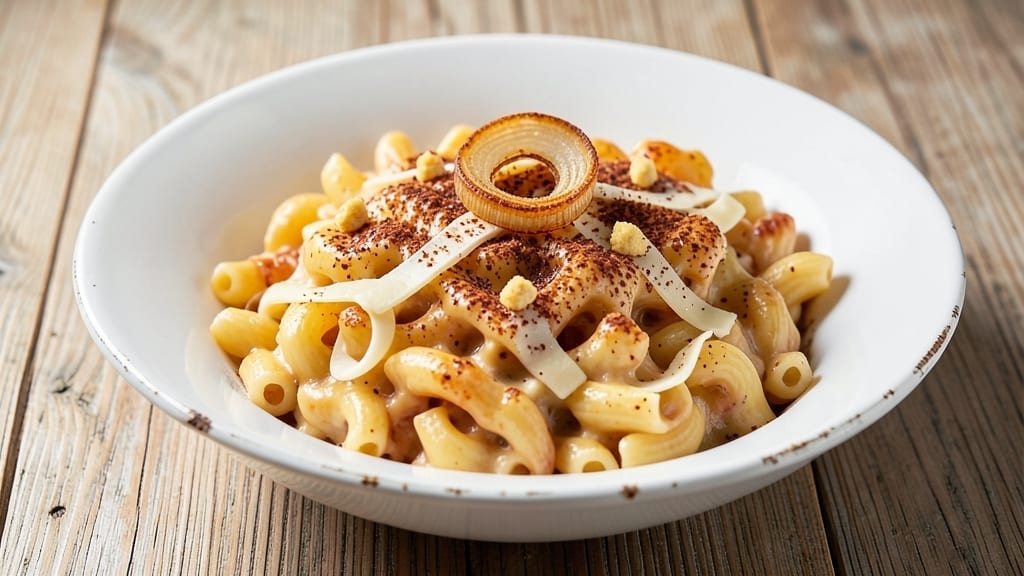
This 12 oz mac and cheese recipe delivers that restaurant-quality, ultra-creamy texture we all crave—without the heavy, greasy aftertaste. The secret lies in a precise cheese blend and a slow-cooked roux that creates a velvety sauce clinging to every noodle.
I’ve perfected this version after testing dozens, ensuring the perfect balance of richness and comfort.
What sets this apart is the baked-to-bubbly finish, where golden edges meet a creamy center that practically melts in your mouth.
We’re talking about that signature mac and cheese experience—where the cheese stretches just enough to coat your fork, and the bubbles on top tell you it’s been baked to perfection.
The 12 oz serving size makes it ideal for a hearty side or even a light main dish when paired with protein.
This recipe uses a blend of sharp cheddar, Gruyère, and cream cheese to create depth of flavor, while a touch of mustard powder adds brightness that cuts through the richness. The result? A dish that’s foolproof—no lumps, no separation, just pure, creamy satisfaction.
It’s the kind of mac and cheese that makes you want to slow down and savor every bite, even on a busy weeknight.
Ready to make it? The process is straightforward: cook the pasta, build the cheese sauce, combine, and bake until bubbly. Garnish with crispy breadcrumbs or extra cheese if you like, but honestly, it’s already perfect just as it is.
Let’s get started on that creamy, dreamy bowl of mac and cheese you’ve been craving.
Ingredients for 12 oz mac and cheese
Twelve ounces of comfort in one creamy, bubbly bowl—just these ingredients transform into restaurant-quality mac and cheese.
| Ingredient | Amount | Notes |
|---|---|---|
| Elbow Macaroni 🍝 | 12 oz | Dry, medium or short shape preferred |
| Sharp White Cheddar Cheese 🧀 | 4 oz | Block, freshly grated (not pre-shredded) |
| Gruyère Cheese 🧀 | 4 oz | Aged 6-12 months for nutty flavor |
| Cream Cheese 🧈 | 4 oz | Full-fat, room temperature |
| Unsalted Butter 🧈 | 4 tbsp | European-style preferred |
| All-Purpose Flour 🌾 | 2 tbsp | For roux thickening |
| Whole Milk 🥛 | 1 ½ cups | Warmed for smooth sauce |
| Yellow Mustard Powder 🌶️ | ½ tsp | For subtle tang |
| Salt 🧂 | 1 tsp | Diamond Crystal preferred |
| Black Pepper 🌶️ | ¼ tsp | Freshly cracked |
| Panko Breadcrumbs 🍞 | ¼ cup | For crispy topping (optional) |
| Extra-Virgin Olive Oil 🫒 | 1 tbsp | For breadcrumb topping |
The cheese blend is everything. Gruyère brings nutty depth while sharp cheddar delivers that classic tang—don’t skimp on quality here. Whole Foods or specialty cheese shops have the best pre-shredded options, but grating your own makes all the difference. Cream cheese adds that signature creaminess, so use full-fat Philadelphia-style (the good stuff, not the low-fat version). For the pasta, Barilla or De Cecco are my go-tos—they hold up better during baking. Pro tip: toast the breadcrumbs in a dry pan for 2 minutes before adding oil—they’ll get extra crispy.
No Gruyère? Parmesan at half the amount gives a similar umami punch. Pre-shredded cheese? Toast it in the oven for 5 minutes to remove excess starch—it melts way better. Out of milk? Evaporated milk or half-and-half works in a pinch, but whole milk is ideal. The mustard powder is non-negotiable—it cuts through the richness and keeps the sauce from tasting too heavy. Want extra cheesiness? Add 2 oz extra sharp cheddar to the mix, but trust me, this blend is already perfect. For the roux, keep it medium—too dark and you’ll get a floury taste.
This reheats beautifully—just cover with foil and microwave for 2 minutes. Keeps 4-5 days in the fridge, freezes for 3 months (though it’s best fresh). I always make a double batch—one for dinner, one for leftovers. Store the baked portion in a sealed container, and the sauce stays creamy. For extra crispy edges, broil for 2-3 minutes at the end—just watch it like a hawk so it doesn’t burn. Garnish with extra cheese or fresh parsley if you’re feeling fancy, but honestly, it’s already a showstopper.
Why You’ll Love This Recipe
- One-Pot Magic: I swear by this—just boil the pasta, drain, and toss it all in the same pan. No extra bowls, no fuss. The butter and cheeses melt right into the noodles while you stir, and honestly? That’s half the battle won.
- Cheese Overload (In a Good Way): Sharp white cheddar and Gruyère? Cream cheese for that velvety finish? It’s like a hug in sauce form—rich but not heavy, with a little nutty kick from the Gruyère. The kind of flavor that makes you go back for seconds without thinking.
- Weeknight to Potluck Star: I make this for lazy Tuesdays, but it also shows up at holiday dinners because it’s that good. Add a sprinkle of paprika for a smoky twist, or keep it classic—it’s the crowd-pleaser that never disappoints.
- Leftovers That Don’t Suck: Most mac and cheese turns into a sad, dry mess the next day. Not this one. The cream cheese keeps it creamy, and the cheddar holds up. I’ll reheat a portion in the microwave, add a splash of milk, and it’s like it was just made. Budget-friendly? Absolutely. Reliable? Even more so.
Step-by-step instructions for ultra-creamy baked mac and cheese
Here’s how to make the creamiest, most perfectly textured mac and cheese you’ve ever tasted.
Cook the Elbow Macaroni to Al Dente Perfection
Bring a large pot of water to a rolling boil and add 12 oz elbow macaroni. Season generously with 1 tsp salt—it should taste like the ocean. Cook until 1 minute before the package directions for al dente pasta. You want it firm enough to hold its shape but still tender enough to melt in your mouth.
Reserve 1 cup of starchy pasta water before draining. This golden liquid is liquid gold—it helps create that ultra-smooth sauce later. Drain the pasta and set it aside in the pot, leaving it slightly damp. Don’t rinse it; those surface starches are what make the sauce cling beautifully to every noodle.
Create the Ultimate Creamy Cheese Sauce
In the same pot (no need to wash it—those toasty bits add flavor), melt 4 tbsp unsalted butter over medium heat until it foams. Whisk in 2 tbsp all-purpose flour and cook for 1-2 minutes until the mixture turns a pale golden color. This is your roux—the flavor foundation of your sauce.
Slowly pour in 1.5 cups warm whole milk while whisking constantly to prevent lumps. Add 0.5 tsp yellow mustard powder and 0.25 tsp black pepper and stir until the sauce thickens enough to coat the back of a spoon. Remove from heat and stir in 4 oz cream cheese until completely melted and smooth.
Combine Cheeses for Maximum Flavor
Add 4 oz freshly grated sharp white cheddar cheese and 4 oz gruyère cheese to the sauce, stirring constantly until fully melted. The gruyère adds a beautiful nutty depth while the cheddar brings that classic tang. If the sauce looks too thick, add 2-3 tablespoons of reserved pasta water to reach your desired consistency—it should coat the back of a spoon but still be pourable.
Now add the cooked macaroni to the cheese sauce and stir gently to coat every noodle. Taste and adjust seasoning with more salt or black pepper if needed. The sauce should be rich but not heavy, with just the right amount of tang from the mustard powder. This is where all the magic happens—each bite should be creamy perfection.
Bake to Bubbly, Golden Perfection
Transfer the mac and cheese to a 9×9-inch baking dish (or similar size) and spread it evenly. For that irresistible crispy top, mix 0.25 cup panko breadcrumbs with 1 tbsp extra-virgin olive oil and sprinkle evenly over the surface. Preheat your oven to 375°F while you prepare this topping.
Bake for 20-25 minutes until the edges are golden brown and the top is bubbling and slightly crispy. You’ll know it’s perfect when you see those beautiful bubbles breaking through the surface and the edges are nicely browned. If it browns too quickly, tent with foil for the last 5 minutes to prevent burning.
Rest and Serve with Confidence
Remove from the oven and let it rest for 5-10 minutes before serving. This resting time allows the sauce to set slightly, making it easier to scoop and preventing a runny mess. The texture should be creamy but not soupy, with that perfect balance of cheesy richness and subtle tang.
Serve immediately while still warm—this mac and cheese is at its peak when fresh from the oven. The creamy sauce should cling to every noodle, the crispy breadcrumb topping adds texture contrast, and each bite delivers that perfect combination of sharp cheddar, nutty gruyère, and velvety creaminess. Enjoy with a simple green salad or crusty bread to soak up every last bit of that delicious sauce!
Pro Tips For Making 12 Oz Mac And Cheese
- Cook Pasta Al Dente: DESCRIPTION: I learned this the hard way—undercooked pasta turns mushy when it soaks up the cheese sauce. For 12 oz elbow macaroni, pull it out one minute before the package says “al dente” (usually around 7 minutes in salted boiling water). It’ll finish cooking in the oven while the sauce melts, and you’ll avoid that sad, gluey texture.
- Grate Cheese Fresh: DESCRIPTION: Pre-shredded cheese has anti-caking agents that make the sauce grainy. Instead, use a box grater for sharp white cheddar and Gruyère—especially the Gruyère, which melts smoother when freshly grated. Skip the food processor; it turns cheese into paste.
- Melt Cheese Slowly: DESCRIPTION: After mixing the sauce, simmer it on low heat while stirring constantly. I used to rush this and end up with clumps—like cheese curds in a sad, greasy puddle. Keep the heat at a whisper until the cream cheese fully dissolves, then turn it off. The residual heat will finish the job.
- Add Butter Last: DESCRIPTION: Toss in the unsalted butter after the cheese sauce is off the heat—it’ll melt instantly and coat the pasta evenly. I skip this, and the sauce ends up too thin or buttery in random spots. A pat or two at the end guarantees a silky finish.
Troubleshooting perfect results
Lumpy Sauce Fix
If your sauce looks grainy or clumpy after mixing, it’s likely from unevenly melted cheese or lumps in the roux. First, whisk vigorously with a hand mixer on low speed to break up any visible clumps.
Then, place the pot over low heat and stir constantly for 1-2 minutes—this gentle warmth helps dissolve any stubborn lumps without scorching. If the sauce still feels gritty, strain it through a fine-mesh sieve into a clean pot for ultra-smooth perfection. 💫
Separation Issues
When the sauce separates into a watery layer on top, it usually means the cheese didn’t melt completely or the roux wasn’t cooked long enough.
To fix this, return the mac and cheese to the pot and stir over low heat for 3-5 minutes, adding 1-2 tablespoons of warm milk at a time until fully combined.
For extra insurance, whisk in 1 teaspoon of cornstarch mixed with 1 tablespoon of cold water to thicken the sauce back up. Stir constantly until it returns to a velvety consistency.
Pasta Too Soft
Overcooked pasta turns mushy during baking, creating a soupy mess. If your noodles are too tender, drain them 1 minute earlier next time (aim for al dente) and add them to the sauce just before baking.
For already-cooked pasta, spread it on a baking sheet and broil for 2-3 minutes to firm it up slightly before adding the cheese sauce. This quick trick helps restore some bite while keeping the creamy texture intact. 🔥
Breadcrumbs Not Crispy
If your breadcrumb topping stays soggy instead of crispy, it’s likely because the mac and cheese released too much moisture during baking. First, make sure your panko is toasted in a dry pan for 2 minutes before mixing with oil—this removes excess starch.
For extra insurance, sprinkle a thin layer of shredded Parmesan between the breadcrumbs and sauce to create a moisture barrier. Bake at 375°F for the full 20-25 minutes with the dish uncovered to allow excess moisture to evaporate.
Sauce Too Thin
A runny sauce usually means the roux wasn’t cooked long enough or too much milk was added. To thicken it up, mix 1 tablespoon of cornstarch with 1 tablespoon of cold water, then stir it into the sauce over medium heat until it thickens (about 2 minutes).
If the sauce is still too thin after baking, broil it for 1-2 minutes at the end to help set the cheese. For future batches, cook the roux 1-2 minutes longer to ensure proper thickening before adding the milk. ✨
Cheese Not Melting
If your cheese isn’t melting completely, it’s likely because the sauce isn’t hot enough or the cheese is too cold.
First, remove the baking dish from the oven and place it over a double boiler (or a heatproof bowl set over a pot of simmering water) for 5-10 minutes, stirring occasionally. If that doesn’t work, add 2 tablespoons of warm milk or heavy cream and stir until fully combined.
For stubborn cheese, grate it freshly and add it gradually while stirring constantly over low heat. Pre-shredded cheese often contains anti-caking agents that prevent proper melting. 🧀
Nutrition facts
Frequently asked questions
Can I make this mac and cheese without baking it?
For a stovetop version, combine the cooked pasta with the cheese sauce in a pot over low heat for 5-7 minutes, stirring constantly until fully melted and creamy. Stir in 2 tbsp butter at the end for extra richness. Serve immediately with a sprinkle of Parmesan or fresh herbs. The texture will be slightly softer than baked, but still delicious.
What’s the best way to store leftovers?
Let the mac and cheese cool completely, then transfer to an airtight container. It keeps in the fridge for 4-5 days—reheat covered with a damp paper towel in the microwave for 2-3 minutes, stirring halfway. For freezing, portion into single servings and freeze for up to 3 months. Thaw overnight in the fridge before reheating.
Why does my cheese sauce sometimes get grainy?
Graininess usually happens when cheese doesn’t melt completely or the roux develops lumps. To fix it, whisk vigorously with a hand mixer on low, then place over low heat for 1-2 minutes while stirring constantly. For ultra-smooth results, strain through a fine-mesh sieve before combining with pasta. Always use freshly grated cheese—pre-shredded varieties contain anti-caking agents that prevent proper melting.
Can I use different types of pasta?
While elbow macaroni is ideal for this recipe, you can substitute with penne, farfalle, or cavatappi for similar results. Avoid long, thin pasta like spaghetti—it won’t hold up well during baking. For extra texture, try roasted pasta (toss cooked pasta with olive oil and bake for 5 minutes at 400°F) before adding the cheese sauce.
How can I make this recipe vegetarian?
This recipe is already vegetarian-friendly! Just ensure your butter is dairy-free if needed. For a vegan version, substitute the butter with vegan butter or olive oil, use vegan cheese (like Miyoko’s or Violife), and replace the milk with unsweetened almond or oat milk. The same technique applies—build the roux first, then add plant-based milk and cheese alternatives.

- 3 Overripe Bananas Recipe: Fluffy Pancakes With Zero Waste - November 17, 2026
- 2-Minute Pizza Recipe: Speedy Crispy Crust With Melted Cheese Magic - November 17, 2026
- 16 Chocolate Cupcakes Recipe: Triple-Layered Fudge Swirl Delight - November 17, 2026