
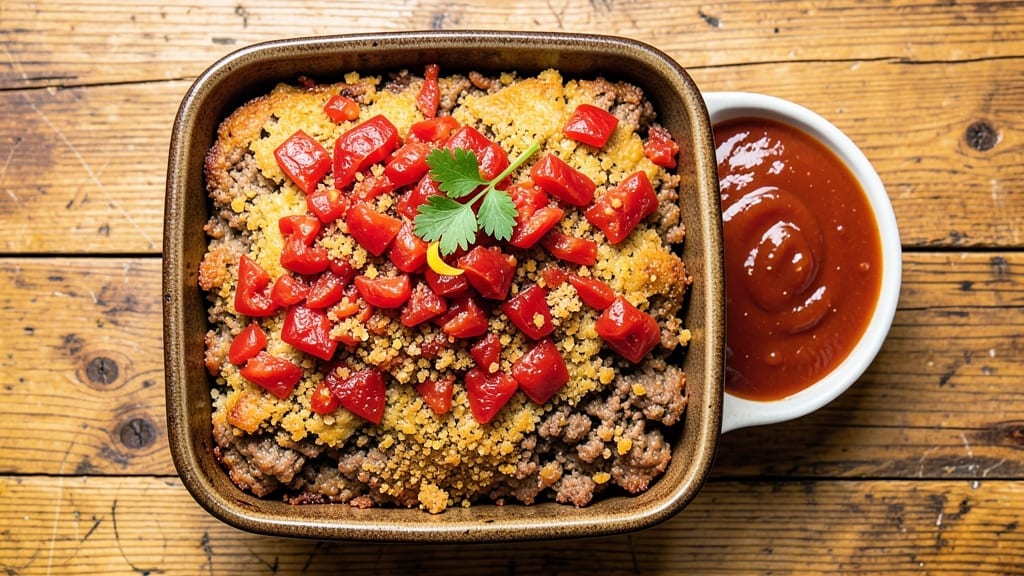
This 12 tomatoes meatloaf recipe transforms a classic comfort dish into a juicy, fork-tender masterpiece with a built-in tomato glaze that locks in moisture and adds depth.
The secret lies in blending crushed tomatoes directly into the meat mixture—no separate sauce needed—so every bite delivers that perfect balance of savory meat and tangy tomato sweetness. I developed this version after years of dry meatloaf failures, and it never disappoints.
The beauty of this approach is simplicity: ground beef, breadcrumbs, and egg bind together while the tomatoes create a natural glaze that caramelizes beautifully during baking.
At 350°F for 50 minutes, the meatloaf develops a golden crust while staying moist inside, with the tomato glaze bubbling up for that restaurant-quality finish. No extra steps, no complicated techniques—just a foolproof method that delivers restaurant-quality results every time.
What you’ll end up with is a meatloaf so tender it nearly falls apart, with a glossy tomato glaze that’s rich, slightly sweet, and packed with umami. The texture is what sets this apart—no more dry, crumbly loaves, just melt-in-your-mouth perfection that’ll have everyone asking for seconds.
Serve it with mashed potatoes or crusty bread to soak up every last drop of that luscious glaze.
This recipe works equally well for weeknight dinners or holiday gatherings, and the leftovers reheat beautifully. The tomatoes add natural sweetness that balances the savory meat, while the breadcrumbs create just the right crumbly texture.
Trust me—once you try this version, you’ll never go back to the dry, boring meatloaf of old.
Ingredients for 12 tomatoes meatloaf
Six ingredients transform dry meatloaf into juicy perfection with built-in tomato glaze magic.
| Ingredient | Amount | Notes |
|---|---|---|
| Ground Beef 🥩 | 2 lb | 80/20 fat ratio preferred |
| Crushed Tomatoes (12 oz can) 🍅 | 1 can | San Marzano preferred for sweetness |
| Plain Breadcrumbs 🍞 | 1 cup | Freshly toasted for better texture |
| Large Eggs 🥚 | 1 whole | Room temperature for even binding |
| Onion Powder 🧅 | 1 tbsp | Freshly ground preferred |
| Garlic Powder 🧄 | 1 tbsp | Not garlic salt |
| Worcestershire Sauce 🍶 | 1 tbsp | Vegan version if needed |
| Kosher Salt 🧂 | 1 ½ tsp | Diamond Crystal preferred |
| Ground Black Pepper 🌶️ | 1 tsp | Freshly cracked preferred |
| Olive Oil 🫒 | 1 tbsp | For greasing loaf pan |
| Ketchup 🍅 | 2 tbsp | For topping glaze |
| Mustard (Dijon) 🥬 | 1 tbsp | For topping glaze |
The ground beef is where it all starts—80/20 fat ratio keeps it juicy, but don’t skimp on quality. Kroger or Costco usually have the best-priced packages, and you’ll want about 2 pounds total. The crushed tomatoes? San Marzano makes all the difference here—sweeter, less acidic, and just richer overall. If you can’t find it, any good-quality crushed tomatoes will work, but don’t use those watery canned tomato sauces. The breadcrumbs need to be fresh—toast your own if you’ve got stale bread lying around, just pulse it in a food processor for that perfect texture. And trust me on the Worcestershire—it’s doing the umami heavy lifting here.
No Worcestershire? Soy sauce at half the amount works in a pinch, but you’ll lose some depth. The ketchup and mustard topping glaze is non-negotiable for that classic look—Heinz or French’s are fine, but if you’ve got a fancy mustard you love, use that instead. The egg binds everything together, so make sure it’s room temperature when you mix it in—no cold eggs here. The spices are simple but essential: onion and garlic powder give that savory base, while the salt and pepper balance everything out. Pro tip: Toast your spices in a dry pan for 30 seconds before mixing—they’ll sing more in the final dish.
This meatloaf is best made fresh, but it reheats beautifully—just cover it with foil and warm in the oven at 300°F for about 15 minutes. Leftovers keep for 4-5 days in the fridge, and you can freeze portions for up to 3 months. I always make a double batch because it disappears fast. The glaze thickens as it cools, so if you’re serving it warm, just add a splash of water or broth to loosen it up before serving. And if you’re wondering—yes, the glaze is edible, and yes, you’ll want to lick the plate.
Why You’ll Love This Recipe
- No Fuss Mixing: I swear by this recipe’s simplicity—just toss everything in a bowl. The crushed tomatoes and breadcrumbs do all the work while you crack eggs and sprinkle onion powder. No fancy techniques, no stress.
- Tomato-Beef Magic: That can of tomatoes? It’s the secret weapon. The acidity cuts through the richness of the beef, while the breadcrumbs keep it moist and tender—like a hug for your taste buds. (Yes, even on a Tuesday night.)
- Leftovers That Shine: This meatloaf actually improves the next day. Slice it thin, reheat with a splash of water, and it’s just as good—if not better—than fresh. My freezer’s full of these, and I never get tired of them.
- Budget-Buster Crowd-Pleaser: Ground beef and a can of tomatoes? That’s my kind of grocery haul. It stretches for a big family dinner or feeds me for three lunches without breaking the bank. Plus, no one ever complains.
Step-by-step instructions for juicy meatloaf with tomato sauce
Here’s how to make a meatloaf so tender you’ll want to skip dinner for dessert.
Prep the Tomato Sauce for Maximum Flavor
In a medium bowl, combine the entire 1 can crushed tomatoes, 1 tbsp Worcestershire sauce, 1 tbsp onion powder, 1 tbsp garlic powder, 1.5 tsp kosher salt, and 1 tsp ground black pepper. Stir well to distribute all seasonings. This sauce will both flavor the meatloaf and become its signature topping.
Set aside half of this mixture (about ½ cup) for the topping later. The remaining sauce will be mixed directly into the meatloaf—this ensures every bite stays moist and packed with tomato flavor. The acidity in the tomatoes helps tenderize the meat during baking, so don’t skip this step.
Mix the Meatloaf Ingredients for Perfect Texture
In a large mixing bowl, combine the 2 lb ground beef, 1 cup plain breadcrumbs, and the whole large egg. Use your hands to gently mix everything until just combined—don’t overwork the meat or it’ll become dense. The breadcrumbs will absorb moisture, while the egg acts as a binder to hold everything together.
Add the remaining ½ cup tomato sauce (from Step 1) to the meat mixture. Stir carefully to distribute evenly without breaking up the beef too much. The sauce will add moisture and richness, preventing the meatloaf from drying out during baking. Here’s the thing—this sauce is your secret weapon for juiciness.
Shape and Prepare for Baking
Lightly grease a 9×5-inch loaf pan with 1 tbsp olive oil. Transfer the meat mixture to the pan and spread it evenly, shaping it into a smooth rectangle. Press down gently but firmly—this ensures even cooking and prevents cracks. The pan’s size gives you that classic meatloaf shape while keeping it compact for perfect doneness.
Spread the reserved ½ cup tomato sauce evenly over the top of the meatloaf. This creates a flavorful crust and prevents the surface from drying out. In a small bowl, mix together the 2 tbsp ketchup and 1 tbsp Dijon mustard, then spread this mixture over the tomato sauce layer. This dual-layer topping gives you both sweetness and tangy depth.
Bake to Perfect Doneness
Preheat your oven to 375°F. Place the loaf pan on the center rack and bake for 50-60 minutes. You’ll know it’s ready when the internal temperature reaches 160°F and the edges are golden brown. The meatloaf should feel firm to the touch but still spring back slightly when pressed.
Don’t open the oven during baking—this causes temperature fluctuations that can lead to a dry loaf. If you’re worried about doneness, use an instant-read thermometer. The mustard-ketchup topping should be bubbly and slightly caramelized by the end, indicating the meatloaf is cooked through.
Rest and Serve for Maximum Tenderness
Remove the meatloaf from the oven and let it rest in the pan for 10-15 minutes. This resting period allows the juices to redistribute throughout the meat, ensuring every slice is moist and flavorful. Cutting it too soon would result in dry, crumbly pieces—patience here makes all the difference.
Slice into 6 equal portions and serve immediately. The inside should be fork-tender with just a slight pink center, surrounded by that rich tomato sauce. The crust should be golden and slightly crisp, while the texture inside remains juicy and crumbly. Serve with mashed potatoes or roasted vegetables for the ultimate comfort meal.
Pro Tips For Making 12 Tomatoes Meatloaf
- Crush Your Own Tomatoes: That 12-oz can of crushed tomatoes? Drain it completely—don’t just shake it out. Leftover juice makes the meatloaf soggy, and nobody wants a mushy loaf. I learned this the hard way after serving a batch that fell apart at the dinner table.
- Mix Like You Mean It: Don’t just stir the ground beef, breadcrumbs, and egg together—work it. Use your hands to break up any clumps in the breadcrumbs and mix until the texture is uniform. This ensures even cooking and a tighter crumb. (Yes, even if you’re impatient like me.)
- Skip the Overmixing: Once everything’s combined, stop touching it. Overworking the meat makes it dense and tough—this isn’t meatballs, it’s a loaf. Just fold in the crushed tomatoes gently at the end, and resist the urge to “fix” the texture.
- Rest Before Baking: Shape the loaf, then let it sit uncovered in the fridge for 15–20 minutes. This lets the breadcrumbs firm up slightly, so they don’t turn to paste when the tomatoes steam. I was skeptical until I tried it—now it’s non-negotiable.
Common mistakes when making this dish
Overmixing the Meat
I can’t stress this enough—overmixing the meat mixture is the #1 reason meatloaf turns out dense and dry. When you mix the ground beef, breadcrumbs, and egg, work just until combined.
The moment you see streaks of tomato sauce disappear, stop. Overworking the meat develops gluten, which creates a tough texture. I’ve ruined more meatloaves this way than I’d like to admit. 🥩
Skipping the Rest Time
Rushing to slice your meatloaf as soon as it comes out of the oven is a big mistake. The resting period (10-15 minutes) lets the juices redistribute, preventing dry slices.
I once cut into a meatloaf immediately and ended up with crumbly, flavorless pieces. Trust the process—patience here makes all the difference in texture.
Incorrect Temperature
Baking at too high a temperature (like 400°F) causes the outside to cook too fast while the inside stays raw. The perfect temperature is 375°F—this gives you a golden crust without drying out the center.
I learned this the hard way when my first attempt came out with a burnt exterior and undercooked middle. An instant-read thermometer is your best friend here.
Using Low-Quality Tomatoes
Don’t cut corners with watery, low-quality crushed tomatoes. The flavor and moisture content vary dramatically between brands. San Marzano tomatoes are my go-to because they’re sweeter and less acidic, which balances perfectly with the meat. I’ve tried cheaper brands, and the results were noticeably less flavorful and more watery.
Ignoring the Glaze Layers
Applying just one layer of topping (either sauce or ketchup-mustard mix) leads to an uneven finish. The dual-layer approach (tomato sauce base + ketchup-mustard top) creates both flavor depth and that classic meatloaf look.
I once skipped the mustard layer and ended up with a bland, one-note topping. The mustard adds tangy brightness that cuts through the richness.
Opening the Oven Too Soon
Peeking at your meatloaf too early causes temperature fluctuations that lead to uneven cooking. The ideal scenario is to bake it undisturbed for the full 50-60 minutes. I’ve caught myself opening the oven “just to check” and ended up with a meatloaf that took 20 extra minutes to finish.
Resist the urge—trust your thermometer instead. 🌡️
Nutrition facts
Frequently asked questions
Can I substitute fresh tomatoes for the canned crushed tomatoes?
You can use fresh tomatoes, but you’ll need to adjust the preparation. Blend 12 medium fresh tomatoes (about 2 cups) with 1 tbsp Worcestershire sauce and 1 tsp salt until smooth. Strain out excess liquid if needed—fresh tomatoes release more moisture than canned. The flavor will be brighter but slightly more acidic, so you may want to add a pinch of sugar to balance it.
How do I make this meatloaf vegetarian?
Replace the ground beef with 2 lbs plant-based ground crumbles (like Beyond Meat or Impossible) and add ½ cup cooked lentils for extra moisture. Use the same tomato mixture and baking instructions, but reduce the baking time by 10 minutes—plant-based meats cook faster. The texture will be slightly different but still delicious with the tomato glaze.
Why does my meatloaf crack on top?
Cracking usually happens from uneven baking or overmixing. To prevent it, press the meatloaf firmly into the pan and avoid poking it while baking. If it cracks anyway, don’t worry—just cover the cracks with extra ketchup-mustard glaze before the final 10 minutes of baking. The heat will melt everything together beautifully.
Can I make this meatloaf in a slow cooker?
Shape the meatloaf in a slow cooker-safe dish, cover with foil, and cook on low for 4-5 hours or high for 2-3 hours. Uncover and add the ketchup-mustard glaze in the last 30 minutes to caramelize. The slow cooker method keeps it extra moist, but you’ll lose the crispy crust—so it’s a trade-off for convenience.
What’s the best way to reheat leftovers?
Wrap slices in foil and reheat in a 350°F oven for 15 minutes or microwave for 1-2 minutes (covered) until warmed through. The oven method keeps the texture juicier, while the microwave works in a pinch. Avoid reheating in the air fryer—it dries out the meatloaf too quickly. Store leftovers for 4-5 days in the fridge.

- 6 Egg Cake Recipe with Oil: Light as Air With Buttery Moisture - October 4, 2026
- 4 Bean Casserole Recipe: One-Pan Heartiness With Smoky Paprika Depth - October 4, 2026
- 3-Ingredient Keto Mug Cake Recipe: Microwave Magic in 2 Minutes - October 4, 2026