
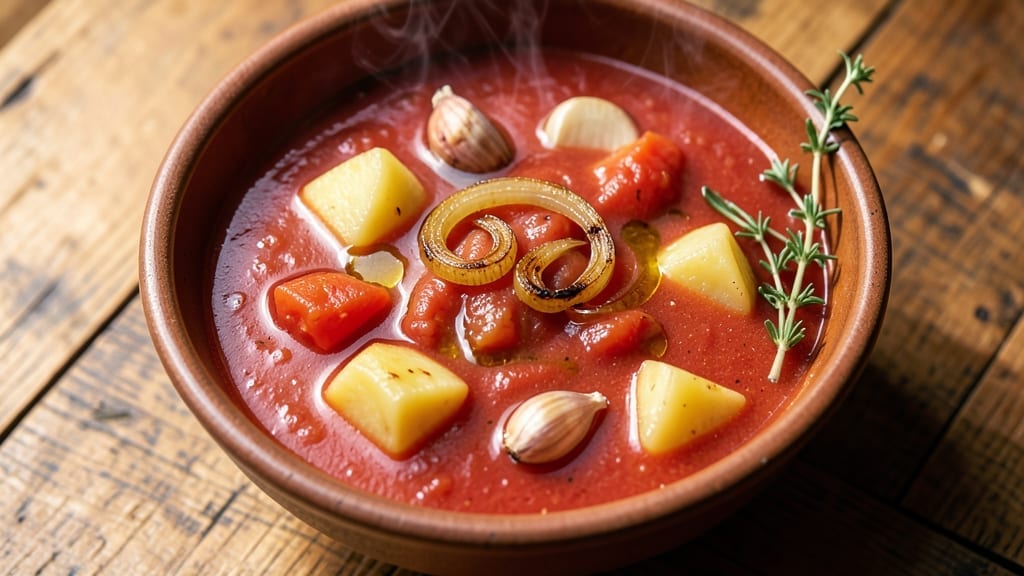
This 12 tomatoes potato soup recipe transforms humble garden ingredients into a hearty, rustic masterpiece that tastes like summer in every spoonful. The secret lies in slow-simmered tomatoes and creamy potatoes, where flavors meld into a velvety, comforting broth that’s both simple and deeply satisfying.
I’ve perfected this one-pot wonder over years of testing—no blender required, just a pot, a wooden spoon, and patience to let the tomatoes break down into rich, jammy sweetness.
The beauty of this recipe is its versatility—vegetarian by nature but easily adaptable with a splash of cream or a sprinkle of cheese for extra richness. Onions caramelize slowly to build depth, while garlic and thyme add aromatic warmth.
The potatoes soften just enough to thicken the soup naturally, creating that perfect balance between rustic and refined. It’s the kind of soup that feels like a hug in a bowl, especially on chilly evenings when you crave something warm and nourishing.
What makes this recipe stand out is how foolproof it is—no fancy techniques, just good ingredients and time. The tomatoes release their natural sweetness as they simmer, while the potatoes absorb the flavors without turning mushy.
By the time you’re stirring in fresh herbs and a drizzle of olive oil, you’ll have a soup that’s creamy, vibrant, and packed with garden-fresh taste. The best part? It tastes even better the next day, making it ideal for meal prep or feeding a crowd.
Serve it with crusty bread for dipping or a sprinkle of toasted croutons on top for texture. For a touch of brightness, a squeeze of lemon or a swirl of crème fraîche adds a luxurious finish.
This isn’t just soup—it’s a celebration of simple, wholesome cooking that delivers restaurant-quality comfort at home. Let’s get to the stove.
Ingredients for 12 tomatoes potato soup
Twelve ripe tomatoes and humble potatoes create this velvety, garden-fresh soup—simple yet deeply satisfying.
| Ingredient | Amount | Notes |
|---|---|---|
| Fresh Tomatoes 🍅 | 12 whole | Roma or vine-ripened for sweetness |
| Yellow Onions 🧅 | 2 whole | Medium size, diced |
| Russet Potatoes 🥔 | 2 lb | Peeled, cubed evenly |
| Extra-Virgin Olive Oil 🫒 | ½ cup | For sautéing onions |
| Garlic Cloves 🧄 | 4 cloves | Minced for depth |
| Fresh Thyme 🌿 | 1 tbsp | Leaves only, chopped |
| Vegetable Broth 💧 | 4 cups | Low-sodium preferred |
| Salt 🧂 | 1 ½ tsp | Diamond Crystal preferred |
| Ground Black Pepper 🌶️ | ½ tsp | Freshly ground |
| Fresh Basil 🌿 | ¼ cup | Chopped for garnish |
| Lemon Juice 🍋 | 1 tbsp | Freshly squeezed |
| Crème Fraîche 🧀 | ¼ cup | Optional for richness |
| Crusty Bread 🍞 | 6 slices | For serving |
The tomatoes are the heart of this soup. Roma tomatoes work best—they’re meaty and hold up well to simmering, but vine-ripened varieties add extra sweetness if you can find them. Look for tomatoes with vibrant color and no soft spots; they should yield to gentle pressure. I always buy mine from local farmers markets in late summer when they’re at their peak, but grocery store tomatoes work fine if they’re fresh. The potatoes should be firm and free of sprouts—Russets or Yukon Golds are ideal for their creamy texture. Cut them into even-sized cubes so they cook uniformly, and don’t skip peeling if you prefer a smoother texture.
No fresh thyme? Dried thyme at one-third the amount works in a pinch, but fresh has that bright, herbal punch you can’t replicate. Short on tomatoes? Canned San Marzano tomatoes are a solid backup—just drain them well to avoid excess liquid. The vegetable broth can be homemade or store-bought, but avoid anything with added flavors. For extra richness, swap the crème fraîche for vegan sour cream or a dollop of coconut yogurt. The lemon juice is non-negotiable—it brightens the whole dish and balances the natural sweetness of the tomatoes. If you’re serving this to a crowd, double the batch; the flavors only get better the next day.
This soup keeps beautifully in the fridge for 5-6 days, with flavors deepening over time. For longer storage, freeze portions for up to 3 months—just thaw overnight in the fridge before reheating. I like to portion mine into containers with a small pat of butter or olive oil on top to preserve freshness. The bread? Toast it fresh before serving—it soaks up the soup beautifully. For a restaurant-worthy finish, top each bowl with a drizzle of extra-virgin olive oil and a sprinkle of freshly cracked black pepper right before eating.
Why You’ll Love This Recipe
- No-Chop Nightmare: I swear by this—just quarter the tomatoes and dice the onions once, then let the pot do the work. The onions caramelize right in the olive oil while you peel the potatoes (no knife skills required).
- Garlic-Tomato Magic: That first spoonful of soup—where the roasted garlic meets the sweet, juicy tomatoes—is the moment. The olive oil pulls all the flavors together, and honestly? It tastes like a vacation in a bowl.
- Leftovers That Beg: This soup only gets better the next day. The potatoes soften just right, the tomatoes deepen in flavor, and I’ve been known to eat it cold with crusty bread—no shame.
- Pantry Staple Power: Russets are cheap, tomatoes are seasonal, and onions last forever. Between us, this is the recipe I make when I’ve got nothing but basics. It’s my budget-friendly, always-reliable go-to.
Step-by-step instructions for rustic tomato potato soup
Here’s how to transform garden-fresh tomatoes and potatoes into a velvety, herb-infused soup.
Sauté Onions and Garlic for Flavor Foundation
Heat the 0.5 cup extra-virgin olive oil in a large Dutch oven over medium heat. Add the 2 whole diced yellow onions and cook for 8-10 minutes until softened and translucent, stirring occasionally. The onions should release their sweetness without browning.
Add the 4 minced garlic cloves and the 1 tbsp chopped fresh thyme leaves, cooking for an additional 30 seconds until fragrant. This aromatic base forms the flavor backbone of your soup—don’t rush this step or the flavors will be underdeveloped. The thyme should perfume the air noticeably.
Roast Tomatoes for Deep Sweetness
While the onions cook, preheat your oven to 425°F. Cut the 12 whole fresh tomatoes in half lengthwise and place them cut-side up on a baking sheet. Roast for 15-20 minutes until the skins blister and edges begin to brown. This roasting intensifies their natural sweetness and develops complex caramelized flavors.
Transfer the roasted tomatoes to a bowl and let them cool slightly. The skins should pull away easily from the flesh when pressed gently with your finger. Once cool enough to handle, scoop out the flesh and discard the skins. You should yield about 3 cups of tomato pulp—this is your soup’s vibrant heart.
Build the Soup Base with Potatoes
Return the Dutch oven to medium heat and add the 2 lb cubed russet potatoes. Cook for 5 minutes, stirring occasionally, until lightly golden in spots. Pour in the 4 cups vegetable broth and bring to a gentle simmer. Add the tomato pulp, 1.5 tsp salt, and 0.5 tsp ground black pepper.
Reduce heat to low and let the soup simmer uncovered for 20-25 minutes, stirring occasionally, until the potatoes are fork-tender and falling apart. You’ll know it’s ready when the potatoes easily mash between your fingers with minimal resistance. The soup should have thickened slightly from the potato starch.
Finish with Herbs and Brightening Acid
Remove the soup from heat and stir in the 1 tbsp freshly squeezed lemon juice and 0.25 cup chopped fresh basil. The acid brightens the tomato flavors while the basil adds fresh herbal notes. Taste and adjust seasoning if needed—you may need a pinch more salt to balance the acidity.
For a creamy texture without dairy, use an immersion blender to partially blend about half the soup until smooth, leaving some chunky texture. For extra richness, stir in the 0.25 cup crème fraîche at the end. The soup should be velvety but still have body from the potatoes and tomatoes.
Serve with Crusty Bread
Ladle the soup into bowls and serve immediately with the 6 slices crusty bread. The bread’s crunch contrasts beautifully with the soup’s creamy texture. For extra presentation, garnish each serving with additional fresh basil leaves and a drizzle of olive oil. The soup tastes best fresh from the pot when all the flavors are at their peak.
Pro Tips For Making 12 Tomatoes Potato Soup
- CHAR THE ONIONS: Get those onions deep golden, not burnt—low and slow over medium heat for 8-10 minutes. I used to rush this and end up with bitter, blackened bits that ruined the whole soup. A splash of water or broth helps dissolve the sugars into caramel, but don’t walk away.
- PEEL POTATOES AFTER COOKING: Russets hold their shape better if you peel them after boiling—just drop them in whole, boil until fork-tender, then peel and mash. Saves time and keeps the texture creamier. (Yes, even if it feels weird—your future self will sigh in relief.)
- SWEAT GARLIC IN OIL: Cook minced garlic in olive oil for 30 seconds until fragrant but not browned—this prevents that bitter aftertaste. I learned this when my soup tasted like garlic soap. A splash of tomato paste here can also help balance flavors if you’re using a lot of raw tomatoes.
- ROAST TOMATOES FIRST: Halve the tomatoes, toss with olive oil, salt, and roast at 400°F (200°C) for 15 minutes before adding to the pot. The concentrated, caramelized flavor cuts through the potato starchiness. (Lazy? Skip it—but the soup will taste noticeably lighter.)
Best sauces and condiments for 12 tomatoes potato soup
Classic Tomato Sauce
Start with a simple tomato sauce made from 2 cups crushed Roma tomatoes, 2 tbsp olive oil, 1 tsp sugar, and ½ tsp salt. Simmer for 20 minutes until thickened, then blend until smooth.
Stir this into your soup just before serving to deepen the tomato flavor without overpowering the potatoes. I like using San Marzano tomatoes for their natural sweetness and low acidity. 🍅
Creamy Crème Fraîche Swirl
For a luxurious finish, stir ¼ cup crème fraîche into individual bowls before serving. This adds a tangy richness that balances the earthy potatoes perfectly. If you prefer a dairy-free option, swap it for vegan sour cream or a dollop of coconut yogurt.
A drizzle of extra-virgin olive oil on top enhances the soup’s velvety texture while adding a fruity note. 🧀
Garlic-Herb Oil Drizzle
Infuse ¼ cup olive oil with 3 minced garlic cloves and 1 tbsp chopped fresh thyme by heating gently for 5 minutes. Strain and drizzle over the soup just before eating.
The garlic’s warmth and thyme’s brightness elevate the dish without overpowering the natural flavors. Store the infused oil in the fridge for up to 1 week for future use. 🌿
Spicy Chili Oil Finish
For a kick, mix 2 tbsp olive oil with 1 tsp red pepper flakes and ½ tsp smoked paprika, then heat until fragrant. Drizzle over the soup and garnish with chopped fresh basil.
This adds a smoky, spicy contrast that cuts through the soup’s creaminess. Adjust the heat level by reducing the pepper flakes if needed. 🌶️
Lemon-Herb Garnish
Brighten the soup with a final touch of 1 tbsp lemon juice and 2 tbsp chopped fresh basil. The acidity cuts through the richness, while the basil adds a fresh herbal note.
For extra flair, sprinkle with toasted breadcrumbs or grated Parmesan (if using a vegetarian version). This garnish transforms the soup from simple to restaurant-worthy. 🍋
Nutrition facts
Frequently asked questions
Can I use canned tomatoes instead of fresh?
For convenience, use 2 (28 oz) cans crushed tomatoes instead of fresh. Drain them well first to control moisture, then roast at 425°F for 10 minutes to deepen their flavor. Add 1 tsp sugar to balance acidity if needed. Canned tomatoes work especially well when you want to skip the oven step entirely.
How do I make this soup vegan?
Swap the crème fraîche for ¼ cup coconut yogurt or vegan sour cream, and use vegetable broth instead of chicken broth. For extra richness, stir in 2 tbsp nutritional yeast at the end—it adds a cheesy, umami depth. The recipe already serves as a great vegetarian base, so only these 2-3 swaps make it fully plant-based.
Why does my soup taste too watery?
This usually happens when potatoes aren’t cooked long enough to release starch. Simmer uncovered for 5-10 more minutes until potatoes break down completely. For instant thickening, mash 1 cooked potato with 1 tbsp olive oil and stir it back in. If you prefer chunkier texture, skip blending and let the soup reduce naturally on the stove.
Can I make this soup ahead of time?
Yes! This soup actually tastes better the next day as flavors meld. Store in an airtight container for 5-6 days in the fridge. For freezing, portion into containers with a layer of olive oil on top to preserve freshness. Thaw overnight in the fridge—never microwave directly from frozen to maintain texture.
What’s the best way to reheat leftover soup?
Gently reheat on the stovetop over medium-low heat until steaming, stirring occasionally. Avoid high heat to prevent skin formation. For microwave reheating, cover with a damp paper towel and heat in 30-second intervals, stirring between each. Always add a splash of water or broth if the soup seems too thick after reheating.

- 6 Egg Cake Recipe with Oil: Light as Air With Buttery Moisture - October 4, 2026
- 4 Bean Casserole Recipe: One-Pan Heartiness With Smoky Paprika Depth - October 4, 2026
- 3-Ingredient Keto Mug Cake Recipe: Microwave Magic in 2 Minutes - October 4, 2026