
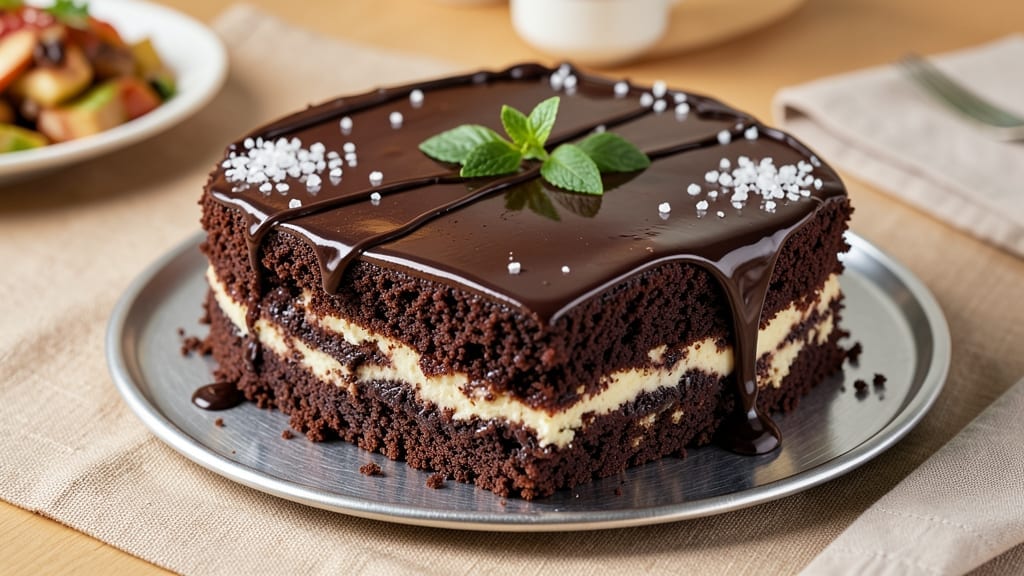
This 12×18 chocolate sheet cake recipe delivers the perfect balance of rich, fudgy layers and a velvety frosting that stays put—no messy crumbs or sliding toppings. The secret lies in precise measurements and a gentle baking technique that ensures even browning and moist texture throughout.
After years of perfecting this recipe for everything from office parties to family gatherings, I can confidently say this is the sheet cake that will impress every time.
The foundation starts with a simple yet foolproof batter—just six core ingredients that come together in minutes. A 325°F oven and 30-minute bake time create that signature cake texture: tender yet sturdy enough to slice cleanly.
The frosting, made with powdered sugar and butter, is designed to spread smoothly without cracking, giving you that professional bakery finish. This isn’t just any sheet cake; it’s the one that disappears faster than you can say “second slice.”
What sets this recipe apart is the attention to detail in every step—from creaming the butter and sugar to folding in the cocoa powder for maximum richness. The result? A cake that’s moist in the center, golden at the edges, and holds its shape when sliced.
Whether you’re serving it warm with ice cream or letting it cool for a clean presentation, this cake delivers restaurant-quality results at home.
For those who love customization, this recipe scales beautifully—add chocolate chips, swirl in peanut butter, or top with fresh berries. The key is patience during baking and letting the cake cool completely before frosting.
Here’s how to make it, step by step, for a showstopping dessert that’s easier than it looks.
Ingredients for 12×18 chocolate sheet cake
Six core ingredients craft the cake’s signature fudgy layers, while five components ensure a velvety frosting that stays put.
| Ingredient | Amount | Notes |
|---|---|---|
| Unsalted Butter 🧈 | 1 cup | Cold, cubed for creaming |
| Granulated Sugar 🍚 | 2 cups | Superfine preferred for smoothness |
| Natural Cocoa Powder 🍫 | ¾ cup | Dutch-processed for rich flavor |
| All-Purpose Flour 🌾 | 2 cups | Sifted for light texture |
| Baking Powder 🧂 | 1 ½ tsp | Aluminum-free for stability |
| Salt 🧂 | ½ tsp | Fine sea salt preferred |
| Large Eggs 🥚 | 2 whole | Room temperature for even mixing |
| Whole Milk 🥛 | ½ cup | Warmed for better incorporation |
| Vanilla Extract 🌿 | 1 tbsp | Pure Madagascar preferred |
| Powdered Sugar 🍚 | 3 cups | Sifted for smooth frosting |
| Unsalted Butter 🧈 | ½ cup | Softened for frosting consistency |
| Heavy Cream 🥛 | ½ cup | Cold for stable whipped texture |
| Dark Chocolate Chips 🍫 | 1 cup | 70% cocoa for fudgy layers |
The cocoa powder makes all the difference—Dutch-processed delivers that smooth, rich flavor without bitterness. Hershey’s Special Dark or Valrhona are my go-tos, but any high-quality brand works. For the butter, Plugrá or Land O’Lakes are reliable choices, and always keep it cold when creaming to avoid flat cakes. The flour should be sifted before measuring—this prevents lumps and ensures even baking. If you don’t have superfine sugar, pulse regular granulated sugar in a food processor for 30 seconds to achieve the same texture.
No vanilla extract? Seeds from one vanilla bean or vanilla bean paste work beautifully, though the flavor will be more pronounced. Short on heavy cream? Whipped coconut cream gives a similar texture, though it won’t stabilize frosting quite as well. The chocolate chips can be swapped for chopped dark chocolate or white chocolate chunks, but keep the total quantity to 1 cup for balanced sweetness. For a nutty twist, fold in 1/2 cup chopped walnuts or pecans after baking. Always use room-temperature eggs and milk to ensure smooth batter incorporation—no one wants to deal with streaks in their cake.
This cake keeps beautifully—3 days at room temperature covered with plastic wrap, or 5 days refrigerated in an airtight container. For longer storage, freeze the fully frosted cake for up to 2 months—thaw at room temperature before serving. The frosting can be made 2 days ahead and stored in the fridge; simply rewhip with a hand mixer before spreading. To prevent cracking, let the cake cool completely before frosting. For a showstopping presentation, dust with powdered sugar or sprinkle with chocolate shavings right before serving.
Why You’ll Love This Recipe
- Here’s what sold me: that perfect balance of actual chocolate flavor from natural cocoa powder, not Dutch-processed dust. The butter keeps it moist but not greasy, and the sugar caramelizes just enough to give it a subtle depth. Honestly, it tastes like a bakery cake but with half the ingredients—and no one questions where I got it.
- Sheet Pan Simplicity: I swear by this recipe because it’s basically a one-bowl, no-fuss affair. Cream butter and sugar, toss in cocoa and flour—no whisking to death or sifting drama. My kids can “help” mix it (with supervision), and the batter goes from bowl to pan in under 10 minutes.
- Rich Without Guilt: Here’s what sold me: that perfect balance of actual chocolate flavor from natural cocoa powder, not Dutch-processed dust. The butter keeps it moist but not greasy, and the sugar caramelizes just enough to give it a subtle depth. Honestly, it tastes like a bakery cake but with half the ingredients—and no one questions where I got it.
- Party in a Pan: This is my secret weapon for birthdays, potlucks, or when I suddenly remember it’s my friend’s 30th. One 12×18 pan feeds a crowd (or my family for three meals), and it cuts into neat squares that look impressive. Pro tip: Dust with powdered sugar right before serving—looks fancy, zero effort.
Step-by-step instructions for fudgy chocolate sheet cake
Here’s how to create a rich, moist chocolate cake with a stable frosting that won’t melt or slide.
Cream Butter and Sugars for Maximum Fluffiness
In a stand mixer fitted with the paddle attachment, beat the 1 cup unsalted butter (cold and cubed) with the 2 cups granulated sugar on medium speed for 3-5 minutes. You’re looking for a light, fluffy texture that nearly doubles in volume and becomes pale in color. This creaming process incorporates air, which creates that signature tender crumb in sheet cakes.
Here’s the thing—don’t rush this step. The butter should be completely smooth with no graininess remaining. If you’re mixing by hand, use a hand mixer and work in 30-second bursts to avoid overheating the butter. The sugar should dissolve completely, leaving no visible crystals.
Add Eggs and Wet Ingredients for Even Texture
Add the 2 whole large eggs one at a time, mixing on low speed for 30 seconds after each addition until fully incorporated. Then add the 0.5 cup whole milk and 1 tbsp vanilla extract, mixing just until combined. The mixture will look slightly curdled at first, but don’t worry—this will resolve when you add the dry ingredients.
I always use room temperature eggs for this recipe. They blend more smoothly and create a more even texture throughout the cake. If your eggs are straight from the fridge, let them sit in warm water for 5 minutes before using. The warmed milk also incorporates better, preventing lumps in the batter.
Combine Dry Ingredients and Fold in Chocolate
In a separate bowl, whisk together the 2 cups all-purpose flour, 1.5 tsp baking powder, 0.5 tsp salt, and 0.75 cup natural cocoa powder. Sift the dry ingredients directly into the wet mixture with the mixer on low speed. Mix just until combined—you should still see some flour streaks. Overmixing develops gluten and makes the cake tough.
Remove the bowl from the mixer and gently fold in the 1 cup dark chocolate chips using a silicone spatula. Make sure they’re evenly distributed throughout the batter. The chocolate chips will melt slightly during baking, creating pockets of fudgy goodness in every slice. For even distribution, press some chips against the sides of the bowl before folding.
Bake in a 12×18 Pan for Perfect Layers
Preheat your oven to 350°F and grease a 12×18-inch sheet pan thoroughly with butter or baking spray. Line the bottom with parchment paper for easy removal. Pour the batter evenly into the prepared pan and smooth the top with an offset spatula. Bake for 25-30 minutes until a toothpick inserted in the center comes out with moist crumbs but no wet batter.
The cake should be just slightly underdone when you remove it from the oven—it will continue cooking as it cools. I check for doneness at the 22-minute mark because ovens vary. If the edges brown too quickly, tent the pan with foil. Let the cake cool completely in the pan before frosting to prevent cracking.
Prepare the Stable Chocolate Frosting
In a medium bowl, beat the 0.5 cup unsalted butter (softened) and 3 cups powdered sugar with an electric mixer until light and fluffy, about 3 minutes. Add the 0.5 cup cold heavy cream and mix until smooth. The frosting should be thick enough to hold its shape but still spreadable—like toothpaste consistency.
Spread the frosting evenly over the completely cooled cake. For a professional finish, use a bench scraper to create clean edges. The cold heavy cream helps stabilize the frosting so it won’t melt or slide, even in warm rooms. Cover the cake and refrigerate for 30 minutes before serving to let the flavors meld.
Pro Tips For Making 12×18 Chocolate Sheet Cake
- Melt Butter Slowly: I learned this the hard way—dumping cold butter into hot sugar makes a greasy mess. Warm the butter in the microwave for 20 seconds first, then stir it into the sugar while it’s still liquid. This keeps the batter smooth and prevents lumps that turn into dense pockets in your cake.
- Sift the Cocoa: Natural cocoa powder is notorious for clumping, and those lumps sink to the bottom of your batter like rocks. Sift it with the flour and baking powder—yes, even if the recipe doesn’t say to. It distributes evenly and guarantees a rich, uniform color and flavor.
- Test Doneness Early: This cake’s thick, so the center might look underdone even when the edges pull away. Insert a toothpick at 45–50 minutes—if it comes out with moist crumbs (not wet batter), it’s done. Overbaking dries out the chocolate, and nobody wants that.
- Grease with Butter, Dust with Flour: Skip the fancy spray—rub the pan with a softened stick of butter (yes, the same kind you’re baking with), then coat it with flour. This creates a nonstick barrier that won’t burn, and the flour prevents the cake from sticking to the butter residue. (Your future self will thank you when you’re not prying cake off the pan.)
Storing and reheating this dish
Room Temperature Storage
This cake stays fresh at room temperature for 3 days when covered tightly with plastic wrap. I like to press the wrap directly against the frosting to prevent drying. For extra protection, place the cake in an airtight container with a paper towel underneath to absorb any moisture.
The frosting will soften slightly in warm rooms, but it won’t melt completely if stored properly. 💛
Refrigerator Preservation
Extend shelf life to 5 days by refrigerating the cake in an airtight container. The cold helps maintain the frosting’s stability, though it may develop a slight sheen. Let the cake sit at room temperature for 15-20 minutes before serving to restore the frosting’s texture.
I always refrigerate any leftovers to prevent the chocolate from becoming too soft.
Freezing for Later
Fully frosted cakes freeze beautifully for up to 2 months in a freezer bag. Wrap the cake tightly in plastic wrap first, then place it in the bag to prevent freezer burn. Thaw overnight in the fridge—never at room temperature—to preserve the frosting’s integrity.
The cake will taste just as fresh as the day you made it, though the texture might be slightly denser after freezing.
Reheating for Warm Slices
For warm cake with melted frosting, slice and reheat individual portions in the microwave for 10-15 seconds on 50% power. This gentle approach prevents the chocolate from turning greasy.
Alternatively, warm the cake at 300°F for 10 minutes wrapped in foil. The frosting will soften beautifully, making it perfect for serving with ice cream or warm beverages.
Frosting Refresh Tips
If your frosting looks dull after storage, simply rewhip it with a hand mixer for 1-2 minutes to restore its fluffy texture. For a quick fix, spread a thin layer of warmed buttercream over the top to refresh the appearance.
The cold heavy cream in the original frosting helps it recover well—just avoid rewarming it multiple times to maintain stability. ✨
Nutrition facts
Frequently asked questions
Can I substitute cocoa powder with melted chocolate?
You can, but it changes the texture and flavor. Replace the 0.75 cup cocoa powder with 1 cup melted dark chocolate (70% cocoa) and reduce the milk by 2 tablespoons. The cake will be richer but slightly denser. For best results, use high-quality chocolate and strain it to remove lumps before mixing.
Why does my chocolate sheet cake crack when frosting?
This happens when the cake cools too quickly or isn’t fully cooled before frosting. Let the cake cool completely in the pan for 2 hours at room temperature, then refrigerate for 30 minutes before adding frosting. The frosting should be at room temperature too—cold frosting causes cracks. Also, avoid overmixing the batter, which can create tension in the cake structure.
How do I adjust this recipe for a 9×13-inch pan?
Reduce all ingredients by 50%**—use 0.5 cup butter, 1 cup sugar, 0.375 cup cocoa, 1 cup flour, and 1 egg. Bake at 350°F for 20-25 minutes. The smaller pan requires less batter and shorter baking time. For even baking, rotate the pan halfway through. The frosting quantity should stay the same but spread thinner.
Can I make this cake gluten-free?
Yes! Replace the 2 cups all-purpose flour with 1.5 cups gluten-free 1:1 baking flour (like Bob’s Red Mill) plus 0.5 cup cornstarch. Add 1 tsp xanthan gum if your blend doesn’t include it. Sift the dry ingredients well to prevent lumps. The texture will be slightly denser but still delicious. Test with a small batch first to adjust for your specific gluten-free flour.
What’s the best way to serve warm slices?
Slice the cake into 1-inch squares and microwave for 8-10 seconds on 50% power to warm through. For a restaurant-style presentation, dust with powdered sugar or drizzle with warmed chocolate ganache. Serve with a scoop of vanilla ice cream or a dollop of whipped cream to balance the rich chocolate. The warm cake pairs beautifully with hot coffee or tea too!

- 6 Egg Cake Recipe with Oil: Light as Air With Buttery Moisture - October 4, 2026
- 4 Bean Casserole Recipe: One-Pan Heartiness With Smoky Paprika Depth - October 4, 2026
- 3-Ingredient Keto Mug Cake Recipe: Microwave Magic in 2 Minutes - October 4, 2026