
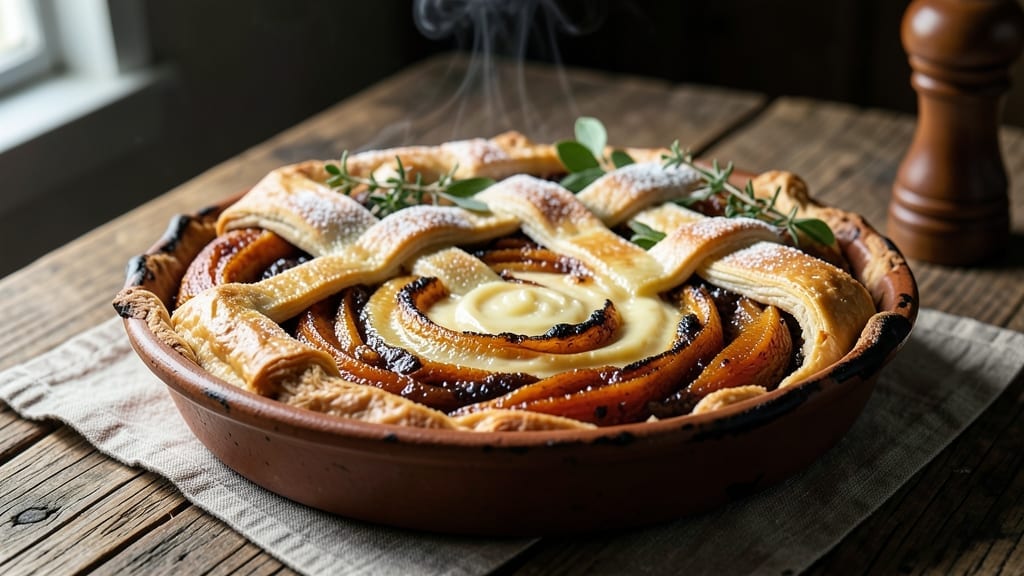
This 1600s pumpkin pie recipe brings colonial baking to life with its rich, spiced filling and flaky crust—no refined sugar in sight. 🌟 The secret lies in molasses and warm spices like nutmeg and cinnamon, which were staples in early American kitchens.
What makes this recipe special is its historical accuracy while remaining adaptable for modern ovens and pantries.
The crust is made with simple ingredients like flour, lard, and a touch of vinegar for tenderness, creating a golden, crisp shell that holds up to the dense filling.
The filling combines pumpkin, molasses, and a blend of spices that were commonly available in the 1600s, delivering a flavor profile that’s both nostalgic and deeply satisfying. This pie isn’t just a dessert—it’s a taste of history.
By the time it emerges from the oven, you’ll have a pie with a perfectly golden crust and a spiced filling that’s creamy yet firm, with just the right balance of sweetness and warmth.
The aroma alone will transport you to a colonial kitchen, but the taste is what truly makes it unforgettable. Every bite carries the essence of early American baking.
Whether you’re recreating history or simply craving a pie with depth and character, this recipe delivers. The steps are straightforward, but the result is anything but ordinary—proof that some traditions are worth preserving. Let’s get baking!
Ingredients for 1600s pumpkin pie
Colonial pantry staples meet modern baking for a pie that tastes like history.
| Ingredient | Amount | Notes |
|---|---|---|
| Fresh Pumpkin 🎃 | 2 cups | Canned or fresh, pureed smooth |
| Unsulphured Molasses 🍯 | ½ cup | Dark molasses for rich flavor |
| All-Purpose Flour 🌾 | 2 ½ cups | White or whole wheat blend |
| Lard 🧈 | ½ cup | Leaf or leaf lard preferred |
| White Vinegar 🍶 | 2 tbsp | For tender crust |
| Ice Water 💧 | ¼ cup | For pie dough |
| Ground Cinnamon 🍃 | 2 tbsp | Freshly ground preferred |
| Ground Nutmeg 🌿 | 1 tsp | Freshly grated nutmeg |
| Ground Allspice 🌶️ | ½ tsp | Or whole allspice seeds |
| Salt 🧂 | ½ tsp | Diamond Crystal preferred |
| Eggs 🥚 | 1 whole | For binding filling |
| Heavy Cream 🥛 | ¼ cup | For richness |
| Brown Sugar 🍚 | ¼ cup | Lightly packed |
The molasses is non-negotiable here—look for unsulphured varieties at specialty stores like Whole Foods or Trader Joe’s for that authentic colonial depth. Lard gives the crust its signature flakiness (no butter here—this is 1600s after all), and you can find it at butcher shops or in the baking aisle. Freshly ground spices make all the difference—Penzeys or bulk bins at natural markets are your best bet. For the pumpkin, Libby’s 100% pure pumpkin works perfectly if you’re short on time, but fresh pumpkin purée delivers that homegrown quality. The vinegar might seem odd, but it tenderizes the crust in that classic colonial way.
No molasses? Maple syrup at half the amount gets you close, though it’ll taste slightly different. Coconut oil can replace lard (same quantity), but the texture won’t be identical. Ground spices can be swapped for whole seeds (toast and grind allspice, nutmeg) if you’re feeling fancy. Brown sugar is optional but adds that caramelized note—substitute with white sugar if needed. The eggs are crucial for binding the filling, but if you’re making this ahead, you can add them just before baking to prevent a soggy crust. Heavy cream can be swapped for half-and-half if you prefer a lighter texture.
The lard should be stored in the fridge and brought to room temperature before mixing. Spices keep their potency for 6-12 months in airtight containers away from light. Molasses lasts indefinitely in the pantry, but the pumpkin filling is best made fresh (though it can be prepped a day ahead). The pie crust can be chilled for up to 48 hours before baking—perfect for making ahead. Once baked, it reheats beautifully in a 350°F oven for 10 minutes to restore that fresh-from-the-oven aroma.
Why You’ll Love This Recipe
- No Fuss, One Bowl: I swear, this pie comes together in one bowl—no mixing bowls, no stress. Just mash the pumpkin, stir in the molasses and vinegar, then fold in the flour and lard until it’s just thick enough. Honestly, the crust might take more effort, but the filling? Done before the kettle boils.
- Spiced Like History: That molasses-vinegar combo? It’s unexpectedly good—deep, tangy, and just sweet enough to balance the pumpkin’s natural richness. The lard makes it tender, not greasy, and the crust’s buttery crunch? (Yes, even with lard—it’s magic.) Taste it cold, and you’ll wonder why you ever ate modern pumpkin pie.
- Pie for Any Gathering: Serve it warm with a dollop of whipped cream at Thanksgiving, or slice it cold for a picnic. Between us, my college roommates and I ate this for months as a cheap, filling dessert—no one cared it wasn’t “fancy.” Works for potlucks, dorm rooms, or when you’re too tired to bake anything else.
- Leftovers? Best Leftovers: This pie actually improves the next day—crust stays crisp, filling thickens into a perfect spreadable texture. I’ve reheated slices in the oven, microwaved them (yes, it’s fine), and even packed it for lunch. Budget-friendly? Absolutely. But more importantly, it’s the kind of dessert people actually finish.
Step-by-step instructions for colonial pumpkin pie
Here’s how to craft an authentic 1600s-inspired pie with a tender crust and spiced filling.
👨🍳 Step 1: Prepare the Pumpkin Filling with Molasses
In a large mixing bowl, combine the 2 cups fresh pumpkin with 0.5 cup unsulphured molasses, stirring until the molasses dissolves completely. The mixture should be smooth with no lumps—this ensures even distribution of flavor throughout the filling. Add the 0.25 cup brown sugar and mix again until fully incorporated.
Next, whisk in the 1 whole egg and 0.25 cup heavy cream. This creates a rich, custard-like base that will thicken beautifully during baking. Sprinkle in the 2 tbsp ground cinnamon, 1 tsp ground nutmeg, 0.5 tsp ground allspice, and 0.5 tsp salt, then gently fold everything together with a wooden spoon. The spices should be evenly distributed, giving each bite that warm, aromatic punch characteristic of colonial pies.
🍳 Step 2: Make the Lard-Based Crust
In a separate large bowl, cut the 0.5 cup lard into small cubes and mix with the 2.5 cups all-purpose flour using a pastry cutter or your fingers until the mixture resembles coarse crumbs. This texture is crucial—it creates a flaky, tender crust rather than a tough one. Add the 2 tbsp white vinegar and mix again, working quickly to distribute it evenly.
Gradually add the 0.25 cup ice water, one tablespoon at a time, mixing gently until the dough just comes together. The dough should be cold and slightly crumbly—don’t overmix or it will develop gluten and become tough. Divide the dough into two equal portions, flatten each into a disk, wrap in plastic, and refrigerate for at least 30 minutes while you preheat the oven to 375°F.
🥘 Step 3: Assemble and Bake the Pie
Roll out one dough disk on a floured surface into a 12-inch circle (about ⅛-inch thick). Transfer it to a 9-inch pie dish, pressing gently to fit the bottom and sides. Trim any excess dough hanging over the edge. Roll out the second disk and place it over a baking sheet—this will be your pie’s top crust.
Pour the pumpkin filling into the prepared crust, spreading it evenly. Cut the top crust into strips, then weave them together to create a lattice pattern. Brush the lattice with a bit of water to help it seal. Bake on the middle rack for 45-50 minutes until the crust is deep golden brown and the filling is set but still slightly jiggly in the center. The filling should be thick enough to hold its shape when gently shaken.
⏰ Step 4: Cool and Serve for Perfect Texture
Remove the pie from the oven and let it cool on a wire rack for 2 hours before slicing. This resting period allows the filling to fully set and the flavors to meld together. The pie will be warm but not hot to the touch when ready to serve.
Slice into wedges and serve with whipped cream or a dollop of vanilla ice cream. The crust should be crisp yet tender, while the filling remains moist with just the right balance of sweetness from the molasses and spice from the colonial-inspired blend. Each bite should deliver that authentic 1600s flavor profile—rich, spiced, and perfectly balanced.
Pro Tips For Making 1600s Pumpkin Pie
- BOIL THE PUMPKIN: Cut the pumpkin into 1-inch chunks, then boil them uncovered for 20-25 minutes until fork-tender. I learned this the hard way—steaming them leaves them waterlogged, and the filling will turn out soupy. The molasses needs something solid to hold onto, not a mushy base.
- CHILL THE LARD: Take the lard out of the fridge 30 minutes before mixing it into the crust—it should be cool but pliable. My grandmother swore by this, and she was right: cold lard makes a flakier crust than greasy, melted messes. Skip the butter if you’re aiming for that authentic 1600s texture.
- WHISK THE MOLASSES: Heat the unsulphured molasses in a small saucepan for 2-3 minutes to thin it slightly, then whisk it into the filling last. The vinegar will curdle it if you mix it in too early, and you don’t want a lumpy pie filling. Sounds weird, but it works: the filling stays smooth and rich.
- BAKE LOW AND LONG: Bake at 325°F (160°C) for 50-60 minutes until the crust is deep golden and the filling jiggles like jelly when shaken. After burning three batches, I finally figured out that rushing it leads to a cracked top or undercooked center. Patience here guarantees a perfect slice.
Creative variations of 1600s pumpkin pie
Colonial Spice Swaps
In the 1600s, spices like cardamom and cloves were common in New England kitchens—add ½ tsp each for depth. I like toasting whole spices (like allspice berries) and grinding them fresh for maximum aroma.
For a ginger snap twist, fold in 1 tbsp grated fresh ginger with the cinnamon. 🌶️
Modern Shortcuts
Skip the lard crust? Use ½ cup coconut oil chilled for 30 minutes—it mimics the flakiness. For the filling, swap molasses with ½ cup maple syrup + 1 tbsp blackstrap molasses (for authenticity).
Pre-made pie dough works too—just omit the vinegar and add 1 tbsp cold water to the filling to compensate.
Regional Twists
New England Style: Add ¼ cup cornmeal to the crust for a crunchier texture, inspired by early Puritan baking. Southern Variation: Replace nutmeg with ½ tsp mace (a colonial spice blend) and a pinch of cayenne for subtle heat. Both keep the historical integrity while adding local flair.
Seasonal Adaptations
Fall Harvest: Use roasted butternut squash (2 cups) instead of pumpkin—simmer with 1 tbsp maple syrup before blending. Winter Spice: Boost warmth with ½ tsp ground coriander and a dash of orange zest in the filling. Both versions highlight seasonal produce while staying true to colonial techniques.
Dietary Tweaks
Gluten-Free: Swap flour for 1.5 cups almond flour + 1 tsp xanthan gum in the crust. Vegan: Replace lard with ½ cup vegan butter (like Miyoko’s) and use flax eggs (1 tbsp ground flax + 3 tbsp water per egg). The filling stays rich and spiced, just without dairy or gluten. 💛
Presentation Ideas
Serve slices with whipped cream sweetened with honey (a colonial favorite) or candied pecans on top. For a rustic touch, dust with powdered sugar or ground cinnamon right before serving. A drizzle of caramel** (made with molasses and butter) adds modern elegance while keeping the historic vibe.
Nutrition facts
Frequently asked questions
Why does this 1600s pumpkin pie use molasses instead of sugar?
Molasses was the primary sweetener in colonial America because refined sugar was rare and expensive. The deep, caramel-like flavor of unsulphured molasses adds rich complexity that modern sugar can’t replicate. It also helps balance the tartness of the pumpkin and spices, creating that authentic historical taste.
Can I make this pie without lard in the crust?
Yes! For a modern twist, substitute ½ cup coconut oil (chilled) or vegan butter in equal amounts. The texture will be slightly different but still flaky. If you want to stay true to history, leaf lard is the traditional choice—it creates the signature crispness colonial bakers achieved.
How do I know when the pie is fully baked?
The pie is done when the crust is deep golden brown and the filling is set but still slightly jiggly in the center (like 2°F movement when gently shaken). A toothpick inserted should come out clean or with just a few moist crumbs—not wet filling. Overbaking makes the crust tough and the filling dry.
What’s the best way to store leftover pie?
Store the pie in an airtight container at room temperature for up to 2 days, or refrigerate for 5 days. For longer storage, freeze individual slices wrapped in plastic wrap for up to 3 months. Reheat slices in a 350°F oven for 10 minutes to restore that fresh-baked aroma.
Can I use canned pumpkin instead of fresh?
Use 100% pure pumpkin (not pumpkin pie filling) for the best results. Canned pumpkin has a smoother texture and consistent flavor, making it ideal for this recipe. Just be sure to drain any excess liquid if your can is particularly watery.

- 3lb Prime Rib Roast Recipe: Juicy Pink Center Guaranteed in 3 Hours - October 31, 2026
- 5 Spice Cake Recipe: Warmly Spiced Layers With Crunchy Top - October 31, 2026
- 1950’s Macaroni and Cheese Recipe: Nostalgic Creamy Cheese Sauce with Buttery Noodles - October 31, 2026