
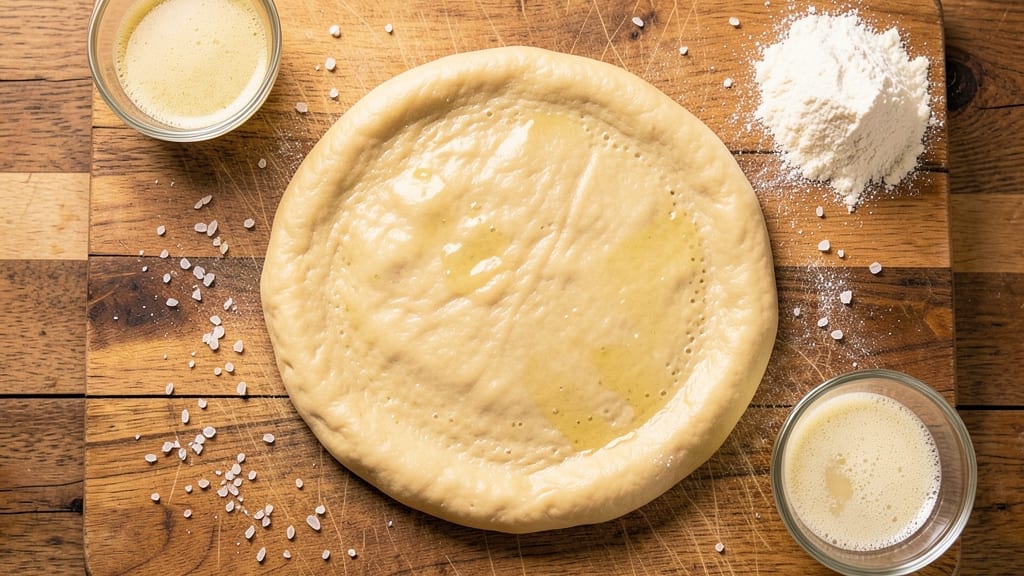
A 12-ounce pizza dough recipe that rises in just 2 hours without kneading transforms homemade pizza night into a foolproof experience. This no-knead method delivers professional results with minimal effort—perfect for beginners or busy cooks.
The dough develops deep flavor during its slow rise, creating a tender, airy crust that holds toppings beautifully. No special equipment required, just a bowl and patience.
The secret lies in the 2-hour cold rise, which mimics traditional fermentation while keeping your kitchen cool. This approach ensures a light, digestible texture without the risk of overproofing.
The dough is simple to mix—just flour, water, yeast, salt, and a touch of oil—but the technique guarantees restaurant-quality results every time. Whether you prefer Neapolitan-style thin crust or New York-style fold, this dough adapts effortlessly.
By the time you roll it out, you’ll have a smooth, elastic dough ready for your favorite toppings. The no-knead process eliminates guesswork, so even first-timers achieve perfect texture.
This recipe scales easily for larger batches, making it ideal for meal prep or entertaining. Let’s get started with a dough that’s as reliable as it is delicious.
For extra crispiness, bake on a preheated stone or steel—this step elevates the dough from good to extraordinary. Store leftovers in the fridge for up to 48 hours, or freeze portions for future pizza nights.
The versatility of this dough means it’s always ready when cravings strike. Here’s how to make it flawless every time.
Ingredients for 12 oz pizza dough
Four simple ingredients transform into a perfect 12-ounce pizza dough with no-knead ease.
| Ingredient | Amount | Notes |
|---|---|---|
| All-Purpose Flour 🌾 | 3 ½ cups | Unbleached, high-protein preferred |
| Active Dry Yeast 🍞 | ¼ tsp | Freshly opened for best results |
| Warm Water 💧 | 1 ¼ cups | 110°F for optimal yeast activation |
| Extra-Virgin Olive Oil 🫒 | 1 tbsp | High-quality for flavor |
| Fine Sea Salt 🧂 | 1 tsp | Diamond Crystal preferred |
| Granulated Sugar 🍚 | ¼ tsp | Optional for yeast activation |
| Semolina Flour 🌾 | ½ cup | For dusting and rolling |
| Cornmeal 🌽 | ¼ cup | For pre-baking crust |
| Cornstarch 🍞 | 1 tbsp | For extra crispiness |
The flour is your foundation—King Arthur or Caputo Tipo 00 give the best texture, but all-purpose works fine for beginners. Yeast matters too: Saf-Instant is foolproof, but active dry yeast works if you dissolve it in warm water first. Most grocery stores carry these staples, but specialty bakeries have higher-quality options. Look for flour labeled ‘bread flour’ if you want extra chewiness—it’s worth the few bucks for the perfect crust. The olive oil should be fruity and peppery; California-based brands like Corto are my go-to for that authentic pizza flavor.
No yeast? Sourdough starter at half the amount works in a pinch, but it’ll taste different. Short on sugar? Honey or maple syrup at the same quantity speeds up fermentation slightly. The cornmeal and semolina can be swapped—rice flour works too—but they’re key for that crispy, golden crust. For a lighter dough, add 1 tbsp vital wheat gluten to the flour. And if you’re making multiple pizzas, double the recipe—this dough scales perfectly. The secret to the 2-hour rise? Keep your kitchen at 70°F or cooler—any warmer and it’ll overproof.
This dough keeps like a dream. Wrap it tightly in plastic and store in the fridge for up to 48 hours—it actually develops more flavor overnight. For longer storage, freeze portions wrapped in parchment and plastic for up to 3 months. Thaw in the fridge overnight before using. Pro tip: Sprinkle a little flour on the dough before wrapping to prevent sticking. And if you’re prepping for a pizza party, make two batches—one for classic Neapolitan, one for New York-style folds. The possibilities are endless.
Why You’ll Love This Recipe
- Pantry-Friendly Magic: I swear by this dough because it lives in my pantry. Four ingredients—flour, yeast, olive oil, and salt—mean no last-minute grocery runs. Just mix, let it rise, and you’re golden.
- Chewy, Not Dense: That olive oil keeps it tender, while the yeast gives it a light, airy lift. The salt? Just enough to make every bite sing without overpowering. It’s the kind of dough that makes you forget takeout exists.
- Weeknight Superhero: Between us, this is my go-to for lazy nights. Double the batch, freeze half, and boom—pizza night on demand. No waiting for delivery, no sad store-bought crust. Just fresh, every time.
- Budget Crust Wins: A 12 oz batch stretches far—split it for two personal pizzas or one family feast. The cost? Pennies per serving. Honestly, the only thing more impressive than the flavor is how little it costs to make.
Step-by-step instructions for no-knead pizza dough
Here’s how to make a perfectly elastic, restaurant-quality pizza dough in just two hours.
Activate the Yeast in Warm Water
Combine the 1.25 cups warm water (about 110°F) with the 0.25 tsp granulated sugar and 0.25 tsp active dry yeast in a large mixing bowl. Let it sit for 5-10 minutes until the mixture becomes foamy and bubbly—this confirms your yeast is alive and ready to work. If it doesn’t bubble, your yeast may be dead, and you’ll need to start over.
I always use freshly opened yeast for best results. The sugar helps activate the yeast faster by providing an immediate food source. Stir gently with a wooden spoon to avoid creating too many air bubbles, which can collapse during mixing.
Mix the Dough Ingredients
Add the 3.5 cups all-purpose flour, 1 tbsp extra-virgin olive oil, and 1 tsp fine sea salt to the yeast mixture. Using a wooden spoon or dough whisk, stir vigorously for 2-3 minutes until the dough begins to come together into a shaggy mass. You’ll notice the dough will be sticky but not wet.
This is where the magic begins—the gluten starts developing as you mix. Don’t be tempted to add more flour yet; the dough needs to stay hydrated enough to develop properly. If it feels too sticky to handle, we’ll address that in the next step.
Knead and Rest the Dough
Turn the dough out onto a lightly floured surface and knead for 5 minutes by folding and pressing the dough. I like to use the “slap and fold” method—slap the dough down and fold it over itself to develop gluten quickly. The dough should become smoother and more elastic as you work it.
Once the dough is smooth and elastic, place it back in the mixing bowl. Cover loosely with plastic wrap or a damp towel and let it rest at room temperature for 1 hour. This initial rest period allows the gluten to relax and the dough to become more manageable. Don’t skip this step—it’s crucial for developing flavor and texture.
Shape and Second Rise
After the initial rest, gently press down on the dough to release any air bubbles. Sprinkle the 0.5 cup semolina flour on a clean surface and transfer the dough to it. Divide the dough into 4 equal portions (about 3 ounces each) and shape each into a smooth ball. For best results, let the dough balls rest for 30 minutes before using.
Here’s the thing—this second rise is where the dough develops its final texture. Place the dough balls on a floured surface or in a lightly greased bowl, cover, and let them rise at room temperature for 1 hour or until they’ve nearly doubled in size. The dough should feel light and airy when you press it gently.
Prepare for Baking
About 30 minutes before baking, preheat your oven to 500°F with a pizza stone or baking sheet inside. Sprinkle the 0.25 cup cornmeal and 1 tbsp cornstarch on a clean surface. Roll out each dough ball on this mixture to your desired thickness—about ⅛-inch thick for classic Neapolitan-style pizza.
The cornmeal and cornstarch create a textured crust that’s crispy on the outside and soft on the inside. Don’t roll too thin, or you’ll end up with a crispy cracker instead of a chewy crust. Transfer the shaped dough to your preheated pizza stone or baking sheet and let it rest for 10 minutes before adding toppings—this final rest ensures an even bake.
Pro Tips For Making 12 Oz Pizza Dough
- Weigh Your Flour: A kitchen scale isn’t optional—it’s the only way to nail that 12 oz dough. I learned this after making dough that was either too stiff or too sticky, and the problem was always the flour. Measure by weight (about 300g for this recipe) for consistency every time, especially if you’re not using a digital scale.
- Dissolve the Yeast: Mix the yeast with warm water first—no exceptions. I used to just sprinkle it in dry, and the dough would take forever to rise or end up uneven. Stir it into the water for 5 minutes until it’s frothy; if it doesn’t bubble, your yeast is dead, and you’ll need to start over.
- Knead Until Smooth: Stop when the dough passes the “windowpane test”—stretch a piece thin enough to see light through it. I used to over-knead, which made the dough tough, or under-knead, which left it gummy. Aim for 8-10 minutes by hand or 5-6 minutes with a stand mixer on low.
- Use Room-Temp Oil: Cold olive oil slows down the dough’s rise and can make the texture uneven. Let your extra-virgin olive oil sit out for 20 minutes before measuring—just enough to take the chill off. Trust me, your dough will thank you with a better texture and rise.
Wine and beer pairings for this dish
Crisp White Wine
For this light, airy pizza dough, a dry Italian white wine like Pinot Grigio or Vermentino works beautifully. The crisp acidity cuts through the richness of olive oil and cheese, cleansing your palate with each bite.
I love a chilled glass of Pinot Grigio from Alto Adige—its citrus notes complement the dough’s subtle sweetness without overpowering it. Serve it slightly cooler than room temperature for the best experience. 🍷
Light Italian Red
If you prefer red wine, go for something light-bodied like Chianti or Sangiovese. These wines have bright acidity and earthy notes that pair wonderfully with the dough’s natural flavors.
A Chianti Classico from Tuscany, with its cherry and herbaceous undertones, enhances the pizza’s rustic charm. Let it breathe for 10 minutes before pouring to soften its tannins. 🍇
Crisp Lager Beer
A crisp Italian lager like Peroni or Birra Moretti is my go-to beer pairing. The light maltiness and subtle hop bitterness balance the dough’s richness without competing. For a craft option, try a Belgian witbier—its citrusy coriander notes create a refreshing contrast.
Serve chilled to highlight the beer’s crispness and let it complement rather than dominate the pizza. 🍺
Seasonal Cider Option
For a seasonal twist, try a dry sparkling cider like Martinelli’s. The effervescence and slight tartness cleanse your palate between bites, making it perfect for summer gatherings.
If you prefer something richer, a hard cider with apple and pear notes adds a fruity counterpoint to the savory dough. Serve well-chilled for the best experience. 🍎
Non-Alcoholic Pairings
For a non-alcoholic option, I recommend a sparkling blood orange soda like San Pellegrino Aranciata Rossa. The citrusy fizz and slight sweetness mimic the flavors of white wine while keeping it refreshing.
Alternatively, a cucumber-mint infused water with a squeeze of lemon adds a crisp, cooling contrast to the warm pizza. 💧
Dessert Wine Finish
If you’re serving pizza as an appetizer followed by dessert, finish with a light Moscato d’Asti. Its sweetness and effervescence complement the savory flavors of the dough without clashing.
The slight carbonation also helps cleanse your palate, making it a perfect bridge to richer desserts. Serve it well-chilled to enhance its refreshing qualities. 🍾
Nutrition facts
Frequently asked questions
Can I use this dough recipe for deep-dish pizza?
This 12-ounce no-knead dough is designed for thin-crust or Neapolitan-style pizzas. For deep-dish, you’ll need a stiffer dough with higher hydration (65-70% water) and longer fermentation. Try adding 1 extra cup flour and 1 tbsp vital wheat gluten for structure, then let it rise 4-6 hours in the fridge. The texture will be denser, perfect for hearty toppings.
Why is my dough sticky even after resting?
Sticky dough is normal with this recipe! The 60% hydration creates a tender crust, but too much handling adds gluten. Wet your hands slightly when shaping, and use semolina flour (not all-purpose) to prevent sticking. If it’s unbearably sticky, add 1 tbsp flour at a time while shaping—just don’t overdo it or the crust will be tough.
How do I adjust this for a wood-fired oven?
For wood-fired cooking, preheat your oven to 750°F with hardwood (oak or hickory) burning for 30 minutes before adding the pizza. Roll the dough ⅛-inch thick and bake for 60-90 seconds—watch closely! The high heat creates charred edges instantly. Brush the crust with olive oil after baking for extra crispiness.
Can I make this dough without yeast?
Yes! Replace the yeast with 1 cup sourdough starter (fed and active) and 1 tbsp baking powder. Mix as directed, let it rest 1 hour, then shape and bake immediately—no second rise needed. The flavor will be tangier, but the texture will be denser. For best results, use this method for same-day baking only.
What’s the best way to store leftover dough?
Wrap the dough tightly in plastic wrap, then place it in an airtight container. Store in the fridge for up to 48 hours—it actually improves in flavor! For longer storage, freeze shaped dough balls wrapped in parchment and plastic for up to 3 months. Thaw overnight in the fridge before using. Never refreeze thawed dough.

- 3lb Prime Rib Roast Recipe: Juicy Pink Center Guaranteed in 3 Hours - October 31, 2026
- 5 Spice Cake Recipe: Warmly Spiced Layers With Crunchy Top - October 31, 2026
- 1950’s Macaroni and Cheese Recipe: Nostalgic Creamy Cheese Sauce with Buttery Noodles - October 31, 2026