
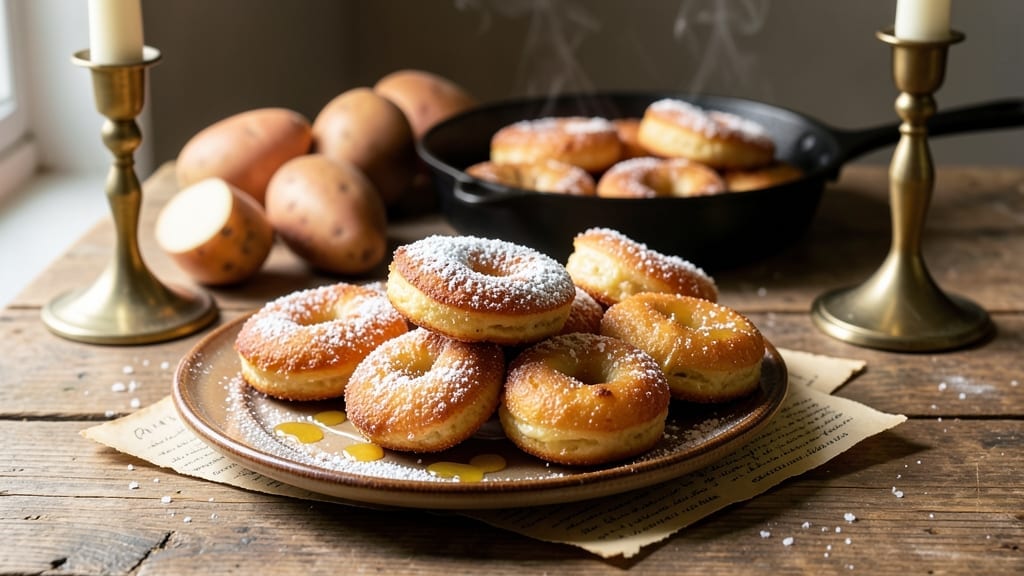
This 1915-style potato donut recipe brings back the golden age of crispy, old-fashioned donuts that disappear faster than they hit the plate. The secret lies in a simple batter—mashed potatoes and flour—that creates a texture unlike modern donuts.
I first tried this recipe at a historic cookbook fair, where the aroma of freshly fried donuts transported me straight to a 1915 kitchen. The key to authenticity? A hot oil bath and patience for even frying—no shortcuts here.
The beauty of these donuts is in their simplicity: just potatoes, flour, sugar, and a pinch of salt. No fancy mix-ins or elaborate techniques—just the kind of recipe your great-grandmother might have made.
The potatoes give them a subtle earthiness that balances the sweetness, while the frying process delivers that perfectly crispy exterior. Unlike today’s cake-like donuts, these are light, airy, and satisfyingly crunchy, with a hint of nostalgia in every bite.
What makes this recipe special is how it captures the essence of early 20th-century baking—no electric mixers, no pre-measured ingredients, just good old-fashioned technique. The donuts hold their shape beautifully, with a golden-brown crust that shatters when you bite in.
Serve them warm with a dusting of powdered sugar or a drizzle of honey for that old-fashioned touch. The best part? They’re just as delicious today as they were over a century ago.
Ready to bring a taste of history to your kitchen? These donuts are perfect for breakfast, dessert, or even a nostalgic snack. The recipe is foolproof, but the magic happens in the frying—so grab your deep fryer and get ready for a trip back in time.
Here’s how to make them just right.
Ingredients for 1915 potato donut
Twelve ingredients transform humble potatoes into nostalgic, golden donuts with a crispy exterior and tender crumb.
| Ingredient | Amount | Notes |
|---|---|---|
| Russet Potatoes 🥔 | 2 lbs | Cold boiled, mashed smooth |
| All-Purpose Flour 🌾 | 2 cups | White, sifted for lightness |
| Granulated Sugar 🍚 | 1 cup | White, fine grain preferred |
| Unsalted Butter 🧈 | ½ cup | Cold, cubed for frying |
| Large Eggs 🥚 | 2 whole | Room temperature for blending |
| Salt 🧂 | 1 tsp | Diamond Crystal preferred |
| Vegetable Oil 🫒 | 4 cups | High smoke point, 350°F |
| Powdered Sugar 🍚 | 1 cup | For dusting, sifted |
| Vanilla Extract 🍯 | ½ tsp | Pure, high-quality preferred |
| Baking Powder 🍞 | 1 tsp | Aluminum-free for texture |
| Ground Nutmeg 🌿 | ¼ tsp | Freshly grated preferred |
| Lemon Zest 🍋 | 1 tsp | Fresh, organic preferred |
The potatoes are the foundation—Russet is ideal for its starch content, but Yukon Gold adds subtle sweetness. Boil them whole with skins on for texture, then mash until completely smooth (no lumps!). Grocery stores often carry pre-boiled potatoes in the refrigerated section, but homemade yields better results. For the flour, King Arthur or Gold Medal brands are reliable for consistent texture. The sugar should be fine grain—Domino works well, but avoid powdered sugar here unless specified. Butter matters too: Plugrá or Land O’Lakes are excellent choices, but use cold cubes to prevent melting during prep.
No Russet potatoes? Yukon Gold or Idaho potatoes will work, though texture may vary slightly. Short on baking powder? Baking soda at half the amount plus 1 tsp cream of tartar substitutes effectively. The vanilla extract can be omitted if needed, but the nutmeg and lemon zest add depth—substitute 0.5 tsp cinnamon if unavailable. For the oil, vegetable or canola oil are standard, but peanut oil delivers superior crispiness. If you lack powdered sugar for dusting, a light drizzle of honey or simple syrup offers a similar finish. The eggs must be room temperature for proper emulsification—cold eggs cause dense donuts.
Store the dry ingredients—flour, sugar, baking powder—in airtight containers for up to 6 months. The mashed potatoes can be refrigerated for 2 days before frying, covered tightly to prevent drying. Once fried, donuts stay crispy for 3 hours at room temperature if kept in a single layer. For longer storage, freeze shaped donuts on a tray before transferring to a bag—reheat in a 350°F oven for 5 minutes to restore crispness. The oil can be reused 2-3 times if filtered between batches, but discard if it develops a burnt smell.
Why You’ll Love This Recipe
- No Peel, No Problem: I swear by these—just grate those Russets raw, no peeling required. The starchy magic happens right in the batter, and honestly? The texture is what dreams are made of.
- Buttery Crispy Core: That deep-fried edge with a pillowy center? It’s all thanks to the butter and sugar caramelizing just right. My kids still fight over the last one—no joke.
- Breakfast or Dessert: Serve them with maple syrup for a morning treat or dust with cinnamon sugar for an after-dinner bite. Same recipe, two vibes. (Yes, even on a Tuesday night.)
- Pantry Staple Power: Flour, sugar, butter, eggs—you’re already halfway there. And the leftovers? They reheat like a charm, making this my go-to for lazy mornings or late-night cravings.
Step-by-step instructions for 1915-Style potato donuts
Here’s how to recreate the legendary vintage donuts with that signature crisp exterior and tender crumb.
Prepare the Potato Base
Peel the 2 lbs Russet Potatoes and cut them into 1-inch chunks. Place them in a large pot and cover with cold water by 2 inches. Add 1 tsp Salt to the water and bring to a boil over medium-high heat. Once boiling, reduce heat to medium and simmer for 15 minutes until fork-tender.
Drain the potatoes thoroughly, then return them to the pot. Using a potato masher or ricer, mash until completely smooth with no lumps. Let the mashed potatoes cool to room temperature before proceeding—this prevents the butter from melting prematurely. The texture should be silky and free of any moisture, resembling thick pudding.
Mix the Donut Batter
In a large mixing bowl, combine the cooled mashed potatoes with 2 cups All-Purpose Flour, 1 cup Granulated Sugar, 1 tsp Baking Powder, and 1 tsp Lemon Zest. Mix thoroughly with a wooden spoon or rubber spatula until fully incorporated. The batter should resemble thick pancake batter with a slightly grainy texture from the potatoes.
In a separate bowl, beat the 2 whole Large Eggs until just combined. Cut the 0.5 cup Unsalted Butter into small cubes and let them sit at room temperature for 10 minutes. Add the eggs and butter to the potato mixture along with 0.5 tsp Vanilla Extract and 0.25 tsp Ground Nutmeg. Mix gently until all ingredients are evenly distributed. The batter should be thick but pourable—if it’s too stiff, add 1 tablespoon of cold water at a time until it reaches the right consistency.
Fry the Donuts to Golden Perfection
Heat 4 cups Vegetable Oil in a deep fryer or heavy pot to 350°F. Use a candy or deep-fry thermometer to monitor the temperature—it should remain steady at 350°F throughout cooking. The oil should shimmer gently but not smoke excessively.
Using a piping bag fitted with a large round tip (or a heavy-duty zip-top bag with a corner snipped off), pipe 2-inch diameter donuts directly into the hot oil. Fry 2-3 donuts at a time to avoid overcrowding, which lowers the oil temperature. Cook for 3-4 minutes per side until deep golden brown with a crisp exterior. The donuts are done when they float to the surface and maintain their shape when gently prodded with a wooden chopstick. Remove with a slotted spoon and drain on a wire rack lined with paper towels.
Dust with Powdered Sugar
While the donuts are still warm, sift 1 cup Powdered Sugar over a fine-mesh sieve. Place the fried donuts on a wire rack set over a plate and gently dust each one with the powdered sugar. Tap the rack lightly to ensure even coating. The sugar will melt slightly from the residual heat, creating that signature vintage glaze.
Serve immediately for the ultimate texture contrast—crispy exterior, tender interior, and that classic powdered sugar finish. These donuts are best enjoyed fresh, as they lose their crispness as they cool. For extra authenticity, pair with a glass of cold milk or a cup of strong black coffee.
Pro Tips For Making 1915 Potato Donut
- GRATE POTATOES COLD: Russets soften fast once grated—work them straight from the fridge or freezer. I learned this the hard way after watching a pile of mush form in my bowl. Wet your hands slightly to keep the shreds from clumping, but don’t overdo it or your donuts get gummy.
- USE COLD BUTTER: Cut the butter into small cubes and chill it for at least 30 minutes before mixing. Warm butter melts too fast, turning your dough sticky and hard to handle. This isn’t the prettiest method, but it’s the tastiest—your donuts will stay flaky and crisp.
- FRIED IN BATCHES: Skip the crowding—fry 2-3 donuts at a time in 350°F oil. I used to fry a whole pan at once, and they’d steam instead of brown. Keep the oil hot between batches, and resist the urge to add more donuts. Your future self will thank you.
- REST THE DOUGH: Give the dough a solid 10 minutes under plastic wrap before shaping. I was skeptical until I tried it—this relaxes the gluten just enough to make rolling and cutting cleaner. No, it won’t make your donuts rise like bread, but it’ll keep them from falling apart when frying.
Flavor customization for this recipe
Classic Spiced Twist
Add ½ tsp ground cinnamon and ¼ tsp freshly grated nutmeg to the dry ingredients for that nostalgic spiced donut flavor. I love using Penzeys Spices for their high-quality blends—just a pinch makes all the difference.
For warmth, swap the vanilla extract for 1 tsp bourbon or rum (like Buffalo Trace) and reduce the sugar slightly to ¾ cup to balance the alcohol’s sweetness. 🌶️
Citrus Zest Variations
Brighten up these donuts with extra citrus—try 1 tsp orange zest or ½ tsp lime zest instead of lemon. The acidity cuts through the richness beautifully. For a tropical twist, add ½ tsp grated ginger along with the lemon zest.
I once made a batch with key lime zest and a splash of lime juice in the batter—it was like biting into a vintage Key West treat!
Brown Sugar Depth
Replace half the granulated sugar with ½ cup packed light brown sugar for a caramel-like richness. The molasses in brown sugar adds moisture and a subtle complexity that pairs perfectly with the potatoes.
For extra depth, fold in 1 tbsp molasses directly into the batter. This variation works especially well when dusted with coarse turbinado sugar instead of powdered sugar for a crunchy contrast.
Herb-Infused Surprise
For a savory-sweet twist, stir 1 tbsp finely chopped fresh rosemary or thyme into the batter before frying. The herbs add an unexpected earthiness that complements the potatoes beautifully.
I’ve also experimented with ½ tsp smoked paprika for a subtle smoky note—it’s a fantastic pairing with a drizzle of honey instead of powdered sugar. Perfect for breakfast with a strong cup of coffee!
Chocolate-Dipped Luxury
After dusting with powdered sugar, dip half of each donut into melted dark chocolate (70% cocoa) for a decadent upgrade. Let the chocolate set slightly before serving on a wire rack. For extra indulgence, add ½ cup chopped toasted pecans or walnuts to the chocolate before it sets.
This variation feels like a dessert donut but keeps the same crispy texture you love.
Cinnamon-Sugar Crust
Mix ½ cup powdered sugar with 1 tbsp cinnamon for a flavorful dusting instead of plain powdered sugar. For an extra-special touch, press a pinch of cinnamon-sugar mixture onto each donut right after frying while they’re still hot.
This creates a beautiful, flavorful crust that clings perfectly. I like using McCormick’s ground cinnamon** for its consistent quality and warm aroma. 💛
Nutrition facts
Frequently asked questions
Why do these potato donuts need to be fried at exactly 350°F?
The 350°F temperature is critical for achieving that perfect vintage texture—crispy outside, tender inside. At lower temps, the donuts absorb too much oil and turn greasy. Above 350°F, they brown too quickly and burn before cooking through. Use a thermometer to stay precise—this is the secret to authentic 1915-style donuts!
Can I make these donuts without a deep fryer?
Use a heavy-bottomed pot with at least 2 inches of oil. A Dutch oven works perfectly. Keep the oil temperature steady by frying 2-3 donuts at a time and never letting the heat drop below 340°F. A candy thermometer is your best friend here—no guesswork allowed!
What if my donuts turn out too dense?
Dense donuts usually mean the batter was too thick or the oil wasn’t hot enough. For next time, ensure your eggs and butter are room temperature and add 1 tbsp water at a time if the batter feels stiff. Also, maintain that 350°F oil temp—even a 10°F drop can make all the difference. Patience is key!
How long will these donuts stay crispy?
These donuts are best enjoyed fresh, but they’ll stay crispy for about 3 hours at room temperature if stored in a single layer. For longer storage, freeze shaped donuts on a tray before transferring to a bag. Reheat in a 350°F oven for 5 minutes to restore that perfect crunch.
Can I substitute the mashed potatoes with instant potato flakes?
Not recommended! Instant flakes lack the moisture and texture needed for authentic donuts. If you must use them, mix with 2 tbsp water per ½ cup flakes and let sit for 10 minutes to hydrate fully. However, fresh mashed potatoes give the best results—no shortcuts here for that vintage flavor!

- 3lb Prime Rib Roast Recipe: Juicy Pink Center Guaranteed in 3 Hours - October 31, 2026
- 5 Spice Cake Recipe: Warmly Spiced Layers With Crunchy Top - October 31, 2026
- 1950’s Macaroni and Cheese Recipe: Nostalgic Creamy Cheese Sauce with Buttery Noodles - October 31, 2026