
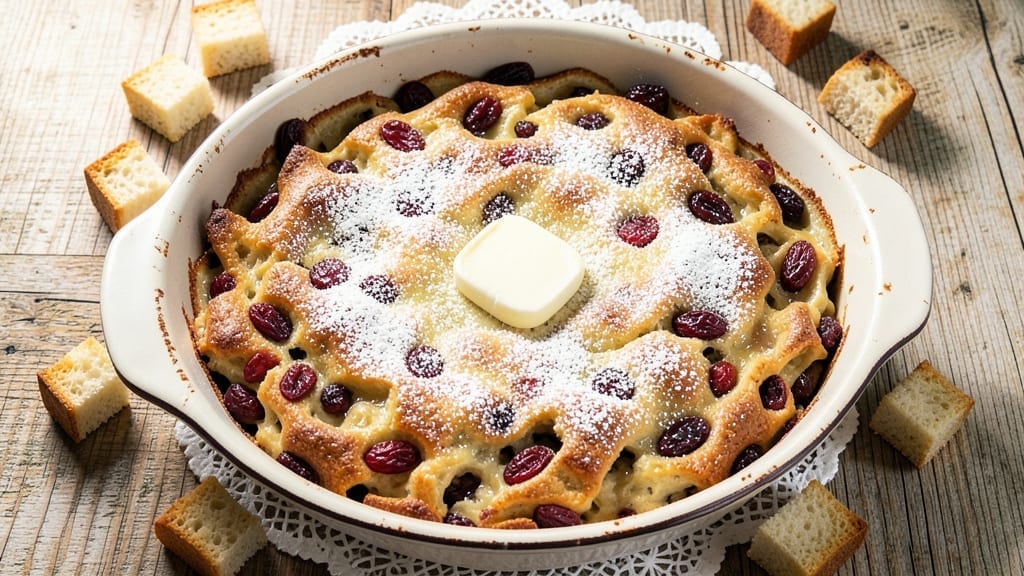
This 1940s bread pudding recipe brings back the warm, comforting flavors of mid-century home cooking—where simple ingredients created extraordinary desserts. The secret lies in soaking stale bread in a rich vanilla custard, then baking until golden and fragrant with plump raisins.
I’ve recreated this classic using ingredients available during the war years, ensuring authenticity without sacrificing modern convenience.
The recipe relies on a few key elements: day-old bread for perfect texture, a vanilla-infused custard for depth, and raisins for natural sweetness. Baking at 350°F for about 45 minutes transforms the mixture into a tender, custardy dessert with a lightly crisp top.
The result is a dessert that feels nostalgic yet effortlessly achievable in today’s kitchen.
What makes this version special is its balance of simplicity and richness—no refined sugars or specialty ingredients required. The raisins plump up during baking, releasing their sweetness, while the vanilla custard creates a velvety texture.
Serve warm with a drizzle of homemade caramel or a dusting of powdered sugar for that vintage touch.
Perfect for family dinners, holiday gatherings, or when you crave a dessert that feels like a warm hug. This bread pudding is foolproof, comforting, and undeniably delicious—just like the ones from the 1940s. Let’s get baking!
Ingredients for 1940s bread pudding
Simple pantry staples transform into nostalgic 1940s comfort with this vintage bread pudding.
| Ingredient | Amount | Notes |
|---|---|---|
| Day-Old Bread 🍞 | 8 cups | Cubed, crusts removed, sourdough or white |
| Large Eggs 🥚 | 6 whole | Room temperature for even mixing |
| Whole Milk 🥛 | 2 cups | Full-fat for rich custard texture |
| Granulated Sugar 🍚 | 1 ½ cups | White or light brown preferred |
| Pure Vanilla Extract 🌿 | 2 tsp | High-quality, not imitation |
| Unsalted Butter 🧈 | ½ cup | Cold, cubed for custard |
| Seedless Raisins 🍇 | 1 ½ cups | Soaked in warm water for 15 mins |
| Ground Cinnamon 🌶️ | 1 tsp | Freshly ground for aroma |
| Salt 🧂 | ½ tsp | Diamond Crystal preferred |
| All-Purpose Flour 🌾 | ½ cup | For thickening custard |
| Powdered Sugar 🍚 | ¼ cup | For dusting finished pudding |
The bread is the foundation—day-old works best for perfect texture, but stale bread from 2-3 days ago is ideal. Sourdough adds depth, while white bread keeps it light. For authenticity, avoid pre-sliced loaves; tear the bread into irregular chunks. Trader Joe’s or local bakeries often have excellent day-old bread at discounted prices. If you must use fresh bread, toast it first to mimic the texture. The raisins should be plump, not dried out—Sun-Maid is a reliable brand for consistent quality.
No vanilla extract? Vanilla bean paste works beautifully, or scrape seeds from a split vanilla bean for intensity. The custard needs proper thickening—cornstarch or arrowroot powder can replace flour if preferred. For a richer texture, substitute half the milk with heavy cream. If you’re avoiding refined sugar, maple syrup or honey can replace up to half the granulated sugar, though the texture may vary slightly. The butter should be cold when mixing to prevent a greasy custard—cut it into small cubes and let it sit at room temperature for 30 minutes before adding.
This dessert reheats beautifully—just 350°F for 15-20 minutes until warmed through. Store leftovers covered in the fridge for up to 4 days, though it’s best enjoyed fresh. For make-ahead convenience, prepare the custard mixture up to 24 hours ahead and refrigerate before baking. The pudding freezes well for 3 months if wrapped tightly in plastic and foil. Serve with extra powdered sugar or a drizzle of homemade caramel for that true 1940s touch—though the recipe itself requires no such embellishments.
Why You’ll Love This Recipe
- No Waste Needed: I swear by this trick—toss in whatever stale bread you’ve got lurking in the back of the pantry. French bread? Sourdough? Even that half-eaten loaf from last week’s sandwiches. The eggs and milk turn it into something golden and rich, like magic.
- Vanilla-Kissed Comfort: That first spoonful of warm pudding, where the vanilla blooms against the toasty bread? It’s the kind of flavor that makes you slow down. No fancy extracts here—just pure vanilla, but it’s the star anyway.
- Make-Ahead Magic: Between us, this is my go-to for lazy Sundays or last-minute dinner guests. Bake it ahead, reheat it later, and it’s still creamy and perfect. Honestly, I’ve had it cold the next day with a drizzle of honey—same level of delicious, zero effort.
- Budget-Friendly Luxury: Five ingredients, all pantry staples. Eggs stretch the richness, sugar caramelizes into the bread, and milk makes it velvety. It’s the kind of recipe that feels indulgent but costs next to nothing—my wallet thanks me every time.
Step-by-step instructions for 1940s bread pudding
Here’s the classic method that delivers that perfect balance of custardy richness and spiced raisin sweetness.
Prepare the Raisins and Bread
First, soak the 1.5 cups seedless raisins in ½ cup warm water for 15 minutes. This plumps them up dramatically and prevents them from sinking to the bottom of your pudding. Drain them well before using, but don’t rinse—they’ll carry that soaking liquid’s sweetness into the mixture.
While the raisins soak, cube the 8 cups day-old bread into 1-inch pieces, removing any crusts. I use a serrated knife for this—it gives you cleaner cuts and prevents the bread from crumbling. Spread the cubes on a baking sheet and toast in a 350°F oven for 5-7 minutes until lightly golden. This step creates texture contrast and prevents a gummy pudding. Let them cool completely before proceeding.
Make the Custard Mixture
In a large bowl, whisk together the 6 whole eggs, 2 cups whole milk, 1.5 cups granulated sugar, 2 teaspoons pure vanilla extract, 1 teaspoon ground cinnamon, and ½ teaspoon salt until completely smooth. The mixture should be pale yellow and fully combined—no visible streaks of egg or sugar. I use a whisk for this because it incorporates air better than a fork, which helps create that signature vintage lightness.
In a separate bowl, melt the ½ cup unsalted butter in a heatproof bowl set over simmering water (bain-marie) until just liquid. Then whisk this melted butter into the egg mixture along with the ½ cup all-purpose flour. The flour helps thicken the custard without making it dense. Fold in the drained raisins and toasted bread cubes, coating them evenly with the custard mixture. Real talk: don’t skip this folding step—it ensures every bite has that perfect raisin-to-bread ratio.
Bake the Pudding
Pour the bread pudding mixture into a greased 9×13-inch baking dish. I like to use butter for greasing—it adds flavor and prevents sticking. Bake in a preheated 350°F oven for 45-50 minutes until the top is golden brown and the center just barely jiggles when shaken. Here’s the thing—if you pull it out too early, the center will be undercooked; too late, and it’ll be dry. The knife slide test works best: insert a knife near the center—it should come out clean but with slightly moist crumbs.
For that authentic 1940s touch, broil the pudding for 1-2 minutes at the end to create a caramelized crust. Watch it closely—broilers vary wildly in intensity. The moment the top turns golden brown, remove it immediately. Let the pudding rest for 10 minutes before serving—this allows the custard to set slightly and makes slicing easier.
Serve with Classic Presentation
Dust the warm pudding generously with ¼ cup powdered sugar through a fine-mesh sieve for that vintage restaurant look. Serve immediately with vanilla ice cream or whipped cream on the side. The contrast of warm pudding with cold ice cream is pure nostalgia. I like to garnish with an extra sprinkle of cinnamon—it reminds me of old-fashioned dessert plates from the 1940s.
Your bread pudding should have a custardy interior with pockets of juicy raisins and tender bread pieces. Each bite should balance sweetness from the raisins and sugar with the subtle warmth of cinnamon. If you have leftovers, store them covered in the refrigerator for up to 3 days—they reheat beautifully with a quick broil or in the microwave.
Pro Tips For Making 1940s Bread Pudding
- Cube Bread Evenly: Use a serrated knife and cut the bread into 1-inch cubes—any smaller and they’ll turn to mush, any bigger and the center stays doughy. I learned this the hard way after pulling out a pudding that was still raw inside.
- Whisk Eggs Like Mad: Beat the eggs until they’re pale and thick enough to leave a trail when you lift the whisk—this ensures a silky texture, not a lumpy one. Skimp here, and you’ll end up with a sad, dense pudding.
- Skip the Cold Milk: Warm the milk to room temperature first—cold milk makes the eggs curdle, and nobody wants a grainy pudding. Just pour it into a measuring cup and let it sit for 10 minutes.
- Bake Until Golden: Watch for the top to turn a deep golden brown, not just pale—this means it’s fully set inside. I used to pull mine out too soon, only to have it collapse later. A toothpick test works, but don’t trust it blindly.
Regional styles of this 1940s bread pudding
Midwest Homestyle
The Midwest version of 1940s bread pudding leans into hearty, comforting flavors with a touch of warmth. Here, you’ll find extra cinnamon (1.5 tsp) and ½ tsp nutmeg folded into the custard, creating a spiced aroma that fills the kitchen.
Many home cooks in this region used cornmeal bread for a nuttier texture, and some even added chopped walnuts for crunch. The pudding is often baked in a cast-iron skillet for that classic crispy edge—just like Grandma’s recipes from the era. 🌶️
Southern Comfort Style
In the South, bread pudding became a staple at church potlucks and family gatherings, often with a richer twist. You’ll see buttermilk substituted for half the milk, giving it a tangy depth.
Some recipes call for pecans or pralines mixed into the custard, while others top it with a layer of brown sugar and butter before baking for a caramelized crust. The Southern version also frequently includes a splash of bourbon (1 tbsp) in the custard, adding warmth and complexity.
This style is all about indulgence—think extra buttery and deeply spiced.
New England Classic
New England’s bread pudding reflects its Puritan roots with simpler, more rustic ingredients. Here, the focus is on whole wheat bread and less sugar, creating a heartier, less sweet dessert. You’ll often find dried currants instead of raisins, adding a tart contrast to the custard.
The custard itself is lighter, with less butter (¼ cup) and more emphasis on vanilla and nutmeg. This version is baked in a glass baking dish for even heat distribution, and it’s traditionally served with maple syrup instead of powdered sugar.
The result is a lighter, more elegant pudding that still delivers that nostalgic comfort.
Pacific Northwest Twist
Out West, 1940s bread pudding often incorporated local ingredients unavailable in other regions. You might find dried apples or pears replacing raisins, giving it a fruity depth. Some recipes use rye bread for a denser texture, while others add a pinch of cardamom for an unexpected Nordic influence.
The Pacific Northwest version also frequently includes a drizzle of honey instead of powdered sugar, reflecting the region’s beekeeping traditions. This style is all about balancing sweetness with natural fruit flavors—perfect for those who prefer a lighter, fruit-forward dessert.
Urban East Coast Adaptation
In cities like New York and Boston, 1940s bread pudding took on a more refined, restaurant-inspired approach. Here, you’ll see French bread or brioche used for a lighter texture, and the custard often includes a touch of brandy (1 tbsp) instead of bourbon.
Some versions even incorporate chopped dates or figs for a luxurious twist. The presentation is key—this version is often baked in a round cake pan for elegant slices, and served with a dusting of confectioners’ sugar and a side of vanilla bean ice cream.
It’s the kind of dessert you’d find at a 1940s speakeasy or upscale diner.
Nutrition facts
Frequently asked questions
Why does this recipe use day-old bread instead of fresh?
Day-old bread has less moisture, which prevents a soggy pudding. The starches in stale bread absorb the custard better, creating that perfect tender-yet-firm texture. If you must use fresh bread, toast it first to mimic the moisture content of day-old bread.
Can I make this bread pudding without raisins?
Swap raisins for dried cranberries, chopped dates, or even chocolate chips for a modern twist. Just soak them first if they’re dried fruit—this prevents them from sinking and keeps the texture balanced.
What’s the best way to tell when it’s fully baked?
Use the knife test: Insert a knife near the center—it should come out clean but with slightly moist crumbs. The top should also be golden brown. Overbaking makes it dry, while underbaking leaves it gummy.
How can I make this more decadent for special occasions?
Add a layer of vanilla custard on top before baking, or fold in chopped pecans and a splash of bourbon (1 tbsp). For extra richness, substitute half the milk with heavy cream and top with whipped cream when serving.
Can I prepare this ahead of time?
Yes! Assemble the pudding up to 24 hours ahead and refrigerate. Bake straight from the fridge (add 5-10 minutes to baking time). For make-ahead convenience, freeze baked pudding for up to 3 months—just thaw overnight before reheating.

- 3lb Prime Rib Roast Recipe: Juicy Pink Center Guaranteed in 3 Hours - October 31, 2026
- 5 Spice Cake Recipe: Warmly Spiced Layers With Crunchy Top - October 31, 2026
- 1950’s Macaroni and Cheese Recipe: Nostalgic Creamy Cheese Sauce with Buttery Noodles - October 31, 2026