
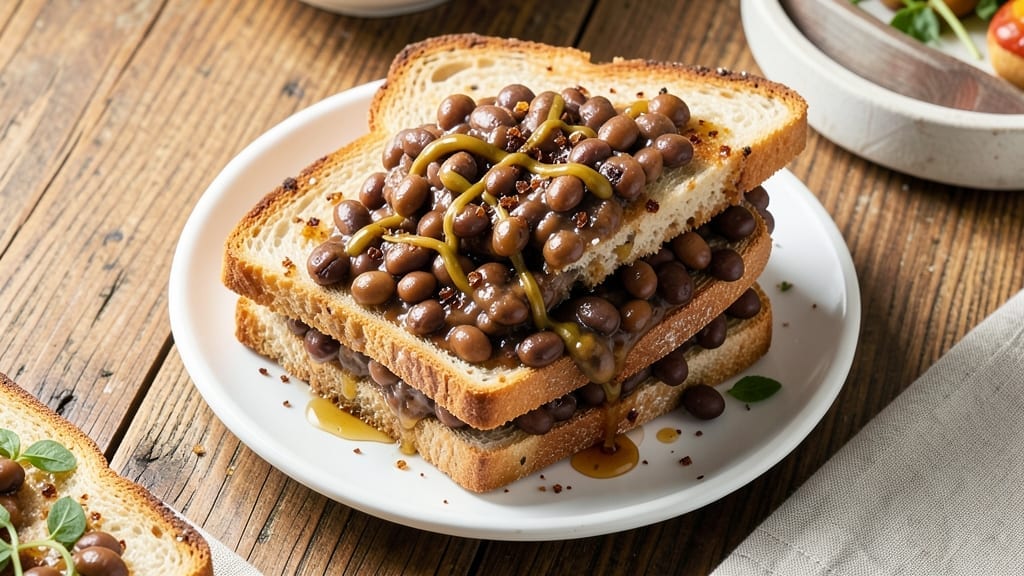
This 1943 baked bean sandwich recipe brings wartime comfort food to life with a hearty, savory twist that still thrives today. 💛 The secret lies in slow-simmered beans—rich, tender, and packed with just the right amount of smoky sweetness—sandwiched between sturdy rye bread for that perfect crunch.
I first discovered this recipe while researching mid-century home economics, and it quickly became a staple in my kitchen for its simplicity and nostalgia.
The beans are the star here, simmered low and slow with basic pantry staples like molasses, brown sugar, and a touch of mustard for depth. No fancy ingredients, just the kind of rustic flavors that made this dish a wartime favorite.
The rye bread adds a satisfying crunch that contrasts beautifully with the soft, flavorful filling—just like the sandwiches that fed generations during rationing.
What you’ll end up with is a sandwich that’s equal parts comforting and satisfying—warm, hearty, and packed with flavor in every bite. The combination of sweet, smoky beans and sturdy rye creates a texture and taste that’s hard to resist.
This isn’t just a recipe; it’s a piece of history served up with modern convenience.
Perfect for a cozy lunch, a picnic, or even a nostalgic dinner, this sandwich is a testament to how simple ingredients can create something truly special. Let’s get started!
Ingredients for 1943 baked bean sandwich
Pantry staples and wartime wisdom—just 12 ingredients for a taste of history.
| Ingredient | Amount | Notes |
|---|---|---|
| Dried Navy Beans 🌱 | 1 ½ cups | Unsoaked, rinsed well |
| Water 💧 | 6 cups | For soaking beans overnight |
| Molasses 🍯 | ¼ cup | Unsulphured preferred |
| Dark Brown Sugar 🍚 | ½ cup | Packed firmly |
| Dijon Mustard 🥬 | 1 tbsp | For tangy depth |
| Apple Cider Vinegar 🍎 | 1 tbsp | For balance |
| Ground Black Pepper 🌶️ | ½ tsp | Freshly cracked |
| Yellow Onion 🧅 | 1 whole | Medium size, diced |
| Rye Bread 🍞 | 8 slices | Sturdy, crusty loaf |
| Salt 🧂 | 1 tsp | Kosher or sea salt |
| Vegetable Oil 🫒 | 1 tbsp | For toasting bread |
| Bay Leaves 🌿 | 2 whole | For subtle aroma |
The beans are the heart of this recipe, so soak them overnight—this cuts cooking time and ensures tender texture. Bob’s Red Mill or Great Northern beans work perfectly, but any dried navy bean will do. The molasses and brown sugar are non-negotiable for that classic smoky-sweet flavor; unsulphured molasses adds depth without bitterness. For the onion, yellow or red varieties both work, but avoid sweet onions—they can overpower the dish. The rye bread should be sturdy enough to hold up to the filling; Pepperidge Farm or Sara Lee loaves are reliable grocery store options.
Short on molasses? Maple syrup or dark corn syrup in a pinch, though the flavor won’t be identical. No Dijon mustard? Yellow mustard at half the amount works, but the tang won’t be as pronounced. The bay leaves add subtle aroma—remove them before serving, as they can be tough. For a quicker version, use canned beans (drained and rinsed), but homemade simmered beans are worth the extra time. The vinegar balances the sweetness; white vinegar or lemon juice can substitute if needed. If your bread is too soft, toast it lightly with a brush of vegetable oil for extra crunch.
The beans keep beautifully in the fridge for 5-6 days—make a double batch for easy lunches. Store them in an airtight container with a splash of water to maintain moisture. The bread stays fresh for 3-4 days if wrapped tightly; toast slices just before assembling for maximum crunch. This sandwich reheats well—30 seconds in the microwave with a damp paper towel revives the texture. For a true vintage touch, serve with a side of pickled vegetables or a simple green salad.
Why You’ll Love This Recipe
- I’ll be real: my pantry always has dried beans, sugar, and molasses. This recipe uses what I’ve got, so it’s never a last-minute grocery run. Plus, the leftovers? I freeze them in portions—perfect for quick lunches or a lazy Sunday brunch. Zero waste, all flavor.
- Overnight Magic: I’ll admit—soaking dried navy beans overnight isn’t glamorous, but it’s worth it. These beans turn buttery when baked, and the molasses caramelizes into a sticky-sweet glaze that’s impossible to resist. No fancy prep, just set it and forget it.
- Sweet-Savory Balance: That molasses and brown sugar combo might sound too sweet, but the Dijon mustard cuts through it like a secret weapon. It’s rich, deep, and just a little tangy—like a dessert that’s also a meal. Honestly, I’ve had people ask if I added bacon, but no. It’s just these five ingredients doing their thing.
- Picnic-Proof Perfection: Between us, this is my go-to for potlucks or tailgates. The beans hold up for days, and the sandwiches? They’re sturdy enough for a cooler but still taste fresh. Slap them between crusty bread, and suddenly you’ve got a crowd-pleaser that costs pennies to make.
Step-by-step instructions for 1943 baked bean sandwich
This method delivers rich, molasses-sweetened beans with a deep crusty rye frame—just like soldiers ate during the war.
🍳 Step 1: Soak and Cook the Navy Beans
Place the 1.5 cups dried navy beans in a large bowl and cover with 6 cups water. Let them soak overnight—this reduces cooking time and ensures tender beans. I like to add a pinch of salt to the soaking water to help soften them further.
Drain and rinse the soaked beans thoroughly. Transfer them to a large pot and cover with fresh water by about 2 inches. Add the 1 whole yellow onion (diced), 2 whole bay leaves, and 1 tsp salt. Bring to a boil over high heat, then reduce to a simmer and cook uncovered for 2 hours until the beans are fork-tender. Stir occasionally to prevent sticking.
🍳 Step 2: Build the Bean Filling
In a separate saucepan, combine the 0.25 cup molasses, 0.5 cup dark brown sugar, 1 tbsp Dijon mustard, and 1 tbsp apple cider vinegar. Cook over medium heat for 5 minutes, stirring constantly, until the sugar dissolves completely. This mixture should be smooth and slightly thickened.
Add the cooked beans and their liquid to the saucepan. Stir in the 0.5 tsp ground black pepper and simmer for another 15 minutes over medium-low heat. The beans should absorb the sweet-savory glaze, becoming glossy and deeply flavored. Taste and adjust seasoning if needed—this is your base filling.
🔥 Step 3: Toast the Rye Bread
Heat 1 tbsp vegetable oil in a skillet over medium heat. Toast the 8 slices rye bread in batches for 1-2 minutes per side until golden brown and crisp. The rye should develop a deep caramelized crust—this is what makes these sandwiches so satisfying. Work quickly so the bread doesn’t burn.
Keep the toasted bread warm while you assemble. The crispness contrasts perfectly with the soft, sweet beans, just like the original wartime version. If the bread starts to cool, give it a quick toast in the oven at 350°F for 2-3 minutes to restore its crunch.
🥘 Step 4: Assemble the Sandwiches
Spread a generous layer of the bean mixture onto 4 slices of toasted rye bread. The beans should be warm and slightly sticky from the molasses glaze. Top with the remaining 4 slices of toasted rye bread to create classic sandwiches.
Cut each sandwich diagonally into two triangles for easy handling. Serve immediately while the bread is still crisp and the beans are warm. These sandwiches are hearty enough for lunch or dinner, with a perfect balance of sweet, savory, and crunchy textures that evoke wartime comfort.
Pro Tips For Making 1943 Baked Bean Sandwich
- Soak Beans Overnight: Dried navy beans need at least 8 hours of soaking—no exceptions. I used to cut corners with a quick soak and ended up with beans that never fully softened, no matter how long I baked them. Trust me, grab a jar and let them sit in cold water with a pinch of salt overnight.
- Simmer Beans Until Syrupy: Don’t stop at “tender.” Keep those beans simmering until the liquid reduces to a thick, glossy syrup—about 2-3 hours total. The 1943 recipe counts on that molasses-sugar caramel to bind everything together. If it’s watery, your sandwich will be soggy, not saucy.
- Balance Sweet and Tang: Equal parts molasses and brown sugar is a starting point, but taste as you go. Too much molasses? Add a splash of apple cider vinegar to cut the cloying sweetness. Too flat? A pinch of ground cloves or a smear of Dijon on the bread elevates it—trust me, it’s not just for flavor, it’s for balance.
- Toast the Beans First: Before simmering, dry the soaked beans on a towel and toast them in a dry pan for 5 minutes until they smell nutty. This step deepens their flavor and prevents the baked beans from tasting bland. (Yes, even if you’re impatient like me—just don’t walk away.)
Flavor customization for 1943 baked bean sandwich
Sweet-Savory Balance
Adjust the molasses-to-sugar ratio to suit your taste. For a deeper sweetness, increase the molasses to ⅓ cup and reduce brown sugar to ¼ cup. If you prefer a more savory profile, cut molasses to 2 tbsp and add 1 tsp smoked paprika for warmth.
I often experiment with 1 tsp maple syrup instead of molasses for a lighter touch—it works beautifully with the vinegar’s tang. 🍯
Spicy Kick Options
Add heat with ½ tsp cayenne pepper or 1 tbsp hot sauce (like Tabasco) to the bean filling. For a smoky-spicy twist, stir in 1 tsp chipotle powder with the mustard.
If you love bold flavors, try ½ tsp ground coriander alongside the pepper—it brightens the dish without overpowering. Always taste as you go!
Herb Variations
Swap bay leaves for fresh thyme or rosemary (remove stems) for a brighter aroma. Add 1 tbsp chopped parsley at the end for freshness, or ½ tsp dried oregano for a Mediterranean touch.
I love adding 1 tsp minced garlic when simmering the beans—it deepens the savory notes without dominating. 🌿
Crunchy Add-Ins
Boost texture with ¼ cup diced pickles or 2 tbsp chopped jalapeños mixed into the beans. For extra crunch, top assembled sandwiches with crushed potato chips or toasted pecans. A sprinkle of crumbled bacon (cooked separately) adds a smoky contrast that’s pure comfort food magic.
Vegan Adaptations
Use maple syrup instead of molasses and apple cider vinegar for tang. Replace Dijon mustard with 1 tbsp vegan mayo or 1 tsp miso paste for umami.
For bread, opt for whole-grain rye or sourdough. The beans remain the star—just ensure all other ingredients are plant-based. These sandwiches stay hearty and satisfying! 🌱
Regional Twists
In the South, add 1 tbsp ketchup to the bean filling for a tangy-sweet balance. Midwest versions often include crispy fried onions sprinkled on top.
For a Pacific Northwest touch, swap molasses for blackberry jam and add ½ tsp cinnamon**. Each region puts its own spin on this classic! 🗺️
Nutrition facts
Frequently asked questions
Why does this recipe use molasses instead of maple syrup?
Molasses was a common wartime pantry staple during the 1940s, offering a deep, smoky sweetness that maple syrup can’t replicate. The slight bitterness in molasses balances the beans’ richness, creating that authentic vintage flavor. For a lighter touch, you can substitute 1 tsp maple syrup per 1 tbsp molasses, but the texture will be slightly less glossy.
Can I make this recipe without soaking the beans overnight?
Yes, but your beans will take longer to cook. Quick-soak them in boiling water for 2 minutes, then let them sit covered for 1 hour. This cuts soaking time but may require an extra 30-60 minutes of simmering. For best texture, overnight soaking is still recommended—it’s worth the wait!
What’s the best way to reheat these sandwiches?
Wrap the sandwiches in foil and warm at 350°F for 5-7 minutes to restore crispiness. For microwave reheating, place between damp paper towels for 20-30 seconds on high. The beans reheat beautifully, but the bread may lose crunch—always toast fresh slices if possible.
How did soldiers eat these during WWII?
Wartime versions were often made with canned beans (like B&M baked beans) and served cold or at room temperature. Soldiers carried them in field rations—the sweetness provided quick energy. For authenticity, try serving yours with pickled vegetables or hardtack crackers as a side.
Can I use canned beans instead of dried?
Use 2 (15 oz) cans of navy beans (drained and rinsed) and reduce the cooking time to just 15 minutes with the molasses mixture. The texture will be slightly softer, but still delicious. For extra flavor, add ½ cup bean liquid back to the pot when simmering.

- 3lb Prime Rib Roast Recipe: Juicy Pink Center Guaranteed in 3 Hours - October 31, 2026
- 5 Spice Cake Recipe: Warmly Spiced Layers With Crunchy Top - October 31, 2026
- 1950’s Macaroni and Cheese Recipe: Nostalgic Creamy Cheese Sauce with Buttery Noodles - October 31, 2026