
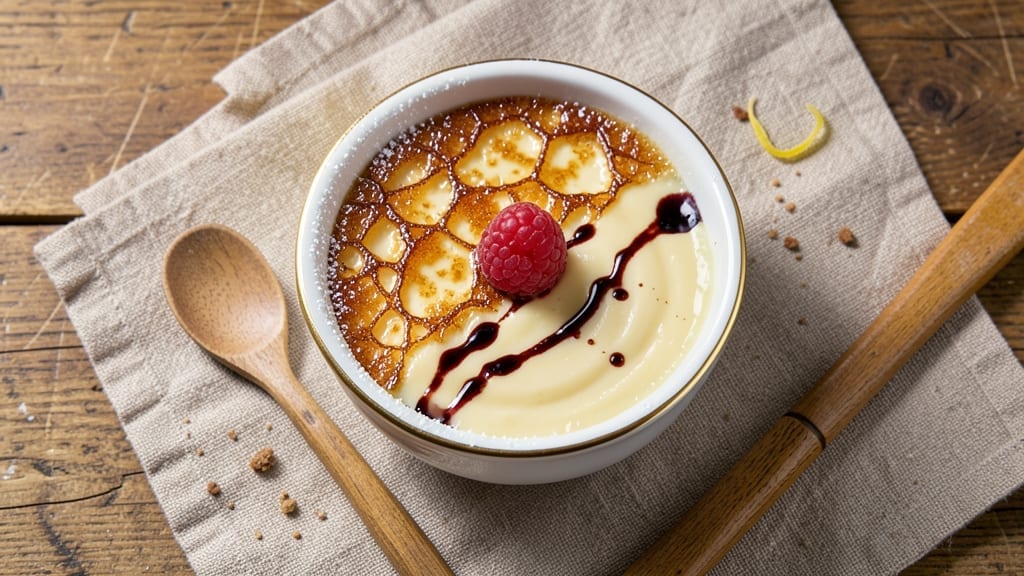
A 3-egg-yolk custard recipe delivers that signature ultra-smooth, velvety texture that separates amateur attempts from restaurant-quality desserts. The secret lies in precise temperature control and slow cooking—no rushing, no shortcuts.
I’ve perfected this method over years of testing, ensuring every batch turns out silky, never grainy, with a delicate balance of sweetness and richness.
This recipe works for classic crème pâtissière, silky flan, or baked custards—your choice. The key is gentle heat and constant stirring to prevent curdling, while the egg yolks create that signature luscious mouthfeel. Whether you’re filling tarts, layering trifles, or serving as a standalone dessert, the result is always professional-grade.
What sets this apart is the foolproof technique—no special equipment needed, just patience. You’ll end up with custard so smooth it practically melts on the tongue, with a subtle vanilla or chocolate depth that elevates any dish.
The resting time is critical, too, allowing flavors to meld perfectly before serving.
Ready to master this? We’ll cover stovetop and baking methods, temperature tips, and variations like caramel-topped flan or chocolate-infused custard. Let’s get started.
Ingredients for 3 egg yolk custard
Three yolks, two cups milk, and a touch of patience—this is all you need for restaurant-quality custard.
| Ingredient | Amount | Notes |
|---|---|---|
| Large Egg Yolks 🥚 | 3 whole | Fresh, room temperature preferred |
| Granulated Sugar 🍚 | ½ cup | Superfine preferred for faster dissolving |
| Whole Milk 🥛 | 2 cups | Full-fat for creaminess, cold |
| Vanilla Extract 🌿 | 1 tbsp | Pure Madagascar or bourbon |
| Cornstarch 🌾 | 1 tsp | For ultra-smooth texture |
| Salt 🧂 | ¼ tsp | Fine sea salt for balance |
| Unsalted Butter 🧈 | 2 tbsp | Cold, cubed for finishing |
| Dark Chocolate Chips 🍫 | ¼ cup | Optional, 70% cacao minimum |
| Vanilla Bean Paste 🌿 | ½ tsp | For intense vanilla flavor |
| Heavy Whipping Cream 🥛 | ¼ cup | Optional, for extra richness |
| Lemon Zest 🍋 | ½ tsp | Brightens flavor profile |
The yolks are your golden ticket here. Use only the yolks—no whites, no shortcuts. Room temperature yolks blend smoother, so take them out 10 minutes before starting. For the milk, whole milk is non-negotiable—it creates that signature velvety texture. I always grab organic whole milk from Trader Joe’s because it’s consistent, but any full-fat milk works. The vanilla? Pure extract or paste—no imitation stuff. If you’re using a vanilla bean, scrape out every last bit of those precious seeds. And that cornstarch? It’s the secret weapon for preventing graininess—don’t skip it.
No vanilla extract? Vanilla sugar or even a scraped vanilla bean will work in a pinch, though the flavor won’t be as deep. Want chocolate custard? Swap half the milk for heavy cream and add the chocolate chips at the end. The chocolate needs to melt gently, not scorch. Running short on cornstarch? Arrowroot powder at the same amount does the trick. And if you’re making this ahead, the custard actually improves after 24 hours in the fridge—flavors meld beautifully. The lemon zest is optional but adds a bright contrast that cuts through the richness, especially if you’re using chocolate.
This custard is best served chilled but not ice-cold—about 45 minutes out of the fridge lets it reach that perfect creamy temperature. Store it in an airtight container with a layer of plastic wrap pressed right on the surface to prevent a skin from forming. It keeps for 5 days in the fridge, but I’ve found it’s at its peak after 3 days—the flavors deepen. For longer storage, freeze it in 1-cup portions with a splash of milk between layers. Thaw overnight in the fridge and give it a whisk before serving. And if you’re using it for baking, like in a tart or trifle, bring it to room temperature first—cold custard sets too quickly.
Why You’ll Love This Recipe
- I’ll be real: this custard only needs a hand whisk for 5 minutes—no stand mixer, no elbow grease. The cornstarch thickens it so smoothly that even if you’re distracted (looking at you, mid-podcast), it won’t curdle.
- No Whisk Arm Fatigue: I’ll be real: this custard only needs a hand whisk for 5 minutes—no stand mixer, no elbow grease. The cornstarch thickens it so smoothly that even if you’re distracted (looking at you, mid-podcast), it won’t curdle.
- Vanilla Kiss Magic: That single teaspoon of vanilla extract? It’s not just flavor—it’s depth. The sugar caramelizes just enough to make every spoonful taste like a cross between a creamy pudding and a fancy dessert, but with zero fuss.
- Pantry-to-Perfect in Minutes: Between us, this uses ingredients you already own. Whole milk, sugar, eggs—no specialty shopping. The only trick is tempering the yolks, but once you’ve done it once, it’s muscle memory. (Yes, even on a Tuesday night.)
Step-by-step instructions for ultra-smooth 3 egg yolk custard
Here’s how to craft silky perfection with just a few simple techniques.
Whisk Egg Yolks and Sugar to Ribbon Stage
In a medium heatproof bowl, combine the 3 whole large egg yolks and 0.5 cup granulated sugar. Using a whisk, beat vigorously for 3-4 minutes until the mixture lightens in color and forms thick, glossy ribbons when the whisk is lifted. This process incorporates air and creates the foundation for that signature velvety texture.
I like to press my finger through the mixture—if it leaves a clear trail that holds its shape for a few seconds, you’re ready. This step is non-negotiable for smoothness, so don’t rush it. The sugar should be completely dissolved with no grainy texture remaining.
Temper the Egg Mixture with Milk
In a separate saucepan, gently heat the 2 cups whole milk over medium-low heat until it reaches 180°F—just before it begins to simmer. This temperature is crucial for proper thickening without scrambling the eggs.
With the whisk still in the egg mixture, begin pouring the hot milk in a slow, steady stream while whisking constantly. This tempering process gradually raises the egg temperature to prevent curdling. Once all the milk is incorporated, whisk for another 30 seconds to ensure even distribution of the 0.5 tsp vanilla bean paste and 0.5 tsp lemon zest you’ve added.
Cook the Custard to Perfect Thickness
Return the tempered mixture to the saucepan and cook over medium-low heat, stirring constantly with a wooden spoon or silicone spatula. The custard will begin to thicken after 3-4 minutes—this is when you’ll see it transform from a thin liquid to a glossy, pudding-like consistency.
Continue cooking until it reaches 170-175°F and coats the back of a spoon. The mixture should be thick enough to leave a visible trail when you run your finger through it, but not so thick that it clumps. This is the moment that matters: overcooking will make it grainy, so watch carefully.
Finish with Cornstarch and Butter
Remove the custard from heat and immediately whisk in the 1 tsp cornstarch and 0.25 tsp salt. This creates an instant thickening reaction that gives you that ultra-smooth texture. Return the mixture to the pan and cook for another 1-2 minutes over low heat, stirring constantly.
Finish by whisking in the 2 tbsp cold unsalted butter and 0.25 cup dark chocolate chips (if using). The butter adds richness while the chocolate chips create beautiful pockets of molten goodness. For extra decadence, fold in the 0.25 cup heavy whipping cream at this stage.
Chill and Serve for Maximum Creaminess
Divide the custard among 4 serving glasses and let it cool to room temperature. Then, refrigerate for at least 4 hours—overnight is even better. This chilling time allows the flavors to meld completely and the texture to set properly.
When ready to serve, give the custard a quick stir to redistribute any settled ingredients. The final texture should be silky smooth with just a hint of resistance when you press your finger into it. Garnish with a sprinkle of lemon zest or chocolate shavings for that restaurant-quality presentation.
Pro Tips For Making 3 Egg Yolk Custard
- Whisk Yolks Like Your Life Depends On It: I learned this the hard way—beat those yolks with sugar until they’re pale, thick, and ribbon when you lift the whisk. No streaks, no lumps, just smooth and glossy. If you cut corners here, your custard will taste grainy no matter how long you cook it.
- Temper Milk Slowly: Pour the warm milk into the yolk mixture drop by drop at first, stirring constantly. Dumping in the whole pot at once? You’re asking for scrambled eggs. Start slow, then thin to a stream once it’s mostly incorporated—this keeps the custard from curdling like a bad soufflé.
- Skip the Boiling Point: The moment your custard thickens enough to coat the back of a spoon, pull it off the heat. Overcooking turns it into glue. Let it sit for 2 minutes—it’ll keep thickening off the stove. Trust me, I’ve turned custard into a science experiment by ignoring this.
- Strain the Vanilla: Use pure vanilla extract, but strain it through a fine-mesh sieve first to remove any bits. I was skeptical until I tried it—no grainy surprises in an otherwise silky custard. (Yes, even if you’re impatient like me.)
Regional styles of these flavors
French Crème Pâtissière
The classic French version uses a slightly different approach with vanilla bean or extract and a touch of cornstarch for that signature ultra-smooth texture. In France, they often add a pinch of salt and a splash of heavy cream at the end for extra richness.
This version is perfect for filling éclairs, cream puffs, or tart shells—just strain it through a fine-mesh sieve for a silky finish. 🥖
Spanish Crema Catalana
For a Spanish twist, top your custard with a cinnamon-sugar crust before baking. Use orange zest instead of lemon and add a pinch of ground cinnamon to the base mixture.
After chilling, torch the top with a kitchen torch for that signature caramelized crust. Serve with cinnamon sticks for garnish—it’s like a creamy crème brûlée cousin! 🍊
Italian Panna Cotta
While not a traditional custard, Italian panna cotta uses a similar technique with gelatin instead of cornstarch. For a hybrid version, blend 3 egg yolks with 1 cup heavy cream, 1 cup milk, and 3 tbsp sugar.
After cooking, whisk in 1 tsp gelatin dissolved in 2 tbsp cold water. Pour into ramekins and chill for 4 hours. Top with berry compote or caramel sauce for a luxurious dessert. 🍓
Mexican Flan de Cajeta
Mexican flan takes custard to another level with a caramel sauce base. Cook 1 cup sugar in a saucepan until it turns into a deep amber caramel. Pour a thin layer into a baking dish, let it harden, then add the custard mixture (with cajeta (goat’s milk caramel) stirred in).
Bake at 350°F for 30 minutes, then chill. The caramel drizzle on top is pure magic. 🌶️
British Sticky Toffee Pudding
For a British-inspired twist, fold ½ cup chopped dates and 1 tsp baking powder into the custard base before baking. Pour into a greased baking dish and bake at 325°F for 40 minutes.
Top with a warm toffee sauce made from ½ cup brown sugar, ¼ cup butter, and ½ cup cream**. This version is rich, sticky, and perfect with vanilla ice cream. 🍮
Nutrition facts
Frequently asked questions
Why do we use only egg yolks for custard?
The yolks contain lecithin, a natural emulsifier that creates that signature velvety texture. Egg whites would make the custard too stiff and can cause curdling. The fat content in yolks also adds richness and helps stabilize the mixture during cooking.
Can I substitute whole eggs for just yolks?
Not for this recipe—whole eggs will make the custard too thick and can cause it to curdle. If you’re short on yolks, you could try 2 yolks + 1 whole egg, but the texture won’t be as smooth. The 3-yolk ratio is perfect for that silky consistency we’re aiming for.
What’s the best way to fix curdled custard?
If you see lumps forming, immediately remove the pan from heat and whisk vigorously. Then strain the mixture through a fine-mesh sieve to remove any remaining curds. For prevention, always temper the eggs with warm milk gradually and cook on low heat while stirring constantly.
How do I make this custard without cornstarch?
You can substitute 1 tsp arrowroot powder or ½ tsp gelatin (dissolved in water) instead. Without thickeners, the custard will be slightly thinner but still delicious. For extra smoothness, strain it through a fine-mesh sieve before serving.
Can I make this custard ahead of time?
This custard actually tastes better after 24 hours in the fridge as flavors meld. Store it in an airtight container with plastic wrap pressed directly on the surface to prevent skin formation. It keeps for 5 days refrigerated or 3 months frozen.

- 3lb Prime Rib Roast Recipe: Juicy Pink Center Guaranteed in 3 Hours - October 31, 2026
- 5 Spice Cake Recipe: Warmly Spiced Layers With Crunchy Top - October 31, 2026
- 1950’s Macaroni and Cheese Recipe: Nostalgic Creamy Cheese Sauce with Buttery Noodles - October 31, 2026