
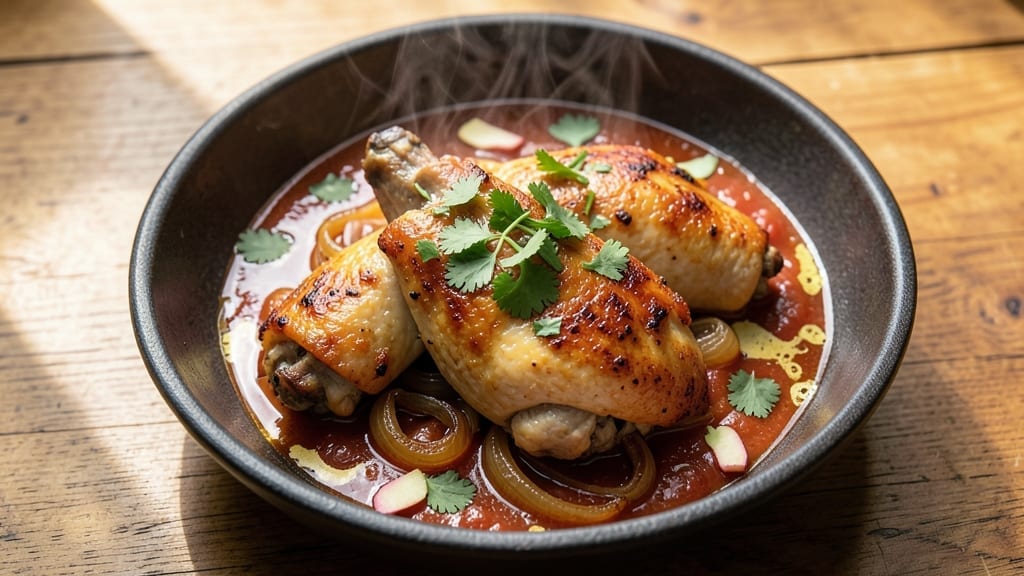
This 1970s chicken curry recipe brings back the warm, spiced comfort of a bygone era when slow-cooked gravies and aromatic spices ruled dinner tables. The secret lies in the layered flavors—ginger, garlic, and cinnamon simmered low and slow until the chicken falls apart in tender perfection.
I first tried this version while researching vintage cookbooks, and it became an instant family favorite for its rich, velvety texture and nostalgic warmth.
The beauty of this recipe is its simplicity—just a handful of pantry staples and one pot to clean. Traditional techniques like browning the spices in ghee (or butter) build deep, complex flavors, while the slow simmer transforms tough chicken into melt-in-your-mouth bites.
The curry’s natural sweetness from tomatoes and onions balances the heat, making it approachable for all palates.
By the time you serve it, you’ll have a dish that’s comforting yet elegant, perfect over steamed basmati rice or with warm naan. The aroma alone will transport you to a cozy 1970s kitchen, where meals were made with care and shared with love.
This recipe isn’t just food—it’s a taste of history in every spoonful.
For modern twists, you can add coconut milk for extra creaminess or swap in chickpeas for a vegetarian version. The original method, however, stays true to the era’s charm: slow, spiced, and deeply satisfying. Ready to bring vintage comfort to your table?
Ingredients for 1970s chicken curry
Pantry staples meet vintage spice magic for this nostalgic chicken curry.
| Ingredient | Amount | Notes |
|---|---|---|
| Chicken Thighs, Bone-In 🍗 | 1 ½ lb | Skin-on for best flavor |
| Yellow Onion 🧅 | 1 whole | Diced, medium size |
| Garlic Cloves 🧄 | 6 cloves | Minced, fresh preferred |
| Fresh Ginger 🌿 | 2 tbsp | Grated, peeled root |
| Canned Tomato Sauce 🍅 | 1 can | 28 oz, San Marzano if possible |
| Ghee or Butter 🧈 | ½ cup | Ghee for authentic flavor |
| Ground Cumin 🌿 | 1 tbsp | Toasted for depth |
| Ground Coriander 🌶️ | 1 tbsp | Freshly ground preferred |
| Ground Turmeric 🧂 | ½ tsp | Bright yellow color |
| Ground Cinnamon 🌿 | ½ tsp | Ceylon preferred |
| Ground Black Pepper 🌶️ | ½ tsp | Freshly cracked |
| Salt 🧂 | 1 ½ tsp | Diamond Crystal preferred |
| Chicken Broth 💧 | 1 cup | Homemade or low-sodium |
| Fresh Cilantro 🌿 | ¼ cup | Chopped, for garnish |
| Lemon Juice 🍋 | 1 tbsp | Freshly squeezed |
The chicken thighs are non-negotiable here—bone-in, skin-on for that authentic 1970s texture. Costco or your butcher’s counter usually has the best deals on bone-in cuts. Look for good marbling and avoid anything with grayish edges. For the spices, Penzeys or bulk bins at Indian markets have the freshest ground spices, but the regular grocery store stuff works too. Just make sure your turmeric is bright yellow—not dusty—and your cumin smells warm and earthy. The San Marzano tomatoes? Worth the splurge if you can find them—they’re sweeter and less acidic than regular canned tomatoes, which is key for balancing the spices.
No ghee? Butter works in a pinch, though it burns faster. Running low on chicken broth? Water plus a bouillon cube gets you close. Fresh ginger and garlic are ideal, but if you’re using dried, double the amount of ground ginger and half the amount of garlic powder. The cilantro can be swapped for parsley if you’re not a fan, but trust me on the fresh lemon juice at the end—it brightens everything up. For extra richness, stir in 2 tbsp of coconut milk at the end, but don’t skip the slow simmer that makes this curry special.
This curry tastes even better the next day—3-4 days in the fridge, covered. Freezes beautifully for up to 3 months if you portion it into containers. I always make a double batch because it reheats so well for lunches. Store the broth separately if you want to stretch it into soup later. The spices lose potency after 6 months, so keep them in a cool, dark place. And if you’re feeling fancy, serve it with warm naan straight from the oven—trust me, it’s worth the extra minute.
Why You’ll Love This Recipe
- One-Pan Magic: I swear by this recipe for lazy nights—just brown the bone-in thighs, toss in the onions and ginger, then let the tomato sauce do the work. No chopping boards, no fuss, just hands-off simmering while you sip tea.
- Golden Crisp Secrets: That bone-in magic? The skin gets crackling crisp while the meat stays juicy—no dry chicken here. The ginger and garlic caramelize into something dangerously addictive, and the canned tomatoes add just enough tang to balance it all.
- Leftovers That Shine: Between us, this curry only gets better the next day. The flavors meld into something richer, and it reheats like a dream. Pack it for lunches or freeze portions—your future self will thank you.
- Budget-Friendly Feast: Bone-in thighs stretch farther than breasts, and canned tomato sauce cuts costs without sacrificing depth. Honestly, I make this twice a month just because it’s the kind of dish that feeds a crowd without breaking the bank.
Step-by-step instructions for 1970s chicken curry
Here’s how to build that nostalgic, aromatic curry your family will beg for seconds of.
Sear the Chicken for Deep Flavor
Heat a large, heavy-bottomed pot over medium-high heat until it’s smoking hot. Add the 0.5 cup ghee or butter and let it melt completely, swirling to coat the bottom evenly. This creates a flavorful base for the curry.
Add the 1.5 lb chicken thighs, skin-side down, and let them sear undisturbed for 5-6 minutes until the skin is golden brown and crispy. Flip the thighs and cook for another 3-4 minutes until they’re deeply browned on all sides. This step locks in juices and builds rich flavor—don’t rush it. Once browned, remove the chicken and set it aside on a plate.
Build the Spiced Base
In the same pot, reduce the heat to medium and add the 1 whole diced yellow onion. Cook for 5-6 minutes until softened and translucent, stirring occasionally. Here’s the thing—you want the onions to caramelize slightly for deeper sweetness.
Add the 6 minced garlic cloves and 2 tbsp grated fresh ginger, stirring for 1-2 minutes until fragrant. The aroma will fill your kitchen—this is where the magic starts. Immediately sprinkle in the 1 tbsp ground cumin, 1 tbsp ground coriander, 0.5 tsp ground turmeric, 0.5 tsp ground cinnamon, 0.5 tsp ground black pepper, and 1.5 tsp salt. Stir vigorously for 30 seconds to toast the spices and release their oils.
Simmer the Sauce
Pour in the 1 can canned tomato sauce and scrape up any browned bits from the bottom of the pot—these bits are packed with flavor. Add the 1 cup chicken broth and bring the mixture to a gentle simmer. Return the chicken thighs to the pot, skin-side up, and cover with a lid.
Let the curry simmer on low heat for 30-35 minutes, stirring occasionally. The chicken is done when it’s fork-tender and the sauce has thickened into a rich, aromatic consistency. If the sauce reduces too quickly, add a splash of water or broth to maintain the right texture. Patience here ensures tender meat and balanced flavors.
Finish and Garnish
Once the chicken is tender, remove it from the pot and set it aside again. Increase the heat to medium-high and let the sauce reduce for another 5 minutes until it coats the back of a spoon. This step intensifies the flavors and creates a glossy finish.
Return the chicken to the pot and stir to coat it in the sauce. Add the 1 tbsp freshly squeezed lemon juice and simmer for 2 minutes to brighten the flavors. Taste and adjust the seasoning if needed—this is your chance to balance the dish. Garnish with 0.25 cup chopped fresh cilantro just before serving.
Pro Tips For Making 1970s Chicken Curry
- Brown the Onions Slowly: I used to rush this step and end up with bitter, gray onions—no good for that rich 1970s curry base. Thinly slice those yellow onions and cook them at medium-low heat for 10-12 minutes until they’re deep golden and almost caramelized. The extra time pays off in flavor, especially when paired with the canned tomato sauce later.
- Salt the Chicken First: Skip this, and your thighs will stay bland no matter how long you simmer. Pat them dry, then season generously with salt (and a pinch of black pepper) at least 30 minutes before cooking. The salt breaks down the proteins, keeping them juicy even after the long simmer in the curry.
- Blister the Garlic: After frying the onions, toss in the minced garlic and let it sizzle for 30 seconds until it’s golden and fragrant—this adds a depth the raw garlic can’t match. Just watch it like a hawk; burned garlic ruins the whole dish faster than you can say “1970s disaster.”
- Simmer, Don’t Boil: Once the chicken and sauce are in the pot, keep the heat low enough that you barely see bubbles. Boiling turns the curry watery and makes the chicken rubbery. A gentle simmer (about 45-60 minutes) lets the flavors meld without wrecking the texture—trust me, your future self will notice.
Wine and beer pairings for 1970s chicken curry
Vintage-Inspired Wine Pairings
The 1970s brought bold, full-bodied reds that complement this curry beautifully. I always reach for a California Zinfandel—its jammy blackberry and spice notes mirror the curry’s warmth.
Look for Ravenswood or Seghesio for that authentic 70s vibe. A Chianti Classico also works, with its earthy cherry flavors cutting through the richness. 🍷
For white wine lovers, a dry Gewürztraminer from Alsace offers surprising balance. Its lychee and citrus notes contrast the curry’s spice while standing up to the dish’s depth. Chill it slightly before serving to enhance its refreshing qualities. Avoid overly oaky whites—they’ll clash with the ghee and spices.
Craft Beer Complements
A hazy IPA from New England-style breweries like Trillium or Heady Topper brings unexpected harmony. The curry’s heat pairs wonderfully with the beer’s tropical fruit notes, while its low bitterness lets the spices shine.
For a classic choice, try an English-style pale ale—its malty sweetness and subtle hoppiness complement the dish’s complexity. 🍺
If you prefer darker beers, a Belgian dubbel like Westmalle Dubbel offers caramel and spice notes that echo the curry’s depth. The alcohol content also helps cut through the richness. Just avoid heavy stouts—they’ll overpower the delicate balance of this vintage recipe.
Non-Alcoholic Options
For a refreshing non-alcoholic pairing, I recommend sparkling ginger beer—its effervescence cleanses the palate between bites. Add a squeeze of lime for brightness. Mango lassi (blended yogurt with mango pulp) also works beautifully, balancing the curry’s heat with creamy sweetness.
Both options keep the meal feeling authentic to 70s dining traditions. ✨
Serving Temperature Tips
Serve your wine or beer slightly cooler than room temperature—about 55-60°F for reds and 45-50°F for whites. This enhances their aromas and prevents them from competing with the curry’s spice profile. For beer, I like to chill mine to 40°F to highlight its hoppy characteristics without muting the malt sweetness.
Nutrition facts
Frequently asked questions
Why does this recipe use bone-in chicken thighs instead of breasts?
Bone-in thighs stay juicier and more flavorful during the long simmer, which is key for that authentic 1970s texture. The skin also renders beautifully, creating crispy edges while keeping the meat tender. Plus, the marrow in the bones infuses the sauce with rich depth—something you won’t get with boneless breasts.
Can I make this curry in a slow cooker instead of stovetop?
Brown the chicken and spices as directed, then transfer everything to a slow cooker. Cook on low for 4-5 hours or high for 2-3 hours until the chicken is tender. The slow cooker actually enhances the vintage flavors by keeping everything warm and simmering gently. Just add 1/4 cup water if the sauce gets too thick during cooking.
What’s the best way to store leftovers?
Let the curry cool completely, then store it in an airtight container in the fridge for up to 4 days. For longer storage, freeze portions in airtight containers for up to 3 months. The flavors actually improve overnight as the spices meld together. When reheating, warm gently on the stove with a splash of water or broth to restore moisture.
How can I make this less spicy for kids?
Reduce the black pepper to 1/4 tsp and omit half the cinnamon and coriander. For extra mildness, add 1/2 cup coconut milk at the end to balance the heat. Serve with plain basmati rice and a side of cucumber raita to help cool their palates. The tomato sauce already provides natural sweetness to offset any lingering spice.
What’s the secret to getting that perfect 1970s-style sauce texture?
The key is patience! Simmer uncovered for the last 5-10 minutes to reduce the sauce until it coats the back of a spoon. This creates that signature velvety consistency. Also, never skip scraping up those browned bits from the pot—they’re packed with caramelized flavor. For extra richness, stir in 1 tbsp of yogurt at the end.

- 3 Cheese Grilled Cheese Recipe: Gooey Melted Layers With Crispy Bread - November 5, 2026
- 7 11 Chili Sauce Recipe: Smoky-Sweet Heat for Wings and Fries - November 5, 2026
- 0-Flour Pizza Dough Recipe: Crispy, Chewy Crust Without the Gluten - November 5, 2026