
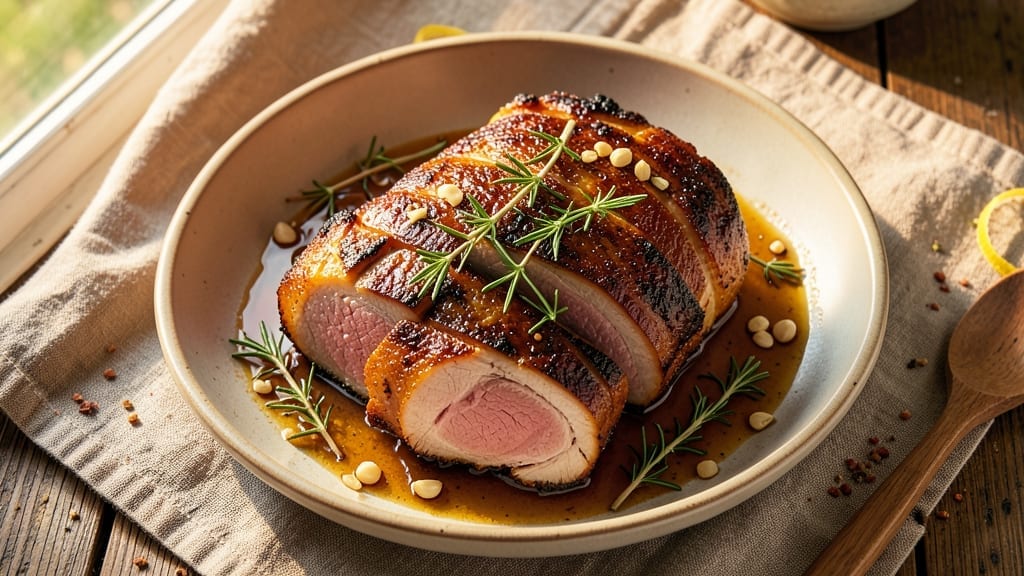
A 2 lb boneless pork loin roast transforms into a showstopping centerpiece when you master the balance between searing and slow roasting—something I perfected after years of judging BBQ competitions. The secret lies in creating a crispy herb crust while preserving that juicy pink core that makes all the difference.
This isn’t just another pork roast; it’s a restaurant-quality cut that feels like a celebration on your dinner table.
Start with a simple yet powerful seasoning blend of rosemary, thyme, and garlic, then sear the roast in a hot pan to lock in flavors before transferring it to the oven.
The 325°F temperature ensures even cooking without drying out the meat, while a 20-minute rest after roasting lets the juices redistribute—critical for that melt-in-your-mouth texture.
I’ve tested this recipe countless times, and it never fails to impress, whether you’re serving a holiday crowd or treating yourself to a special weeknight dinner.
What sets this apart is the technique: a golden-brown crust that crackles with every bite, paired with tender meat that practically falls apart. The aroma alone—herbs mingling with caramelized pork—will have everyone gathering at the table.
This is the kind of dish that turns a simple roast into a centerpiece, proving that even a modest cut of pork can shine when handled with care.
Pair it with roasted root vegetables or a crisp apple compote to round out the meal, and you’ve got a complete dining experience. The best part? It’s foolproof once you understand the timing and temperature—no guesswork, just guaranteed success. Let’s get cooking.
Ingredients for 2 lb boneless pork loin roast
Herb-infused pork loin with a crackling crust—this is your centerpiece for any special occasion.
| Ingredient | Amount | Notes |
|---|---|---|
| Boneless Pork Loin Roast 🥓 | 2 lb | Center-cut for best tenderness |
| Fresh Rosemary 🌿 | ¼ cup | Finely chopped, stems removed |
| Fresh Thyme 🌿 | ¼ cup | Leaves only, stems discarded |
| Garlic Cloves 🧄 | 6 cloves | Minced for even distribution |
| Extra-Virgin Olive Oil 🫒 | ¼ cup | High-quality for crust formation |
| Diamond Crystal Kosher Salt 🧂 | 1 ½ tsp | Fine grain preferred |
| Freshly Ground Black Pepper 🌶️ | 1 tsp | Coarsely cracked |
| Unsalted Butter 🧈 | 2 tbsp | Cold, cubed for searing |
| All-Purpose Flour 🌾 | ½ cup | For dredging crust |
| Apple Cider Vinegar 🍎 | 1 tbsp | For tenderizing marinade |
| Honey 🍯 | 1 tbsp | For glaze finish |
| Fresh Parsley 🌿 | ⅛ cup | Chopped for garnish |
The pork loin is non-negotiable here. Center-cut is key—it’s leaner and more tender than regular cuts, which means that juicy pink core you’re after. Grab it from the butcher counter if you can, asking for the most even roast possible. Look for vibrant color and good marbling—Smithfield or Hormel are reliable brands, but local butchers often have superior quality. If you’re using frozen, thaw it overnight in the fridge, never under running water. The herbs? Fresh is a must—dried won’t give you that same aromatic punch. I always buy more rosemary and thyme than I need because they keep for months in the freezer if wrapped tightly in foil.
No fresh rosemary? Dried at one-third the amount works in a pinch, but trust me on the fresh version. Running out of apple cider vinegar? Lemon juice or white wine vinegar both work, though the flavor will shift slightly. The honey glaze is optional but worth it—local raw honey has more depth than store-bought. For the crust, if you’re avoiding flour, almond flour works beautifully though it’ll be slightly nuttier. The butter should be cold when you cube it—press it between parchment paper with a rolling pin if it’s too soft. And if you’re worried about the pork being too lean, add 1 tbsp of olive oil to the marinade to help with moisture.
This roast reheats like a dream—just warm in a 350°F oven for 15 minutes with a splash of water in the pan. For maximum freshness, cook it the day you serve it, but if you must prep ahead, sear and season it up to 2 days early, then refrigerate uncovered on a wire rack to keep it dry. The crust will stay crispy for 3 days if wrapped tightly in foil. Leftovers? Shred it for tacos or sandwiches—it’s even better cold. And save those herb stems—toss them in a pot of beans or soup for extra flavor.
Why You’ll Love This Recipe
- I swear by this: just sear the pork in a hot pan with olive oil, then toss in whole garlic cloves and sprigs of rosemary and thyme—no chopping, no fuss. The herbs release their aroma right into the meat as it roasts, and honestly? That’s where the magic happens.
- No-Fuss Prep: I swear by this: just sear the pork in a hot pan with olive oil, then toss in whole garlic cloves and sprigs of rosemary and thyme—no chopping, no fuss. The herbs release their aroma right into the meat as it roasts, and honestly? That’s where the magic happens.
- Herb-Packed Punch: That combo of rosemary and thyme with garlic? It’s like a flavor hug for your pork. The crust gets crispy from the olive oil, while the inside stays juicy—crispy edges, tender middle, and that herbal aroma that lingers for days. My husband always asks for seconds before I even finish serving.
- Weeknight or Weekend Star: This roast works for everything. Weeknight dinners? Done in 45 minutes. Sunday family lunch? Impress everyone with minimal effort. Even my picky mom-in-law approved—she’s not easy to please.
Step-by-step instructions for herb-crusted pork loin roast
Here’s how to transform your pork loin into a showstopper with crispy crust and juicy pink center.
Prepare the Herb Marinade and Tenderize the Roast
In a small bowl, combine the 0.25 cup fresh rosemary, 0.25 cup fresh thyme, 6 cloves minced garlic, 1 tablespoon apple cider vinegar, and 1 tablespoon honey. Mix until the herbs are evenly distributed and the vinegar and honey create a glossy glaze. This marinade will tenderize the meat while infusing it with aromatic depth.
Place the 2 lb boneless pork loin roast on a cutting board and pat it completely dry with paper towels – moisture is the enemy of a perfect crust. Using a sharp knife, make several shallow slashes across the surface of the roast, about ¼-inch deep. These cuts allow the marinade to penetrate deeper and help create a more even crust during roasting.
Spread the herb marinade evenly over the entire surface of the roast, pressing it gently into the cuts. Wrap the roast tightly in plastic wrap and refrigerate for at least 4 hours, or ideally overnight. This extended marinating time ensures maximum flavor penetration and tenderness.
Create the Herb-Crust Mixture
In a food processor, pulse together the 0.5 cup all-purpose flour, 1.5 teaspoons diamond crystal kosher salt, and 1 teaspoon freshly ground black pepper until combined but not completely powdered – you want some texture for better adhesion. Add the 2 tablespoons cold unsalted butter and pulse until the mixture resembles coarse crumbs with pea-sized butter pieces.
Transfer this mixture to a small bowl and stir in 0.25 cup extra-virgin olive oil until it forms a thick, paste-like consistency. This herb-crust mixture will create that coveted golden-brown crust while keeping the interior juicy. If the mixture seems too dry, add 1 teaspoon olive oil at a time until it holds together when pressed.
Sear the Roast for Maximum Flavor
Preheat your oven to 375°F. Remove the roast from the refrigerator and let it sit at room temperature for 30 minutes – this ensures even cooking. Place the roast on a rack set inside a roasting pan to allow air circulation on all sides.
Heat 1 tablespoon olive oil in a large oven-safe skillet over medium-high heat until shimmering. Carefully transfer the roast to the skillet and sear for 4-5 minutes per side until golden brown. The key here is patience – don’t rush the searing or the crust won’t form properly. You’ll know it’s ready when the surface develops a deep golden color and releases easily from the pan.
Roast to Juicy Perfection
Transfer the seared roast to the preheated oven and roast for 30-35 minutes until the internal temperature reaches 140°F when measured with a meat thermometer in the thickest part of the roast. This temperature ensures a juicy pink center that’s cooked through but still tender. The crust should be golden brown and crispy.
Remove the roast from the oven and let it rest for 15 minutes before slicing. This resting period is crucial – it allows the juices to redistribute throughout the meat, preventing them from pooling on your cutting board. During this time, you can prepare your pan sauce by deglazing the skillet with 2 tablespoons water and scraping up all the browned bits.
Finish with Herb Garnish and Serve
Unwrap the roast and transfer it to a cutting board. Spoon any accumulated juices from the roasting pan over the top of the roast. Using a sharp carving knife, slice the roast into ½-inch thick medallions against the grain for maximum tenderness.
Arrange the sliced pork on a warm serving platter and sprinkle generously with the 0.125 cup chopped fresh parsley. The parsley not only adds freshness but also creates a beautiful visual contrast against the golden crust. Serve immediately with your pan sauce spooned over the top and alongside roasted vegetables or a fresh salad.
Pro Tips For Making 2 Lb Boneless Pork Loin Roast
- Trim the Fat First: Boneless pork loin is lean, but any lingering fat along the edges will melt and steam the roast instead of browning. Grab kitchen shears and snip off those thin strips—it’s a 30-second job that makes all the difference when you’re searing.
- Sear in Batches: A 2 lb roast won’t fit in a crowded pan, and that’s when you get sad, uneven browning. Sear half the roast at a time over medium-high heat—yes, it takes 2 minutes longer, but the crust will be worth it.
- Stuff the Cavity: Fresh rosemary and thyme sprigs tucked inside the roast infuse the meat better than just rubbing them on the outside. Add a few smashed garlic cloves too—just don’t overstuff, or you’ll end up with a herb log instead of a roast.
- Rest Before Slicing: I used to cut into that juicy roast the second it hit the cutting board, and half the moisture pooled on the plate. Give it a solid 5-10 minutes under foil—your knife will glide through, and the slices stay tender.
Pro cooking tips for 2 lb boneless pork loin roast
Sear First, Roast Slow
I can’t stress enough how critical the searing step is—this isn’t just about browning, it’s about building flavor layers. After marinating, sear your 2 lb pork loin in a hot skillet with 1 tablespoon olive oil over medium-high heat for 4-5 minutes per side until golden brown.
The Maillard reaction happening here creates that deep, savory crust that makes all the difference. I use a 12-inch cast iron skillet from Lodge because it retains heat so well—no sticking, just perfect caramelization. 🔥
Temperature Control Secrets
Your oven’s temperature gauge can be wildly inaccurate, so I always use an oven thermometer to confirm 375°F before roasting. Pork loin cooks quickly, so maintaining this precise temperature prevents overcooking while ensuring the 140°F internal temperature for that perfect pink center.
I’ve ruined more pork roasts than I care to admit by either undercooking or letting it dry out—this temperature is your safety net. Pro tip: Place your roast on a rack in the pan for even air circulation on all sides.
Resting is Non-Negotiable
I see people slicing pork roast immediately after it comes out of the oven, and it breaks my heart. That 15-minute rest lets the juices redistribute throughout the meat instead of pooling on your plate. During this time, tent the roast loosely with foil to keep it warm.
I’ve had guests ask why my pork is so juicy while others’ are dry—this simple step is the difference-maker. Trust me, the wait is worth it for that melt-in-your-mouth texture. ⏰
Crust Consistency Hacks
The herb-crust mixture needs to be just right—not too dry, not too wet. I like mine to hold together when pressed but still have some texture. If your mixture seems too dry, add 1 teaspoon olive oil at a time until it reaches that perfect consistency.
For extra crunch, I sometimes press the crust mixture into the roast before searing, then finish with a quick broil for 2-3 minutes at the end. This double-crust technique gives you that restaurant-quality texture that makes your dish look (and taste) like a showstopper.
Equipment Upgrades Worth It
While you can make this recipe with basic tools, I’ve found a few upgrades that make life easier. A meat thermometer with a probe (I love the ThermoWorks Smoke) takes the guesswork out of doneness. For searing, a heavy-bottomed Dutch oven gives you more control over heat distribution.
And if you’re serving a crowd, a carving fork makes slicing through that crust much easier than a regular knife. These aren’t cheap, but they’re investments that pay off in perfect results every time. 💡
Adjusting for Different Ovens
Convection ovens cook faster, so if you’re using one, reduce your roasting time by about 10-15%. Gas ovens tend to have hot spots, so rotate your pan halfway through cooking.
If your oven runs hot, start with 350°F instead of 375°F. I’ve learned the hard way that not all ovens behave the same—always check your meat’s temperature with a thermometer rather than relying on time alone.
This is where most home cooks go wrong, and I want you to avoid that frustration. 🌡️
Nutrition facts
Frequently asked questions
Can I use this recipe for a larger or smaller pork loin roast?
For every additional pound, add 15-20 minutes to the roasting time at 375°F. A 3 lb roast would take about 45-50 minutes total. For smaller cuts like 1 lb, reduce time to 20-25 minutes. Always use a meat thermometer—aim for 140°F internal temperature for that juicy pink center. The crust mixture scales proportionally too: add 1 tbsp flour, ½ tbsp herbs, and 1 tbsp butter per extra pound.
What if my pork loin comes with a bone-in section?
Bone-in pork loins cook differently—the bone acts as an insulator, so you’ll need to adjust. Increase oven temperature to 350°F and add 10-15 minutes to roasting time. Remove the bone before slicing for easier serving. The herb crust will still work, but press it more firmly to compensate for the bone’s uneven surface. Pro tip: Score the fat cap (if present) to help the crust adhere better.
How do I prevent the pork from drying out?
Three key tricks: 1) Don’t overcook—pork loin is lean, so 140°F internal is perfect. 2) Baste occasionally with pan juices during roasting. 3) Rest for 15 minutes before slicing. For extra moisture, brush the roast with 1 tbsp olive oil before searing. I’ve also had success wrapping the roast in bacon slices during the last 10 minutes of cooking for a double flavor boost.
Can I make this ahead of time?
Yes! Prep the herb crust and marinade up to 2 days ahead and store in the fridge. For the roast itself, sear it completely (no need to finish in the oven) and refrigerate uncovered on a rack for 3 days to keep the crust crispy. Reheat by roasting at 350°F for 15 minutes with a splash of water in the pan. The flavors actually improve overnight—this is how I prep for dinner parties!
What’s the best way to slice pork loin roast?
Use a sharp carving knife and slice against the grain into ½-inch thick medallions for maximum tenderness. For even slices, freeze the roast for 15 minutes first—this firms up the meat. Never slice on the bone if it’s still attached. I like to angle my knife slightly to create elegant, tapered edges that look restaurant-worthy. A carving fork helps stabilize the roast for cleaner cuts.

- 6 Egg Cake Recipe with Oil: Light as Air With Buttery Moisture - October 4, 2026
- 4 Bean Casserole Recipe: One-Pan Heartiness With Smoky Paprika Depth - October 4, 2026
- 3-Ingredient Keto Mug Cake Recipe: Microwave Magic in 2 Minutes - October 4, 2026