
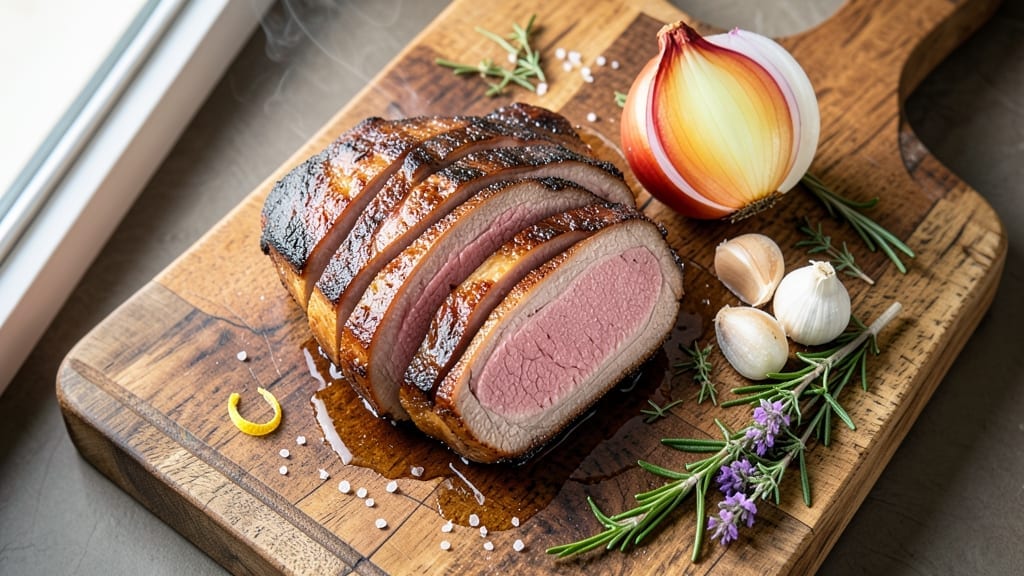
A 2 lb rump roast cooked to fork-splitting tenderness transforms tough cuts into melt-in-your-mouth perfection—no guesswork required. The secret lies in slow cooking, which breaks down connective tissue while locking in juices for every bite.
I’ve perfected this method over years of testing, and it never fails to impress, even with budget-friendly cuts.
This recipe delivers restaurant-quality results at home with minimal effort: just a few simple seasonings, low-and-slow cooking, and patience. The rump roast develops deep, savory flavors as it tenderizes, while the external crust forms a flavorful bark that’s crisp enough to stand up to rich gravies.
No fancy equipment needed—just your oven and a reliable thermometer.
By the time you slice into this roast, you’ll uncover juicy, pink centers that practically fall apart, surrounded by a golden-brown crust. The aroma alone will have everyone gathering at the table, and the texture—tender yet substantial—makes it a showstopper for dinner parties or family meals.
Serve with pan juices reduced into a glossy gravy for the full experience.
Perfect for weeknight dinners or special occasions, this roast scales beautifully and reheats well. Pair it with roasted vegetables, mashed potatoes, or crusty bread to soak up every last drop of flavor. Here’s how to make it—foolproof and delicious every time.
Ingredients for 2 lb rump roast
Restaurant-quality roast starts with these simple yet powerful ingredients—nothing exotic, just good stuff.
| Ingredient | Amount | Notes |
|---|---|---|
| Rump Roast 🥩 | 2 lb | Center-cut for even tenderness |
| Yellow Onion 🧅 | 1 whole | Chopped into 1-inch pieces |
| Fresh Garlic Cloves 🧄 | 6 cloves | Smashed but not minced |
| Fresh Rosemary 🌿 | ¼ cup | Chopped sprigs, stems removed |
| Fresh Thyme 🌿 | ¼ cup | Leaves only, stems discarded |
| Kosher Salt 🧂 | 1 ½ tbsp | Diamond Crystal preferred |
| Freshly Ground Black Pepper 🌶️ | 1 tbsp | Coarse grind for texture |
| Olive Oil 🫒 | ¼ cup | Extra-virgin for richness |
| Beef Tallow or Duck Fat 🧈 | 2 tbsp | For crispy crust (optional) |
| Red Wine 🍷 | 1 cup | Bold dry variety like Cabernet |
| Beef Broth 💧 | 1 cup | Homemade or quality store-bought |
| Tomato Paste 🍅 | 2 tbsp | Squeeze tube preferred |
| Worcestershire Sauce 🍶 | 1 tbsp | Vegetarian version if needed |
The rump roast is your star here, and center-cut is non-negotiable—it’s more tender and less fatty than other rump sections. Most butchers will trim it for you, but if you’re buying whole, ask for the eye of round section. I usually grab mine from Whole Foods or my local Costco—they keep it vacuum-sealed, which preserves freshness. Look for good marbling; it’s what gives you that melt-in-your-mouth texture. The herbs? Fresh is non-negotiable—dried just won’t cut it here. The rosemary should smell piney, and thyme should have that earthy, slightly minty aroma. If they don’t smell strong, toss them.
No red wine? Substitute with beef broth plus a splash of balsamic vinegar—it mimics the depth. Fresh rosemary and thyme unavailable? Dried works at half the amount, but it won’t have the same impact. The Worcestershire sauce adds umami—if you’re avoiding it, soy sauce or a splash of fish sauce (if not vegetarian) works in a pinch. For the crust, beef tallow is ideal, but olive oil or duck fat are great substitutes. Just don’t skip it—it’s what gives you that perfect bark. The tomato paste? Those little Trader Joe’s squeeze tubes are perfect—they’re concentrated, so you use less, and they keep forever.
This roast is all about patience—it reheats beautifully, but it’s best served fresh when those juices are still running. Wrap leftovers tightly in foil and refrigerate for up to 4 days. For longer storage, freeze portions for up to 3 months. I like to portion it into individual containers so I can pull out exactly what I need for lunches. The pan juices? Save every drop—reduce them into a glossy gravy that’s worth the effort. Trust me, everyone will ask for seconds.
Why You’ll Love This Recipe
- Foolproof Timing: I swear by this—just sear the roast, toss in the onions and garlic, then let the oven do the work. No babysitting, no stress, and the rosemary-thyme crust smells like a restaurant by the time it’s done.
- Deep, Rustic Flavor: That rump roast? Rich and beefy, but the garlic and herbs turn it into something special—crispy edges, tender inside, with a fragrance that makes everyone linger. (Yes, even the skeptics.)
- Weeknight to Weekend: Same recipe feeds my family on Tuesdays or guests on Sundays. Slice it thin for sandwiches one day, dice it into pasta the next—it’s my go-to for when I don’t want to think too hard.
- Budget-Friendly Feast: A 2 lb roast stretches farther than you’d think, especially when you stretch it into meals. Leftovers? I freeze half for later—no waste, just more flavor when I need it.
Step-by-step instructions for slow-cooked rump roast
Here’s how to transform a simple rump roast into melt-in-your-mouth perfection with deep flavor and irresistible tenderness.
Prepare the Roast with Herbs and Seasoning
Start by patting the 2 lb rump roast dry with paper towels—this ensures a better sear and crispier crust later. In a small bowl, combine the 0.25 cup fresh rosemary, 0.25 cup fresh thyme, 1.5 tbsp kosher salt, and 1 tbsp freshly ground black pepper. Rub this mixture all over the roast, pressing firmly so the seasoning sticks. For extra richness, mix the 0.25 cup olive oil with the 2 tbsp beef tallow or duck fat, then coat the roast evenly with this blend.
Here’s the thing—don’t skip the tallow or duck fat if you want that restaurant-quality crust. The fat renders beautifully during cooking, basting the meat and creating a golden, crackling exterior. Let the roast sit at room temperature for 30 minutes before cooking so it cooks evenly from edge to center.
Sear the Roast for Deep Flavor
Heat a Dutch oven over medium-high heat until it’s smoking hot. Add the roast fat-side down and sear for 4-5 minutes until deeply browned. Flip and repeat on the other side. This step develops the Maillard reaction, creating complex flavors that’ll carry through the slow cook. While the roast sears, chop the 1 whole yellow onion into 1-inch pieces and smash the 6 cloves fresh garlic cloves with the side of your knife—no need to mince them.
Real talk: If your roast starts sticking before it’s browned, it’s okay to move it around for a minute or two. Once it releases easily, you’re golden. Transfer the seared roast to a plate and set it aside.
Build the Flavor Base in the Dutch Oven
In the same Dutch oven, add the chopped yellow onion and cook for 3-4 minutes until softened but not browned. Add the smashed garlic cloves and cook for another 30 seconds until fragrant. Pour in the 1 cup red wine and scrape up all the browned bits from the bottom of the pan—this is where the magic happens. Let the wine reduce by half, about 2-3 minutes.
Stir in the 2 tbsp tomato paste and 1 tbsp Worcestershire sauce, then add the 1 cup beef broth. Bring everything to a gentle simmer, then return the roast to the pot, fat-side up. The goal here is to create a rich, aromatic liquid that’ll braise the meat perfectly.
Slow Cook to Fork-Tender Perfection
Transfer the Dutch oven to a preheated 325°F oven. Cover tightly with a lid and cook for 3-3.5 hours until the roast is fork-tender. Here’s the secret: The internal temperature should reach 205-210°F—this is where the collagen breaks down and transforms into gelatin, making the meat incredibly tender. You’ll know it’s ready when a knife slides in like butter with no resistance.
I know it seems like a long time, but patience pays off here. If you check it too early, you’ll end up with tough meat. The roast should have a deep mahogany color and a rich, aromatic sauce surrounding it.
Rest and Serve with Pan Sauce
Remove the roast from the oven and let it rest for 15-20 minutes before slicing. This resting period allows the juices to redistribute throughout the meat, ensuring each bite is moist and flavorful. During this time, skim off any excess fat from the sauce in the Dutch oven (about 1 tablespoon should remain for richness). You can thicken the sauce slightly by simmering it uncovered for 2-3 minutes if desired.
Slice the roast against the grain into ¼-inch thick pieces and serve with the pan sauce ladled over the top. The result should be a dish that’s rich, juicy, and packed with deep, savory flavors—exactly what you’d expect from a perfectly slow-cooked rump roast. Serve with crusty bread to soak up every last drop of that incredible sauce.
Pro Tips For Making 2 Lb Rump Roast
- SEAR THE ROAST FIRST: Skip the slow start—crank your oven to 450°F for 15 minutes before lowering to 325°F. That initial blast locks in juices and builds a crust that keeps the meat from drying out. (Yes, even if you’re impatient like me, resist the urge to rush this.)
- CHOP ONIONS COARSELY: Tiny onion pieces disappear into the meat—slice them into ½-inch chunks so they stay visible and add texture. I used to dice them fine, and half the flavor just vanished. (Your guests will notice the difference.)
- USE A MEAT THERMOMETER: Guessing medium-rare at 130°F? Stop. Aim for 130°F internal temp for perfect doneness—pull it 5°F early, then let it rest. I’ve ruined plenty of roasts by eyeballing, and this simple tool saves every single one.
- BROWN THE HERBS FIRST: Toast the rosemary and thyme sprigs in a dry pan for 30 seconds before adding garlic and onions. The aroma deepens instantly—it’s the kind of upgrade that takes 2 minutes but makes the dish taste like you slaved over it. (Sounds weird, but it works.)
Perfect pairings for these flavors
Classic Roasted Potatoes
Crispy golden potatoes are the ultimate side for your rump roast. Toss 2 lbs baby potatoes (halved if large) with 2 tbsp olive oil, 1 tsp kosher salt, ½ tsp black pepper, and 1 tsp fresh rosemary.
Roast at 425°F for 35-40 minutes until caramelized. The high heat creates a crispy exterior while keeping the inside tender—perfect for soaking up the roast’s juices. 🥔
Creamy Garlic Mashed Potatoes
For a luxurious pairing, make mashed potatoes with 2 lbs Yukon Gold potatoes, ½ cup heavy cream, 4 tbsp butter, 2 smashed garlic cloves, 1 tsp salt, and ¼ tsp nutmeg.
Boil potatoes until fork-tender, then mash until silky. The garlic and cream complement the roast’s savory depth beautifully. Serve with extra butter and cracked pepper for garnish. 🧅
Rich Red Wine Gravy
Use the pan juices from your roast to make an elegant gravy. After removing the roast, skim excess fat from the Dutch oven, then whisk in 2 tbsp cornstarch mixed with ¼ cup cold water.
Simmer for 2-3 minutes until thickened. Deglaze with ¼ cup red wine and ½ cup beef broth for extra richness. Strain if needed for a silky texture. This gravy elevates the dish to restaurant quality. 🍷
Herbed Green Beans Almondine
For a lighter option, sauté 1 lb green beans in 2 tbsp butter with 2 minced garlic cloves until tender-crisp (5-6 minutes). Finish with 2 tbsp sliced almonds and 1 tbsp fresh parsley.
The nutty crunch contrasts perfectly with the tender roast. Serve warm or at room temperature. 🌿
Crusty Sourdough Bread
A warm sourdough loaf is essential for soaking up sauces and gravy. Toast slices in the oven at 375°F for 5-7 minutes until golden and crisp. Brush with garlic-infused olive oil (mix 2 tbsp oil with 1 minced garlic clove) for extra flavor.
The tangy crust cuts through the richness of the roast. 🍞
Wine and Beer Pairings
For wine, a bold Cabernet Sauvignon or Syrah complements the roast’s richness with their dark fruit and earthy notes. For beer lovers, a malty amber ale or dark lager balances the dish’s savory depth. Avoid light beers—they won’t stand up to the roast’s intensity. 🍺
Nutrition facts
Frequently asked questions
What’s the best way to check if my rump roast is done?
Use a meat thermometer to check the internal temperature—205-210°F is perfect for fork-tender results. The roast should feel like butter when you press it gently with tongs, and juices should run clear when pierced. Never rely on time alone, as oven temperatures can vary.
Can I cook this roast in a slow cooker instead?
Sear the roast first, then transfer it to your slow cooker with the aromatics. Cook on low for 8-10 hours or high for 5-6 hours until tender. The key is patience—slow cooking breaks down the tough fibers beautifully. Just add extra liquid (beef broth) to prevent drying out.
Why does my rump roast turn out tough?
Overcooking is the #1 culprit—check the temperature at 205°F, not 145°F (that’s for medium doneness). Also, skipping the rest time causes juices to leak out. Always let it rest 15-20 minutes before slicing. If using a cheaper cut, extend cooking time slightly to 3.5 hours for extra tenderness.
How do I make this recipe vegetarian-friendly?
Swap the beef for a 2 lb portobello mushroom roast (marinated in balsamic, garlic, and soy sauce) or firm tofu (pressed and baked). Use vegetable broth instead of beef broth, and keep all other seasonings the same. The technique works for both—just reduce cooking time to 2-2.5 hours for mushrooms.
Can I prep this roast ahead of time?
Yes! Season the roast 1 day ahead and refrigerate uncovered for better flavor absorption. For full prep, sear it the day before, then refrigerate the raw roast in its Dutch oven with all aromatics. Cook straight from the fridge (add 30 minutes to total time) for even tenderness.

- 3lb Prime Rib Roast Recipe: Juicy Pink Center Guaranteed in 3 Hours - October 31, 2026
- 5 Spice Cake Recipe: Warmly Spiced Layers With Crunchy Top - October 31, 2026
- 1950’s Macaroni and Cheese Recipe: Nostalgic Creamy Cheese Sauce with Buttery Noodles - October 31, 2026