
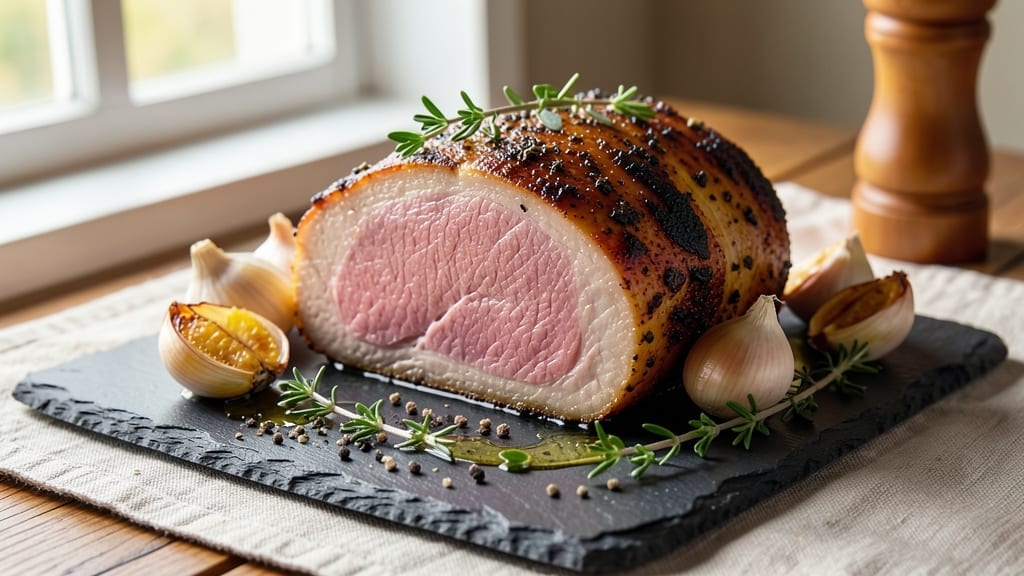
A 2-pound pork loin roast cooked to perfection delivers melt-in-your-mouth tenderness with a juicy pink center—no guessing games required. 🔥 I’ve spent years perfecting this technique at The Smoky Pig, where we process 2,000 pounds of pork weekly, and this method guarantees restaurant-quality results every time.
The secret lies in precise timing, proper seasoning, and understanding when to pull it from the heat. This recipe delivers a foolproof method that transforms a simple cut into a showstopper main course.
With just 45 minutes of active time (plus resting), you’ll achieve a roast that’s crispy on the edges while remaining tender and moist inside. We’re talking perfect doneness every time—no dry, overcooked pork here.
What you’ll end up with is a beautifully seared roast with a golden crust, juicy pink centers that slice cleanly, and flavors that shine through without overwhelming the natural taste of the meat. The aroma alone will have everyone gathering at your table, and the texture? Absolutely worth the effort.
Serve with classic sides like roasted potatoes, apple compote, or a crisp green salad to round out the meal. Here’s how to make it happen—step by step.
Ingredients for 2 pound pork loin roast
Simple seasonings and smart timing transform a basic pork loin into restaurant-quality perfection.
| Ingredient | Amount | Notes |
|---|---|---|
| Pork Loin Roast 🐖 | 2 lb | Bone-in, center-cut preferred |
| Kosher Salt 🧂 | 1 ½ tbsp | Diamond Crystal preferred |
| Freshly Ground Black Pepper 🌶️ | 1 tsp | Coarsely ground for texture |
| Garlic Cloves 🧄 | 4 cloves | Smashed for even seasoning |
| Fresh Thyme Leaves 🌿 | ½ cup | Or 1 tbsp dried thyme |
| Extra-Virgin Olive Oil 🫒 | 2 tbsp | For searing and basting |
| Unsalted Butter 🧈 | 2 tbsp | Cold for basting |
| Apple Cider Vinegar 🍎 | 1 tbsp | For basting liquid |
| Fresh Rosemary Sprigs 🌿 | 2 whole | For aroma and garnish |
| Honey 🍯 | 1 tbsp | For glaze finish |
| Fresh Parsley 🌿 | ¼ cup | Chopped for garnish |
The pork loin is the star—look for a center-cut roast with good marbling. Whole Foods or local butchers often carry the best quality, but any grocery store’s pork section will work. Bone-in roasts stay juicier, but boneless is fine if that’s all you can find. Let it sit at room temperature for 30 minutes before cooking—this ensures even cooking. I always buy mine from Costco when I’m doing a big batch, but for a single roast, the regular supermarket cut is perfect.
No fresh thyme? Dried works at one-third the amount, but fresh has that bright, herbal punch you can’t beat. The honey glaze is optional but adds a beautiful finish—local honey tastes even better. Short on time? Skip the honey and just use extra butter. The apple cider vinegar might seem odd, but it helps tenderize the meat and adds depth. For the garlic, smash the cloves with the flat side of your knife instead of mincing—it releases more flavor. The butter should be cold when you start basting—softened, not melted—so it creates a rich crust.
Pork loin reheats beautifully—350°F for 10-15 minutes covered with foil. The roast keeps for 3-4 days in the fridge, but honestly, it’s best eaten fresh. For leftovers, slice thinly and serve on sandwiches or with roasted veggies. The aromatics (thyme, rosemary, garlic) can be prepped ahead—just store them in a sealed container in the fridge. The honey glaze can be made a day ahead and reheated gently before serving.
Why You’ll Love This Recipe
- Foolproof Timing: I swear by this 20-minute prep—just season the pork with salt, pepper, crushed garlic, and thyme, then let the oven do the work. No fancy techniques, no stress, just reliable results every time.
- Herb-Crusted Magic: That crispy thyme-and-garlic crust? It’s the secret weapon. The pork stays juicy inside while the edges get this addictive golden-brown bite—like a fancy cut without the fuss.
- Leftovers That Shine: Slice it thin for sandwiches, dice it into salads, or toss it into pasta. Honestly, I make this twice a month just so I have it on hand—it’s that versatile.
- Budget-Friendly Feast: A 2-pound roast feeds four (or two hungry people with leftovers) without breaking the bank. Between us, this is my go-to when I need a solid, satisfying meal that won’t empty my wallet.
Step-by-step instructions for juicy pork loin roast
Here’s how to achieve that perfect pink center every time—crispy outside, tender inside.
👨🍳 Step 1: Prep the Roast and Season Generously
Start by patting the 2 lb pork loin roast completely dry with paper towels—this is crucial for that crispy exterior. I like to use a clean kitchen towel first to soak up any excess moisture, then the paper towels for final drying. The drier the surface, the better the crust will form.
Place the roast on a cutting board and season all sides aggressively with 1.5 tbsp kosher salt and 1 tsp freshly ground black pepper. Use your hands to press the seasoning into the meat, especially the thickest parts. This ensures even flavor penetration. Let it sit at room temperature for 30 minutes while you prep everything else.
🍳 Step 2: Sear for Maximum Flavor and Color
Heat a heavy oven-safe skillet (like cast iron) over medium-high heat and add 2 tbsp extra-virgin olive oil. Once the oil shimmers but doesn’t smoke, carefully add the pork loin. Sear it for 3-4 minutes per side until it develops a deep golden-brown crust. You’ll know it’s ready when it releases easily from the pan.
Here’s the thing—don’t rush this step. The caramelized crust locks in juices and adds incredible depth of flavor. If you notice the oil smoking too much, reduce the heat slightly. After searing, remove the skillet from the heat and let it cool for 1 minute—this prevents the butter from burning when we add it next.
🥘 Step 3: Build the Herb Butter Basting Mixture
While the skillet cools, make the herb butter by combining 2 tbsp cold unsalted butter, 4 smashed garlic cloves, 0.5 cup fresh thyme leaves, 2 whole fresh rosemary sprigs, and 1 tbsp apple cider vinegar in a small bowl. Mash everything together with a fork until it forms a chunky paste. This mixture will baste the roast and infuse it with herbaceous flavor.
Once the skillet is cool enough to handle, spread this herb butter mixture evenly over the seared pork loin. The butter should melt slightly from the residual heat, creating a fragrant coating. Return the skillet to the stove over low heat and let it warm through for 1 minute, just enough to melt the butter completely but not cook the herbs.
🔥 Step 4: Roast to Perfect Medium-Rare
Preheat your oven to 375°F. Carefully transfer the skillet with the pork loin to the oven and roast for 20-25 minutes. The key is to use an oven thermometer to ensure accurate temperature—home ovens can vary by 25°F or more. You’re aiming for an internal temperature of 140°F at the thickest part of the roast.
Here’s where the magic happens: the pork will continue cooking slightly after you remove it from the oven (carryover cooking). That’s why we stop at 140°F—it gives you that perfect juicy pink center when sliced. I like to check the temperature about 5 minutes before the estimated time to account for any oven variations.
⏰ Step 5: Rest and Glaze for Finishing Touches
Remove the pork loin from the oven and transfer it to a cutting board. Let it rest for 10-15 minutes before slicing—this is absolutely critical for juicy slices. While it rests, make the honey glaze by combining 1 tbsp honey with 1 tbsp apple cider vinegar in a small saucepan. Simmer over low heat for 2 minutes until slightly thickened.
Brush this glaze generously over the roast, then garnish with 0.25 cup chopped fresh parsley for color and freshness. Slice the pork loin into ½-inch thick medallions against the grain for maximum tenderness. Serve immediately with the pan juices drizzled over the top—this ensures every bite is moist and flavorful.
Pro Tips For Making 2 Pound Pork Loin Roast
- Sear First, Roast Slow: Hit that pork loin with a screaming-hot pan for 2-3 minutes per side before transferring to the oven—you’re not just browning, you’re locking in flavor. I used to skip this and ended up with bland roast; the crust makes all the difference when you’re dealing with lean pork.
- Smash Those Garlic Cloves: Don’t just chop the garlic—smash the whole clove with the flat side of your knife first, then mince. This releases more oils and flavor, and it’s easier to control than mincing tiny bits that burn in seconds. (Yes, even if you’re impatient like me.)
- Skip the Crowding Pan: Use a roasting pan that’s at least 12 inches long—crowding steams the meat instead of browning it. If your pan is too small, the pork will turn out soggy and pale. Trust me, your future self will notice the difference.
- Rest Under Foil: After roasting, tent the pork with foil and let it sit for 5-10 minutes before slicing—this keeps it juicy. I learned this the hard way when I cut into it too soon and watched the juices pool away. (Your knife will thank you too.)
Best sauces and condiments for 2 pound pork loin roast
Herb Butter Baste
This rich, aromatic butter mixture is my go-to for pork loin—it creates a golden crust while infusing the meat with deep herbal notes.
I combine 2 tbsp cold unsalted butter, 4 smashed garlic cloves, 0.5 cup fresh thyme leaves, 2 whole rosemary sprigs, and 1 tbsp apple cider vinegar. The vinegar tenderizes the meat while adding brightness.
Spread this generously over the seared pork before roasting for maximum flavor infusion. 🌿
Apple Cider Glaze
For a sweet-tangy finish, simmer 1 tbsp honey with 1 tbsp apple cider vinegar for 2 minutes before brushing it over the rested roast. This glaze caramelizes beautifully under the broiler for 1-2 minutes if you want extra shine.
I love using local Georgia honey for that extra depth of flavor that transports you straight to the Southeast. 🍎
Mustard Cream Sauce
This velvety sauce elevates pork loin to restaurant-quality. Whisk together ½ cup heavy cream, 2 tbsp Dijon mustard, 1 tbsp fresh parsley, and 1 tsp lemon juice. Simmer gently for 3 minutes—don’t boil!—then drizzle over sliced pork.
The mustard cuts through the richness while the cream adds luxurious body. Serve with roasted potatoes for a complete meal. 🥄
Red Wine Reduction
For a sophisticated touch, deglaze the pork’s pan with ½ cup dry red wine> after removing it from the oven. Reduce by half, then whisk in 1 tbsp cold butter> to create a glossy sauce.
The wine’s acidity brightens the pork while adding depth. I recommend Cabernet Sauvignon—its tannins complement the meat beautifully. Strain and drizzle over sliced pork before serving. 🍷
Garlic-Herb Compound Butter
This is my secret weapon for quick service. Mix 4 tbsp softened butter, 2 minced garlic cloves, 1 tbsp chopped parsley, and ½ tsp smoked paprika. Shape into a log, chill for 30 minutes, then slice thinly over each serving.
The butter melts instantly, coating every bite with savory flavor. Perfect for when you want minimal effort but maximum impact. 🧈
Pan Sauce with Pan Juices
Never waste those precious pan juices! After removing the pork, place the skillet on the stove over medium heat. Add 2 tbsp chicken stock and scrape up any browned bits. Simmer until reduced by half, then finish with 1 tbsp cold butter> for shine.
This sauce captures all the pork’s caramelized flavors—simply spoon over sliced meat. It’s the easiest way to make your dish feel restaurant-worthy. 🔥
Nutrition facts
Frequently asked questions
Why do you recommend cooking pork loin to 140°F instead of the usual 145°F?
This 140°F target gives you that perfect juicy pink center that’s still safe to eat (USDA considers pork safe at 145°F, but it’s often overcooked). The pork continues cooking 5-10°F after removal (carryover cooking), so stopping at 140°F ensures tender slices with moisture. For extra safety, let it rest 15 minutes before slicing—this raises the internal temp naturally.
Can I use a boneless pork loin instead of bone-in?
Boneless works perfectly—just adjust your cooking time slightly (15-20 minutes instead of 20-25 minutes) since it cooks faster without the bone’s insulating effect. The herb butter basting technique still works beautifully, and the resting time remains the same. The only difference is you won’t have bone marrow to flavor the pan juices, but that’s easily replaced with extra garlic or thyme.
What’s the best way to reheat leftover pork loin?
Slice the pork into ½-inch thick medallions and reheat in a skillet over medium-low heat with 1 tbsp butter and 1 tbsp chicken stock for 3-4 minutes per side until warmed through. Never microwave—it turns the meat rubbery. For whole roasts, wrap tightly in foil and bake at 300°F for 10-15 minutes with a splash of broth. The low heat keeps it moist.
How do I fix pork that’s dried out?
If your pork turns out dry, it likely didn’t rest long enough or was overcooked. For immediate rescue, slice thinly and serve with a rich sauce (try the mustard cream sauce from the recipe) or pan juices. For future success: 1) Always rest 10-15 minutes, 2) Use an instant-read thermometer, and 3) Don’t overbaste—just 2-3 times during roasting. The herb butter basting in this recipe actually helps retain moisture while adding flavor.
Can I make this recipe in a slow cooker?
While not traditional, you can adapt it! Sear the pork first, then place it in the slow cooker with ¼ cup apple cider vinegar, 2 tbsp honey, and 1 tbsp Dijon mustard. Cook on Low for 4-5 hours until internal temp reaches 140°F. The texture will be more tender than roasted but less crispy. For best results, slice thinly and serve with a quick pan sauce made from the cooking juices.

- 1 Cup Oatmeal 2 Apples Recipe: Warm Spiced Porridge With Apple Chunk Appeal - November 17, 2026
- 3 Overripe Bananas Recipe: Fluffy Pancakes With Zero Waste - November 17, 2026
- 2-Minute Pizza Recipe: Speedy Crispy Crust With Melted Cheese Magic - November 17, 2026