
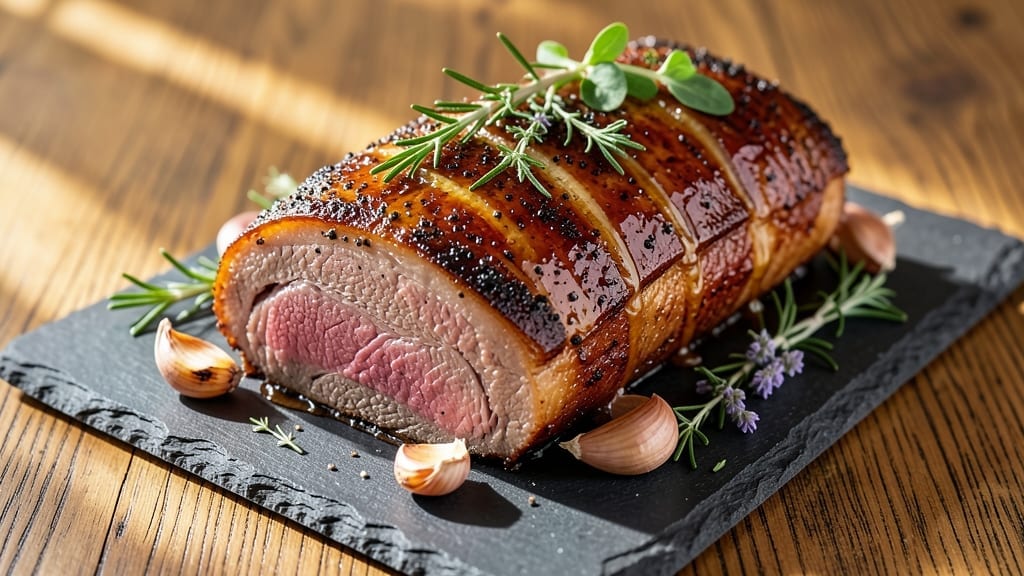
A 2-rib roast beef cooked to perfection delivers that restaurant-quality experience at home—juicy, tender meat with a caramelized crust that locks in every flavor. The reverse-sear method transforms tough cuts into melt-in-your-mouth results, and I’ve refined this technique over years of testing to guarantee success.
What sets this apart is the precision in timing and temperature, ensuring the core stays medium-rare while the exterior achieves that coveted golden-brown finish.
The process begins with a dry brine that enhances seasoning penetration, followed by a low-and-slow oven bake to even out the internal temperature. A final sear in a screaming-hot pan creates that coveted crust without overcooking the inside.
This method isn’t just foolproof—it’s the secret weapon behind every great steakhouse roast. The result? A roast so tender it practically falls apart, with a crust that’s crispy enough to stand up to a carving knife.
Once you’ve mastered this technique, you’ll never settle for anything less than a perfectly cooked roast again. The rich, beefy aroma alone will have your kitchen filled with anticipation, and the first bite delivers on that promise of juicy, flavorful perfection.
Pair it with classic sides like roasted potatoes or a bold red wine reduction for a meal that feels like a special occasion every time.
This recipe is designed for confidence—whether you’re cooking for a holiday dinner or a weekend gathering, the reverse-sear method ensures consistent results. The key lies in patience and precision, but the reward is a roast that’s worth every minute of effort.
Let’s get started on creating a centerpiece that will impress even the most discerning guests.
Ingredients for 2 rib roast beef
The perfect 2-rib roast demands precision—juicy core, caramelized crust, and bold flavors locked in every bite.
| Ingredient | Amount | Notes |
|---|---|---|
| 2-Rib Roast Beef 🥩 | 5 lb | Center-cut, bone-in, medium-rare finish |
| Kosher Salt 🧂 | 1 ½ tbsp | Diamond Crystal preferred, coarse grain |
| Freshly Ground Black Pepper 🌶️ | 1 ½ tbsp | Cracked peppercorns preferred |
| Garlic Cloves 🧄 | 8 whole | Smashed for dry brine infusion |
| Fresh Thyme Sprigs 🌿 | 4 whole | Stems intact for aroma |
| Fresh Rosemary Sprigs 🌿 | 4 whole | Needle-like leaves preferred |
| Unsalted Butter 🧈 | ½ cup | Cold, cut into 8 slices |
| Extra-Virgin Olive Oil 🫒 | 2 tbsp | High smoke point preferred |
| Yellow Onion 🧅 | 1 whole | Peeled, halved lengthwise |
| Carrots 🥕 | 4 whole | Whole, scrubbed, trimmed |
| Celery Stalks 🥬 | 4 whole | Trimmed, cut into 2-inch pieces |
| Dry Red Wine 🍷 | 1 cup | Bold Cabernet Sauvignon preferred |
| Beef Stock 🍲 | 1 cup | Homemade or high-quality store-bought |
| Tomato Paste 🍅 | 1 tbsp | Smooth, no sugar added |
The center-cut 2-rib roast is non-negotiable—this cut delivers the ideal balance of marbling and tenderness. Look for a roast with visible fat cap and even thickness (about 2-2.5 inches) to ensure consistent cooking. Whole Foods or local butchers often carry premium cuts—ask for a roast that’s been dry-aged for 21 days if available, as this enhances flavor. If you’re buying a whole rib roast, trim the silver skin and tie the ribs with butcher’s twine before cooking to maintain shape. The 5-pound size serves 6-8 generously, perfect for holiday gatherings or weekend feasts. For best results, remove the roast from the fridge 1 hour before cooking to equalize temperature.
The dry brine is where flavor magic happens—Diamond Crystal kosher salt dissolves better than table salt, and freshly cracked peppercorns add depth. Substitute smoked paprika (1 tsp) for rosemary if you prefer a different aroma profile, but the herbs are essential for that classic beefy depth. No fresh thyme? Use 1 tsp dried thyme, but toast it first in a dry pan for 30 seconds to intensify flavor. The red wine and beef stock can be swapped for 2 cups of beef broth if needed, but the alcohol helps tenderize the meat. For the tomato paste, Trader Joe’s squeeze tubes are perfect—they’re convenient and last months in the pantry. If your roast is particularly large, increase the wine and stock by 1/3 cup to maintain moisture.
This roast reheats beautifully—wrap tightly in foil and bake at 325°F for 30-45 minutes until internal temp reaches 130°F. For long-term storage, vacuum-seal portions and freeze for up to 3 months. The crust is best enjoyed fresh, but the juicy interior holds up well. Portion the roast into individual slices before serving to maintain presentation. Leftovers transform into beef sandwiches, tacos, or beef stroganoff—just reheat with a splash of beef stock to restore moisture. Save the drippings for gravy or future pan sauces; they’re packed with flavor.
Why You’ll Love This Recipe
- Foolproof Seasoning: I swear by this combo—just salt, pepper, smashed garlic, and thyme. No fancy rubs, no overcomplicating it. That crust? Chef’s kiss. The beef practically seasons itself while it roasts.
- Weeknight Crowd-Pleaser: Between us, this is my go-to for game days or when my brother “forgets” to RSVP. Two ribs feed 6-8 without leftovers (if you’re disciplined), and everyone stops mid-conversation when it comes out.
- Leftovers That Don’t Suck: Cold slices? Yes, really. The garlic-thyme crust stays bold, and the meat’s tender enough to eat straight from the fridge. I pack it in lunches for days—no sad, dry sandwiches here.
- Minimal Hands-On Time: Honestly, the hardest part is waiting. Toss the beef with salt, pepper, and thyme, pop it in the oven, and let it do its thing. Twenty minutes of active time for a dish that feels like a restaurant special.
Step-by-step instructions for 2-Rib roast beef with perfect crust and core
Master this reverse-sear technique for a roast with a caramelized exterior and tender, juicy center every time.
Prepare the Dry Brine Overnight
Remove the 5 lb 2-rib roast beef from packaging and pat it completely dry with paper towels, focusing on the fat cap and any crevices. This step is crucial—moisture on the surface prevents proper crust formation.
In a small bowl, combine the 1.5 tbsp kosher salt and 1.5 tbsp freshly ground black pepper. Rub this mixture evenly over all surfaces of the roast, pressing firmly so the seasoning adheres. Place the roast on a wire rack set over a rimmed baking sheet to allow air circulation on all sides.
Cover loosely with plastic wrap and refrigerate for 12-24 hours. This dry brine process works magic by penetrating the meat deeply while creating an ideal surface for caramelization. The roast should be completely cold before proceeding.
Build the Herb Butter and Sear the Roast
Remove the roast from the refrigerator 1 hour before cooking to allow it to come to room temperature. In a small bowl, combine the 0.5 cup unsalted butter, smashed 8 whole garlic cloves, 4 whole fresh thyme sprigs, and 4 whole fresh rosemary sprigs. Mix gently to distribute the herbs.
Heat a heavy oven-safe skillet (cast iron works best) over medium-high heat. Add the 2 tbsp extra-virgin olive oil and let it shimmer for 1 minute. Place the roast fat-side down in the pan and sear for 8-10 minutes, pressing gently with a spatula to render the fat. Flip and sear the other side for 6-8 minutes until deeply browned.
Remove the roast from the pan and place it fat-side up on a cutting board. Spread the herb butter evenly over all surfaces, pressing gently to ensure it adheres. This butter will baste the meat during roasting and add incredible flavor.
Roast Low and Slow for Even Cooking
Preheat your oven to 275°F. Place the roast fat-side up on a wire rack in a roasting pan. Add the peeled, halved yellow onion, 4 whole carrots, and 4 whole celery stalks (cut into 2-inch pieces) to the pan—they’ll create a flavorful bed for the roast.
Roast for 3-3.5 hours until the internal temperature reaches 115-120°F when measured with a meat thermometer in the thickest part of the roast. This low-temperature cooking ensures even doneness throughout while developing deep flavor. The roast should feel very tender when pressed gently with a finger.
During the last 30 minutes of roasting, prepare the pan sauce by placing the roasting pan on the stovetop over medium heat. Add the 1 cup dry red wine and scrape up any browned bits from the bottom. Simmer for 5 minutes until reduced by half. Stir in the 1 cup beef stock and 1 tbsp tomato paste, then simmer for another 10 minutes until thickened.
Finish with a High-Heat Sear
Remove the roast from the oven and increase the oven temperature to 450°F. Place the roast on a fresh wire rack set over a rimmed baking sheet. Return to the oven for 10-15 minutes until the internal temperature reaches 125-130°F—this final sear creates the caramelized crust while keeping the interior perfectly juicy.
For the final sear, transfer the roast to a hot skillet over high heat for 2-3 minutes per side until deeply browned. This step should be done quickly to avoid overcooking. The crust should be dark mahogany and crisp to the touch.
Rest and Serve with Pan Sauce
Transfer the roast to a cutting board and tent loosely with foil. Let it rest for 15-20 minutes before carving—this allows the juices to redistribute throughout the meat. The internal temperature will rise 5-10°F during resting, so don’t be concerned if it reaches 130-135°F at the end.
Strain the pan sauce through a fine-mesh sieve to remove any herb stems, then whisk in 2 tablespoons of the reserved roasting juices from the pan. Slice the roast against the grain into ½-inch thick portions and serve immediately with the pan sauce spooned over the top. Each slice should be perfectly pink in the center with a rich, caramelized crust.
Pro Tips For Making 2 Rib Roast Beef
- Dry the Roast First: I learned this the hard way—wet beef steams instead of searing. Pat that roast thoroughly with paper towels before you even think about salt. The crust won’t form properly if it’s damp, and you’ll end up with a sad, gray exterior instead of that golden, crackling perfection.
- Salt Generously Before Searing: More salt than you’d use for chicken—this isn’t the time to be shy. A rib roast is thick and needs time to absorb flavor deep inside. Sprinkle that kosher salt heavily (about 1.5 teaspoons per pound) at least 40 minutes before cooking, and don’t skip the pepper either.
- Use a Meat Thermometer: Guessing medium-rare on a rib roast is a fast track to disappointment. The USDA says 145°F for medium, but pull it at 130–135°F for perfect medium-rare—it’ll rise another 10°F while resting. I used to cut into it too soon and ruined a great roast because I didn’t trust the thermometer.
- Sear on High Heat: This isn’t the time to be gentle. Crank your oven to 450°F for the first 20 minutes, then drop to 325°F. The initial blast caramelizes the surface, locking in juices and creating that restaurant-quality crust. Skip this, and you’ll get a bland, pale roast that tastes like it was cooked in a microwave.
Perfect pairings for this recipe
Classic Side Dishes
The richness of a perfectly cooked 2-rib roast calls for sides that balance its depth without overpowering. Crispy roasted Yukon Gold potatoes tossed with rosemary and garlic are my go-to—toss 2 lbs halved potatoes with 2 tbsp olive oil, 1 tsp salt, and ½ tsp black pepper, then roast at 425°F for 45 minutes until golden.
For a touch of elegance, add ¼ cup crumbled blue cheese just before serving. 🥔
Another crowd-pleaser is creamy mashed sweet potatoes—boil 3 lbs peeled sweet potatoes until tender, then mash with ¼ cup butter, ½ cup sour cream, and 1 tsp cinnamon.
The natural sweetness complements the beef’s savory notes beautifully. For a lighter option, serve with sautéed green beans tossed in 1 tbsp lemon zest and toasted almonds.
Red Wine Pairings
A bold red wine is essential to cut through the richness of the roast. I reach for a Cabernet Sauvignon from Napa Valley—look for one with 14-15% ABV and notes of dark fruit and vanilla.
The tannins in a well-aged Cabernet (like Louis M. Martini Cabernet Sauvignon) stand up to the beef’s intensity while enhancing its flavors. For a more affordable option, try Apothic Red Blend—its smooth finish and blackberry notes pair perfectly. 🍷
If you prefer something lighter, a Syrah from the Rhône Valley offers spice and peppery notes that complement the roast’s caramelized crust. Avoid heavy, oaky wines—they’ll clash with the dish’s clean, herbaceous profile. Serve wine slightly chilled (60-65°F) to refresh your palate between bites.
Beverage Alternatives
For non-wine drinkers, a dark beer like Guinness or Samuel Adams Black Lager adds a malty contrast to the beef’s richness. The roasted barley notes in Guinness mirror the caramelized crust, while the creamy texture balances the roast’s heartiness. Pair with crispy onion rings for a fun, casual twist. 🍺
Coffee lovers can enjoy a bold espresso martini—the bitterness cuts through the fat beautifully. Mix 2 oz vodka, 1 oz coffee liqueur, and 1 oz freshly brewed espresso, then shake with ice.
For a non-alcoholic option, serve sparkling pomegranate juice—its tartness cleanses the palate between rich bites.
Garnish and Finishing Touches
Elevate your roast with a red wine reduction drizzle—simmer 1 cup red wine until reduced by half, then whisk in 1 tbsp butter and strain. Spoon over slices just before serving. For a pop of color, add microgreens or edible flowers like nasturtiums—their peppery bite adds freshness. 🌸
Don’t forget the crusty bread—a warm baguette or sourdough is perfect for soaking up pan juices. Toast slices with garlic butter and sprinkle with flaky sea salt for an extra touch of sophistication. These small details transform your roast from a main course to a showstopping centerpiece.
Nutrition facts
Frequently asked questions
Why does the recipe call for a dry brine instead of wet marinade?
The dry brine method creates a perfect crust by drawing moisture to the surface while deeply seasoning the meat. Unlike wet marinades that can dilute flavor, the salt and pepper penetrate evenly, resulting in a more concentrated seasoning profile and that coveted caramelized exterior. Plus, it keeps the meat juicy without adding extra liquid that could interfere with the sear.
Can I cook this roast without a meat thermometer?
While a meat thermometer is ideal, you can estimate doneness by touch and visual cues. For medium-rare, the roast should feel very tender when pressed gently with your finger (about 10 minutes before the target internal temperature). The crust should be deep mahogany brown, and the juices should run clear when pierced with a knife. The final resting time will help carry it to perfect doneness.
What’s the best way to carve a 2-rib roast?
Always carve against the grain for maximum tenderness. Start by slicing between the ribs to separate them, then cut each rib into ½-inch thick slices. For even presentation, make parallel cuts along the length of the roast before slicing through the ribs. Use a sharp carving knife and keep it at a 45-degree angle to create clean, even slices that showcase the beautiful crust.
How far ahead can I prepare the herb butter?
You can prepare the herb butter up to 24 hours ahead and store it in the refrigerator. For best results, let it sit at room temperature for 15-20 minutes before spreading on the roast to ensure it melts evenly. If the butter hardens again during the searing process, that’s normal—the heat will melt it perfectly when you place the roast in the oven.
What if my oven doesn’t go up to 450°F for the final sear?
No problem! Use your oven’s broil setting instead, placing the roast on a wire rack 3-4 inches from the heat source. Watch closely to prevent burning—5-7 minutes should be enough to create that perfect crust. For even browning, rotate the roast halfway through. If your oven lacks a broiler, finish with a quick sear in a screaming-hot cast-iron skillet over high heat for 2-3 minutes per side.

- 3lb Prime Rib Roast Recipe: Juicy Pink Center Guaranteed in 3 Hours - October 31, 2026
- 5 Spice Cake Recipe: Warmly Spiced Layers With Crunchy Top - October 31, 2026
- 1950’s Macaroni and Cheese Recipe: Nostalgic Creamy Cheese Sauce with Buttery Noodles - October 31, 2026