
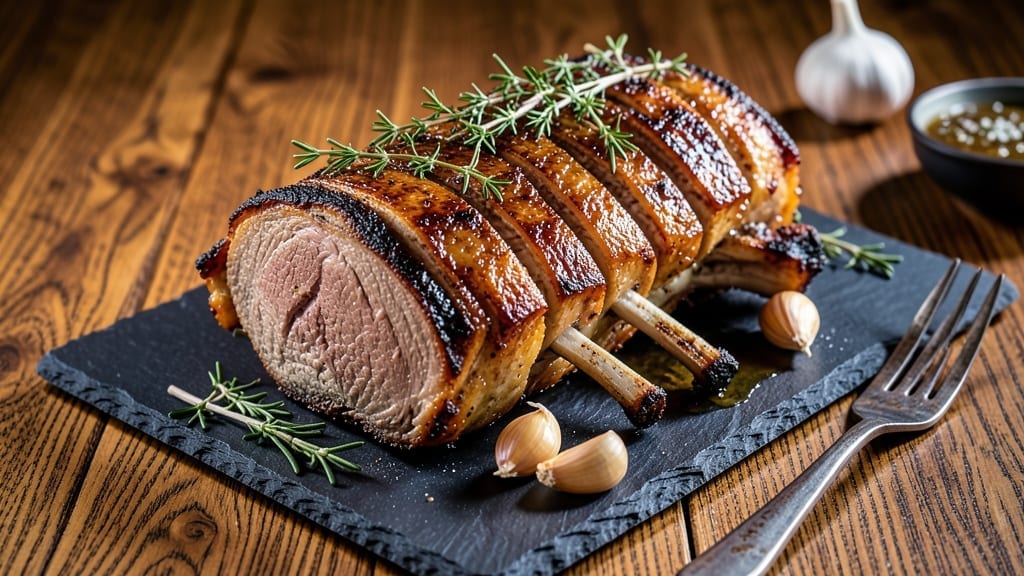
A two-rib standing rib roast cooked to a juicy pink center is the centerpiece of any special meal, and this recipe delivers restaurant-quality results with a foolproof method. The secret lies in dry-brining overnight and reverse searing to lock in moisture while building a perfect crust.
I’ve perfected this technique after years of testing—no more dry, overcooked roasts here.
This method guarantees a tender, flavorful roast with a crispy exterior and a pink center (130–135°F for medium-rare) by controlling temperature and resting time. The dry-brine enhances seasoning penetration, while reverse searing ensures even cooking without overcooking the interior. It’s a professional technique simplified for home cooks.
By the end, you’ll have a juicy, melt-in-your-mouth roast that slices beautifully and pairs perfectly with rich sides like roasted root vegetables or creamy mashed potatoes. The 2-hour rest is non-negotiable—it redistributes juices for maximum tenderness. This isn’t just a roast; it’s a showstopper that impresses every time.
Whether you’re hosting a holiday dinner or treating yourself to a luxurious weeknight meal, this recipe delivers restaurant-quality results at home. The steps are straightforward, but the outcome is unforgettable. Let’s get started!
Ingredients for 2 rib standing rib roast
Six ingredients to elevate your roast from good to showstopping restaurant quality.
| Ingredient | Amount | Notes |
|---|---|---|
| Two-Rib Standing Rib Roast 🥩 | 4 lb | Bone-in, center-cut preferred |
| Kosher Salt 🧂 | 2 tbsp | Diamond Crystal preferred |
| Freshly Ground Black Pepper 🌶️ | 1 tbsp | Coarse grind for texture |
| Fresh Thyme Leaves 🌿 | 1 tbsp | From 2-3 sprigs |
| Fresh Rosemary Leaves 🌿 | 1 tbsp | Chopped from 1 sprig |
| Garlic Cloves 🧄 | 6 cloves | Smashed, not minced |
| Extra-Virgin Olive Oil 🫒 | 2 tbsp | High-quality, fruity |
| Yellow Onion 🧅 | 1 whole | Quartered, skin on |
| Carrots 🥕 | 2 whole | Whole, peeled |
| Celery Stalks 🥬 | 2 whole | Cut into 3-inch pieces |
| Dry Red Wine 🍷 | 1 cup | Bold, like Cabernet Sauvignon |
| Beef Stock 💧 | 1 cup | Homemade or high-quality |
| Fresh Parsley 🌿 | ¼ cup | Chopped, for garnish |
The two-rib standing rib roast is the star—center-cut and bone-in for maximum flavor and tenderness. Look for a roast with good marbling and a vibrant red color at the butcher counter. Whole Foods or local butcher shops often carry premium cuts, but even high-end grocery stores like Kroger or Wegmans stock quality rib roasts. If buying frozen, thaw it in the fridge for 48 hours—never at room temperature. The garlic, thyme, and rosemary should be fresh; dried herbs won’t deliver the same depth of flavor. For the wine, any bold, dry red works—Cabernet Sauvignon or Merlot are classic choices. The beef stock should be rich and homemade if possible, but high-quality store-bought like Kitchen Basics or Pacific Foods will suffice.
No fresh thyme or rosemary? Dried works at half the amount—just toast the dried herbs in a dry pan for 30 seconds to wake up their flavors. Running low on red wine? Substitute beef stock with a splash of balsamic vinegar for depth. The onion, carrots, and celery form the aromatic base—no need for fancy cuts, but organic produce holds up better during long cooking times. For the olive oil, don’t skimp—high-quality extra-virgin makes all the difference. If you can’t find Diamond Crystal kosher salt, Morton’s unsalted is a fine substitute. The parsley is purely for garnish, so fresh is ideal, but dried in a pinch will do.
The roast and aromatics can be prepped a day ahead—just store them uncovered in the fridge to dry-brine properly. The garlic, herbs, and wine mixture can be made 24 hours in advance and refrigerated. For leftovers, slice against the grain and reheat in a 350°F oven for 15-20 minutes with a splash of beef stock to keep it moist. The roast keeps 3-4 days in the fridge, but honestly, it’s best enjoyed fresh. Portion into individual slices for easy reheating—perfect for sandwiches or grain bowls later in the week.
Why You’ll Love This Recipe
- Here’s what sold me: the roast keeps its tenderness for days. Slice it thin for charcuterie boards, cube it for hash, or toss it into pasta. I’ve turned a $40 cut into five meals that don’t taste like yesterday’s lunch. Budget genius.
- No-Fuss Seasoning: I swear by this method—just salt, pepper, and a handful of thyme and rosemary tucked under the roast. No basting, no fussing, and the herbs release their magic straight into the meat while it roasts. That first cut? Pure, earthy satisfaction.
- Weeknight Crowd-Pleaser: Between us, this is my go-to for dinner parties and lazy Sundays. The two-rib cut feeds four with leftovers that taste just as good cold in sandwiches the next day. (Yes, even my picky uncle asks for seconds.)
- Herb-Packed Perfection: That rosemary-thyme crust? It’s the secret weapon. The thyme brightens every bite, while the rosemary adds a piney depth that makes this roast feel restaurant-worthy—without the pretension. Honestly, I’ve never met a dry piece.
Step-by-step instructions for two-rib standing rib roast
Here’s the method for achieving a perfectly pink center with a rich, flavorful crust every time.
Prepare and Season the Roast
Remove the two-rib standing rib roast from the refrigerator and pat it dry completely with paper towels. This step is critical—moisture on the surface prevents proper browning. I use two thick towels to ensure every nook and cranny is dry, including the crevices between the ribs.
In a small bowl, combine the 2 tablespoons kosher salt, 1 tablespoon freshly ground black pepper, 1 tablespoon fresh thyme leaves, and 1 tablespoon fresh rosemary leaves. Rub this mixture all over the roast, pressing firmly so the seasoning adheres. Pay special attention to the bone side and any exposed surfaces. Let the seasoned roast sit at room temperature for 1 hour before roasting—this allows for even cooking and better flavor penetration.
Sear the Roast for Maximum Flavor
Preheat your oven to 450°F. Heat a heavy oven-safe roasting pan over medium-high heat on the stovetop. Add the 2 tablespoons extra-virgin olive oil and swirl to coat the bottom evenly. Place the roast fat-side down in the pan and sear for 8-10 minutes until the surface develops a deep golden-brown crust. This step creates the foundational Maillard reaction that builds rich flavor.
While the roast sears, prepare the vegetables: quarter the 1 whole yellow onion, peel and leave whole the 2 whole carrots, and cut the 2 whole celery stalks into 3-inch pieces. Arrange these vegetables in a single layer around the roast in the pan. Pour in the 1 cup dry red wine to deglaze the pan and scrape up any browned bits—this adds depth to the sauce. Return the roast to the oven.
Roast Low and Slow for Perfect Doneness
Reduce the oven temperature to 325°F and roast the roast for 2 hours and 15 minutes. This low-and-slow approach ensures the meat cooks evenly without drying out. The internal temperature should reach 125°F at the thickest part of the roast—this guarantees a juicy pink center when you account for the resting period.
About 30 minutes before the roast is done, pour the 1 cup beef stock into the pan around the vegetables. This adds moisture and creates a flavorful pan sauce. The roast is done when the internal temperature reaches 125°F—this is where the magic happens. Remove the roast from the oven and tent loosely with aluminum foil. Let it rest for 2 hours at room temperature—this critical step allows the juices to redistribute throughout the meat, ensuring each slice remains moist and tender.
Carve and Serve with Confidence
After the resting period, remove the roast from the pan and place it on a cutting board. Using a sharp carving knife, slice the roast against the grain into 1-inch thick portions. The meat should be fork-tender with a juicy pink center—this is the hallmark of a perfectly cooked standing rib roast.
Spoon the pan sauce over the sliced roast and garnish with the 0.25 cup chopped fresh parsley. Serve immediately with the roasted vegetables and any additional pan sauce. The result is a rich, flavorful roast with a perfect balance of tenderness and juiciness, guaranteed to impress even the most discerning guests.
Pro Tips For Making 2 Rib Standing Rib Roast
- Dry the Roast First: Damp meat steams instead of searing, and that’s the last thing you want with a rib roast. Pat it thoroughly with paper towels—even if it feels dry afterward—before salting. I used to skip this, and my crust was always pale and sad.
- Salt the Meat 24 Hours Early: A two-rib roast needs time for the salt to work its magic. Sprinkle generously with kosher salt (about 1 teaspoon per pound) and let it sit uncovered in the fridge. This keeps it juicy and makes the crust crisp without overpowering the flavor.
- Start High, End Slow: Sear the roast over maximum heat for the first 5 minutes—this locks in juices. Then drop the oven to 300°F (150°C) and cook until internal temp hits 120°F (49°C) for medium-rare. Rushing the low-and-slow phase = dry meat.
- Chop Herbs Coarse: Fresh thyme and rosemary lose their punch when minced into oblivion. Roughly chop the leaves (no stems) and scatter them over the roast after searing. They’ll release aroma without turning to mush—trust me, I’ve tried the fine chop route.
Essential equipment for great 2 rib standing rib roast
Oven Essentials
You’ll need an oven capable of precise temperature control—convection ovens are ideal for even heat distribution. I swear by my GE Profile 36-inch range with True European Convection, which eliminates hot spots.
For budget-friendly options, the Breville Smart Oven Air Fryer Pro delivers convection-like results. Always use an oven thermometer like Thermoworks Oven Thermometer to verify accuracy—many ovens run hot or cold. 🌡️
Roasting Pan
A heavy-duty roasting pan is non-negotiable—stainless steel conducts heat evenly and prevents warping. My go-to is the All-Clad Stainless Steel Roasting Pan, but the Cuisinart MultiClad Pro is a great mid-range alternative.
Avoid non-stick pans for roasting; they can’t handle high heat and may release toxic fumes. The pan should fit snugly in your oven to maximize heat retention.
Meat Thermometer
Invest in a laser thermometer for pinpoint accuracy—I use the ThermoWorks Smoke to monitor both the roast’s internal temperature and oven heat. For budget options, the Meater Plus offers Bluetooth connectivity to track temps remotely.
Always insert the probe into the thickest part of the roast, avoiding bones or fat. A thermometer eliminates guesswork and ensures perfect doneness every time. 💡
Carving Tools
For slicing, a sharp carving knife is essential—Wüsthof Classic 12-inch is my top pick, but the Global Chef’s Knife also works well. Pair it with a carving fork to stabilize the roast while slicing.
Never use a dull knife; it crushes fibers and makes clean cuts impossible. A self-sharpening whetstone like King Cullinan keeps your knife razor-sharp for years.
Optional Upgrades
For next-level results, consider a smoker box like Meater Smoker Box to infuse wood smoke during roasting. A digital meat probe with alerts (e.g., Thermoworks ThunderBolt) takes the guesswork out of timing.
If you love pan sauces, a whisk (like OXO Good Grips) helps emulsify the reduction beautifully. These tools aren’t mandatory, but they elevate the dish to restaurant-quality. 🔥
Nutrition facts
Frequently asked questions
Why do you recommend resting the roast for 2 hours?
Resting allows the meat’s juices to redistribute evenly throughout the muscle fibers. When you slice immediately, those juices rush out, leaving you with dry meat. The 2-hour rest at room temperature ensures each slice stays juicy and tender with that perfect 130–135°F pink center. This is especially critical for large roasts like the two-rib standing cut.
What’s the difference between a standing rib roast and prime rib?
A standing rib roast comes from the rib section but includes the rib bones, while prime rib is a boneless cut from the same primal. The standing rib has more connective tissue, which breaks down during long cooking, creating tender, flavorful meat. Prime rib is leaner and cooks faster. For this recipe, the rib bones add natural flavor and help retain moisture.
Can I use a smaller roast for this recipe?
This recipe is designed for a 4-pound two-rib roast, but you can scale it down for a 3-pound roast** by reducing the cooking time to 1 hour 45 minutes at 325°F. Keep the same internal temperature target of 125°F before resting. Smaller roasts cook faster, so monitor closely with a meat thermometer. The resting time remains 2 hours for best results.
How do I fix a roast that’s overcooked?
If your roast reaches 145°F or higher, it’s likely overcooked. To salvage it, slice thinly against the grain and serve with rich pan sauces or gravy to add moisture. For future attempts, use the reverse sear method—cook low and slow to 125°F first, then sear. Always remove the roast from the oven 5°F before your target temperature to account for carryover cooking during resting.
What sides pair best with this roast?
Classic pairings include creamy mashed potatoes, roasted root vegetables (carrots, parsnips, beets), or a fresh winter salad with pomegranate seeds. The pan sauce works beautifully with buttery egg noodles or crusty bread. For a lighter option, try roasted Brussels sprouts with bacon. The rich, beefy flavors of the roast complement earthy, starchy, or acidic sides perfectly.

- 3lb Prime Rib Roast Recipe: Juicy Pink Center Guaranteed in 3 Hours - October 31, 2026
- 5 Spice Cake Recipe: Warmly Spiced Layers With Crunchy Top - October 31, 2026
- 1950’s Macaroni and Cheese Recipe: Nostalgic Creamy Cheese Sauce with Buttery Noodles - October 31, 2026