
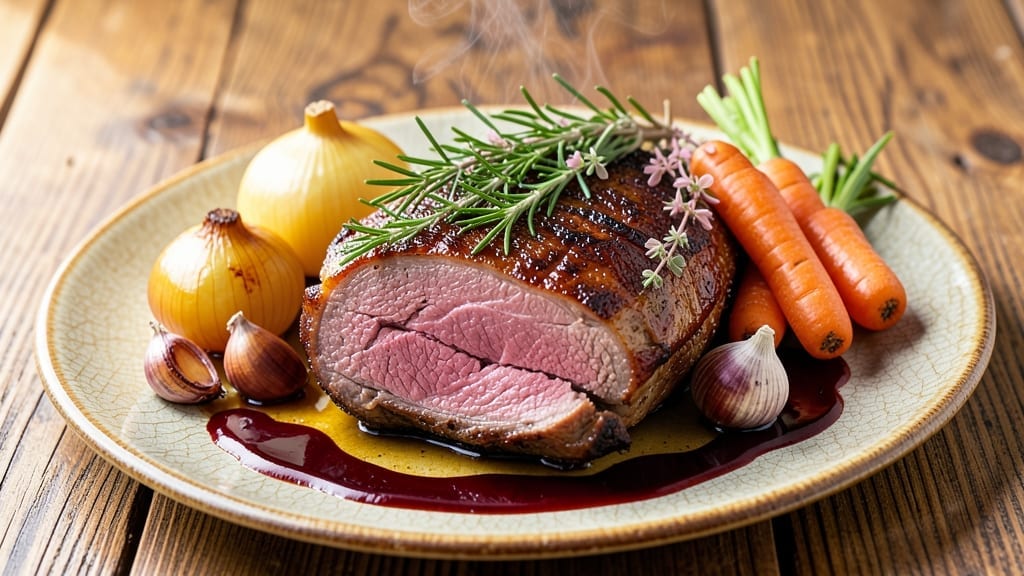
A 2.5-pound chuck roast transformed into tender, caramelized perfection is the kind of dish that turns weeknight dinners into a celebration. The secret lies in slow cooking—where tough cuts melt into fork-tender bites while developing deep, savory flavors.
I’ve perfected this method over countless batches, ensuring every slice is juicy, rich, and packed with that irresistible caramelized crust. This isn’t just a recipe; it’s a technique that elevates humble ingredients into something extraordinary.
The process begins with a high-heat sear to lock in juices and build flavor, followed by slow cooking until the meat practically falls apart. A simple blend of aromatics—garlic, onions, and herbs—infuses the roast while it simmers, creating a fragrant, golden-brown sauce that ties everything together.
No fancy equipment is needed; a Dutch oven or slow cooker will do the job beautifully. The key is patience—letting the meat work its magic over hours rather than rushing the process.
By the time you’re ready to serve, you’ll have a perfectly juicy, caramelized roast that’s tender enough to cut with a fork. The sauce clings to every bite, offering a balance of sweetness and savory depth.
This dish pairs effortlessly with mashed potatoes, crusty bread, or roasted vegetables, making it versatile enough for family dinners or special occasions. The best part? Leftovers taste even better the next day, reheating into a comforting, hearty meal.
Whether you’re feeding a crowd or treating yourself to a Sunday supper, this foolproof method guarantees restaurant-quality results at home. The techniques are straightforward, but the outcome is undeniably impressive—proof that slow cooking doesn’t require complicated steps, just time and attention.
Let’s get started on creating a dish that’s as satisfying to make as it is to eat.
Ingredients for 2.5 lb chuck roast
Sixteen ingredients transform a tough cut into melt-in-your-mouth perfection through slow cooking mastery.
| Ingredient | Amount | Notes |
|---|---|---|
| Chuck Roast 🥩 | 2 ½ lb | Bone-in preferred for flavor |
| Yellow Onions 🧅 | 2 whole | Medium size, sliced into half-moons |
| Garlic Cloves 🧄 | 8 cloves | Fresh, peeled, smashed slightly |
| Carrots 🥕 | 4 whole | Medium size, cut into 2-inch chunks |
| Fresh Rosemary 🌿 | 2 tbsp | Chopped, stems removed |
| Fresh Thyme 🌿 | 1 tbsp | Leaves only, stems removed |
| Beef Broth 💧 | 3 cups | Low-sodium preferred |
| Red Wine 🍷 | 1 cup | Bold, dry variety like Cabernet |
| Tomato Paste 🍅 | 2 tbsp | Smooth, not chunky |
| Olive Oil 🫒 | 2 tbsp | Extra-virgin for searing |
| Kosher Salt 🧂 | 1 ½ tbsp | Diamond Crystal preferred |
| Freshly Ground Black Pepper 🌶️ | 1 ½ tbsp | Coarse grind preferred |
| Brown Sugar 🍯 | 1 tbsp | Light or dark, packed |
| Balsamic Vinegar 🍶 | 1 tbsp | Aged 25+ months preferred |
The chuck roast is the star here—bone-in delivers the best flavor, though boneless works in a pinch. Whole Foods or local butchers offer the best quality, but any reputable grocery store’s pre-packaged chuck will do. Look for good marbling and vibrant color—avoid anything with a grayish tint or excessive fat. The 2.5-pound size is ideal for six servings, though you can scale up or down easily. For maximum tenderness, pat the meat dry before searing to ensure a proper crust. The aromatics—fresh rosemary and thyme—are non-negotiable; dried herbs won’t provide the same depth of flavor, though they can be used at half the quantity in a pinch.
No red wine? Beef broth with a splash of balsamic vinegar works perfectly, though the sauce will lack some complexity. Substitute dried herbs at one-third the amount if fresh isn’t available, but the flavor won’t be identical. The tomato paste can be skipped entirely if you prefer, though it adds a subtle sweetness that balances the acidity. For the olive oil, use something with a high smoke point—light or refined olive oil works better for searing than extra-virgin. The brown sugar adds depth, but maple syrup can substitute in a 1:1 ratio if you’re avoiding refined sugar. If you’re short on time, pre-sliced onions and pre-minced garlic save steps without sacrificing quality.
This dish tastes even better the next day as the flavors meld further. Store leftovers in an airtight container for up to 5 days in the fridge, or freeze for 3 months for future meals. The caramelized crust is best enjoyed fresh, but reheating gently in the oven with a splash of broth restores moisture. For meal prep, portion the roast into individual servings before freezing—this makes it easy to thaw only what you need. The beef broth and wine can be prepped ahead and refrigerated for up to 3 days, though fresh is always better. Double the batch if feeding a crowd; the slow cooker handles it effortlessly.
Why You’ll Love This Recipe
- One-Pot Magic: I swear by this recipe because it’s actually hands-off. Sear the chuck roast, toss in chopped onions, garlic, carrots, and rosemary sprigs, then let the slow cooker or oven do the work. No flipping, no fussing—just rich, falling-apart meat when you’re ready.
- Rosemary-Garlic Bomb: Between us, that fresh rosemary and minced garlic cloves turn this into a flavor powerhouse. The roast soaks up the aroma like a sponge, and the carrots caramelize just enough to add natural sweetness. It’s the kind of dish that makes you close your eyes and sigh.
- Weeknight to Potluck: This recipe works everywhere. Toss it together on a Tuesday for an easy dinner, or double it for a holiday gathering. The leftovers? Even better the next day—slice it thin for sandwiches or shred it into tacos. My go-to for “I don’t want to cook but need to feed people.”
- Budget Feast: A 2.5 lb chuck roast stretches for days, and the ingredients cost next to nothing. Onions, garlic, and carrots are pantry staples, and rosemary lasts forever if you dry it. Honestly, it’s the kind of meal that makes you feel like you’re serving a restaurant-quality dish without breaking the bank.
Step-by-step instructions for slow-cooked chuck roast
Master this technique and you’ll transform tough chuck roast into melt-in-your-mouth perfection.
Sear the Chuck Roast for Deep Flavor
Pat the 2.5 lb chuck roast completely dry with paper towels—this ensures maximum browning. Heat 2 tablespoons olive oil in a large Dutch oven over medium-high heat until shimmering. Place the roast fat-side down and sear for 5 minutes without moving it, until a deep golden crust forms. Flip and sear the other side for another 5 minutes.
While searing, I like to press down gently on the roast during the first minute—this prevents it from curling and ensures even contact with the pan. The goal is to develop that rich, caramelized crust that carries so much flavor throughout the cooking process. Transfer the seared roast to a plate and set aside.
Build the Aromatic Base
In the same Dutch oven, add 2 tablespoons olive oil and reduce heat to medium. Add the sliced 2 whole yellow onions and cook for 5 minutes until softened and lightly golden. Add the 8 smashed garlic cloves, 2 tablespoons chopped fresh rosemary, and 1 tablespoon fresh thyme leaves, stirring for 1 minute until fragrant.
This is where the magic happens—those aromatics release their essential oils that will infuse the meat. Don’t rush this step; you want the garlic to just barely turn golden, not burn. Add the 4 cut carrots and stir to combine. The vegetables will soften further as the roast cooks, creating a rich, textured sauce.
Deglaze and Develop the Sauce
Pour in the 1 cup red wine and scrape up all the browned bits from the bottom of the pan with a wooden spoon. This deglazing step captures all that concentrated flavor. Let the wine simmer for 3 minutes until reduced by half. Add 2 tablespoons tomato paste, 1.5 tablespoons kosher salt, 1.5 tablespoons freshly ground black pepper, 1 tablespoon brown sugar, and 1 tablespoon balsamic vinegar, stirring to combine.
The tomato paste adds depth while the brown sugar and balsamic vinegar create a subtle caramelized sweetness that balances the acidity. This sauce foundation will become the luxurious bath that keeps the roast moist during the long cook. Return the roast to the Dutch oven, fat-side up, and pour in the 3 cups beef broth until it just covers the vegetables.
Slow Cook to Tenderness
Bring the liquid to a simmer, then cover the Dutch oven with a tight-fitting lid. Transfer to a 325°F oven and cook for 3 hours. This low-and-slow approach breaks down the tough muscle fibers while allowing the roast to absorb all those wonderful flavors. Check the liquid level occasionally and add ¼ cup beef broth if it reduces too much.
Here’s the thing—don’t be tempted to peek or move the roast. Every time you disturb it, you lose heat and moisture. The roast is done when it reaches an internal temperature of 195°F and the meat is fork-tender with no resistance. The vegetables should be completely tender and falling apart.
Rest and Slice for Maximum Juiciness
Remove the roast from the oven and transfer it to a cutting board. Tent loosely with foil and let it rest for 30 minutes. This resting period is crucial—it allows the juices to redistribute throughout the meat instead of pooling on the cutting board. During this time, skim any excess fat from the sauce and adjust seasoning if needed.
Slice the roast against the grain into ¼-inch thick slices. Each piece should be incredibly tender, practically falling apart at the touch. Serve the roast with the rich sauce spooned over the top and the tender vegetables. The result is a restaurant-quality dish that’s surprisingly simple to achieve at home.
Pro Tips For Making 2.5 Lb Chuck Roast
- SEAR FIRST, THEN SLOW: Sear the chuck roast in a hot Dutch oven with 1 tablespoon oil—crank the heat to medium-high and let it brown for 4-5 minutes per side before adding onions and carrots. I learned this the hard way: skipping the sear makes the final dish taste bland, like someone forgot to turn on the flavor.
- CHAR THE ONIONS: Cut the yellow onions into ½-inch chunks and cook them in the same pan until deep golden brown—about 10-12 minutes, stirring occasionally. Sounds tedious, but caramelized onions add a depth that raw or lightly cooked ones can’t match. (Yes, even if you’re impatient like me.)
- SALT THE MEAT TWICE: Season the chuck roast generously with salt before searing, then add another layer midway through cooking—around the 1.5-hour mark if braising. This ensures the salt penetrates deeply and balances any bitterness from long cooking.
- USE WHOLE ROSMARY SPRIGS: Tuck 2-3 fresh rosemary sprigs into the roast before adding liquid, then remove them before serving. The needles infuse flavor without turning the dish into a herbal muddle. (And no, you don’t need to chop them—just poke them in like toothpicks.)
Dietary considerations for these flavors
Gluten-Free Adaptations
This chuck roast recipe is naturally gluten-free, but there are a few areas to double-check for cross-contamination. Use gluten-free beef broth (like Annie’s Homegrown or Pacific Foods) and ensure your tomato paste and balsamic vinegar are certified gluten-free.
I always check labels on wine too—some brands use barley-based fining agents. For extra precaution, cook the roast on a clean baking sheet lined with parchment paper before transferring to the Dutch oven. 🌾
Low-Carb Versions
To make this dish keto-friendly, skip the brown sugar and balsamic vinegar (they add carbs), and use 1 tablespoon erythritol or 1 teaspoon stevia instead. The red wine can be replaced with bone broth or dry white wine to keep it low-carb.
I’ve also had great success using sugar-free Worcestershire sauce (like Lalique) for depth without the carbs. The total net carbs will be under 5 grams per serving with these adjustments.
Dairy-Free Considerations
This recipe is already dairy-free, but if you’re serving it with sides, opt for dairy-free mashed potatoes (made with olive oil or Kite Hill almond milk) or roasted vegetables. The rich beef sauce pairs beautifully with dairy-free alternatives.
For extra richness, stir 1 tablespoon dairy-free butter (like Miyoko’s) into the sauce before serving. The texture remains creamy and decadent without any dairy. 🥛
Allergen-Friendly Swaps
For nut allergies, avoid any garnishes with toasted nuts or nut-based sauces. If you’re avoiding garlic or onions, substitute with 1 tablespoon each of asafoetida (hing) and 1 tablespoon onion powder—they mimic the depth without the allergens.
For soy allergies, ensure your beef broth is soy-free (most are, but always check labels). I’ve also used coconut aminos in place of soy sauce in similar recipes with great results. 🌱
Protein-Packed Boost
Want to make this dish even more protein-rich? Add 1 cup cooked lentils or ½ cup chopped mushrooms to the Dutch oven during the slow cook. Both absorb the flavors beautifully while adding fiber and extra protein.
For a meatier option, include ½ lb ground beef browned and drained before adding the roast. This turns it into a hearty beef stew with even more staying power. 💪
Meal Prep Adjustments
When prepping for leftovers, store the roast and sauce separately in airtight containers. Reheat the sauce first on the stovetop, then add the roast to warm through gently. For freezer meals, portion the roast into individual servings before freezing—this prevents a large block of meat from thawing unevenly.
Label containers with dates, as this dish tastes best within 3 months in the freezer. The sauce can be frozen separately for up to 6 months. 📅
Nutrition facts
Frequently asked questions
Can I use a different cut of beef instead of chuck roast?
While chuck roast is ideal for this slow-cooked method, you can substitute with brisket or short ribs for similar results. Avoid leaner cuts like sirloin—they won’t become as tender. If using brisket, increase cooking time by 30-60 minutes since it’s slightly tougher. Short ribs will cook faster (2 hours instead of 3) but require more frequent basting.
How do I know when the chuck roast is fully cooked?
The roast is done when it reaches an internal temperature of 195°F and the meat is fork-tender with no resistance. Insert a meat thermometer into the thickest part—it should read 195°F (well done) with no pink center. The vegetables should also be completely tender. If unsure, let it cook 15-30 minutes longer; chuck roast continues cooking slightly after removal from heat.
Can I make this in a slow cooker instead of the oven?
Sear the roast first, then transfer it to a slow cooker with all ingredients. Cook on low for 8 hours or high for 5-6 hours until fork-tender. The texture will be slightly more saucy, but just as tender. For extra flavor, add ½ cup beef broth halfway through cooking. The slow cooker method is perfect for hands-off preparation.
Why is my chuck roast tough after cooking?
Toughness usually means it wasn’t cooked long enough or the heat wasn’t low enough. Chuck roast needs 3+ hours at 325°F to break down properly. Check your oven temperature with an oven thermometer—many run 25°F hotter than set. Also, avoid cutting into the meat until it rests 30 minutes to let juices redistribute. If it’s still tough, try cooking 1 more hour at 300°F.
What are the best sides to serve with this dish?
This rich roast pairs beautifully with creamy mashed potatoes, crusty bread, or roasted root vegetables. For a lighter option, try quinoa pilaf or green beans almondine. The caramelized sauce works well with polenta or wild rice. For a complete meal, serve with a simple green salad dressed with balsamic vinaigrette.

- 6 Egg Cake Recipe with Oil: Light as Air With Buttery Moisture - October 4, 2026
- 4 Bean Casserole Recipe: One-Pan Heartiness With Smoky Paprika Depth - October 4, 2026
- 3-Ingredient Keto Mug Cake Recipe: Microwave Magic in 2 Minutes - October 4, 2026