
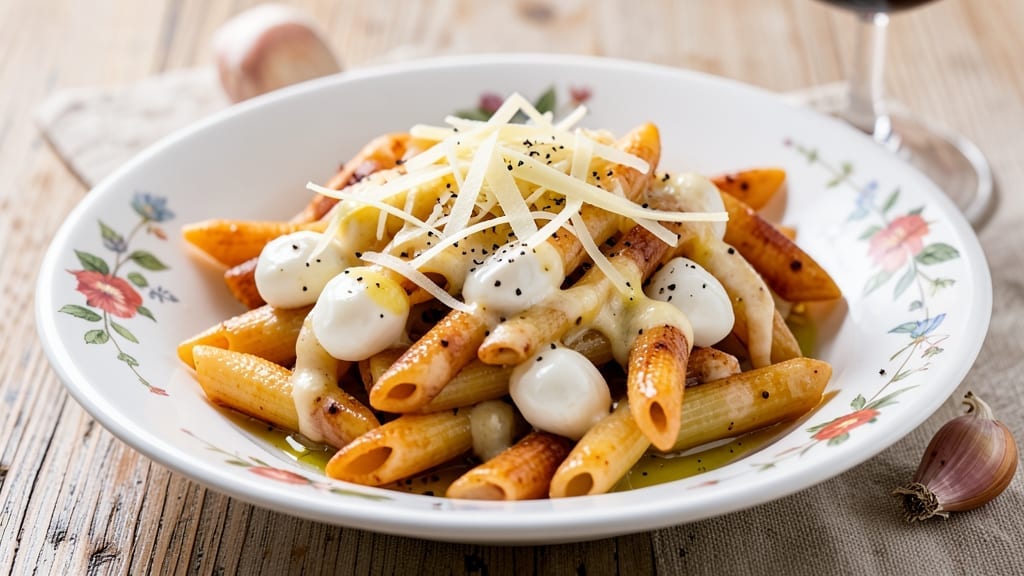
This 3-cheese penne pasta recipe delivers the perfect balance of creamy richness and al dente texture—every bite is a harmonious blend of sharp cheddar, nutty Gruyère, and velvety mozzarella. The secret lies in a two-stage sauce that melts cheeses smoothly while preserving that satisfying pasta bite.
I developed this recipe after years of testing, and it’s now my go-to for weeknight dinners that feel like a restaurant meal.
The process is straightforward but delivers restaurant-quality results: boil penne to al dente perfection, then toss it with a velvety cheese sauce made from a blend of cheeses, garlic-infused olive oil, and a splash of pasta water.
The sauce clings to each strand, creating a creamy yet not heavy finish. This isn’t your typical baked pasta—it’s a one-pot wonder that’s ready in 25 minutes with minimal cleanup.
What makes this recipe stand out is the bold triple-cheese layer—each cheese contributes a distinct flavor: sharp cheddar for tang, Gruyère for depth, and mozzarella for creaminess. The result is a dish that’s comforting yet refined, perfect for feeding a family or impressing guests.
Garnish with fresh parsley and a sprinkle of cracked black pepper for a touch of elegance.
For extra protein, add grilled chicken or shrimp before serving. The sauce’s versatility means it works as a main dish or a hearty side. Let’s get cooking—this pasta is a game-changer for any pasta night.
Ingredients for 3 cheese penne pasta
Twelve essential ingredients create a restaurant-quality triple-cheese penne that’s creamy yet al dente.
| Ingredient | Amount | Notes |
|---|---|---|
| Penne Pasta 🍝 | 12 oz | Dry, al dente texture preferred |
| Sharp White Cheddar Cheese 🧀 | 4 oz | Block form, freshly grated |
| Gruyère Cheese 🧀 | 4 oz | Aged 12+ months for depth |
| Mozzarella Cheese 🧀 | 4 oz | Fresh, low-moisture preferred |
| Extra-Virgin Olive Oil 🫒 | ¼ cup | Fruity, cold-pressed variety |
| Garlic Cloves 🧄 | 3 cloves | Fresh, minced for infusion |
| Fresh Parsley 🌿 | ¼ cup | Chopped, for garnish |
| Black Pepper 🌶️ | ½ tsp | Freshly cracked, coarse grind |
| Salt 🧂 | 1 ½ tsp | Diamond Crystal preferred |
| Heavy Cream 🥛 | ¼ cup | Full-fat for richness |
| Whole Milk 🥛 | ¼ cup | Warmed for smoother sauce |
| Butter 🧈 | 2 tbsp | Unsalted, for finishing |
| Red Pepper Flakes 🌶️ | ¼ tsp | Optional, for subtle heat |
The cheese trio is non-negotiable. Sharp white cheddar delivers the tang, aged Gruyère adds nutty depth, and fresh mozzarella ensures velvety texture. For the best results, buy block cheeses and grate them yourself—the pre-shredded kind contains anti-caking agents that make the sauce grainy. Whole Foods or specialty cheese shops are ideal for sourcing Gruyère, while regular grocery stores carry the other two. Look for Gruyère labeled ’12+ months aged’—younger versions lack complexity. The pasta should be high-quality dried penne like Barilla or De Cecco; avoid store-brand varieties that turn mushy.
No Gruyère? Comté or Emmental work in a pinch, though the flavor profile shifts slightly. Pre-shredded cheese is a disaster here—grate your own for smoothness. The heavy cream and milk can be swapped for half-and-half or whole coconut milk for a lighter option, though the sauce will be slightly less rich. Fresh garlic is essential, but if you’re short on time, garlic powder at half the amount works. For extra protein, add grilled chicken or shrimp before serving, but don’t overcook—keep it warm until the very end. The red pepper flakes are optional but add a subtle heat that balances the cheese’s richness.
Freshly grated cheese loses potency quickly, so store it in an airtight container in the fridge for up to 3 days. The pasta sauce reheats beautifully—simply add a splash of water or milk to loosen it. This dish keeps for 4-5 days in the fridge, though the texture softens slightly after day two. For longer storage, freeze portions in airtight containers for up to 3 months. Garnish with parsley just before serving to keep it vibrant. The sauce thickens as it cools, so add a splash of milk when reheating if needed.
Why You’ll Love This Recipe
- No-Chop Needed: I swear by this recipe when I’m too tired to dice anything. Just grate the cheeses—no fancy prep, no mess—and toss them into the simmering olive oil. That’s it. The Gruyère melts into this golden, velvety blanket over the penne, and honestly? It’s the kind of dish that makes you feel like you put in effort, even when you didn’t.
- Triple Cheese Magic: The sharp white cheddar brings that tangy punch, the Gruyère adds nutty depth, and the mozzarella? It’s the creamy glue holding everything together. Between us, I’ve tried other cheese combos, but this trio is spot-on—rich without being heavy, and that crispy edge on the pasta? Chef’s kiss.
- Lunchbox Hero: Between us, this is my go-to for meal prep. Toss the cooled pasta with a drizzle of olive oil to keep it from sticking, and it reheats like a dream. My kids grab it for school lunches, and my husband sneaks seconds when he thinks I’m not looking. (Yes, even on a Tuesday night.)
- Budget Stretch: I buy block cheeses and grate what I need—no fancy pre-shredded stuff—so it stretches further than you’d think. A single batch feeds four, and leftovers? They’re even better the next day. Plus, olive oil is my secret weapon for making cheap pasta feel luxurious. Ten bucks, one pan, zero regrets.
Step-by-step instructions for 3 cheese penne pasta
Master this technique and you’ll achieve a perfectly al dente pasta with a rich, layered cheese sauce every time.
🍳 Step 1: Cook Pasta to Al Dente Perfection
Bring a large pot of water to a rolling boil and add 1.5 teaspoons of salt. This should make the water taste like the sea—proper salting is essential for flavor. Add the 12 oz penne pasta and cook according to package directions, but remove it 1 minute before it reaches al dente (about 11-12 minutes total). You want the pasta to have a slight bite when bitten—this ensures it won’t turn mushy when mixed with the cheese sauce.
Reserve 1 cup of pasta water before draining. This starchy water is crucial for creating a silky sauce. I keep a measuring cup nearby so I don’t forget this step—it’s easy to overlook when you’re eager to add the cheese. Drain the pasta and return it to the pot, shaking it gently to break up any clumps.
🍳 Step 2: Build the Cheese Sauce Foundation
In a large skillet over medium heat, add the 0.25 cup extra-virgin olive oil and 2 tablespoons of butter. Once the butter has melted and the oil shimmers (about 1 minute), add the 3 cloves minced garlic and sauté for 30 seconds until fragrant. You’ll smell the garlic release its sweet, pungent aroma—this is your cue that it’s ready for the next step.
Pour in the 0.25 cup warmed whole milk and 0.25 cup heavy cream, stirring constantly to combine. Let the mixture simmer gently for 2-3 minutes until it begins to thicken slightly. This creates a velvety base that will carry the cheese beautifully. If the sauce starts to curdle, reduce the heat slightly—it’s ready for the cheeses.
🥘 Step 3: Incorporate the Cheeses Gradually
Lower the heat to low and begin adding the cheeses in stages. First, sprinkle in 2 oz of freshly grated sharp white cheddar cheese, stirring constantly until fully melted. Then add 2 oz of gruyère cheese, followed by 2 oz of mozzarella cheese, each time stirring until completely incorporated before adding the next. The gruyère will melt first, creating a luxurious texture, while the mozzarella adds stretch and creaminess.
If the sauce becomes too thick, add 1-2 tablespoons of reserved pasta water at a time until it reaches a smooth, pourable consistency. The sauce should coat the back of a spoon but still flow easily. Season with 0.5 teaspoon black pepper and 0.25 teaspoon red pepper flakes (if using) for a subtle kick. Taste and adjust the seasoning—you may need a pinch more salt to balance the richness of the cheeses.
🍽️ Step 4: Combine Pasta and Sauce
Transfer the cooked penne pasta to the skillet with the cheese sauce. Using tongs, gently toss the pasta to coat it evenly with the sauce. If the sauce seems insufficient, add another splash of pasta water to loosen it. The pasta should glisten with a glossy, creamy coating—this indicates the perfect sauce-to-pasta ratio. Let the mixture simmer together for 1-2 minutes to meld the flavors completely.
For the final touch, stir in the 0.25 cup chopped fresh parsley and the remaining 2 oz of each cheese (cheddar, gruyère, and mozzarella). The parsley adds a bright, fresh contrast to the rich cheese sauce, while the additional cheese creates a luxurious finish. Taste once more and adjust seasoning if needed—this is your chance to perfect the balance of flavors.
Pro Tips For Making 3 Cheese Penne Pasta
- Cook Pasta Al Dente: DESCRIPTION: Penne should have a slight bite—test it 1 minute early, then drain and toss immediately. Overcooking turns it mushy, and no amount of cheese can save that.
- Grate Cheese Fresh: DESCRIPTION: Skip pre-shredded cheese—it’s coated with anti-caking agents that make the sauce grainy. Use a box grater for sharp white cheddar and Gruyère, and tear mozzarella into chunks for meltiness.
- Melt Cheese Slow: DESCRIPTION: Low heat is your friend here. Add the cheese off the heat or on the lowest simmer, stirring like your life depends on it. High heat = scrambled cheese, not creamy sauce.
- Reserve Starchy Water: DESCRIPTION: Before draining, scoop out ½ cup pasta water—it’s liquid gold for emulsifying the cheese. Add it a splash at a time until the sauce comes together, like a lazy saucepan whispering, “More, please.”
Dietary considerations for 3 cheese penne pasta
Gluten-Free Adaptation
For a gluten-free version, swap the penne for gluten-free pasta like Barilla or Jovial—both brands make excellent al dente options. Look for 1:1 gluten-free penne to maintain the dish’s texture. I recommend cooking it for 1-2 minutes less than the package suggests since gluten-free pasta often cooks faster.
Reserve 1 cup pasta water as usual, but use a dedicated pot to avoid cross-contamination with gluten. 🌾
Dairy-Free Options
Replace the cheeses with nutritional yeast (2 tbsp) for a cheesy flavor, plus cashew cream (blend 1 cup soaked cashews with ½ cup water) to mimic richness. Use dairy-free butter (like Miyoko’s) and coconut milk instead of heavy cream.
The sauce will be lighter but still creamy—just add more pasta water as needed to adjust consistency. Taste and add ½ tsp garlic powder to boost umami.
Lower-Carb Swap
For a lower-carb version, replace penne with zucchini noodles (2 medium, spiralized) or shirataki noodles (soaked and rinsed). The cheese sauce remains the same, but reduce the milk to ¼ cup to prevent a watery texture.
Shirataki noodles need 3-4 minutes of sautéing in olive oil to remove excess moisture before adding sauce. Garnish with extra parsley to brighten the dish. 🥦
Vegan-Friendly Version
Create a vegan triple-cheese sauce using vegan cheddar (like Violife), vegan mozzarella (Miyoko’s), and nutritional yeast for depth. Swap butter for olive oil, and use full-fat coconut milk instead of heavy cream.
The sauce will be richer but still creamy—simmer for 2-3 extra minutes to thicken properly. Add ½ tsp turmeric for color if desired. Serve with gluten-free pasta for a fully plant-based meal.
Protein Additions
Boost nutrition by adding grilled chicken breast (½ lb, sliced) or shrimp (½ lb, sautéed with garlic). Cook protein separately and fold it into the pasta just before serving to keep it warm.
For a vegetarian option, stir in white beans (1 cup, drained) during the final 1-2 minutes of simmering. The beans absorb the cheese sauce beautifully, adding heartiness without overpowering the dish. 🍗
Nutrition facts
Frequently asked questions
Can I use pre-shredded cheese instead of freshly grated?
I recommend freshly grated cheese for the smoothest, most flavorful sauce. Pre-shredded cheese contains anti-caking agents that make the sauce grainy and less creamy. If you must use pre-shredded, choose a brand labeled “block-style shredded” and pat it dry with a paper towel to remove excess moisture.
How do I prevent the sauce from becoming too thick or clumpy?
Use the reserved pasta water! Add it 1 tablespoon at a time while stirring constantly until you reach a smooth, pourable consistency. Also, keep the heat low when adding cheeses and stir vigorously to prevent clumping. If it still gets too thick, a splash of warm milk or cream will help restore creaminess.
Can I make this ahead of time?
Yes, but with a few adjustments. Cook the pasta and sauce as directed, then store in an airtight container in the fridge for up to 3 days. Reheat gently on the stove with a splash of water or milk to loosen the sauce. For best texture, add fresh parsley and a final sprinkle of cheese when reheating.
What’s the best way to add protein without overcooking it?
Cook protein (like chicken or shrimp) separately and add it to the pasta just before serving. For shrimp, sauté with garlic for 2-3 minutes until pink, then fold into the hot pasta. For chicken, slice thin strips and warm through in the sauce for 1-2 minutes—this keeps everything hot and prevents drying.
Why does my sauce sometimes separate or curdle?
This usually happens from too much heat or acidic ingredients. Keep the heat low when adding cheeses and avoid adding lemon juice or tomato-based ingredients. If it curdles, whisk in 1 tablespoon of cold butter or a splash of warm milk to restore smoothness. Stir constantly to prevent separation.

- 3lb Prime Rib Roast Recipe: Juicy Pink Center Guaranteed in 3 Hours - October 31, 2026
- 5 Spice Cake Recipe: Warmly Spiced Layers With Crunchy Top - October 31, 2026
- 1950’s Macaroni and Cheese Recipe: Nostalgic Creamy Cheese Sauce with Buttery Noodles - October 31, 2026