
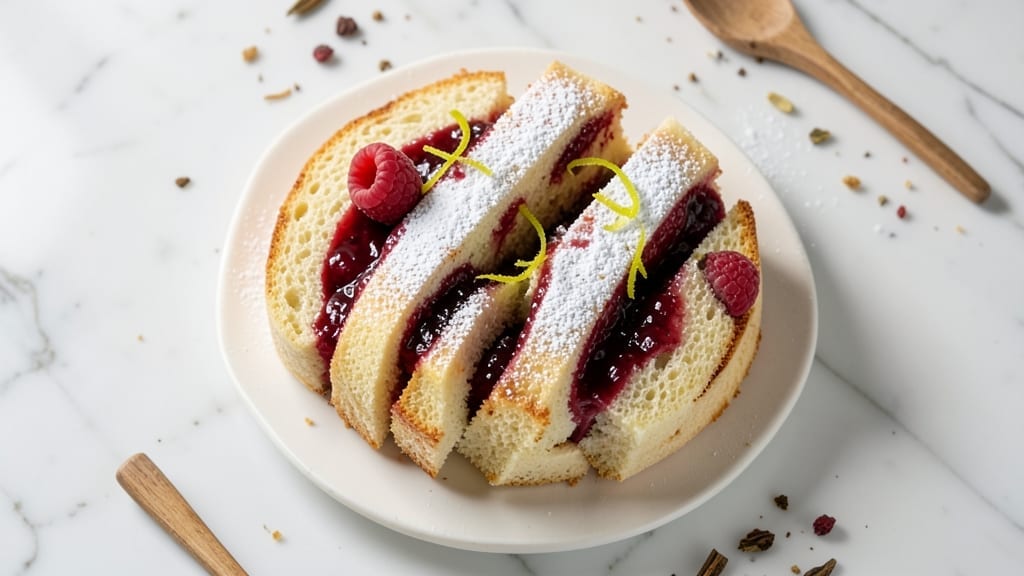
This three-egg Swiss roll recipe delivers the perfect balance of delicate sponge and rich filling—every slice reveals a tender, airy texture that holds its shape beautifully. The secret lies in the precise ratio of eggs to flour, creating a light yet sturdy base that rolls without cracking.
I’ve perfected this technique over years of baking, ensuring your Swiss roll stays elegant even after slicing.
The recipe begins with a simple batter of 3 eggs, sugar, and flour, whipped to just the right consistency for a fine, even crumb. Once baked, the warm sponge gets slathered with jam or cream while still pliable, then rolled with precision to create that classic cylindrical shape.
The key is working quickly—timing is everything when it comes to rolling without tearing.
What you’ll end up with is a perfectly shaped Swiss roll that’s light as a cloud yet sturdy enough to slice cleanly. The filling stays moist and flavorful, while the sponge remains delicate and tender. This isn’t just dessert—it’s a showstopper that looks as impressive as it tastes.
Whether you’re serving it at a tea party or treating yourself to a special dessert, this recipe delivers restaurant-quality results at home. The three-egg formula ensures the ideal texture, and the rolling technique guarantees a flawless finish every time. Let’s get started!
Ingredients for 3 egg swiss roll
Three eggs, precise measurements, and patience create this delicate Swiss roll masterpiece.
| Ingredient | Amount | Notes |
|---|---|---|
| Large Eggs 🥚 | 3 whole | Room temperature for best incorporation |
| Granulated Sugar 🍚 | 1 cup | Superfine preferred for smooth texture |
| All-Purpose Flour 🌾 | 1 ½ cups | Sifted for even crumb structure |
| Unsalted Butter 🧈 | ½ cup | Softened to room temperature |
| Vanilla Extract 🌿 | 1 tsp | Pure extract for authentic flavor |
| Raspberry Jam 🍓 | 1 cup | Seeded for smooth filling texture |
| Heavy Whipping Cream 🥛 | 1 cup | Cold for optimal whipping |
| Powdered Sugar 🍚 | ½ cup | For whipped cream sweetness |
| Baking Powder 🌶️ | 1 tsp | Ensures proper rise |
| Salt 🧂 | ¼ tsp | Fine sea salt preferred |
| Powdered Egg Whites 🥚 | ¼ cup | Optional for extra stability |
| Parchment Paper 📄 | 1 sheet | For easy rolling and release |
The eggs are the foundation—room temperature is critical for even incorporation into the batter. Pasture-raised eggs from local farms yield a richer flavor, but store-bought large eggs work perfectly fine. For the flour, King Arthur or Gold Medal brands are ideal—they sift beautifully and create a fine crumb. The butter should be softened to room temperature but not melted; you should be able to press your finger into it without leaving a print. European-style butter like Plugrá or President has a higher fat content, which helps create a more tender crumb.
No vanilla extract? Vanilla bean paste works beautifully—just reduce the amount by half. For the jam, Marmalade or apricot preserves can substitute, but raspberry’s acidity balances the sweetness perfectly. The whipped cream filling can be made ahead and stored in the fridge for up to 24 hours, but bring it to room temperature before whipping. If you’re concerned about the sponge tearing, powdered egg whites (like those used in meringues) add structural stability without altering the texture significantly.
The parchment paper is non-negotiable—it prevents sticking and makes rolling effortless. Line your baking sheet and rolling surface with it to avoid any tears. Once baked, the Swiss roll keeps best at room temperature for up to 2 hours, but for longer storage, wrap tightly in plastic and refrigerate for up to 3 days. To reheat, warm slices in the oven at 300°F for 5-10 minutes to restore the sponge’s tenderness.
Why You’ll Love This Recipe
- No Mixer Needed: I swear by this recipe because it’s all about the gentle fold—no stand mixer, no stress. Just a bowl and a spatula, and you’re rolling out something that tastes like a bakery’s secret. Honestly, the butter-egg ratio makes it effortlessly tender.
- Vanilla Butter Bliss: That whisper of vanilla in the butter? It’s the star. The sugar caramelizes just enough to give it a subtle depth, while the eggs keep it rich without being heavy. Not too sweet, not too plain—just perfectly balanced.
- Party in a Roll: Slice it thin for elegant finger food, or serve it whole for a showstopper dessert. Between us, I’ve used it for brunch, potlucks, and even as a last-minute teacher gift. It’s the one dessert that works everywhere.
- Half the Cost, Double the Love: Three eggs, a stick of butter—that’s it. No fancy ingredients, no markup. My kids beg for it, my wallet thanks me, and I still have leftovers for days. (Yes, even on a Tuesday night.)
Step-by-step instructions for three-egg lightness with perfect roll shape
Mastering the swiss roll requires precision—here’s how to achieve that signature lightness and flawless roll every time.
Prepare the Batter for Even Texture
In a medium mixing bowl, combine the 3 whole Large Eggs, 1 cup Granulated Sugar, and 1 tsp Vanilla Extract. Whisk vigorously for 3-4 minutes until the mixture triples in volume and becomes pale, thick, and ribbony when you lift the whisk. This step is critical—under-whipping leads to dense cake, while over-whipping incorporates too much air.
In a separate bowl, sift together the 1.5 cups All-Purpose Flour, 1 tsp Baking Powder, and 0.25 tsp Salt. Gently fold this dry mixture into the egg mixture in three additions, using a spatula to cut through the center and fold from the bottom up. Avoid overmixing—just until no dry streaks remain. The batter should be smooth and slightly glossy, with a consistency like thick pancake batter.
Bake the Cake Layer to Perfect Doneness
Preheat your oven to 350°F and line a 10×15-inch jelly roll pan with the 1 sheet Parchment Paper, leaving an overhang on two long sides for easy rolling later. Pour the batter evenly into the prepared pan and spread it into the corners with a spatula.
Bake for 10-12 minutes until the top springs back when gently pressed and a toothpick inserted in the center comes out clean. The cake should be golden but not browned—this ensures it stays tender enough to roll. Real talk: if you see any browning, you’ve gone too far. Remove from the oven immediately and transfer to a wire rack.
Apply Jam and Roll While Warm
While the cake is still warm (but not hot), spread 1 cup Raspberry Jam evenly over the surface, leaving a ½-inch border uncovered. This border prevents the filling from oozing out when you roll. Here’s the thing—work quickly but carefully. The cake needs to be cool enough to handle but still pliable enough to roll without cracking.
Starting at the long side closest to you, roll the cake tightly into a log using the parchment overhang. The parchment prevents sticking and makes rolling much easier. Press gently but firmly to shape it into a perfect cylinder. Let it cool completely on the rack before removing the parchment.
Prepare the Whipped Cream Filling
In a chilled mixing bowl, beat the 1 cup Heavy Whipping Cream until soft peaks form. Gradually add the 0.5 cup Powdered Sugar and, if using, the 0.25 cup Powdered Egg Whites. Continue beating until the cream holds stiff peaks that stand straight up when the whisk is lifted. The cream should be thick enough to hold its shape but still smooth enough to spread easily.
If you’re concerned about stability, this is where the powdered egg whites come in handy—they add structure without altering the texture. Beat the cream just until it reaches the right consistency—overbeating can turn it grainy. Transfer to a piping bag fitted with a large star tip for clean, even application.
Assemble and Chill for Perfect Texture
Using a serrated knife, cut the cooled swiss roll in half horizontally. This gives you two even layers to assemble. Spread the whipped cream evenly over the bottom layer, then place the top layer on top. Press gently to create a clean edge and prevent filling from oozing out.
Wrap the assembled roll tightly in plastic wrap and refrigerate for at least 4 hours, or preferably overnight. This chilling time is essential—it allows the flavors to meld and the cake to absorb the cream, resulting in that signature moist, tender texture. When ready to serve, slice with a sharp knife dipped in hot water for clean cuts every time.
Pro Tips For Making 3 Egg Swiss Roll
- STOP OVERBEATING THE BATTER: The moment your mixer starts making the batter look like pancake batter, stop. This recipe relies on a light, airy texture—overmixing turns it dense. Use a hand mixer on medium speed and fold in the flour just until combined. I learned this the hard way after rolling out a cake that could’ve been used as a doorstop.
- USE COLD BUTTER FOR ROLLING: Chill your butter before spreading it on the cake layers—literally, pop it in the fridge for 10 minutes. Cold butter creates crisp, clean layers that don’t ooze into your filling when rolled. Trust me, your Swiss roll will stay intact instead of turning into a sad, sticky mess.
- DON’T SKIP THE PARCHMENT TRICK: Line your baking sheet with parchment paper and dust it with flour before pouring the batter. This prevents sticking and makes flipping the cake onto the cooling rack effortless. I used to struggle with this step—now I just slide the parchment straight off the pan, no drama.
- WEIGH YOUR FLOUR (OR SPOON IT): Scooping flour from the bag packs it down, adding extra moisture to the batter. Use a kitchen scale for precision, or spoon flour into your measuring cup and level it off with a knife. This keeps your Swiss roll light, not gummy. Yes, it’s a pain, but the difference is noticeable.
Regional styles of this 3 egg swiss roll
Classic French Style
The original Swiss roll, or rouleau, comes from French patisserie traditions where precision and elegance are paramount. Here, the sponge is often slightly denser than modern versions, relying on 1 cup of jam (traditionally apricot or raspberry) and a layer of pastry cream instead of whipped cream.
I like using Van Houten’s Dutch-process cocoa powder for the pastry cream to add depth. The key difference? The French version is baked in a 12×16-inch pan and rolled while still warm but pliable—no parchment overhang needed. 🥖
Japanese Mochi-Inspired
Japanese patisseries take the Swiss roll to another level by incorporating mochi flour (glutinous rice flour) into the batter for a chewier texture. Replace 0.5 cup of all-purpose flour with 0.5 cup mochi flour and add 1 tbsp cornstarch to prevent gumminess.
The filling often includes red bean paste (anko) or matcha-infused whipped cream. For rolling, use a 12×18-inch pan and let the cake cool slightly before rolling—it’s more forgiving than traditional versions. 🍡
Italian Cannoli Twist
Southern Italian bakeries sometimes adapt the Swiss roll by adding ricotta cheese to the filling instead of whipped cream. Mix 1 cup ricotta with 0.25 cup powdered sugar and 1 tsp vanilla, then spread between the sponge layers.
For extra flair, sprinkle chopped pistachios or candied citrus peel on top before chilling. The ricotta keeps the filling moist for days, and the texture becomes almost cannoli-like when sliced. 🍋
British Victoria Sponge
In the UK, the Swiss roll is often called a “Victoria sponge roll” and incorporates buttercream instead of whipped cream. Make the buttercream by beating 0.5 cup softened butter with 1 cup powdered sugar and 2 tbsp milk until smooth.
Spread between two layers of the sponge (like a Victoria sponge cake) and roll while still slightly warm. The British version is usually larger—bake in a 13×18-inch pan—and often dusted with icing sugar before serving. 🇬🇧
Modern Decadent Version
For a showstopper, try a chocolate-hazelnut Swiss roll using Nutella as the filling. Spread 1 cup Nutella (warmed slightly for easier spreading) over the baked sponge, then roll as usual.
Add a layer of hazelnut whipped cream (whip 1 cup heavy cream with 0.25 cup Nutella and 0.25 cup powdered sugar). Top with toasted hazelnuts and chocolate shavings. This version is richer but still light—perfect for special occasions. 🍫
Nutrition facts
Frequently asked questions
Why does this recipe use only 3 eggs instead of 4?
The three-egg formula creates the perfect balance of lightness and structure. Fewer eggs make the sponge more delicate and airy while still providing enough protein to hold its shape when rolled. This is especially important for Swiss rolls, where the cake needs to be pliable enough to roll without cracking but sturdy enough to hold the filling.
How do I prevent the Swiss roll from cracking when rolling?
Work with the cake while it’s warm but not hot—this makes it more flexible. Use parchment paper to help roll it tightly, and start from the long side closest to you. If you see small cracks, don’t panic—just press them gently while rolling. The key is speed and a light touch.
Can I make this Swiss roll ahead of time?
Assemble the roll and refrigerate it for at least 4 hours before serving. For best results, make it the night before—this allows the flavors to meld perfectly. Store it wrapped tightly in plastic to maintain moisture. When ready to serve, slice with a hot knife for clean cuts every time.
What’s the best way to slice the Swiss roll?
Use a sharp serrated knife and dip it in hot water between each slice. This prevents the cake from tearing and gives you clean, professional-looking pieces. Wipe the knife clean after each slice to maintain sharpness. For even slices, mark your cutting lines with a toothpick before slicing.
Can I substitute the raspberry jam with something else?
Yes! Try apricot preserves, marmalade, or even Nutella for a chocolate twist. Just ensure your filling is smooth and not too runny—thick fillings like jam or pastry cream work best. The filling should spread evenly without oozing out when rolled.

- 6 Egg Cake Recipe with Oil: Light as Air With Buttery Moisture - October 4, 2026
- 4 Bean Casserole Recipe: One-Pan Heartiness With Smoky Paprika Depth - October 4, 2026
- 3-Ingredient Keto Mug Cake Recipe: Microwave Magic in 2 Minutes - October 4, 2026