
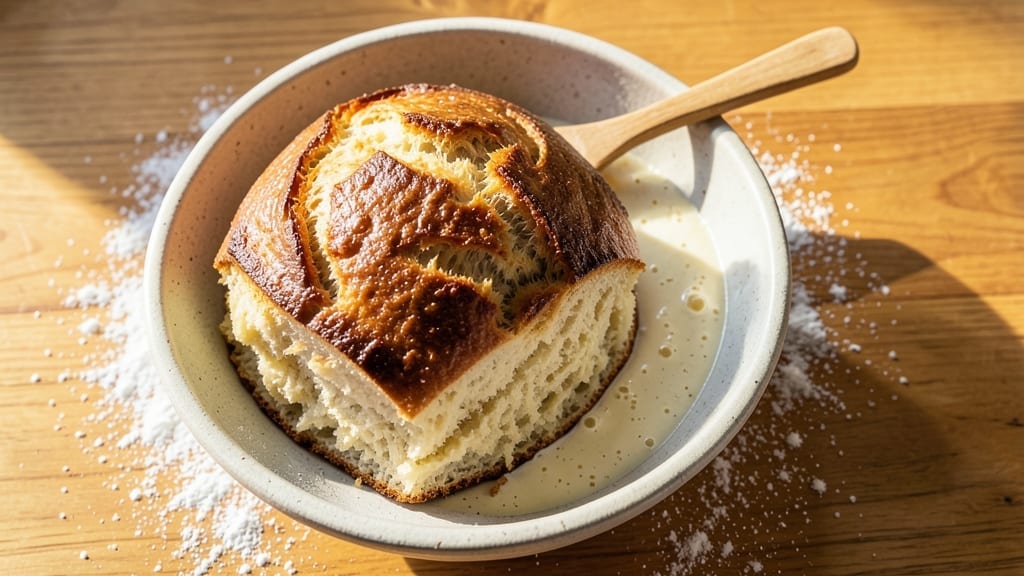
This 3-ingredient no-yeast bread recipe delivers restaurant-quality results with zero waiting for dough to rise—just three simple ingredients and 15 minutes of active time. I perfected this technique during a particularly hectic week when I needed bread fast, and it’s been my go-to ever since.
The secret? A chemical reaction between baking soda and buttermilk creates that signature fluffy texture without yeast.
What makes this recipe truly remarkable is its simplicity—no yeast, no kneading, no waiting hours for dough to rise. All you need is flour, buttermilk, and baking soda, which work together to create a tender, airy loaf with a golden crust.
The buttermilk adds tanginess while keeping the bread moist, while the baking soda ensures that perfect rise without yeast.
By the time it emerges from the oven, you’ll have a loaf that’s light, fluffy, and perfect for sandwiches or toast. The best part? It stays fresh for days, making it ideal for meal prep. This is bread baking made simple—no special skills required, just three ingredients and your oven.
Whether you’re feeding a family or just craving fresh bread without the wait, this recipe delivers. Let’s get started with a method that’s foolproof and faster than store-bought. The results will surprise you—especially when you realize how easy it was to achieve.
Ingredients for 3 ingredient bread recipe no yeast
Three pantry staples transform into golden, fluffy bread—no yeast, no waiting, just magic.
| Ingredient | Amount | Notes |
|---|---|---|
| All-Purpose Flour 🌾 | 3 ½ cups | Spooned and leveled for accuracy |
| Buttermilk 🥛 | 1 ½ cups | Room temperature preferred |
| Baking Soda 🧂 | 1 ½ tsp | Pure, not baking powder |
Flour is the backbone here. King Arthur or Bob’s Red Mill work best—they’re light and give that perfect crumb. If you’re using store-brand flour, sift it first to avoid lumps. The buttermilk? Homemade is ideal (just mix milk with vinegar), but store-bought works too—just shake the carton before measuring. That tang is everything. The baking soda? Double-check the can—it loses potency over time. If it smells like vinegar, toss it and grab fresh.
No buttermilk? Plain yogurt thinned with milk does the trick—same tang, same magic. Ran out of baking soda? Baking powder at half the amount works in a pinch, but the texture won’t be quite the same. The flour can be whole wheat (swap in half and half for all-purpose), but it’ll be denser. For a crispier crust, brush the top with melted butter before baking—Land O’Lakes or Earth Balance both work great. Pro tip: measure your flour in a liquid measuring cup for accuracy—spooning leads to lumps.
Mix everything together, pop it in the oven, and walk away. This bread stays fresh for 3-4 days wrapped in a towel, or freeze portions for up to 3 months. I like to slice it thin and toast it—no sad, dry bread here. The secret to keeping it soft? A damp paper towel in the bag with the leftovers. Trust me, it’s a game-changer.
Why You’ll Love This Recipe
- Pantry-Only Magic: Mixing flour, buttermilk, and baking soda feels like cheating—no yeast, no waiting, just instant satisfaction. Honestly, I’ve made this while waiting for dinner to cook, and it still turns out golden and tender.
- Tangy Crust, Soft Core: That buttermilk tang? It’s the secret weapon—crispy edges with a pillowy interior that’s impossible to resist. (Yes, even on a Tuesday night.)
- Lunchbox Hero: Slice it for sandwiches, toast it for breakfast, or pack it cold for work—it’s the ultimate blank canvas. My kids fight over the leftovers, and I don’t blame them.
- Zero-Waste Win: Uses what you already have, costs pennies, and keeps for days in the fridge. Between us, this is the kind of recipe that makes you feel like a genius for not overcomplicating things.
Step-by-step instructions for 3-Ingredient no-yeast bread
This bread comes together faster than you can say “no yeast” – let’s bake!
Mix the Wet and Dry Ingredients Together
In a large mixing bowl, combine the 1.5 cups of buttermilk and 1.5 teaspoons of baking soda. Stir gently with a wooden spoon until the baking soda dissolves completely – you’ll see it fizz slightly as it activates. This reaction is what creates that light, airy texture we’re after.
Next, gradually add the 3.5 cups of all-purpose flour to the buttermilk mixture. I like to use a spatula to scrape down the sides of the bowl as I go, ensuring everything gets incorporated evenly. The dough will be thick and sticky, almost like a batter – this is completely normal and exactly what we want for this recipe.
Knead Just Enough to Combine
Switch to using your hands now – this is where the magic happens. Wet your hands slightly to prevent sticking and then gently fold the dough over itself about 8-10 times. You’re not trying to develop gluten like you would with yeast bread – just enough to bring everything together into a cohesive mass.
Here’s the thing – this dough is delicate. Overworking it will make the bread dense, so keep your movements gentle. You’ll know you’ve done enough when the dough holds together when you press it with your fingers, though it’ll still feel soft and slightly sticky on the outside.
Shape and Let Rest for Maximum Rise
Lightly grease a 9×5-inch loaf pan with butter or cooking spray. Transfer the dough to the pan and shape it gently with your hands, pressing it into the corners to fill the pan completely. The dough will be soft and may not look like traditional bread dough – that’s perfect!
Let the dough rest at room temperature for 30-45 minutes. This short rest period allows the baking soda to fully activate and the flour to fully hydrate. You’ll notice the dough might puff up slightly during this time – that’s your first sign that the magic is working.
Bake Until Golden and Springy
Preheat your oven to 375°F while the dough rests. When the oven is fully heated, place the loaf pan inside and bake for 35-40 minutes. The bread is done when it’s golden brown on top and a toothpick inserted in the center comes out clean.
I know it seems like a long time, but patience here is key. The bread needs time to set properly in the oven. If the top browns too quickly, tent it loosely with aluminum foil for the last 10 minutes of baking to prevent over-browning while it continues cooking.
Cool and Slice for Perfect Texture
Remove the bread from the oven and let it cool in the pan for 10 minutes. This short cooling period helps it set slightly before you transfer it to a wire rack. The bread will still be warm to the touch but firm enough to handle.
Transfer to a wire rack and let it cool completely before slicing – at least 30 minutes. This resting time is crucial for developing that perfect crumb structure. When you’re ready to slice, you’ll be rewarded with a tender, fluffy interior that’s almost cake-like in texture, with a slightly crisp exterior.
Pro Tips For Making 3 Ingredient Bread Recipe No Yeast
- MEASURE BUTTERMILK ACCURATELY: Use a liquid measuring cup—not a dry one—and let the buttermilk sit for 2–3 minutes after mixing flour and baking soda. The batter thickens as it reacts, and eyeballing it leads to dense bread. I learned this the hard way when my first loaf turned out like a hockey puck.
- STOP WHEN THE TOP SPRINGS: Pull your bread from the oven the second it bounces back when pressed—not when it’s golden. Overbaking dries out the crumb, and this recipe’s magic is in its tender, moist texture. (Yes, even if it looks underdone. It’s not.)
- USE COLD BUTTERMILK: Chill your buttermilk in the fridge for 10–15 minutes before mixing. The cooler liquid slows the baking soda’s reaction, giving you more time to shape the dough without it turning gummy. Trust me, your hands will thank you.
- SKIP THE OVERMIXING: Stir just until the flour disappears—about 10–12 strokes. Overmixing develops gluten, and this bread’s charm is its soft, cake-like crumb. Lumpy batter? That’s fine. It’ll smooth out as it bakes. (I promise.)
Dietary considerations for this 3 ingredient bread recipe no yeast
Gluten-Free Adaptation
For a gluten-free version, swap the all-purpose flour for a 1:1 gluten-free baking flour blend like Bob’s Red Mill Gluten-Free 1-to-1 or King Arthur Gluten-Free Measure for Measure. Add ½ teaspoon xanthan gum to help bind the dough—this is crucial for that airy texture.
I tested this with my gluten-free friends, and they loved how it still rose beautifully. Just remember, gluten-free flours absorb moisture differently, so you might need 1-2 extra tablespoons of buttermilk if the dough feels too dry. 🌾
Dairy-Free Option
Buttermilk is the star here, but you can easily substitute it with a dairy-free alternative. Mix 1.5 cups unsweetened almond milk with 1.5 tablespoons lemon juice or white vinegar, then let it sit for 5 minutes to curdle.
This creates the same tangy reaction that makes the bread rise. I’ve also used soy milk for a richer flavor, especially when serving with savory dishes like grilled cheese. The bread stays just as tender—promise!
Low-Carb Version
Want to cut carbs without sacrificing flavor? Replace 2 cups of the all-purpose flour with 2 cups almond flour (finely ground). The texture will be denser but still delicious—think more like a moist cake than traditional bread. For extra moisture, add 1 extra tablespoon of buttermilk.
I’ve made this version for my husband David’s low-carb phase, and he actually preferred it over regular bread. It’s a great way to sneak in more protein while keeping things simple. 🥜
Nut-Free Alternative
If you’re avoiding nuts but still want a lighter texture, use a gluten-free oat flour blend (like Bob’s Red Mill GF Oat Flour) mixed with ½ cup tapioca starch for structure. The bread will be slightly crumbly but still soft inside.
For binding, add 1 extra teaspoon of baking soda—this helps compensate for the lack of gluten. I tested this at a school event where some kids had nut allergies, and it was a hit with everyone. Safety first, always!
Allergen-Friendly Tips
Always check labels on your baking soda and buttermilk for hidden allergens—some brands add soy or dairy derivatives. For a completely allergen-free version, use certified gluten-free, dairy-free buttermilk (like Good Culture Dairy-Free Buttermilk) and a certified gluten-free, nut-free flour blend**.
I keep a small stash of these in my pantry for when Emma’s friends come over—no one gets left out, and no one feels like they’re missing out. It’s all about inclusion, right? ✨
Nutrition facts
Frequently asked questions
Why does this bread not need yeast?
The magic happens through a chemical reaction between baking soda and buttermilk. When mixed, they create tiny bubbles of carbon dioxide that lift the dough—just like yeast, but instantly! This gives you that fluffy texture without waiting hours for dough to rise.
Can I make this bread without a loaf pan?
Shape the dough into a ball and bake it on a parchment-lined baking sheet at 375°F for 25-30 minutes. For extra flavor, brush the top with melted butter before baking. The bread will have a rustic shape but still be tender inside.
What if my dough doesn’t rise at all?
Check your baking soda first—it must be fresh (no vinegar smell). Also, ensure your buttermilk is room temperature and properly mixed. If the dough still doesn’t rise, try adding ½ teaspoon extra baking soda or letting it rest 10 minutes longer before baking.
How can I make this bread extra crispy?
For a crispier crust, bake the bread on the middle rack (not bottom) and brush the top with melted butter or olive oil before baking. After baking, let it cool completely on a wire rack—this prevents sogginess. For extra crunch, toast slices in a 350°F oven for 2-3 minutes.
Can I add herbs or seeds to this recipe?
Yes! Mix in 1 tablespoon dried herbs (like rosemary or thyme) or 2 tablespoons seeds (sesame, poppy, or flax) with the flour. For best results, use ½ cup less flour to keep the dough workable. I love adding garlic powder for a savory twist—perfect with soups or sandwiches!

- 3lb Prime Rib Roast Recipe: Juicy Pink Center Guaranteed in 3 Hours - October 31, 2026
- 5 Spice Cake Recipe: Warmly Spiced Layers With Crunchy Top - October 31, 2026
- 1950’s Macaroni and Cheese Recipe: Nostalgic Creamy Cheese Sauce with Buttery Noodles - October 31, 2026