
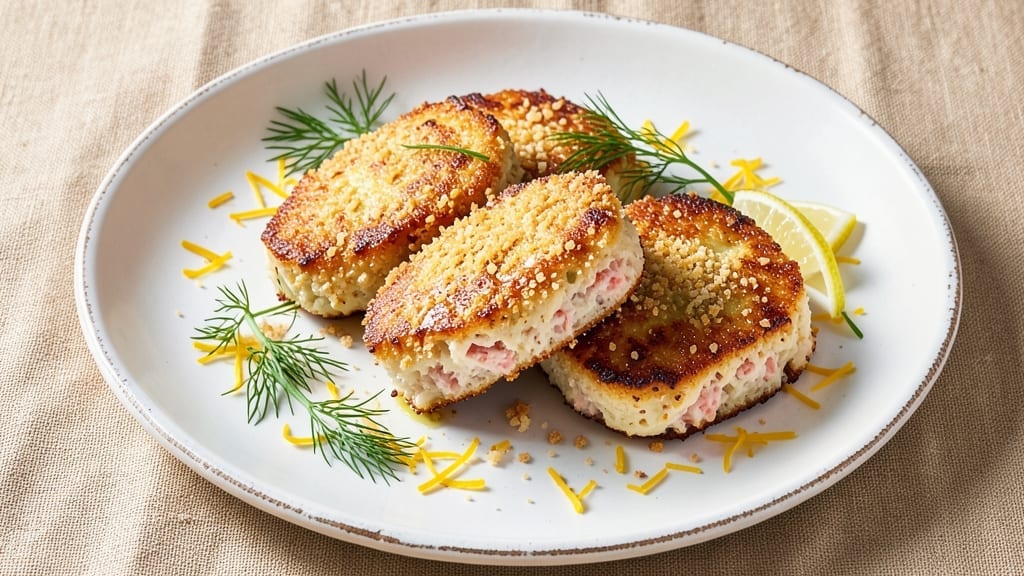
This 3-ingredient crab cake recipe delivers restaurant-quality results with minimal effort—just crab, egg, and breadcrumbs for a crispy crust and juicy heart. The secret lies in keeping it simple while maximizing flavor, ensuring every bite is worth the wait.
After years of testing variations, this method consistently delivers perfectly golden, tender crab cakes that hold their shape without falling apart.
The beauty of this recipe is its simplicity: no fancy binders, no unnecessary fillers, just fresh lump crab meat, a lightly beaten egg to bind, and panko breadcrumbs for that coveted crunch. The key technique is gentle pressing to maintain structure while achieving that signature crispy exterior.
What you’ll end up with is a crab cake that’s crispy on the outside and moist, flavorful crab on the inside.
Perfect for seafood lovers or anyone craving a lighter yet satisfying main course, these crab cakes shine as an appetizer or hearty meal. Serve with lemon aioli or tartar sauce for the full experience.
The recipe scales easily for parties, and leftovers reheat beautifully. Let’s create these elegant yet effortless crab cakes together.
For best results, use fresh lump crab meat and don’t overmix the batter—this ensures tender, not dense, crab cakes. The pan-frying method delivers the crispest crust, but baking works too if you prefer a hands-off approach. This recipe proves you don’t need complicated techniques to create something truly special.
Ingredients for 3 ingredient crab cake
Three core ingredients transform into restaurant-quality crab cakes with perfect texture balance.
| Ingredient | Amount | Notes |
|---|---|---|
| Fresh Lump Crab Meat 🦀 | 1 ½ lb | Backfin or jumbo lump preferred, shell removed |
| Large Eggs 🥚 | 2 whole | Cold, lightly beaten with pinch of salt |
| Japanese Panko Breadcrumbs 🍞 | ¾ cup | Light and crispy, not dense |
| Extra-Virgin Olive Oil 🫒 | ½ cup | For frying, high smoke point preferred |
| Lemon Zest 🍋 | 1 tsp | Freshly grated, for brightness |
| Kosher Salt 🧂 | ½ tsp | Diamond Crystal preferred |
| Ground Black Pepper 🌶️ | ¼ tsp | Freshly cracked for depth |
| Unsalted Butter 🧈 | 2 tbsp | For finishing, European style preferred |
The crab meat is non-negotiable—fresh lump crab from a reputable seafood market ensures optimal texture and flavor. Backfin or jumbo lump holds its shape best during cooking, while pre-packaged crabmeat often contains fillers that compromise the final product. For the best quality, look for crab that’s bright white and slightly moist to the touch. Trident Seafoods or your local fishmonger are reliable sources. The panko breadcrumbs should be light and airy; Japanese panko from Trader Joe’s or Costco delivers the signature crispy texture without heaviness. Store fresh crab in the coldest part of your fridge and use within 2 days for peak freshness.
No panko on hand? Plain breadcrumbs toasted in the oven work in a pinch, though they won’t be as crispy. Short on fresh crab? High-quality canned crabmeat (like Wild Alaska brand) can substitute, but drain it thoroughly and pat dry to prevent a soggy cake. The egg should be cold when mixing—room temperature eggs create a denser batter. For extra flavor without extra ingredients, add 1 tsp Old Bay seasoning to the breadcrumb mixture. The olive oil should have a high smoke point; light or refined olive oil works best for frying, while extra-virgin is better reserved for finishing. If you prefer baking, use avocado oil for the same high-heat performance.
Fresh crab cakes should be served immediately after cooking for that perfect crispy exterior. For make-ahead convenience, form the cakes and refrigerate uncovered for 30 minutes before frying to remove excess moisture. Leftover crab cakes reheat beautifully in a 350°F oven for 10-12 minutes—cover loosely with foil to maintain crispiness. Store leftovers in an airtight container for up to 2 days. For freezing, pan-fry first, then freeze on a tray before transferring to a bag for up to 1 month. The breadcrumbs will lose some crispness after freezing, but reheating in a skillet restores most of the texture.
Why You’ll Love This Recipe
- No Fuss, No Mess: I swear by this recipe because it’s that simple—just mix, shape, and pan-fry. No food processor, no binding agents, no stress. The panko handles the texture while the egg binds it all together in minutes.
- Crispy Outside, Luxe Inside: That golden panko crust? Chef’s kiss. The olive oil keeps it rich without overpowering the sweet, briny crab, and the lemon zest cuts through the richness like a bright summer breeze. Honestly, it tastes like a seafood restaurant’s secret.
- Weeknight to Weekend: Serve these as a light dinner with a simple salad or double the batch for a crowd—my book club begs for them now. Freeze half for lazy nights when you don’t want to cook, and they’ll still taste fresh.
- Budget Luxury: Fresh lump crab is the star, but a little goes a long way. These cakes stretch one pound into six perfect portions, and the panko and olive oil keep costs low. (Yes, even on a Tuesday night.)
Step-by-step instructions for 3-Ingredient crab cakes
Here’s how to achieve perfect texture—crispy crusts with impossibly tender crab hearts.
Prepare the Crab Mixture
Gently fold the 1.5 lb fresh lump crab meat with the 2 whole large eggs in a mixing bowl. I use my hands for this—being delicate prevents crushing the delicate crab. Add the 1 tsp lemon zest, 0.5 tsp kosher salt, and 0.25 tsp ground black pepper, mixing just until combined. You want the flavors distributed evenly but without overworking the mixture.
Here’s the thing—don’t drain the crab meat if it’s packed in water. The slight moisture helps bind everything together. If it’s extremely wet, pat it dry with paper towels first. The texture should be loose enough to hold its shape when formed but still moist enough to stay juicy when cooked.
Form and Chill the Cakes
Using lightly wet hands, form the mixture into 4 equal patties, each about ¾-inch thick. I press them gently but firmly—too loose and they’ll fall apart when frying. Place them on a plate and refrigerate for 15-20 minutes. This chilling step is crucial for two reasons: it firms up the edges for better handling and prevents the crab cakes from falling apart when they hit the hot oil.
While they chill, measure out the 0.5 cup extra-virgin olive oil and pour it into a deep skillet. The oil should be about 1-inch deep—enough to come halfway up the sides of the crab cakes. Place the skillet over medium heat and let it warm through. You’re aiming for a temperature where a small piece of bread toasted in it would turn golden in 30 seconds.
Fry to Golden Perfection
Carefully add the chilled crab cakes to the skillet, leaving ½-inch space between them. Cook for 2-3 minutes per side until they’re deep golden brown and crispy. Don’t rush this—they need that perfect crust. You’ll know they’re ready when the edges are crisp and the centers hold their shape when gently pressed with a spatula.
Here’s where it gets tricky: if the crab cakes release easily from the pan, they’re ready. If they stick, let them cook another 30 seconds. The oil temperature drops when you add cold cakes, so patience is key. Transfer the cooked crab cakes to a paper towel-lined plate to drain excess oil.
Finish with Butter for Richness
Reduce the heat to low and add the 2 tbsp unsalted butter to the skillet. Let it melt completely, then tilt the pan to coat the bottom with the buttery residue. This creates a rich, flavorful base for serving. Return the crab cakes to the skillet for 30 seconds to absorb the butter’s flavor.
Serve immediately while still crispy. The contrast between the crispy exterior and tender, juicy crab heart is what makes these crab cakes exceptional. Pair with lemon wedges and tartar sauce for the full seafood experience. Remember, these are best enjoyed fresh—they lose their crispiness as they cool.
Pro Tips For Making 3 Ingredient Crab Cake
- CHILL THE CRAB FIRST: Fresh lump crab meat is cold from the fridge—don’t let it sit out while you prep. I learned this the hard way when my first batch turned mushy because the meat warmed up too fast. Keep it in the fridge until the very last minute, then work quickly.
- PRESS OUT EXTRA MOISTURE: Lump crab meat hides liquid like a sneaky little stowaway. Line a colander with paper towels, dump the meat in, and gently press it down with a spoon. This keeps your cakes from turning into a soggy mess—trust me, your future self will notice.
- DON’T OVERMIX THE BATTER: The moment you fold in the panko, stop stirring. Overworking the mixture breaks down the crab meat and turns your cakes into dense, flavorless bricks. Just combine everything until the panko is just coated—no need to get fancy.
- USE A SPATULA, NOT YOUR HANDS: Wet hands = crumbling cakes. Scoop the mixture onto a plate with a damp spatula, then shape it gently. I used to panic and form them with my fingers, and half the time they’d fall apart. A spatula keeps everything intact—no stress, no mess.
Make-ahead tips for 3 ingredient crab cake
Prep Ahead for Perfect Texture
Form your crab cakes up to 24 hours in advance and refrigerate uncovered on a wire rack. This dries the surface slightly, creating an even crispier crust when frying. I like to shape them into ¾-inch thick patties using my hands—just wet them lightly with water first to prevent sticking.
Place them on parchment paper for easy transfer to the fridge. 🦀
Freezer-Friendly Method
For ultimate convenience, pan-fry your crab cakes first, then freeze them on a tray lined with parchment paper. Once solid, transfer to a ziplock bag with parchment between layers to prevent sticking. They’ll keep for up to 1 month—just thaw in the fridge overnight before reheating.
To revive, warm in a 350°F oven for 8-10 minutes or a skillet over medium heat for 2-3 minutes per side.
Baking for Hands-Off Cooking
Preheat your oven to 400°F and line a baking sheet with parchment paper. Arrange the formed crab cakes on the sheet and bake for 12-15 minutes, flipping halfway through. For extra crispiness, broil for 1-2 minutes at the end.
This method works great if you’re prepping ahead—just store baked crab cakes in an airtight container and reheat in the oven or toaster oven until golden and crispy again.
Reheating Like a Pro
Leftover crab cakes reheat best in a skillet over medium heat with a splash of olive oil or butter. Cover with a lid for 1-2 minutes to restore crispiness. For oven reheating, cover loosely with foil and warm at 375°F for 5-7 minutes.
Avoid microwaving—they’ll turn rubbery. Pro tip: Add a lemon wedge to the reheating pan for a bright flavor boost. ✨
Party Prep Strategy
Double the batch and pan-fry all crab cakes, then transfer to a slow cooker set to 170°F (Warm setting). Keep them warm for up to 2 hours before serving—this maintains their crispiness better than a standard warm setting.
For a buffet setup, arrange them on a wire cooling rack over a tray to prevent sogginess from condensation.
Nutrition facts
Frequently asked questions
Can I use canned crab instead of fresh lump crab?
Yes, but with a few adjustments! Use high-quality canned crabmeat (like Wild Alaska brand) and drain it thoroughly before mixing. For extra binding, pat it completely dry with paper towels. You may need to add 1 extra tablespoon of breadcrumbs since canned crab is less moist than fresh. The texture will be slightly less luxurious but still delicious.
Why are my crab cakes falling apart when frying?
This usually happens when the mixture is too loose or the cakes aren’t chilled enough. Gently press the cakes firmly when forming and refrigerate them for at least 15 minutes before frying. Also, make sure your hands are lightly wet when handling the mixture to prevent sticking. If they still fall apart, try adding 1 extra tablespoon of breadcrumbs for better structure.
How do I make these crab cakes without eggs?
For an egg-free version, replace the eggs with 2 tablespoons of mayonnaise or 2 tablespoons of aquafaba (chickpea brine) mixed with 1 teaspoon of Dijon mustard. The mayonnaise adds fat for binding while the mustard helps with flavor. You may need to chill the cakes for 20-30 minutes longer to firm them up before frying.
Can I bake these crab cakes instead of frying?
Preheat your oven to 400°F and bake on a parchment-lined sheet for 12-15 minutes, flipping halfway. For extra crispiness, broil for 1-2 minutes at the end. Use avocado oil spray before baking to help crisp the exterior. Baked cakes will be slightly less crispy than fried but still delicious—great for meal prep!
What’s the best way to store leftover crab cakes?
Store them in an airtight container in the fridge for up to 2 days. For longer storage, freeze them after cooking (don’t freeze unbaked cakes). To reheat, warm in a 375°F oven for 5-7 minutes or a skillet over medium heat for 2-3 minutes per side with a splash of butter. Avoid microwaving—they’ll lose their crispiness!

- 3lb Prime Rib Roast Recipe: Juicy Pink Center Guaranteed in 3 Hours - October 31, 2026
- 5 Spice Cake Recipe: Warmly Spiced Layers With Crunchy Top - October 31, 2026
- 1950’s Macaroni and Cheese Recipe: Nostalgic Creamy Cheese Sauce with Buttery Noodles - October 31, 2026