
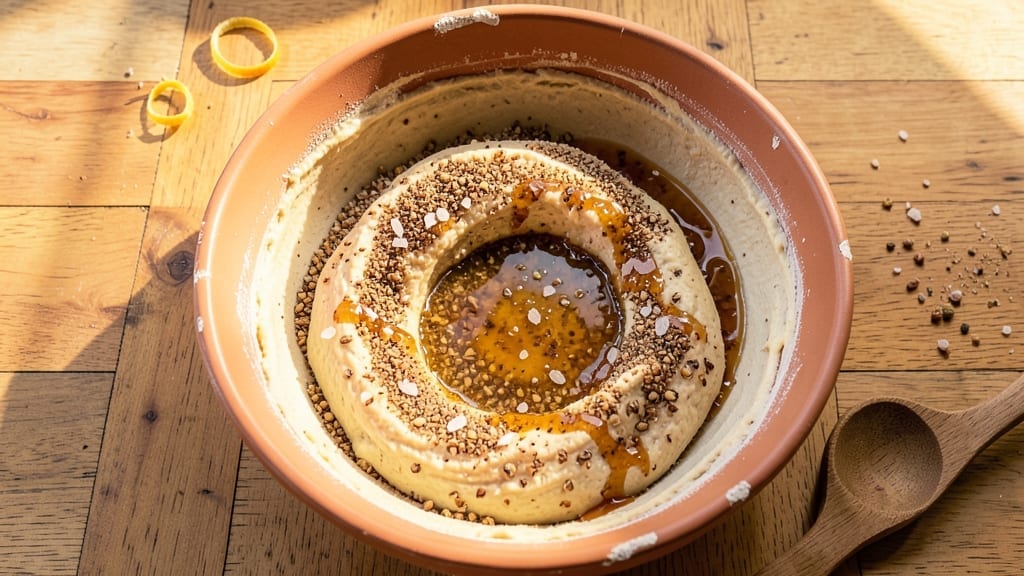
This 50/50 whole wheat bread recipe delivers the perfect balance of hearty whole grains and familiar texture—no kneading required. The secret lies in the no-knead rise, which develops flavor and structure while keeping the process simple enough for beginners.
I’ve baked hundreds of loaves using this method, and it never fails to produce a crusty exterior with a tender, open crumb. The magic happens with a 50% whole wheat, 50% bread flour blend, which creates a lighter loaf than 100% whole wheat while still delivering nutty depth.
Hydration is key—just enough moisture to create a smooth dough that rises beautifully without sticking. Proofing overnight in the fridge enhances flavor and makes shaping effortless.
By the time it comes out of the oven, you’ll have a crusty, golden-brown loaf with a satisfying crunch and a soft interior that’s perfect for sandwiches or toast. The aroma alone will have everyone asking for seconds. This is bread that feels like a restaurant-quality loaf without the fuss.
Whether you’re baking for a family dinner or meal prepping, this recipe scales perfectly. Let’s get started—your kitchen will smell like a bakery in no time.
Ingredients for 50 50 whole wheat bread
Five simple staples plus a few specialty items for that perfect crusty loaf.
| Ingredient | Amount | Notes |
|---|---|---|
| Bread Flour 🌾 | 2 cups | High-protein for structure |
| Whole Wheat Flour 🌾 | 2 cups | Unbleached preferred |
| Active Dry Yeast 🍞 | ¼ oz | Or 2.25 tsp packet |
| Warm Water 💧 | 1 ½ cups | 110°F ideal for yeast |
| Honey 🍯 | 1 tbsp | Or maple syrup |
| Salt 🧂 | 1 ½ tsp | Kosher or sea salt |
| Olive Oil 🫒 | 2 tbsp | Extra-virgin preferred |
| Cornmeal 🌽 | ½ cup | For dusting loaf pan |
| Ice Water ❄️ | ¼ cup | For final dough adjustment |
The flours do all the heavy lifting here. King Arthur or Bob’s Red Mill are my go-tos for both—consistent quality, no weird aftertastes. Whole wheat flour varies wildly, so grab unbleached from the organic section if you can. Yeast is the unsung hero: Saf-Instant is my secret weapon because it doesn’t need proofing in warm water. Store it in the freezer to keep it fresh longer. The honey? Any kind works, but raw wildflower adds subtle floral notes that pair perfectly with the whole wheat.
No bread flour? All-purpose plus 1 tbsp vital wheat gluten gets you 90% there. Short on honey? Maple syrup or agave in the same amount. Olive oil substitute? Melted coconut oil works, but the flavor’s different. For the water, room temp is fine—just not hot. The ice water at the end? Don’t skip it. It tightens the gluten just enough for that perfect oven spring. And if your dough feels sticky? Add 1 tbsp more flour, but no more—we want that moist crumb.
This dough keeps for 24 hours in the fridge before shaping, which is perfect for overnight proofing. Shape your loaf, let it rise at room temp for 1 hour, then refrigerate overnight for 8-12 hours. Bake straight from the fridge for that restaurant-quality crust. Leftovers? 3 days in a bread bag, or freeze for 3 months. Toasting revives stale bread—just pop it in the toaster for 30 seconds.
Why You’ll Love This Recipe
- No-Knead Nightmare Solved: I swear by this—just mix, let it rise, and forget about it. The whole wheat and bread flour combo gives it that perfect chew without turning into a brick, and the yeast does all the work while I’m scrolling or watching a show.
- Honey’s Secret Weapon: That little splash of honey? It’s not just for sweetness—it keeps the bread soft for days and adds this subtle caramel depth that makes every slice taste like it’s still warm from the oven. (Yes, even on stale leftovers.)
- Lunchbox Legend: Between us, this is my go-to for sandwiches, toast, or even garlic bread. The 50/50 blend holds up to jam, peanut butter, or even a hearty chicken salad—no soggy bread in sight, and it’s way more exciting than store-bought.
- Pantry Staple Power: Honestly, you’ve got to try this if you’re stocking up on flour. It’s cheaper than buying whole wheat loaves, freezes like a dream, and I’ve made it with just five ingredients when I forgot the yeast—still turned out fine. Budget win.
Step-by-step instructions for 50 50 whole wheat bread
Here’s how to make this no-knead, crusty loaf with equal parts whole wheat and bread flour.
Mix the Dough and Let It Rest
In a large mixing bowl, combine the 2 cups bread flour, 2 cups whole wheat flour, 1 tbsp honey, 1.5 tsp salt, and 0.25 oz active dry yeast. Stir gently to distribute the yeast evenly through the dry ingredients. This prevents clumping and ensures even rising later.
Next, add the 2 tbsp olive oil and 1.5 cups warm water (around 110°F). Using a wooden spoon or dough whisk, mix until just combined—you want a shaggy, sticky dough that comes together but still has some texture. Overmixing develops gluten too early, which can make the final bread dense. Let the dough rest for 1 hour at room temperature. This initial rest allows the flour to hydrate and the gluten to relax slightly, making the next steps easier.
After the hour, the dough should look slightly smoother and less sticky. If it’s still too stiff, add 1-2 tablespoons of warm water. If it’s too loose, add 1 tablespoon of flour. The dough should be soft but not wet, and it should hold its shape when pressed gently with a finger.
Shape and Proof the Dough
Lightly flour a clean work surface and turn out the dough. Gently shape it into a loose round by folding the edges toward the center and tucking them under. Don’t worry if it’s not perfect—this isn’t a tight, smooth boule. The goal is to create a compact shape that will rise evenly in the pan.
Place the shaped dough seam-side up in a greased 9×5-inch loaf pan. Cover the pan loosely with plastic wrap or a damp kitchen towel and let it proof at room temperature for 1 to 1.5 hours. The dough is ready when it has risen to about 1 inch above the rim of the pan and feels slightly springy when pressed gently with a fingertip. If the dough doesn’t rise much, it might need a warmer spot or more time—whole wheat dough takes longer to proof than all-purpose.
Prepare the Dough for Baking
Preheat your oven to 375°F. While the oven heats, sprinkle the 0.5 cup cornmeal evenly into the bottom of a baking sheet or directly onto another clean work surface. This creates a crispy, golden crust on the bottom of your loaf.
Turn the proofed dough out onto the cornmeal-covered surface, seam-side down. Gently press the dough to reshape it slightly if needed, then use a sharp knife or razor to score the top of the loaf in a simple crosshatch pattern or a single diagonal cut. This helps the bread expand during baking and prevents it from cracking unpredictably.
Bake to Golden Perfection
Carefully transfer the scored dough to a baking sheet lined with parchment paper. Bake in the preheated oven for 30 to 35 minutes, until the bread is deep golden brown and sounds hollow when tapped on the bottom. The internal temperature should reach 190°F to 200°F.
If the top browns too quickly, tent the loaf with a piece of aluminum foil after 20 minutes to prevent over-browning while the interior finishes baking. The crust should be crisp and the crumb should look evenly baked with no raw spots.
Cool and Finish
Remove the bread from the oven and let it cool in the pan for 5 minutes. Then, transfer it to a wire rack to cool completely for at least 1 hour. This resting time allows the steam inside the bread to escape, preventing a gummy texture.
If the bread seems slightly dense when first sliced, don’t worry—it will firm up as it cools. The crust should be crisp and golden, with a tender crumb inside. For extra flavor, brush the warm loaf with a little melted butter or olive oil before serving. This 50/50 whole wheat bread keeps well at room temperature for 2 to 3 days, or you can freeze it for up to 3 months.
Pro Tips For Making 50 50 Whole Wheat Bread
- Bloom the Yeast First: DESCRIPTION: Skip mixing yeast into dry flours—dissolve it in warm water with honey first, then let it sit for 5 minutes until bubbly. I learned this the hard way after kneading dough with dead yeast and wondering why my loaves never rose. The honey also feeds the yeast faster, so your dough will wake up quicker.
- Weigh Your Whole Wheat: DESCRIPTION: Whole wheat flour packs differently than bread flour—spoon it into your scale, don’t scoop. I used to eyeball it and ended up with dense, heavy loaves. A 1:1 ratio by weight works, but volume measurements turn into guesswork.
- Hydrate the Dough Slowly: DESCRIPTION: Add water in stages while mixing—whole wheat soaks up moisture like a sponge. Start with 70% of the water called for, then adjust as you knead. Overdo it, and your dough turns into glue; underdo it, and it’ll be dry and crumbly.
- Proof at Room Temp: DESCRIPTION: Skip the fridge—let dough rise in a warm spot (75°F) for 1–1.5 hours until doubled. Cold proofing slows fermentation, which can make your bread taste flat. A sunny windowsill or turned-off oven with the light on works perfectly.
Creative variations of this 50 50 whole wheat bread
Herb-Infused Twist
Add 1 tbsp each of fresh rosemary and thyme to the dough during the initial mixing for an aromatic herbal loaf. I like using dried herbs> if fresh isn’t available, but reduce to 1 tsp each>—they’re more concentrated.
The herbs pair beautifully with the whole wheat’s nuttiness and create a fragrant crust that’s perfect for soups or charcuterie boards. 🌿
Seeded Crunch
Stir in 2 tbsp sesame seeds, sunflower seeds, or flaxseeds>> into the dough after shaping but before baking for added texture. For extra richness, toast the seeds in a dry pan for 2-3 minutes>> before mixing.
The seeds add a satisfying crunch to every bite while boosting fiber and omega-3s. I especially love this variation with poppy seeds>> for a sweet-savory contrast.
Sweet Swirl Option
Create a sweet version by adding ¼ cup raisins or chopped dates>> to the dough during mixing. For a swirl effect, press the dough into the pan, then sprinkle 2 tbsp brown sugar>> and 1 tbsp cinnamon>> on top before scoring.
This creates a caramelized crust with pockets of sweetness—ideal for breakfast toast or dessert with a dollop of whipped cream. 🍯
Savory Garlic Bread
Transform this into a savory loaf by mixing 3 minced garlic cloves>> and 1 tbsp garlic powder>> into the dough. After baking, brush the warm loaf with melted garlic butter>> (mix 2 tbsp butter>> with 1 tsp minced garlic>>).
This version is perfect for garlic bread lovers who want a whole wheat option with bold flavor. The garlic complements the whole wheat’s earthiness beautifully.
Multigrain Boost
Replace ½ cup of the whole wheat flour>> with ½ cup rolled oats>> or coarse cornmeal>> for added texture. For a seed blend, use ¼ cup each of chia seeds and pumpkin seeds>>.
These additions create a heartier loaf with varied textures and extra nutrients. I find the oat version has a delightful chewiness that pairs well with hearty soups or stews.
Crust Variations
For a darker crust, brush the baked loaf with 1 tbsp melted butter>> or olive oil>> while it’s still hot. For a lighter crust, bake at 350°F>> instead of 375°F>> and cover loosely with foil after 20 minutes>>.
Experiment with egg washes too—beat 1 egg>> with 1 tbsp water>> and brush on before baking for a golden, glossy finish.
Nutrition facts
Frequently asked questions
Why does your recipe use equal parts whole wheat and bread flour?
Pure whole wheat bread can be dense and heavy, while all-purpose creates a lighter loaf. The 50/50 blend gives you the best of both worlds: a tender crumb with nutty flavor from the whole wheat and perfect structure from the bread flour. This ratio also requires less water adjustment than 100% whole wheat recipes.
Can I make this bread without a stand mixer?
This recipe is designed for hand mixing. Use a wooden spoon to combine ingredients, then wet your hands slightly to handle the sticky dough. The 1-hour rest before shaping makes it much easier to work with by hand. Just be gentle when folding the dough—whole wheat is more delicate than all-purpose.
What if my dough doesn’t rise properly?
Whole wheat dough rises slower than all-purpose. First check your yeast—it should be fresh (test by dissolving in warm water with a pinch of sugar). If the dough isn’t rising after 2 hours, try moving it to a warmer spot (like near the oven with the light on) or cover it with a towel to trap heat. Cold kitchens? Let your water reach 110°F rather than just warm.
How do I get a crispier crust?
For maximum crunch, bake at 425°F for the first 10 minutes, then reduce to 375°F. Also try these pro tips: Use cornmeal on your baking sheet, steam the oven with a baking tray of boiling water for 5 minutes before baking, and score the dough deeply before baking. Brush with melted butter right after baking for extra shine.
Can I substitute vital wheat gluten?
Not for this recipe—it’s designed to work without it. The 50/50 flour blend already provides enough structure. Adding gluten would make the dough too elastic and potentially tough. If you’re making 100% whole wheat bread, then gluten helps, but here it’s unnecessary and could alter the texture. Stick to the original ratio for best results.

- 3lb Prime Rib Roast Recipe: Juicy Pink Center Guaranteed in 3 Hours - October 31, 2026
- 5 Spice Cake Recipe: Warmly Spiced Layers With Crunchy Top - October 31, 2026
- 1950’s Macaroni and Cheese Recipe: Nostalgic Creamy Cheese Sauce with Buttery Noodles - October 31, 2026