
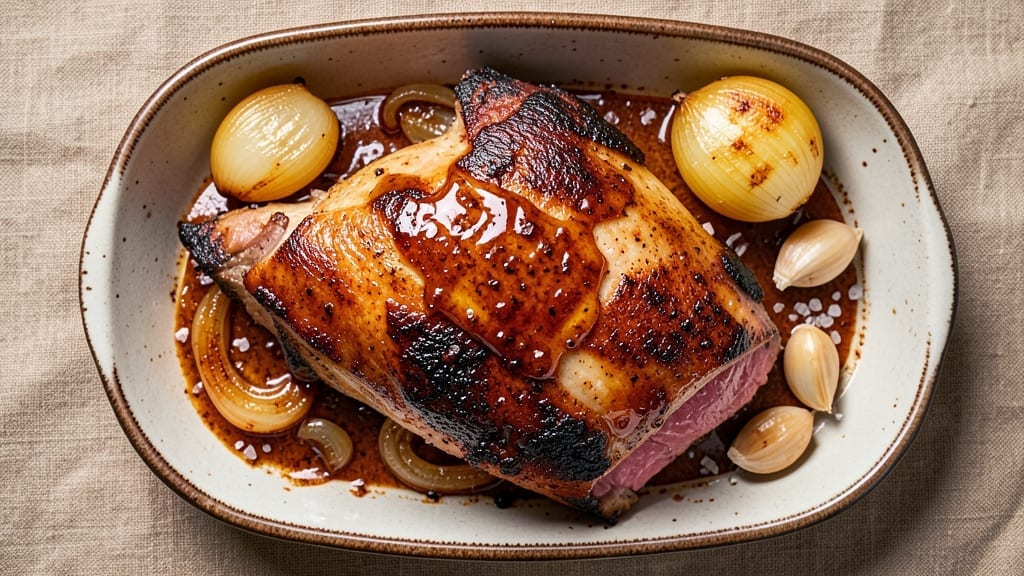
A 3 lb boneless pork shoulder roast transforms from tough to tender when cooked low-and-slow with a smoky crust and juicy pink center—this is the technique I perfected after years of perfecting whole-hog roasts in my Atlanta smokehouse.
The key lies in patience and precision: a slow cook that renders fat into flavor while preserving moisture, resulting in meat that falls apart at the touch of a fork.
I remember my first attempt at this method back in Charleston, where the scent of hickory smoke filled the yard and neighbors would gather around the pit, knowing dinner was coming.
What sets this recipe apart is the balance between texture and flavor—crispy edges from the final sear, tender yet slightly resistant muscle fibers, and that unmistakable smoky aroma that announces dinner is ready.
Unlike traditional pulled pork, this roast maintains its structure while delivering maximum juiciness, making it ideal for slicing or serving whole. The process is straightforward: a simple dry rub, low oven temperature, and a final crisping step that locks in all those rendered juices.
By the time you serve this pork shoulder, your kitchen will smell like a Southern BBQ joint, and every slice will reveal that perfect pink center—juicy, flavorful, and impossible to resist. The crust holds its shape when sliced, providing a satisfying contrast to the tender meat underneath.
This is the kind of dish that turns weeknight dinners into memorable meals, whether you’re feeding a family or treating yourself to a restaurant-quality experience at home.
Pair it with classic Southern sides like creamy mashed potatoes, tangy coleslaw, or a simple green salad to round out the meal. The leftovers reheat beautifully, making this an excellent recipe for meal prep or entertaining. Let’s get started on creating your perfect pork shoulder roast.
Ingredients for 3 lb boneless pork shoulder roast
Three pounds of pork shoulder, twelve ingredients, and a slow cook that delivers restaurant-quality tenderness.
| Ingredient | Amount | Notes |
|---|---|---|
| Boneless Pork Shoulder Roast 🐖 | 3 lb | Evenly trimmed for even cooking |
| Yellow Onion 🧅 | 1 whole | Large, roughly chopped for rub |
| Garlic Cloves 🧄 | 6 cloves | Fresh, smashed for rub intensity |
| Brown Sugar 🍚 | 2 tbsp | Light or dark, packed |
| Smoked Paprika 🌶️ | 2 tbsp | High-quality for smoky depth |
| Kosher Salt 🧂 | 2 tbsp | Diamond Crystal preferred |
| Ground Black Pepper 🌶️ | 1 tbsp | Freshly cracked for sharpness |
| Mustard Powder 🍯 | 1 tsp | For subtle tang |
| Dried Thyme 🌿 | 1 tsp | Or 1 tbsp fresh thyme leaves |
| Apple Cider Vinegar 🍎 | 1 tbsp | For tenderizing soak |
| Hickory Wood Chips 🌳 | 1 cup | For smoker or grill |
| Unsalted Butter 🧈 | 2 tbsp | Cold for final crust |
| Olive Oil 🫒 | 1 tbsp | For basting |
The pork shoulder is your star—look for thick-cut, well-marbled roasts at your local butcher or Costco for the best value. If you’re buying from the grocery store, check the cut near the meat counter; it should feel firm but slightly yielding to the touch. Trader Joe’s often carries excellent pre-trimmed roasts, and their house brand is a solid choice. The key here is fat—you want that marbling to render down into flavor during the cook. If your roast has a thick fat cap, trim it down to about ¼-inch thickness for even cooking. For that perfect smoky aroma, hickory wood chips are non-negotiable—if you can’t find them, mesquite or pecan will work in a pinch.
No smoked paprika? Regular paprika plus a pinch of liquid smoke gets you close, though it won’t be quite the same. Running short on time? Pre-mix your rub in a jar—it keeps for months in the pantry. The apple cider vinegar soak is worth the extra 15 minutes; it tenderizes the meat and adds a subtle tang that pairs perfectly with the smoky crust. For the final sear, use a mix of cold butter and olive oil—the butter adds richness while the oil helps create that golden crust. If you’re cooking on a stovetop instead of a smoker, use a cast-iron skillet and keep the heat medium-low to avoid burning the rub before the meat is done.
This roast reheats like a dream—wrap tightly in foil and warm in a 300°F oven for 20-30 minutes until steaming hot. It keeps beautifully in the fridge for 4-5 days if wrapped in butcher paper or foil, and freezes for up to 3 months when vacuum-sealed. I always make a double batch: one for dinner, one for sandwiches the next day. The leftovers are even better cold, sliced thin over crusty bread with pickles and mustard—trust me, it’s a game-changer for lunch. For serving, let the roast rest for 15-20 minutes before slicing to keep those juices locked in.
Why You’ll Love This Recipe
- No-Chop Night: I swear by this one—just slice the onion and garlic coarsely, toss them with the pork, and let the oven do the work. The brown sugar caramelizes into a sticky glaze without any extra effort, and honestly? That’s my kind of cooking.
- Sweet-Smoky Magic: Between the smoky paprika and the deep caramel notes from the brown sugar, this roast has layers of flavor that’ll make you close your eyes. It’s not just “good”—it’s the kind of dish that lingers in your taste buds long after the last bite.
- Leftovers That Shine: This recipe actually improves the next day. Shred it for tacos, sandwiches, or even a quick fried rice—every time, it’s a win. I’ve got a freezer stash of this because it’s that reliable.
- Budget-Friendly Feast: A 3 lb roast stretches for a family dinner and leftovers without breaking the bank. The onions and garlic add freshness, while the brown sugar and paprika make it feel special—no fancy ingredients needed. My wallet (and my dinner guests) thank me.
Step-by-step instructions for smoked pork shoulder roast
Here’s how to transform a simple pork shoulder into melt-in-your-mouth perfection with a crispy bark and juicy pink center.
Prepare the Pork Shoulder for Maximum Flavor
Start by trimming any excess fat from the 3 lb boneless pork shoulder roast, leaving about ¼ inch thickness. This ensures even cooking while preserving moisture. Place the roast in a large bowl and pour the 1 tablespoon apple cider vinegar over it. The acidity helps tenderize the meat and develops deeper flavor.
Next, combine the 1 whole yellow onion, 6 cloves garlic cloves (smashed), 2 tablespoons brown sugar, 2 tablespoons smoked paprika, 2 tablespoons kosher salt, 1 tablespoon ground black pepper, 1 teaspoon mustard powder, and 1 teaspoon dried thyme in a food processor. Pulse until you have a fine, even rub. This blend creates the perfect balance of sweet, smoky, and savory flavors that will penetrate the meat.
Apply the Rub and Soak for Tenderization
Generously coat the pork shoulder with the spice rub, pressing it firmly into all surfaces. The rub should adhere well and not fall off when you handle the meat. Place the rubbed pork shoulder on a plate and refrigerate uncovered for at least 4 hours, or preferably overnight. This dry-brining process enhances flavor penetration and creates that coveted crust.
Here’s the thing—don’t skip this step. The longer the pork sits with the rub, the more intense the flavor becomes. If you’re short on time, at least let it sit for 2 hours. The rub needs time to work its magic and create that flavorful crust we’re after.
Set Up Your Smoker for Low-and-Slow Cooking
Soak the 1 cup hickory wood chips in water for 30 minutes to prevent burning. Fill your smoker with the soaked wood chips and preheat to 225°F. This low temperature is crucial for breaking down the connective tissue in the pork shoulder without drying it out. You’ll know your smoker is ready when you see clean, blue smoke with no white steam.
Place the pork shoulder fat-side up on the smoker grate. The fat will render slowly during cooking, basting the meat and creating that beautiful bark. Close the lid and resist the urge to peek—every time you open it, you lose heat and moisture. This is where patience pays off, so let the smoker do its work.
Smoke Until Probe-Tender
Smoke the pork shoulder for 8-10 hours, or until the internal temperature reaches 195-203°F. This is when the collagen in the meat fully breaks down, transforming into gelatin that makes the pork incredibly tender. You’ll notice the temperature will stall around 165°F—this is normal and called “the stall.”
To combat the stall, wrap the pork shoulder tightly in butcher paper (not aluminum foil) when it hits 165°F. The paper allows some moisture to escape while maintaining the bark. Return it to the smoker and continue cooking until it reaches the target temperature. The probe should slide in like butter with no resistance when you test it in the thickest part of the meat.
Rest and Finish with a Crispy Crust
Once the pork shoulder reaches the proper internal temperature, remove it from the smoker and tent loosely with foil. Let it rest for at least 1 hour—this allows the juices to redistribute throughout the meat. Real talk: this is the most important step for juicy pork. If you skip it, you’ll end up with dry meat.
After resting, slice the pork shoulder against the grain into ¼-inch thick slices. In a hot skillet, melt the 2 tablespoons unsalted butter and 1 tablespoon olive oil over medium-high heat. Add the sliced pork shoulder and sear for 2-3 minutes per side until you achieve a golden-brown crust. This final step adds extra flavor and texture that takes your pork shoulder to the next level.
Pro Tips For Making 3 Lb Boneless Pork Shoulder Roast
- Sear Before Browning: Hit the pork shoulder with a quick sear in a hot pan—no oil needed—before adding onions and garlic. This locks in juices and builds flavor faster than skipping the initial crust. (Yes, even if you’re impatient like me, give it 2-3 minutes per side.)
- Char the Onions: Don’t just soften those onions—let them caramelize until deep golden brown. I learned this the hard way: undercooked onions make the dish taste flat. Push them to the edges of the pan and let them crisp for 5-7 minutes.
- Skip the Sugar Rush: Brown sugar burns faster than you think. Add it after the onions are caramelized, then stir it in just until melted—no need to cook it further. Overdoing it turns your sauce bitter, and nobody wants that.
- Test for Doneness Early: A 3 lb pork shoulder hits 145°F internally before it’s tender enough. Pull it when it’s 140°F, tent with foil, and let it rest 10 minutes—it’ll climb to 145°F while resting. (Your meat thermometer is your best friend here.)
Regional styles of this 3 lb boneless pork shoulder roast
Southern BBQ Style
In the Southeast, pork shoulder roasts are all about that smoky, sweet, and tangy profile that makes your mouth water just thinking about it.
I grew up eating this style at family gatherings in Georgia, where we’d smoke the pork low-and-slow with hickory and finish it with a splash of apple cider vinegar for that signature tang.
The key here is the bark—that crispy crust you get from the final sear, which holds up perfectly when sliced. Serve it with classic sides like creamy coleslaw and buttery cornbread for that true Southern experience. 🌶️
For extra authenticity, add 1 teaspoon of cayenne pepper to the rub and a ½ cup of apple cider vinegar to the soak. This gives it that signature kick that makes it unforgettable.
I like to serve it with pickled jalapeños on the side for guests who want to turn up the heat.
Charleston Lowcountry Twist
Down in Charleston, we take our pork shoulder with a little more finesse—think shrimp and grits flavor profiles but with pork.
The trick is to add 1 tablespoon of Old Bay seasoning to the rub and a splash of hot sauce (like Crystal or Tabasco) to the final basting butter. This gives it that briny, spicy edge that balances the sweetness perfectly.
I remember my first time cooking this way under Chef Chen—he’d always say, “The Lowcountry is all about balance, Sarah, and that’s what makes it special.”
Pair this version with she-crab soup and Hoppin’ John for a full Lowcountry feast. The shrimp in the soup complements the pork beautifully, and the rice and peas add a hearty texture that rounds out the meal.
It’s a dish that tells a story of the coast, and every bite brings you back to those Charleston summers.
Texas-Style Smoked Crust
Out West in Texas, they go big on the smoke flavor and the crust. The secret here is to use mesquite wood chips instead of hickory and to add 1 tablespoon of mustard powder to the rub for that signature tang.
After smoking, they wrap the pork in butcher paper and finish it with a beer glaze made from ½ cup of stout beer reduced with 1 tablespoon of brown sugar. This creates a sticky, caramelized crust that’s pure magic. 🔥
Serve it with white bread for sandwiches or baked beans for a full Texas-style spread. The beer glaze is a game-changer—it adds depth and a touch of sweetness that cuts through the richness of the pork. If you can’t find stout, dark ale works just as well.
German-Style Braised Roast
For a heartier, more rustic take, try the German approach—braising instead of smoking. After rubbing the pork with the same spices, sear it in a Dutch oven until browned on all sides.
Then, add 2 cups of beef broth, 1 chopped onion, and 2 smashed garlic cloves, cover, and braise at 300°F for 3-4 hours until fork-tender. The result is a rich, saucy roast that’s perfect for feeding a crowd.
This method is inspired by my time traveling through Bavaria, where pork is a staple.
Serve it with red cabbage and potato dumplings for a true German feast. The braising liquid makes for an incredible gravy—just reduce it on the stovetop and drizzle it over the sliced pork. It’s comforting, hearty, and perfect for cooler weather.
Nutrition facts
Frequently asked questions
Can I substitute boneless pork shoulder with bone-in for this recipe?
Yes, but you’ll need to adjust cooking times. Bone-in pork shoulder typically requires 10-12 hours at 225°F due to the bone’s insulating effect. Remove the bone before slicing, but leave it in during cooking to help tenderize the meat. The internal temperature should still reach 195-203°F in the thickest part of the meat.
What’s the best way to check doneness without a meat thermometer?
Use the “fork test”—insert a fork into the thickest part of the meat. If it slides in easily and the juices run clear (not pink or milky), the pork is done. For a 3 lb roast, it should feel tender but still slightly firm to the touch when properly cooked. The bark should also be deep brown and crispy.
How do I prevent the pork from drying out during the long cook?
Keep the temperature steady at 225°F and wrap the roast in butcher paper when it hits 165°F to trap moisture. Avoid aluminum foil—it creates steam that can make the bark soggy. Also, don’t skip the 1-hour rest before slicing. This lets juices redistribute, resulting in meat that stays juicy even after cooking.
Can I make this in an oven instead of a smoker?
Preheat your oven to 225°F and place the pork shoulder on a rack over a baking sheet. Add a water pan to the bottom for moisture. Cook for 5-6 hours until the internal temperature reaches 203°F. For smoky flavor, add 1-2 soaked wood chips to the pan or use a smoker box if available.
What’s the best way to reheat leftovers?
Slice the pork shoulder and reheat in a skillet with 1 tablespoon of butter or olive oil over medium-low heat for 2-3 minutes per side until hot. For larger portions, wrap tightly in foil and warm at 300°F for 20-30 minutes. Never microwave—it turns the meat rubbery. Leftovers keep well in the fridge for 4-5 days.

- 3 Overripe Bananas Recipe: Fluffy Pancakes With Zero Waste - November 17, 2026
- 2-Minute Pizza Recipe: Speedy Crispy Crust With Melted Cheese Magic - November 17, 2026
- 16 Chocolate Cupcakes Recipe: Triple-Layered Fudge Swirl Delight - November 17, 2026