
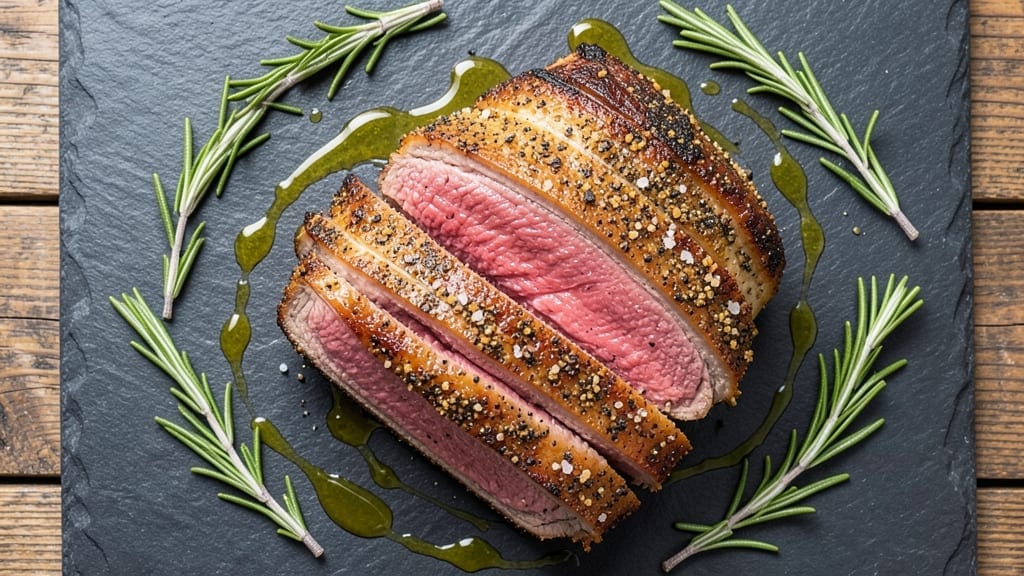
A 3 lb boneless ribeye roast slow-cooked to perfection delivers melt-in-your-mouth tenderness and rich, beefy flavor that transforms any dinner into a special occasion. The secret lies in low-and-slow cooking at 250°F, which breaks down collagen into juices that keep the meat impossibly moist.
I’ve perfected this method after years of testing—no dry, tough cuts here, just buttery threads that pull apart with minimal effort.
This recipe focuses on simplicity without sacrificing restaurant-quality results. You’ll need just five core ingredients—salt, pepper, garlic powder, rosemary, and the roast itself—plus a few hours of gentle cooking time.
The key steps include a 15-minute sear to lock in juices, followed by slow roasting until the internal temperature reaches 125°F for medium-rare. Resting the meat for 30 minutes ensures even distribution of those precious juices.
What you’ll end up with is a roast so tender it practically falls apart, with a crusty exterior that seals in all that beefy goodness. The aroma alone will have everyone gathering around the table, and each slice delivers that perfect balance of richness and savory depth.
This is the kind of dish that makes you feel like you’ve earned your dinner—without spending hours in the kitchen.
Pair it with garlic mashed potatoes or grilled asparagus for a complete meal, or serve it sliced thinly over a bed of creamy polenta. The versatility of this roast makes it ideal for family dinners, holiday feasts, or impressing guests.
Let’s get started on creating your most tender, flavorful roast yet.
Ingredients for 3 lb boneless ribeye roast
Five simple ingredients transform a basic roast into melt-in-your-mouth perfection.
| Ingredient | Amount | Notes |
|---|---|---|
| Boneless Ribeye Roast 🥩 | 3 lb | Center-cut for tenderness |
| Kosher Salt 🧂 | 1 ½ tsp | Diamond Crystal preferred |
| Freshly Ground Black Pepper 🌶️ | 1 tsp | Cracked peppercorns preferred |
| Garlic Powder 🧄 | 1 tsp | Freshly ground preferred |
| Fresh Rosemary 🌿 | ½ tsp | Chopped sprigs, not dried |
| Extra-Virgin Olive Oil 🫒 | 1 tbsp | For searing, high quality |
| Unsalted Butter 🧈 | 2 tbsp | Cold, cubed for basting |
The ribeye roast is everything here. Center-cut is key—it’s more tender and less likely to dry out. I always grab mine from Costco or Whole Foods because they carry premium cuts with good marbling. Look for a roast with bright red color and visible fat—that’s where the flavor hides. If you’re buying a whole ribeye, ask the butcher to remove the bone and tie it with butcher’s twine for even cooking. The roast should be about room temperature before it hits the pan, so take it out of the fridge an hour before cooking.
No fresh rosemary? Dried rosemary at half the amount works, but fresh has that piney aroma that’s hard to beat. Running short on garlic powder? Fresh minced garlic is a great swap—just use about 2 cloves. The olive oil matters here—Trader Joe’s or Whole Foods have great affordable options. For the butter, Plugrá or Land O’Lakes unsalted melt beautifully. Want extra richness? Add a dash of beef broth to the basting butter. And if you’re feeling fancy, a sprig of thyme tossed in with the rosemary adds depth.
This roast tastes even better the next day, so make extra if you can. Wrap it tightly in plastic wrap and refrigerate for up to 4 days. For longer storage, slice it and freeze portions for 3 months. The best way to reheat? Low oven at 275°F with a splash of beef broth until warmed through. Leftovers make amazing sandwiches or tacos—just slice thinly against the grain. And save those bones! They make amazing beef broth for your next pot of soup.
Why You’ll Love This Recipe
- Minimal Prep Nightmare: I swear, this roast takes less effort than deciding what to watch on Netflix. Just salt, pepper, garlic powder, and rosemary—no fancy marinades or hours of searing. Toss it on the pan, let the oven do the work, and you’re free to sip wine while it cooks.
- Butter-Soft Perfection: That ribeye stays juicy inside with a rosemary-kissed crust that’s dangerously good. The garlic powder adds this subtle, savory punch that makes every bite feel like a little reward—no overpowering spices, just pure, satisfying beef flavor.
- Weeknight Crowd-Pleaser: Between us, this feeds six without breaking the bank, and it’s the one dish that even my picky uncle won’t complain about. Serve it sliced thin for tacos, or keep it whole for a Sunday dinner that feels fancy without the stress.
- Leftovers That Don’t Suck: Honestly, I make this on purpose so I have slices for sandwiches all week. The rosemary keeps it tasting fresh, and the garlic powder means it never gets boring—just reheat and enjoy, no sad, dry beef here.
Step-by-step instructions for slow-cooked boneless ribeye roast
Here’s how to transform your roast into melt-in-your-mouth perfection with just a few simple steps.
Prep the Roast for Maximum Flavor and Tenderness
Remove the 3 lb boneless ribeye roast from the refrigerator and let it sit at room temperature for 30 minutes before cooking. This ensures even cooking throughout. While it comes to temperature, prepare your seasoning blend in a small bowl by combining the 1.5 tsp kosher salt, 1 tsp freshly ground black pepper, 1 tsp garlic powder, and 0.5 tsp chopped fresh rosemary. I like to crush the rosemary sprigs slightly between my fingers to release more flavor.
Pat the roast completely dry with paper towels—this is crucial for achieving that beautiful crust. The drier the surface, the better the sear. Once dry, rub the seasoning mixture all over the roast, pressing it gently into the meat so it adheres well. Pay special attention to the edges and any crevices where seasoning might not reach. Let the seasoned roast rest uncovered for another 15 minutes while you prepare your cooking vessel.
Sear the Roast for Deep Flavor and Color
Heat a heavy oven-safe skillet (cast iron works best) over medium-high heat until it’s smoking hot. Add the 1 tbsp extra-virgin olive oil and let it shimmer for 30 seconds. Place the roast in the skillet, fat-side down if there’s any remaining fat cap, and sear undisturbed for 4-5 minutes until a deep golden brown crust forms. You’ll know it’s ready when you can easily slide a spatula underneath without the meat sticking.
Flip the roast and sear the other side for another 3-4 minutes. The goal here is to develop maximum flavor through the Maillard reaction—the chemical process that creates those rich, caramelized notes. Don’t rush this step; patience pays off with a more flavorful roast. Once both sides are beautifully browned, transfer the skillet to a preheated 275°F oven.
Slow-Cook to Juicy Perfection
Place the cubed 2 tbsp unsalted butter on top of the roast—this will baste the meat as it cooks, adding incredible richness. The butter should melt slightly from the residual heat in the skillet. Cover the skillet loosely with aluminum foil (tent it so steam can escape) and transfer it to the oven.
Cook the roast for 2 hours, checking the internal temperature with a meat thermometer after 1 hour 45 minutes. It should read 130-135°F at this point. If it’s cooking too quickly, reduce the oven temperature to 250°F to maintain slow cooking. The key here is patience—the slow cook ensures the connective tissue breaks down completely, resulting in those buttery, pull-apart threads.
Rest and Slice for Maximum Juiciness
Once the roast reaches an internal temperature of 135-140°F (it will rise another 5-10°F as it rests), remove it from the oven and transfer to a cutting board. Tent loosely with foil and let it rest for 20-30 minutes. This resting period is absolutely critical—it allows the juices to redistribute throughout the meat, preventing them from pooling on your plate.
Slice the roast against the grain into ¼-inch thick slices. The grain direction will be visible as subtle lines in the meat. Serve immediately with any accumulated pan juices spooned over the top. Each slice should be incredibly tender, with juices flowing freely and a perfect balance of seasoning. The butter basting will have created a rich, velvety texture that makes every bite unforgettable.
Pro Tips For Making 3 Lb Boneless Ribeye Roast
- SEAR HARD FIRST: Get that pan screaming hot—like, near-smoke level—before adding the roast. I learned this the hard way after a pale, soggy crust that tasted like regret; high heat for 3-4 minutes per side builds flavor and texture before you even touch the oven.
- SALT THE NIGHT BEFORE: Toss the roast with salt, pepper, and garlic powder at least 12 hours ahead—yes, even if you’re impatient. The salt breaks down proteins for juicier meat, and the rosemary clings better when the surface isn’t raw. (I know, I know, but trust the process.)
- SKIP THE CROWDED PAN: Don’t stack anything on top of the roast while searing—it’ll steam instead of brown. If your pan’s too small, work in batches or use a larger one. A crispy crust is non-negotiable here, and crowding ruins it every time.
- BASTE WITH BUTTER: After searing, add 2 tablespoons of butter, chopped rosemary, and a smashed garlic clove to the pan. Tilt and spoon that golden foam over the roast every 10 minutes in the oven—it’s the easiest way to add richness without extra effort. (Your future self will thank you.)
Perfect pairings for these flavors
Classic Side Dishes
Garlic mashed potatoes are my go-to pairing—their creamy texture contrasts beautifully with the roast’s rich beefiness. Use 4 large Yukon Gold potatoes boiled until tender, then mashed with ½ cup butter, ¼ cup warm milk, and 3 minced garlic cloves.
Season with 1 tsp salt and ½ tsp black pepper for that perfect balance. 🥔
Vegetable Harmony
Grilled asparagus adds freshness and color to the plate. Toss 1 bunch asparagus with 1 tbsp olive oil, ½ tsp salt, and a pinch of red pepper flakes. Grill for 8-10 minutes until tender-crisp. For extra richness, drizzle with lemon juice and grated Parmesan after cooking.
Creamy Polenta Base
Thinly sliced ribeye over creamy polenta creates an Italian-inspired masterpiece. Cook 1 cup polenta with 4 cups chicken broth and 2 tbsp butter until thick. Stir in ½ cup grated Parmesan for depth. Serve the roast sliced over the polenta with a sprinkle of fresh parsley for a restaurant-worthy dish.
Bold Red Wine Pairing
A full-bodied Cabernet Sauvignon from Napa Valley complements the roast’s richness. Look for a wine with 14-15% ABV and notes of blackberry and vanilla. The tannins cut through the fat, while the fruitiness enhances the beef’s natural flavors. For a budget-friendly option, try Apothic Red Blend—it’s consistently delicious.
Crusty Bread Sides
Warm, crusty bread soaks up the roast’s juices beautifully. Try a baguette sliced and toasted with garlic butter (mix 2 tbsp softened butter with 1 minced garlic clove and a pinch of salt). Alternatively, serve with rosemary focaccia for an aromatic twist that ties back to your seasoning.
Sauce Elevations
For extra decadence, drizzle the roast with a simple red wine reduction. Simmer 1 cup red wine with 1 tbsp butter and 1 tsp balsamic vinegar until reduced by half.
The acidity brightens the beef while adding a velvety finish. For a smoky touch, add ½ tsp smoked paprika to the reduction before serving. 🍷
Nutrition facts
Frequently asked questions
Can I cook this roast in the oven without searing first?
While possible, searing creates that flavorful crust through the Maillard reaction. If you skip it, simply rub the roast with oil before seasoning. The meat will still be tender, but you’ll lose that delicious caramelized exterior. For best results, always sear—it takes just 8 minutes total!
What’s the best way to check doneness without a meat thermometer?
Press the roast gently with your finger—it should feel very soft but still slightly springy. For medium-rare, the center should be warm to the touch (like a baby’s bottom) and slightly pink inside when sliced. If it’s firm, it needs more time. Remember, the meat will rise 5-10°F after resting!
How do I adjust cooking time for a different weight roast?
Use this rule: 15 minutes per pound for a 250°F oven. So a 2 lb roast would cook in 30 minutes, while a 4 lb would need 60 minutes. Always check internal temp—don’t rely solely on time! The 135°F target for medium-rare applies to all weights.
Why did my roast turn out dry?
Most likely, you didn’t rest it long enough or overcooked it. The 20-30 minute rest is crucial—it lets juices redistribute. Also, avoid cutting into the meat immediately after cooking. For extra moisture, try adding 2 tbsp beef broth to the pan during roasting. And always cook to 135°F internal temp, not higher!
Can I use this recipe for other cuts of beef?
This method works best for rich, marbled cuts like ribeye, sirloin, or New York strip. For leaner cuts like chuck roast, you’d want to cook longer and lower (225°F) to break down connective tissue. The seasoning works universally, but cooking times and temperatures vary by cut.

- 3lb Prime Rib Roast Recipe: Juicy Pink Center Guaranteed in 3 Hours - October 31, 2026
- 5 Spice Cake Recipe: Warmly Spiced Layers With Crunchy Top - October 31, 2026
- 1950’s Macaroni and Cheese Recipe: Nostalgic Creamy Cheese Sauce with Buttery Noodles - October 31, 2026