
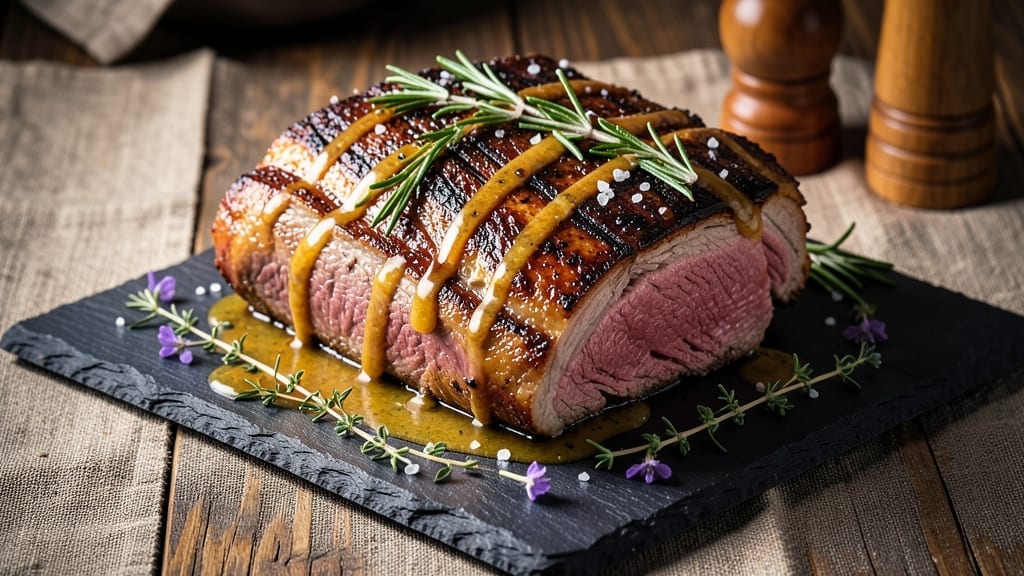
Transforming a 3 lb ribeye roast into steakhouse perfection requires precision—high heat for a deep crust, low-and-slow cooking for juicy tenderness, and a proper rest to lock in flavor.
The secret lies in searing the roast first to develop that signature caramelized bark, then roasting it at a controlled temperature until the internal thermometer hits 125°F for medium-rare. This method ensures every slice delivers that melt-in-your-mouth texture with a bold, savory crust.
What sets this recipe apart is the balance of technique and simplicity. You’ll need just five key ingredients—the roast itself, coarse kosher salt, black pepper, butter, and fresh rosemary—to create a dish that tastes like it belongs on a restaurant menu.
The butter basting during the last 15 minutes of cooking adds richness, while the rosemary infuses subtle herbal notes that complement the beef’s natural depth.
The result is a roast so tender it nearly falls apart, with a crust that’s crispy and flavorful enough to stand up to bold sides like roasted garlic mashed potatoes or a charred vegetable medley.
The resting period—15 minutes minimum—is critical, allowing the juices to redistribute so every bite stays succulent. This isn’t just a roast; it’s a centerpiece that elevates any dinner.
Pair it with a bold red wine reduction or a classic horseradish cream for an extra layer of sophistication. The recipe scales effortlessly, making it ideal for gatherings or a special weeknight dinner. Let’s get started on creating a roast that will impress even the most discerning steak lovers.
Ingredients for 3 lb ribeye roast
Five ingredients transform a simple roast into steakhouse-worthy perfection with crisp crust and tender core.
| Ingredient | Amount | Notes |
|---|---|---|
| Ribeye Roast 🥩 | 3 lb | Bone-in preferred, trimmed of excess fat |
| Coarse Kosher Salt 🧂 | 1 ½ tbsp | Diamond Crystal preferred for texture |
| Freshly Ground Black Pepper 🌶️ | 1 ½ tsp | Cracked peppercorns for optimal flavor |
| Unsalted Butter 🧈 | ½ cup | Cold, cut into 4 equal pieces |
| Fresh Rosemary Sprigs 🌿 | 4 whole | Woody stems removed, leaves finely chopped |
The ribeye roast is the foundation—bone-in cuts deliver richer flavor and more even cooking than boneless. Look for a roast with good marbling (visible fat streaks) at your butcher or grocery store’s meat department. Whole Foods or Costco often carry high-quality cuts; if buying pre-trimmed, ask for a thick-cut roast (1.5-2 inches) to ensure proper searing. The fat cap should be at least 1/4-inch thick—this renders beautifully during roasting, basting the meat naturally. Trim only the very edges if needed, leaving the fat intact for moisture. USDA Choice or Prime grade is ideal, but Select can work if you compensate with extra basting.
For the salt, Diamond Crystal kosher salt is my go-to—its flaky texture clings perfectly to the roast without dissolving into the pan. No coarse salt? Morton kosher salt works, though you may need to adjust slightly (it’s finer). The pepper should be freshly cracked—pre-ground loses potency quickly. Butter matters here: European-style unsalted butter (like Plugrá) has higher fat content and melts cleaner, but any good-quality unsalted will do. The rosemary should be fresh and fragrant—avoid woody stems unless you’re making an infusion. Dried rosemary works in a pinch (use half the amount), but fresh delivers that bright, piney aroma. If you can’t find fresh, substitute with 1 tsp dried rosemary leaves plus a pinch of fresh thyme for complexity.
Store the roast unwashed and exposed to air in the fridge for up to 5 days—this helps develop flavor. The butter should be kept cold and wrapped tightly in parchment, lasting 3 months in the fridge or 6 months frozen. Rosemary stays fresh 1 week wrapped in damp paper towels; for longer storage, freeze the stems in oil for up to 6 months. Once roasted, carve against the grain and serve immediately—every minute of resting (up to 15 minutes) improves texture. Leftovers reheat best low-and-slow in the oven at 275°F to prevent drying. For extra richness, save the rendered fat—it’s perfect for searing steaks later.
Why You’ll Love This Recipe
- Here’s what sold me: the crust. That deep caramelized edge from the butter and salt, then the melt-in-your-mouth center. Rosemary adds a piney brightness that cuts through the richness—like a little flavor hug for your taste buds.
- I’ll be real: most roast leftovers are sad. Not this one. Slice it thin for sandwiches, cube it for hash the next day, or just reheat with a pat of butter. It’s the kind of meal that tastes better the second time around.
Step-by-step instructions for 3-Lb ribeye roast
Here’s the method for achieving steakhouse perfection—crispy crust, juicy core, and aromatic rosemary infusion.
Prep and Season the Ribeye Roast
Begin by removing the ribeye roast from the refrigerator and patting it dry thoroughly with paper towels. I can’t emphasize this enough—dry meat is essential for that perfect crust. Use your hands to press firmly, especially around the edges where moisture tends to linger.
Next, position the roast on a wire rack set inside a rimmed baking sheet. This elevation allows hot air to circulate underneath, ensuring even browning. Generously apply the 1.5 tablespoons coarse kosher salt all over the surface, pressing it into the meat so it adheres well. Then, sprinkle the 1.5 teaspoons freshly ground black pepper evenly, focusing on the thicker sections of the roast.
Remove the woody stems from the 4 whole fresh rosemary sprigs and finely chop the leaves. Distribute these chopped rosemary leaves evenly over the roast, pressing them gently into the surface. This step infuses the meat with aromatic flavor while it cooks. Let the seasoned roast sit at room temperature for 30 minutes before roasting—this ensures even cooking throughout.
Sear the Roast for Maximum Flavor
Preheat your oven to 450°F for the searing phase. While the oven heats, cut the ½ cup unsalted butter into 4 equal pieces (about 1 tablespoon each). Place the roast in the oven and immediately return the temperature to 450°F. Roast for 15 minutes to begin the searing process.
After 15 minutes, remove the roast from the oven and place it on a cutting board. Using a meat mallet, gently pound the butter pieces onto the surface of the roast, pressing them into the meat. This creates a flavorful crust while basting the meat with butter as it continues to cook. Return the roast to the oven and reduce the temperature to 325°F. Roast for an additional 2 hours or until the internal temperature reaches 120°F on a meat thermometer.
Rest and Slice for Juicy Perfection
Once the roast reaches 120°F, remove it from the oven and transfer it to a cutting board. Tent loosely with aluminum foil and let it rest for 30 minutes. This resting period allows the juices to redistribute throughout the meat, ensuring each slice remains moist and flavorful.
While the roast rests, preheat your oven to 475°F. After the 30-minute rest, return the roast to the oven and roast for an additional 10-15 minutes to achieve a deep, caramelized crust. The internal temperature should now reach 130-135°F—this is the ideal range for medium-rare doneness.
Slice the roast against the grain into ½-inch thick slices. Serve immediately, allowing the juices to flow freely onto the plate. The result should be a beautifully seared exterior with a tender, juicy interior infused with rosemary and butter.
Pro Tips For Making 3 Lb Ribeye Roast
- SEAR UNTIL BROWN: Don’t just “heat the pan”—crank it to medium-high and walk away until you see deep golden-brown crusts forming in 3-4 minutes. I learned this the hard way: rushing the sear means flavor gets stuck in the middle while the outside stays pale. Let those butter and rosemary aromas cling to the crust.
- SALT THE ROSEMARY: Lightly coat the rosemary sprigs with a pinch of kosher salt before tucking them into the roast’s crevices. The salt clings to the needles, infusing the butter and meat with extra herbal punch. (Yes, it looks odd, but your knife will prove it works.)
- BASTE WITH PATIENCE: Every 10 minutes, spoon that rendered butter and rosemary juices over the roast—but don’t overdo it. Three or four bastes max, or you’ll turn the crust soggy. The butter’s fat is your friend; let it work, don’t drown it.
- REST UNDER FOIL: Give that roast a solid 5-10 minutes under foil before slicing, even if you’re dying to dig in. I skip this when I’m hungry, and the slices turn out dry and sad. The residual heat keeps everything juicy—trust the process.
Serving suggestions for this recipe
Classic Sides
Start with creamy garlic mashed potatoes—whip 2 lbs Yukon Gold potatoes with ½ cup heavy cream, 4 oz cold butter, and 3 roasted garlic cloves. The richness balances the roast’s boldness beautifully.
For a lighter option, try roasted baby carrots tossed with 1 tbsp honey and ½ tsp smoked paprika—their natural sweetness complements the beef’s depth. 🥔
Bold Sauces
Drizzle each slice with red wine reduction—simmer 1 cup dry red wine with 2 tbsp beef stock and 1 tbsp cold butter until syrupy. The acidity cuts through the richness while enhancing the roast’s flavor.
For a tangy kick, serve with horseradish cream—mix ¼ cup sour cream with 1 tbsp prepared horseradish and a pinch of salt. This adds a sharp contrast that brightens every bite.
Vegetable Medleys
Char asparagus and mushrooms in a cast-iron skillet with 2 tbsp olive oil, 1 tsp thyme, and a pinch of salt until blistered. Their smoky notes pair perfectly with the roast’s crust.
For a heartier option, roast brussels sprouts with ½ cup pancetta, 1 tbsp balsamic glaze, and cracked black pepper until caramelized. The salty-sweet balance makes them irresistible alongside the beef.
Bread Pairings
Serve with crusty sourdough or brioche rolls—their buttery texture soaks up any juices. For extra elegance, toast baguette slices with garlic butter and sprinkle with fresh parsley. The garlic’s aroma elevates the dish without overpowering the roast.
A simple olive oil dip (mix ¼ cup olive oil with 1 tsp lemon zest) adds freshness to each bite. ✨
Dessert Finisher
End the meal with dark chocolate-dipped strawberries—melt 8 oz dark chocolate (70% cocoa) and dip 1 lb strawberries, then chill until set. The bittersweet chocolate cleanses the palate after the rich roast.
For a lighter option, serve vanilla bean ice cream with a drizzle of honey—its cool sweetness provides a refreshing contrast to the savory main course.
Nutrition facts
Frequently asked questions
What’s the best internal temperature for medium-rare ribeye roast?
For a perfectly medium-rare ribeye roast, aim for an internal temperature of 130-135°F when sliced. This ensures a warm, juicy center while maintaining that signature pink hue. Always use a meat thermometer inserted into the thickest part—never guess! The roast will continue rising 5°F after resting.
Can I cook this roast in a slow cooker instead?
Not recommended for this recipe—the slow cooker won’t create that essential crust. For slow-cooked beef, try a chuck roast with low-and-slow methods (6-8 hours on low). Ribeye needs high-heat searing first to develop its signature flavor and texture. If you’re short on time, use a cast-iron skillet to sear first, then finish in the oven.
How do I adjust the cooking time if my roast is 2.5 lbs instead of 3 lbs?
For a 2.5 lb roast, reduce the total cooking time by about 20-25 minutes. Start with 12-15 minutes at 450°F for searing, then 1 hour 45 minutes at 325°F until internal temp reaches 120°F. The resting time remains the same (30 minutes), and the final crusting phase can be 10 minutes at 475°F. Always check with a thermometer!
What if my roast doesn’t have much marbling?
Less marbling means you’ll need to compensate with extra basting. During the final 15 minutes of cooking, baste the roast every 5 minutes with melted butter mixed with 1 tbsp minced garlic and 1 tsp Worcestershire sauce. This adds moisture and flavor. Also, consider adding 1/4 cup beef broth to the baking sheet to create steam and prevent drying.
Can I make this ahead of time?
Yes, but with care! Cook the roast completely (to 145°F internal), then cool rapidly in an ice bath. Reheat in a 275°F oven for 1-2 hours, basting with butter every 30 minutes**. For best results, slice and serve immediately after reheating. The texture won’t be quite as perfect as freshly cooked, but it’s still delicious for meal prep.

- 6 Egg Cake Recipe with Oil: Light as Air With Buttery Moisture - October 4, 2026
- 4 Bean Casserole Recipe: One-Pan Heartiness With Smoky Paprika Depth - October 4, 2026
- 3-Ingredient Keto Mug Cake Recipe: Microwave Magic in 2 Minutes - October 4, 2026